The weather turned out better than expected and under dry skies we picked up the pilot at 05.00 hrs. and docked just before 07.00 in Stavanger. Today it was a busy day in port with four cruise ships in. Our good selves, the Costa Favolosa, the Costa Mediterranea and The Viking Sky (*). Being the smallest ship meant we went to the smallest dock but in this port that does not matter that much. The downtown docks of Stavanger which are now mainly used for the cruise ships are surrounded by the town and that means that downtown is nearby at all sides. If we dock at the official cruise terminal, then we are opposite the Maritime Museum and while we now are docked here, we are across from the Pub so both docks have its advantages. Luckily downtown Stavanger with is large park behind it is fairly spacious so it could easily absorb the approx. 8000 guests going ashore (Not to mention the about 3000 crew members. (*)) Continue reading
Category: ms Prinsendam (page 3 of 6)
Today we are at sea after leaving the Netherlands two hours late. Reason, the lock door of the Main Lock in Ijmuiden did not want to open. Amsterdam can only be reached by deep sea ships via Ijmuiden and then sail via the North Sea Canal to the various cargo berths of Amsterdam Port or all the way to downtown where the Passenger Terminal is located. Which is a great location as there are not many big ports where you dock a 5 minute walk from the downtown area. Also for joining and leaving the ship it is great as Central (Train) Station is also only 5 minutes away. And if there are a lot of Dutch guests on board you can see long lines of “cloggies” roiling their suitcase down the street from the train to the ship.
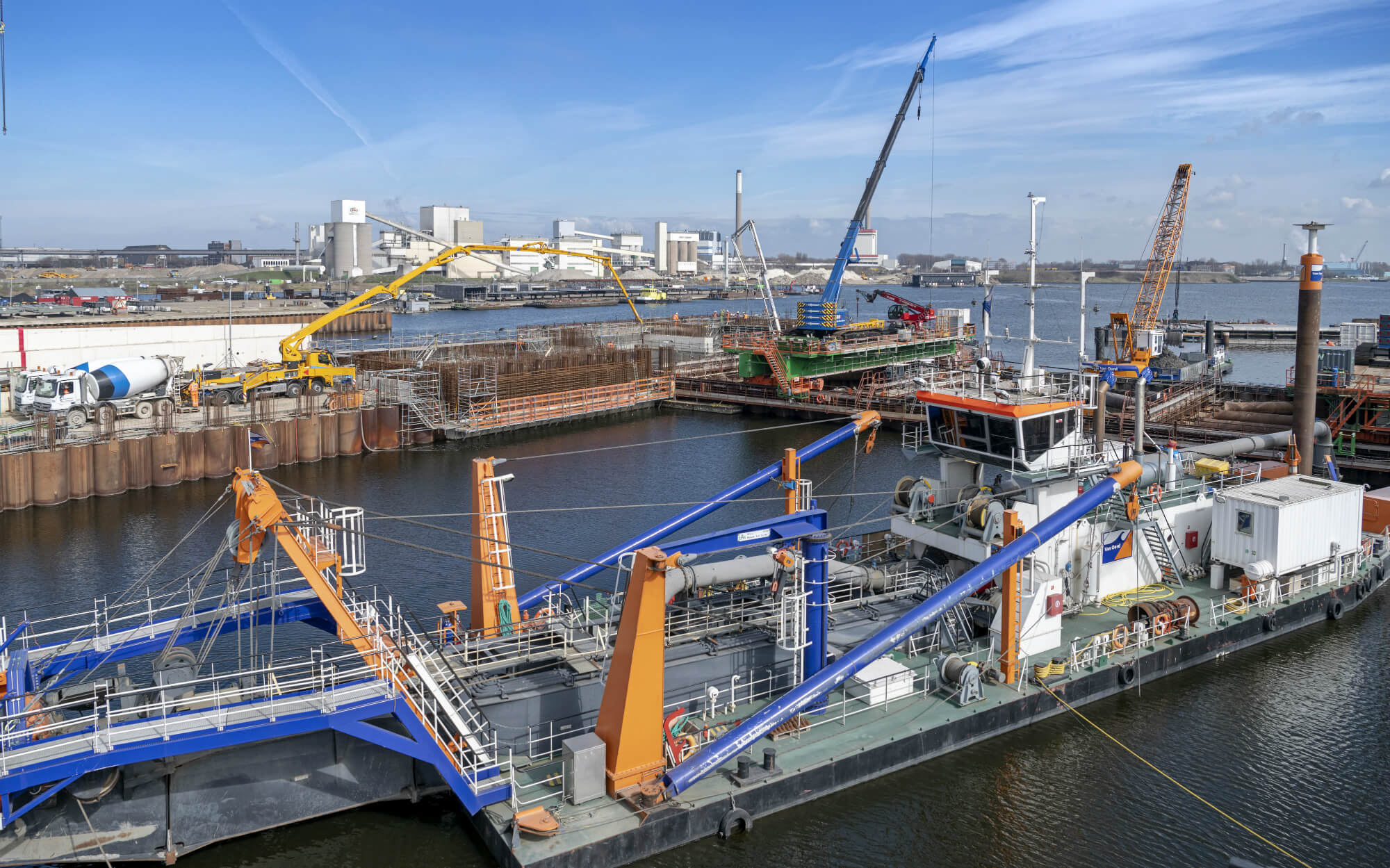
They have now built the walls of the new locks and have lifted a complete dredger into the lock pool to clear out all the mud inside. (Photo Courtesy: Dutch Government)
But the locks are another matter. They are expanding the locks to be the biggest in the world and it seems that the old one is a bit upset about that and starts giving sensor problems. And without electronic sensors nothing can work nowadays. Not even a set of locks that are already over a 100 years old (The first one is from 1876) and must have worked a long long time without any electric wizardly. The Prinsendam was delayed 2 hours inbound two weeks ago and now again two hours while outbound. If it has to happen then outbound is better, as inbound it might affect the dis-embarkation & flights of the guests going home. Outbound there is most of the time sufficient leeway in the schedule to catch up again. And in this schedule on the way to Stavanger we have plenty of time. Continue reading
Today we witnessed something totally new for Holland America; Entertainment employing a nautical person to make a cruise successful. And to ensure that this milestone was indeed taking place, yours truly joined the ms Prinsendam (II) today in Amsterdam from where she commenced her final voyage. This is a 14 day North Cape cruise, calling only at Norwegian ports, and the final port is Amsterdam. Then she will sail to Germany for handover in dry-dock and a large refit. Eventually she will emerge as the Amera for Phoenix Reisen. To make the investment by entertainment worth their while I have offered to do 5 lectures and the Entertainment Manager is trying to squeeze it all in. For the rest there will be the social stuff. I always say, it is great to be the Captain on the bridge, but it is not so bad either to be a Captain in the bar. And as a Norway cruise is an extremely busy one for a cruise ship captain, I have no problems to volunteer to take over the time he cannot be in the ship to entertain. So I stopped over at home to change my work uniform for formal wear so I can be presentable in accordance with the company’s dress code. Continue reading
At 23.00 hrs. we boarded the St. Lawrence River pilots at Escomins and then sailed up the river for a 06.00 hrs. approach to the port. For that we pick up a docking pilot about 3 miles away from Quebec port itself. We use a local docking pilot as he can talk to the linesmen for the rope configuration etc. once we come alongside. Not an un-necessary service as the local linesmen here belong to the most argumentive linesmen we have during our cruises anywhere. So when the ships want something, they do not always agree and that makes the port pilot very useful. On departure we do not have one, as letting go the lines does normally not result in too many heated exchanges. I speak a certain amount of French but not Quebecois but this morning on arrival I heard a few choice words which I have to try to remember as they might be very handy for the future. They sounded quite impressive but maybe not to be used in refined company. Continue reading
What the English language calls the Baltic is called by the Dutch and the Germans the Oost zee, or OstSee, or translated the East Sea. Logical as it is to the East of those countries. But it causes confusion sometimes when a Dutch sailor in his best English advises a Harbormaster in an English port that he came with his ship from the EAST SEA. But for the international world the word Baltic is used and it is a bit uncertain where it is derived from. Wikipedia gives at least four options, but to me it seems that Sea behind the Balts = the Belt Islands between Demark and Sweden is closest to the most viable options.
So we plunged last night into the Baltic Sea after we came out of the Kieler Kanal and had sailed through the Kieler Bight. The Baltic Sea is a shallow sea and if they would close the entrance to the Baltic off at Helsingborg and Helsingr then you could have extended valleys of dry land here, interspersed with mighty rivers carrying all the drainage water from the various countries. The mind boggles what would then happen to the ships, the local infrastructure but also to the boundaries of the surrounding countries. For that reason there is a description in the Finnish language of the Baltic being the “Peace Sea” as through the centuries it kept the various warren factions somewhat apart. It did not always work but the water required those who were intent on conquest to build ships and others to spend their money on forts to protect them. If the sea had been dry land, then any major army could have just marched south or north and things would have been greatly different.
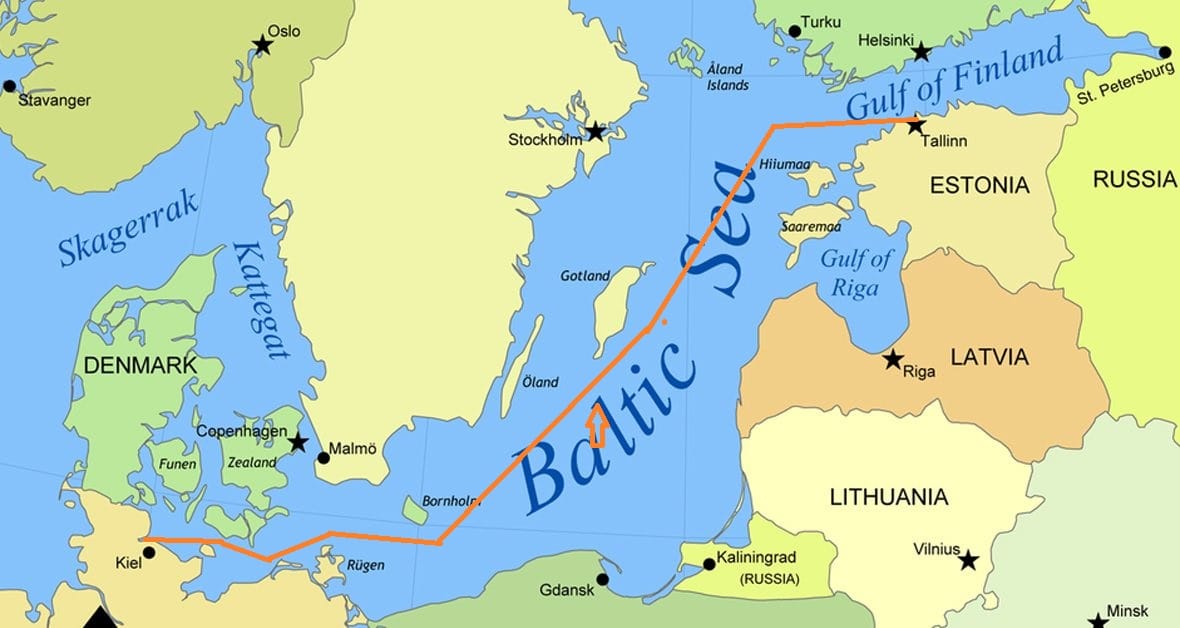
Our Route through the Baltic Sea. Going North we are favoring the Polish side; coming south we will favor the Swedish side.
The Baltic Sea has always been an important trading route from spring to late autumn. Then the sea would freeze over and all the ships would have to wait until the next spring. Nowadays the icebreakers are so powerful that the ports can be reached all year round as long as the ships are following the exact track made by the icebreakers. For the cruise ships that is not much of a challenge we are only here in the summer time. But we still pass the islands that were important points and landmarks for the old navigators in the sailing days.
One such is the island of Bornholm. Located halfway between Poland and Sweden. In the Dutch language we have a saying “achter Bornholm liggen”, to lay behind Bornholm. This referred to what the ships would do if there was a storm blowing. You can shelter behind the island in all directions so where ever the storm is blowing from, you can find shelter at the opposite side behind the island. This was done so often that the phrase became part of the Dutch Language and was even used by those living far far from the sea. There are extensive ferry connections with the island and there is the port of Ronne on the west coast. A ship as the Prinsendam is about the biggest size that fits inside but larger cruise ships will have to anchor.
Today we did not have to lay behind Bornholm as the weather was really good. So we kept Bornholm nicely on our port side and sailed further up the coastline, passing Gotland also on the portside around 17.00 hrs. this afternoon. Gothland is home to the town of Visby which we will visit later on in the cruise. Because the Baltic Sea is so very busy there are assigned shipping lanes everywhere and Bornholm is used as a sort of Separation Island. If you are out of the Baltic and up past Denmark to the North Sea then normally you stay north of Bornholm. Coming into the Baltic and going north, you normally you stay south of Bornholm.
Around midnight we will change course to starboard and sail into the Gulf of Finland with the aim to be docked in Tallinn by 07.00 in the morning. Tallinn is on a different time and thus the whole ship will go forward one hour tonight. The port now has two large dedicated cruise piers and the cruise ships do not dock in the old port anymore. That is now reserved for the ferries of which a greater number call in every day. For the guests it does not make much of a difference. The length of the walk into town is the same length and with the modern pavement it might even be easier than the cobble stones near the old docks.
The weather for tomorrow is supposed to be sunny with temperatures in the high sixties. There is talk about a breezy day but I hope it is not too much as I am examining the sailors tomorrow to extend their competency certificate as Tender Drivers so we going to mess around with boats so to speak.
We left Hamburg in the early morning and turned the ship around as I explained yesterday. Such a maneuver is not done “ off the cuff” but carefully planned so all the officers know exactly what the captain, or his designate who carries out the maneuver is going to do and when. If the officers fore and aft have the exact maneuver also in their mind then they can report in what they see fore and aft while retaining the same mental picture.
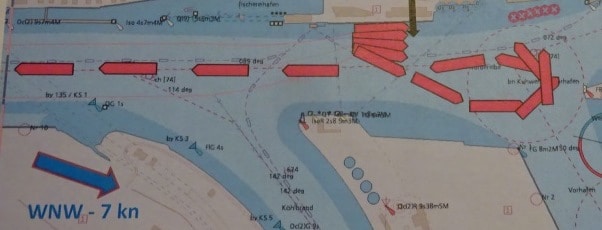
Departure Hamburg during the ebbing tide. As usual we try to use the current as our friend. Put the bow in the current and have it pushed down stream while keeping the stern in position with the main propellers.
Then we sailed down river and just after 9 am. made the sharp turn to starboard and into the Brunsbuttel locks of the Kieler Kanal. Although the official name is the Nord- Ost See Kanal, the name Kaiser Wilhelm II Kanal is also used after the Emperor who opened the canal. It was opened in 1895 but was between 1907 and 1914 already widened due to amount of traffic and larger ships. Holland America has a claim to fame here as the Rotterdam III was the first commercial ship (Commodore F.H Bonjer) that sailed through the Canal following the imperial yacht Hohenzollern with the emperor on board. A Dutch flagged ship was chosen to avoid international bickering about who was more important. The Kingdom of the Netherlands was neutral in European matters so it was the best way out for Germany to keep France, Russia and Great Britain from complaining. The Canal was officially built to reduce the time for ships traveling from the Baltic to the ports in lower Europe and vice versa. Otherwise you have to go all the way around Denmark. The un-official reason is that the Canal was very handy for the German War Fleet to get from the Baltic to the North Sea and vice versa without giving Denmark or Sweden the chance to make things difficult by closing the narrow through fare off between Helinsingor and Helsingborg.
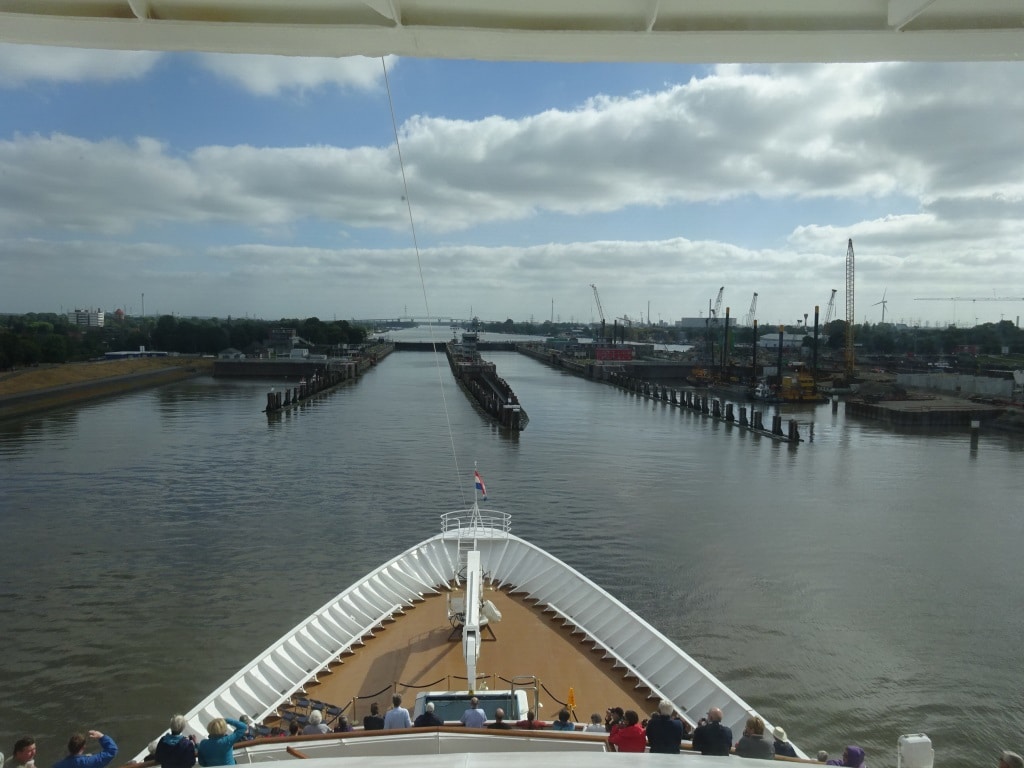
Entering the locks at Brunsbuttel at the Elbe River side. There is a second set of locks to the far right, which is at the moment under re-construction.
There is ample space for the Prinsendam and also larger / read longer and wider ships / to fit in the locks and go through the canal. That is not the problem. The challenge is the height of the ship above the water. There are a number of fixed bridges over the canal and we have to go under them. The Prinsendam is prepared for it as she can lower the top of the radar mast. Some ships also have to lower the funnel (they do that by tipping the top over) but the Prinsendam funnel is low enough. When we book a transit for the canal, one of the things we have to do is to send in a certificate which is approved by Lloyds and which clearly states how high the ship is above water including the draft variations. In the past it has happened a few times that the measurements forwarded to the canal authority where not exactly correct and a bump was the result. Since then a Lloyds Certificate is required.
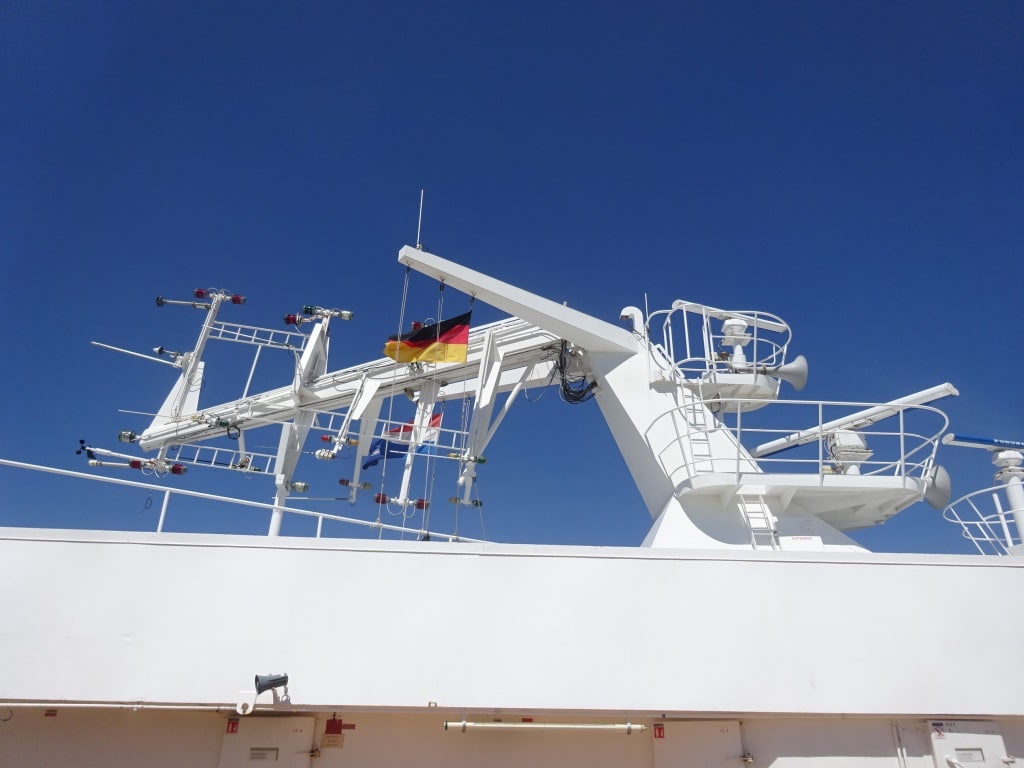
Folding down the top of the Radar Mast to avoid bumping into the bridges.
The Kanal has a length of 98 kilometers and the average speed going through is about 10 knots, with stretches where the ship can do 12 and there are some – inhabited areas where the speed has to go down to 7 or 6 knots. Then there are moments that big ships have to pass each other and then one ship will go against pillars at the side of the canal and lean against it. The 2nd part of the canal is the smallest, the part towards the Baltic, and there no traffic can pass each other, so ships wait at moorings until the North bound convoy has passed. In similar style as in the Panama Canal where ships wait in the Gatun Lake. While going through the Canal we have a pilot, who changes half way through the canal, but the pilot also brings helmsmen to steer the ship. They know exactly how to stay in the middle of the canal or to slow or to veer off the center track when there is opposing traffic.
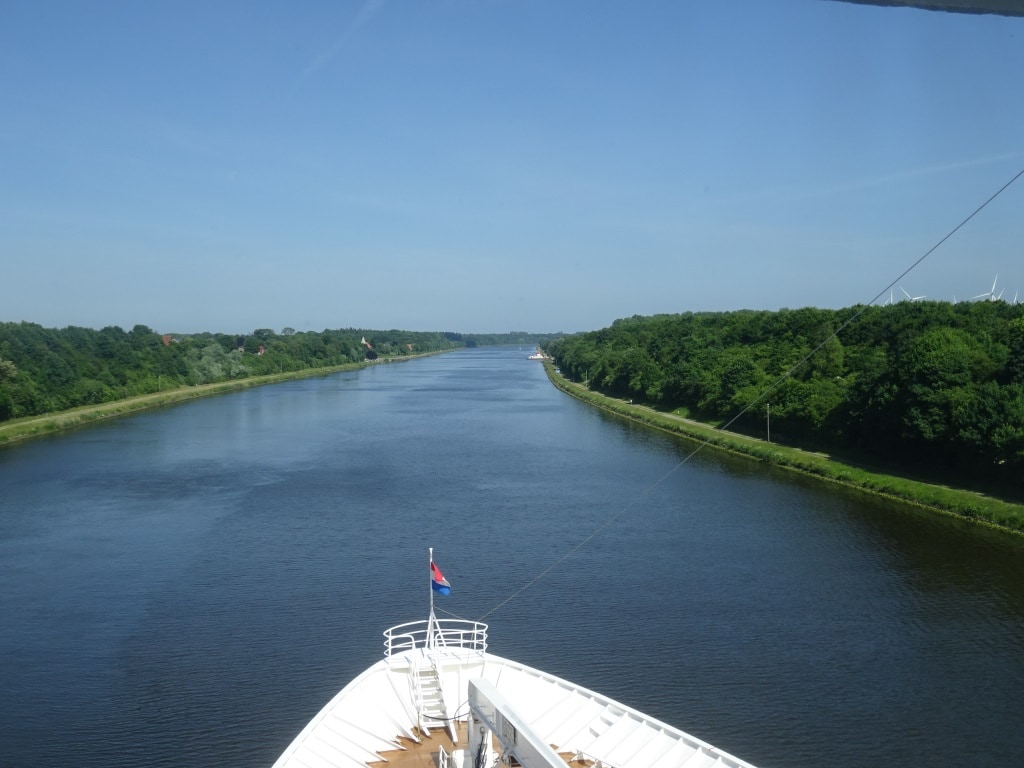
Entering the narrow part of the Canal. There are only a few bridges and the only other way to cross is by small ferries which can be found along the Canal at regular intervals.
By 1830 we were at the end of the Canal at the Holtenau Locks which give access to the Ost See or in English the entrance to the Baltic. This area is called the Kieler “Bucht” or Bight and when we exit the canal it has served the purpose for normal ships of not having to sail around Denmark and for us to have had a very nice scenic day. And we did have a very nice day. With the combined experience of Captain Dag and I we can say that this day was one for the record books. Sunny but not too hot, a gentle breeze but not windy, and a transit all the way on schedule. It is not often that we have all those elements coming together in one day.
This evening we will sail past Kiel and in the lower Baltic and then follow the German coast by going North West towards Tallinn, were we are spend the day, the day after tomorrow.
Expected weather for tomorrow: Sunny, low sixties or around 16.17oC and a gentle breeze. And that gentle breeze should (hopefully) just be enough to keep those low hanging white clouds away.
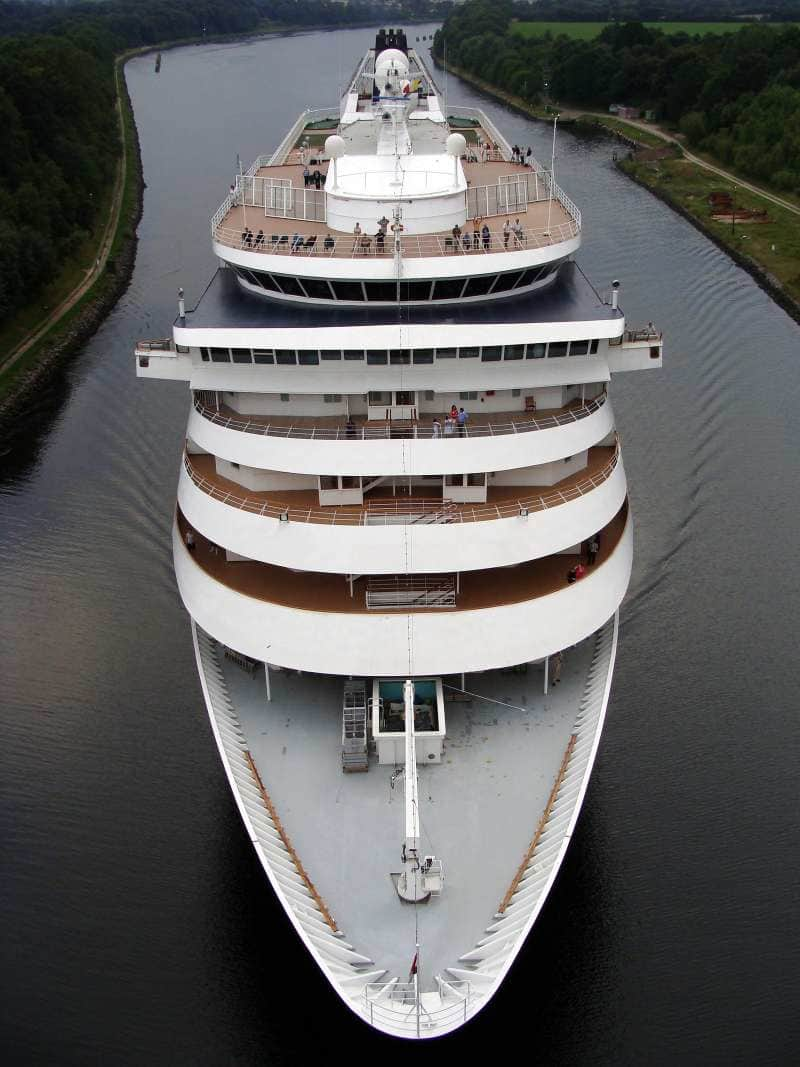
A view of the Prinsendam from one of the bridges. Taken in 2009 while going through the smallest part of the Canal.
We have two overnight stays in Hamburg as it is impossible to get to Hamburg early from Rotterdam. It is simply too far up river. Staying overnight also ties in with the company policy of trying to offer at least one evening’s long stay in a port which in this case translates into an overnight stay, with a bonus for a 2nd one, as the Kieler Kanal is only 4 hours downstream. Those with a taste for German nightlife will be very pleased. For the sort of cruises that the Prinsendam makes – Explorer cruises – this is quite normal. You cannot see Hamburg in one day, even two days is not really long enough. So an overnight with a full afternoon and a full day is as best as one can do.
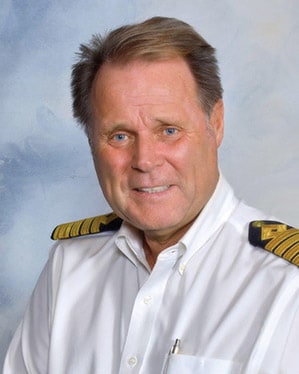 The good ship ms Prinsendam is in the capable hands of Captain Dag Dvergastein who has been commanding cruise ships for the last 30 years and came to us via Seabourn. The company is slowly starting to mix the officer teams from both company’s and we now have two HAL captains with Seabourn and a Seabourn Captain with HAL. Late last evening the white curtain lifted and the Captain could switch off the fog horn much to the delight of the guests who occupied the suites right under the Radar Mast. You get the best cabins on the ship with the suites and also the best view from your balcony but you then also have to accept that you live close to the navigation part of the ship and that includes a lot of honking on the horn if weather or traffic so demands.
Traveling to Hamburg means a 7 hour journey up the river and that makes it impossible to reach Hamburg any earlier. That journey started this morning at 07.00 hrs. with the boarding of the Sea pilot. This pilot takes the ship as far as Brunsbuttel which is also the entrance to the Kieler Kanal where we will be the day after tomorrow. Then at Brunsbuttel, where we were at 09.30 hrs. we embarked the River Elbe Pilot which took the ship up to the entrance of the port. Then shortly after 13.00 hrs. this pilot was relieved by the port pilot who took the ship all the way to the dock. Because the schedule just works on average speeds, you never know if you will arrive exactly on time, as traffic and especially the current can affect things greatly. If you go upriver with the flood behind you, you can save easily an hour on a six hour journey but the other way around is also possible. Today we were unlucky as we had the ebb tide against us for most of the journey and only the beginning of the flood later on as high tide is at 20.11 hrs. And it is a HIGH as water level will rise by 12 feet. So we ran 20 minutes behind the brochure time, with complaints to Mother Nature please. But we had good visibility and so we had excellent sightseeing.
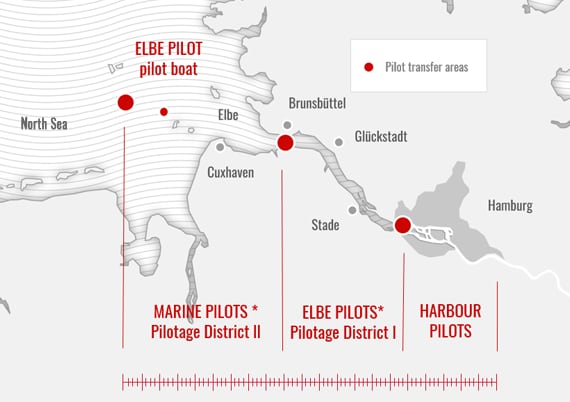
The exact locations where we change pilots. (Courtesy Elbe River pilot site)
Hamburg is a city with a long seafaring tradition. It was once home port to the largest shipping company in the world, the Hamburg Amerika Linie or HAPAG, until the wars put an end to that. Now that distinction is split into the largest container company, or the largest cruise ship company or the largest tanker company. But the citizens of Hamburg have retained a deep affection for the sea and the ships and the Hamburg port days are the biggest spectacle in relation to ports and the sea that you can think of. Also when a cruise ship gets christened in Hamburg, it is not just the company who creates a lot of hype, the whole city joins in. It also means that a lot of traditions are retained here which have fallen by the way side in other countries.
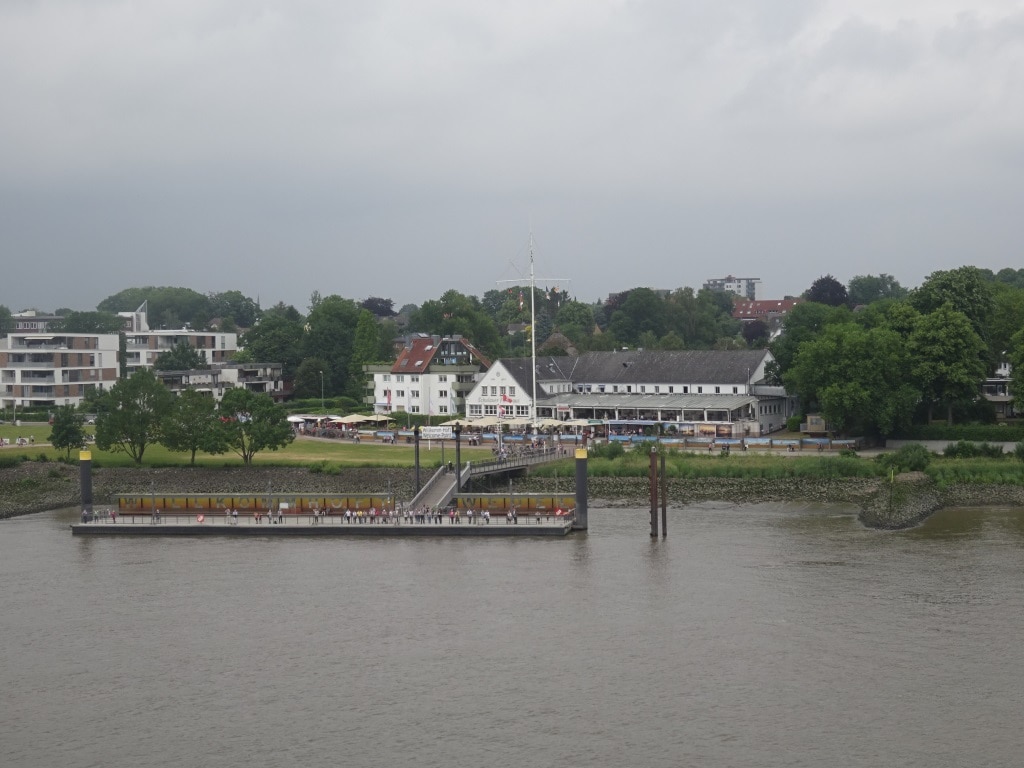
The location with Restaurant is called: Schiffsbegrüßungsanlage Willkomm-Höft, or Ships welcome point. It has been in operation since 1952 and receives sponsor money to keep it going. The pontoon in front is the docking location for the local river ferry,
Once of those traditions is to welcome the ship by flag dipping and playing the National Anthem. I know only one other place in the world where this still happens and that is when going up the St. Lawrence river to Montreal, about 50 miles north of Quebec. Here in Hamburg there is a restaurant which continues the tradition and with a big loudspeaker they bid us welcome in the German and Dutch Language and then played the Dutch National Anthem. It costs money, it does not give any direct value, but it brings style and character and I always compliment those who take the time to keep such things going. People love and hence also the fascination with the pomp and circumstance of Royal Weddings and National Pageantry in the United Kingdom I suppose.
We will remain here until the early morning of the 5th. and then sail down river again to Brunsbuttel to spend a scenic day sailing through the Kieler Kanal.
Tomorrow more about Hamburg.
And thus real life started again and I returned to sea by means of the ms Prinsendam. I was supposed to join the Koningsdam first, but the Prinsendam will be celebrating her 30th. birthday on June 11 and I was asked by the ship to do a few lectures in relation to HAL and our Elegant Explorer. Thus we juggled the schedule around and here we are combining work and hobby-pleasure. Before we dive back in the real world; a small side step with something that happened while I was at home. Also in relation to the history of the company and in relation to the original reason we have a Veendam sailing in the fleet.
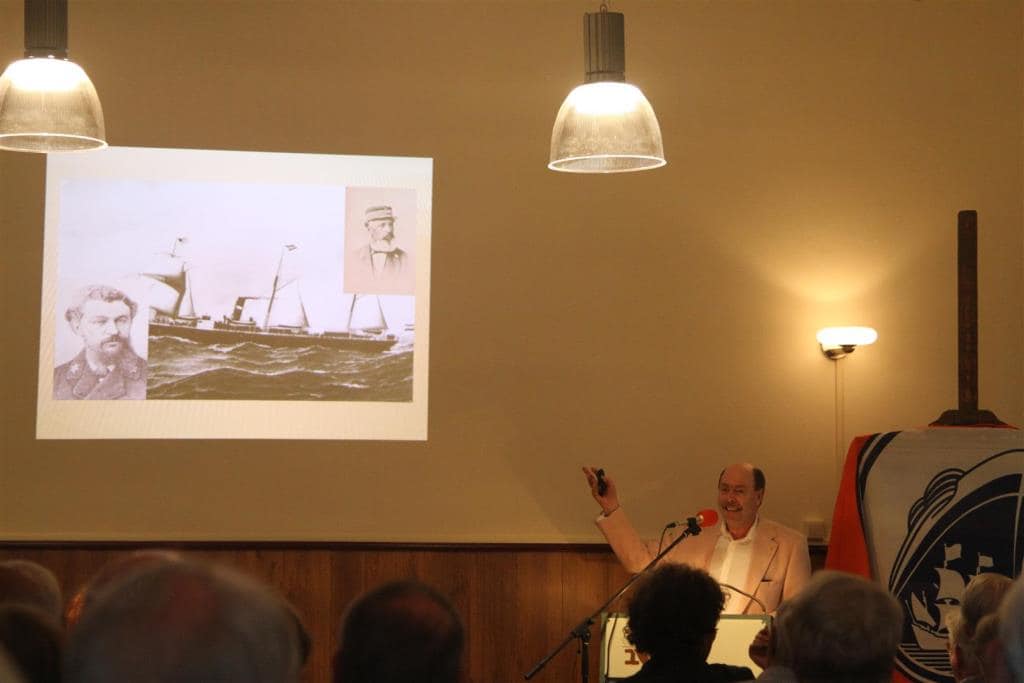
Explaining who W.A Scholten was. This is the ship from 1874 with it’s first Master, Captain Hus Top right and its last Master Captain Taat Lower Left. (Photo courtesy Mr. Ruud van Deventer, son of ex HAL Captain Van Deventer)
Back in the grey mists of time, 145 years ago, Holland America was founded and went public with having a listing on the Dutch Stock Exchange. Out of nowhere a rich industrialist from the Northern part of the Netherlands popped up and bought so many shares that the company was able to finance a complete ship from it. Thus the company named this ship after him. Mr. W.A Scholten was inspired to invest in HAL because he only saw German shipping posters at the various railway stations he used while traveling between his various factories in the Netherlands and as far as Poland. The ss W.A Scholten sank in 1887 but the company replaced it very quickly. By that time the DAM naming system had come in vogue and thus they could not repeat the personal name. But no problems here, Mr. Scholten had factories nearby and lived in the town of Groningen and Veendam was the nearest “DAM” town in area. And thus in 1888 the ss Veendam (I) started sailing for the company. And for most of our history we have had a Veendam in the fleet. The current Veendam being nbr IV.
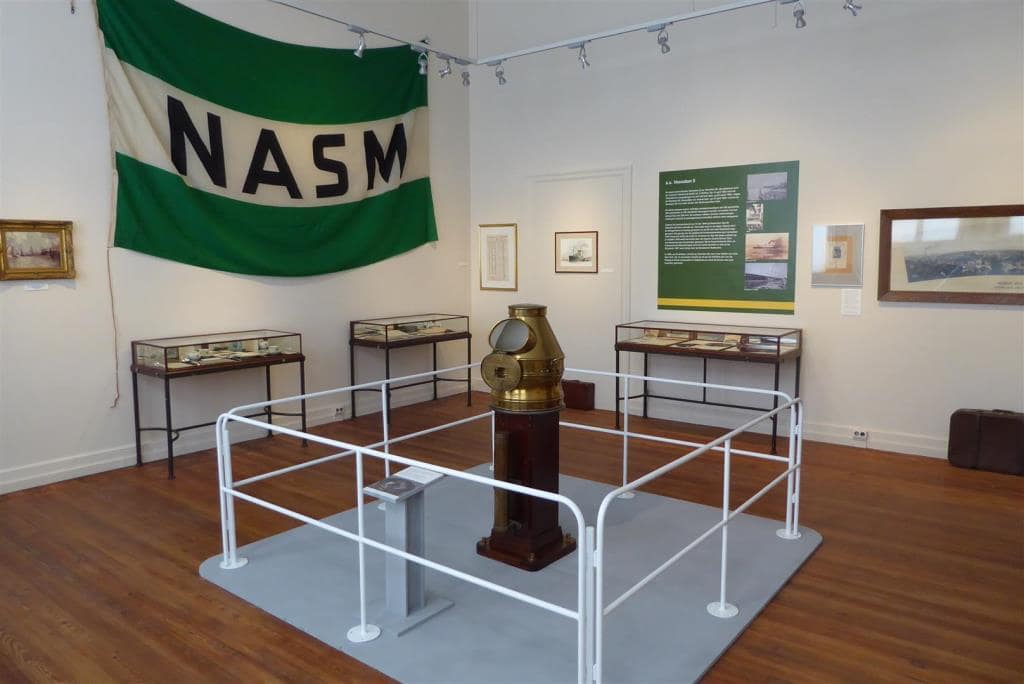
There are big collectors and there are small collectors. I am a small collector but the museum found a gentleman who had managed to salvage the magnetic compass of the Veendam II when it was scrapped in New York. He is a big collector as this compass was only a very small part of his private collection. (Photo courtesy Mr. Ruud van Deventer, son of ex HAL Captain Van Deventer)
In this home town, Veendam in the province of Groningen, there is a museum which is dedicated to the rich shipping history the town once had and also its relation with W.A Scholten. And thus with Holland America being 145 years young and W.A Scholten and the four Veendam’s it was decided to create an exhibition about it all. But then you need material to exhibit. In this case this museum asked the collectors and historians in the country if they could help. And of course they were willing. Every collector likes it when his/her things go on display and most collectors are much easier to work with than the red tape of official museums. And that brought the organizers to me and recognized a sort of unique situation: A Holland America Line historian and collector who also had been the Captain of a Veendam. Some of my collection went on display (and that was not much compared to what some others were able to bring in) and I was quite happy.
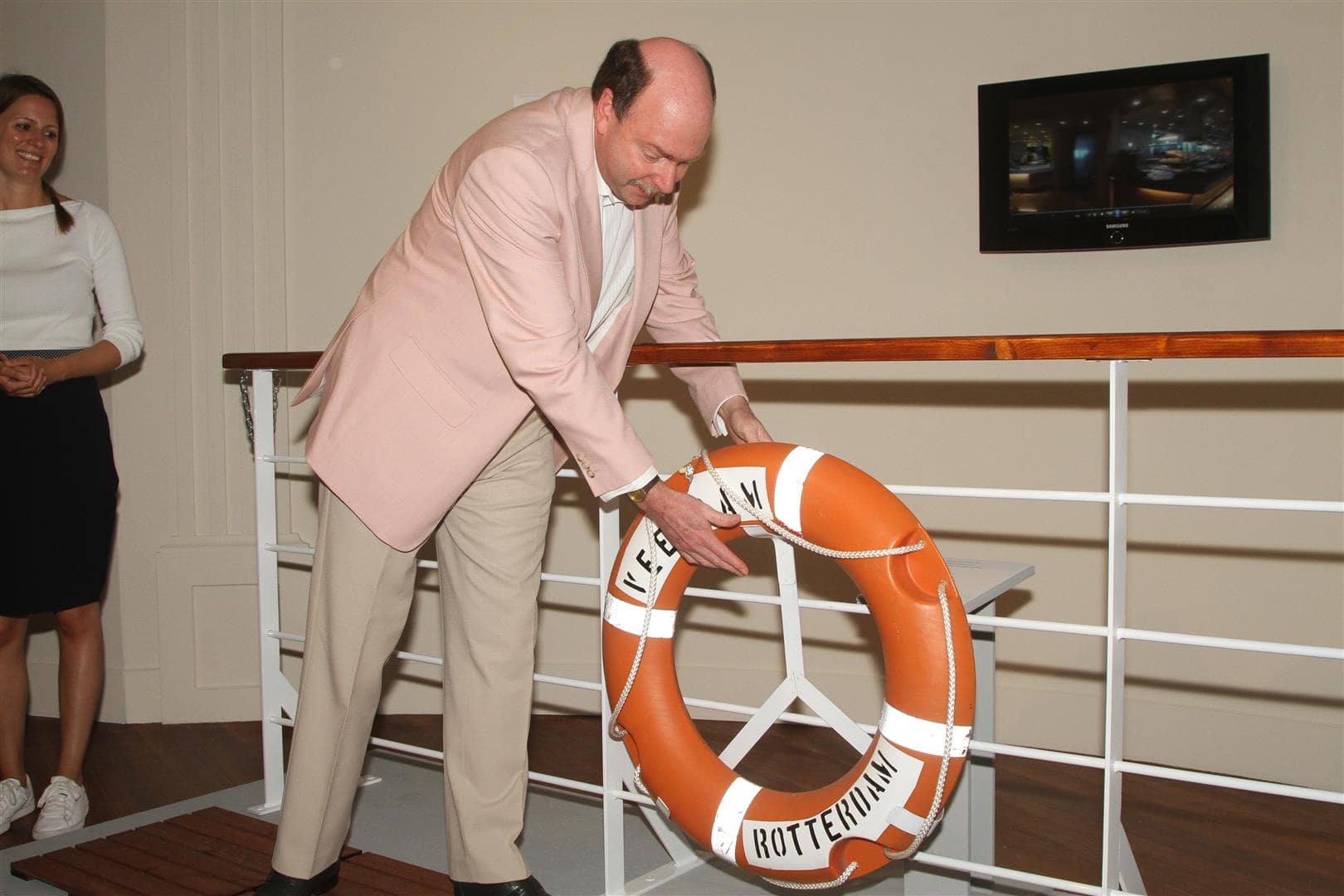
Normally when a sailor has a life buoy in his/her hand it is because somebody has fallen overboard. It is quite unusual to use a lifebuoy to open an exhibition. (Photo courtesy Mr. Ruud van Deventer, son of ex HAL Captain Van Deventer)
Then there was the un-expected next step. As the Dutch King, nor Queen, nor the Prime Minister or any other highbrow official was available (the opening being on a Sunday afternoon…………….), it was decided that I should do the opening. A cruise ship captain’s life is never dull but I do not think that this happens very often. So in the last week of my leave I drove to the far north of the Netherlands, to Veendam to open the exhibition. No ribbon cutting with golden scissors but sailor style with hanging a lifebuoy on a fake railing. For those who read this and have the option to visit, it is well worth to do so, not only because of this exhibition but also for the rest of the museum and for Veendam which is a delightful little town to spend an afternoon in. (https://www.veenkoloniaalmuseum.nl/nl/in-het-museum/tentoonstellingen/veendam-in-de-vaart-1)
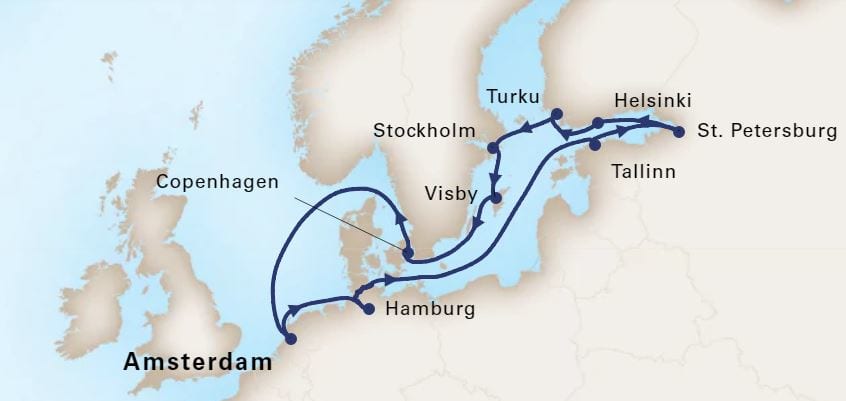
Our current cruise 02 June to 14 June 2018
The ms Prinsendam started today a 14 day round trip to the Baltic and will also call at Turku, where 30 years ago the Royal Viking Sun, now Prinsendam was built. Apart from Hamburg and the Kieler Kanal it is doing a regular Baltic cruise with calls at Tallin, St.Petersburg and Helsinki. The ms Prinsendam is the only HAL ship which fits in the locks of the Kieler Kanal and we have guests on board who have booked this cruise especially for that purpose. I am keeping my fingers crossed that we will have good visibility. Today on departure it was hazy and a white curtain came down the moment we left the locks at Ijmuiden. But tomorrow we are supposed to get a bit of wind and that should change the balance between air and sea temperature somewhat and hopefully that will result in being able to see the whole world again.
On 3 May 1971, Mr. Jaap Wisse joined Holland America as an electrician on board the Nieuw Amsterdam II. He was promoted to Chief Engineer in May 1990 on board the ss Rotterdam (V) and celebrated on 3 May 2011 his 40 years with the company. The ship organized various functions to honor this achievement. The letter of congratulations from Holland America Line President and CEO Stein Kruse was read aloud during the High Mariners party in the presence of all the 300+ day Mariners on board. I hosted a cocktail party in my quarters and a dinner was held for the engine department and other invitees. Jaap’s career spanned a period that included the transition from trans-Atlantic sailing to full time cruising and the subsequent growth of the company. Forty years of faithful and dedicated service to ONE company is an enormous achievement and therefore we should recognize and honor Jaap accordingly.
p.s: See also Captain Albert’s blog 6 may 2011
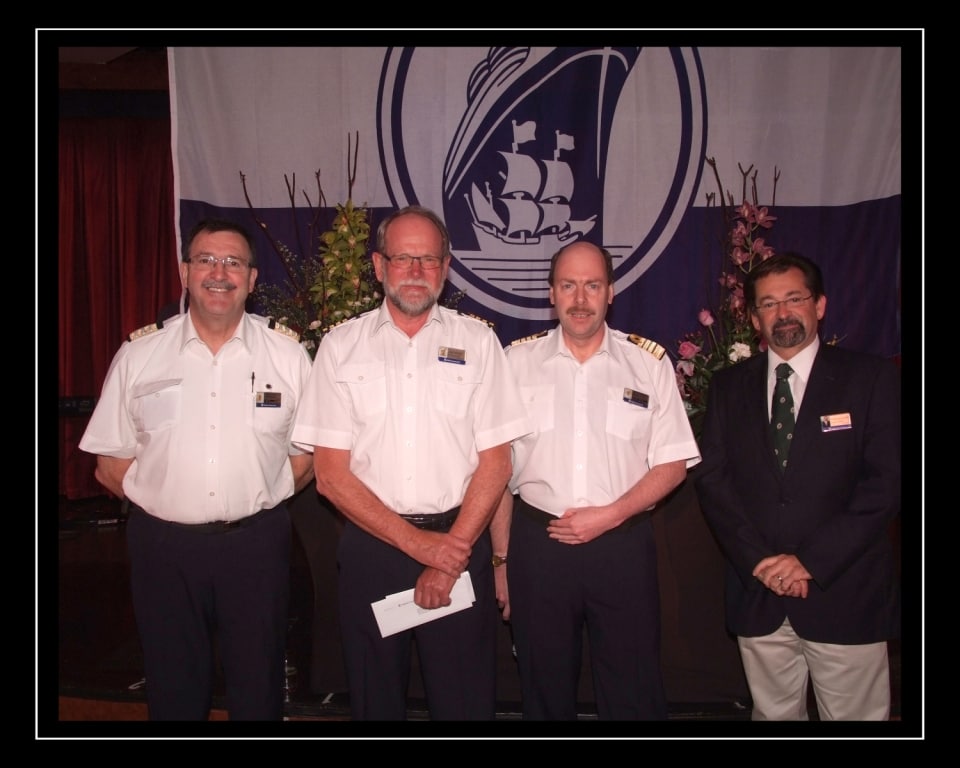
Special presentation for Jaap Wisse (second from the left) during the Mariners party.
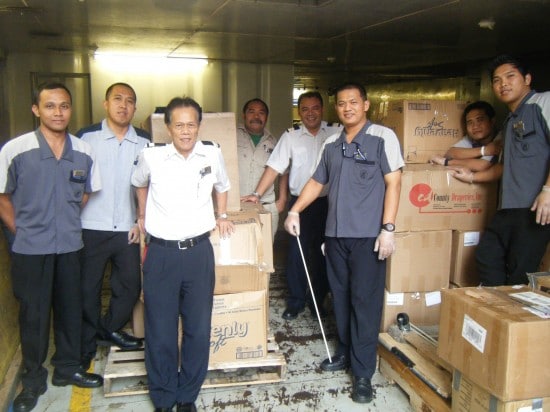
On December 30th, the Prinsendam made a large donation of curtains and diapers to the local rotary club of Port of Spain, Trinidad. This was a follow up to our previous donation in Manaus, Brazil on December 12th. The local rotary club (oldest established club in Port of Spain being 54 years old) will take care of further distribution.
Here is a picture of members of housekeeping and store room department offloading the boxes. Photo by Mike Willock, Prinsendam’s human resources manager.
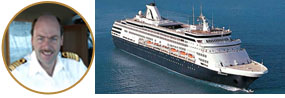
Captain Albert is Prinsendam’s master.
Captain Albert
© 2026 – Captain Albert's Website and Blog –
Theme by Anders Noren — Up ↑