Deventer Van, Hendrik Leonhard
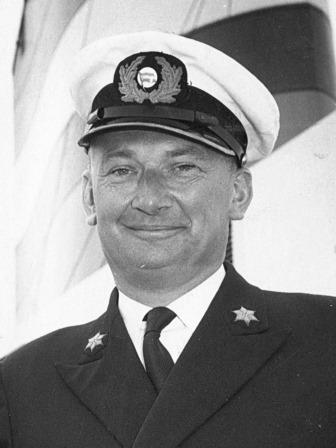
Captain Hendrik van Deventer while captain in the ss Ryndam in 1959
Hendrik Leonhard “Henk” van Deventer was born on 18 June 1917 in the city of The Hague. His father was Hendrik Wilhelm Johannes Jacobus van Deventer. (30 Nov.1887 – 21 May 1982) and worked for the National Government as a Civil Servant involved in the supervision of National Health. His mothers name was Anne Catharina Klaassen (born 06 Sep. 1891). (b)
There were three sons in the family, there was Hendrik himself as the oldest and then two younger brothers: Andre Lodewijk Wilhelm (03 May 1922 born in the Hague) and Wilhelm Hendrik Johan (10 September 1930 also born in The Hague) In 1915 an earlier child (also Henrdrik Leonardus) had been still born. The second son received the name Hendrik with the second name Leonhard after his grandfather.
Before he went for his sea education he lived at Elandstraat 1c, The Hague. (This is a first floor apartment which still exists) The road was bordering an estate with streets all named after Dutch Naval heroes. Also his grand father(Hendrik Leonhard van Deventer 02 Sept. 1854 – 16 March 1917) was involved with water and worked as an Inland River Skipper. Having a Rhine River barge with the assumed length of 192 meter and travelling between Rotterdam and Basel. 192 meters is too long for a single self propelled barge but in those days it was normal to run combined barges, e.g. where some where pulled as they did not have own propulsion.
Then there is another “salt water” connection. His grandfather married Berendina Houtman (17 June 1852 – 30 March 1925). She was a descendant of Cornelis Houtman (1565 to 1599) A famous Dutch Explorer who discovered a new route to the (Dutch) East Indies and thus created the Spice Trade for the Dutch. De Houtman was known to have a “chip on his shoulder” and that might have trickled down the ages because when Mrs. Houtman married her beloved Rhine skipper, her family threw her out as she was marrying below the family standards.
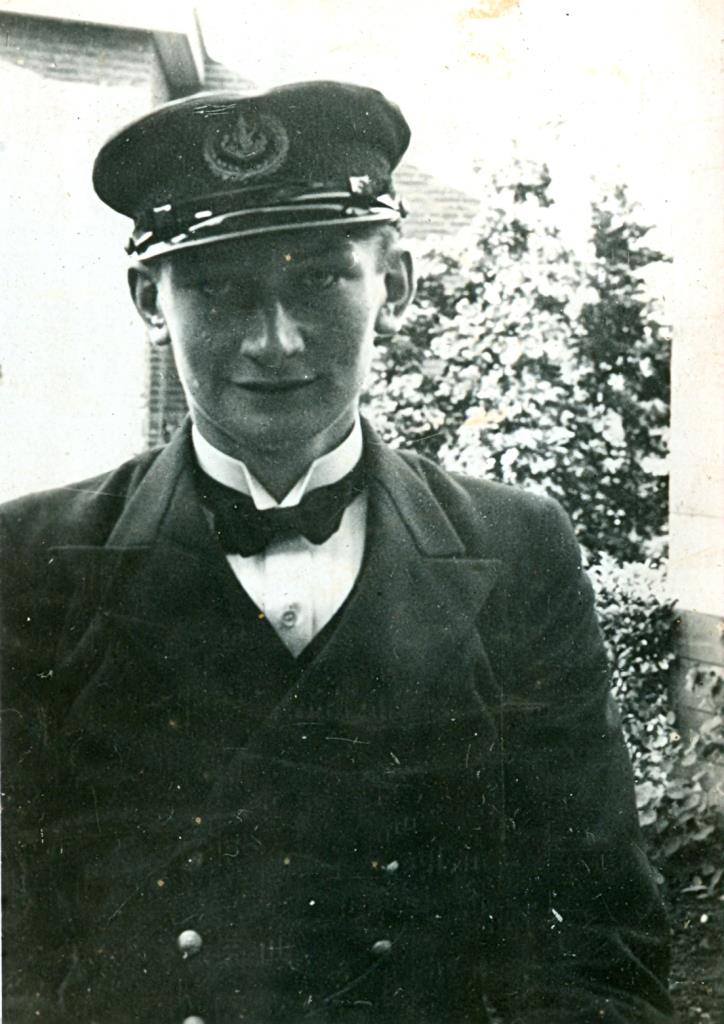
Cadet van Deventer in 1936 in his School Uniform.
All of this might have resulted in him deciding to go to sea and at the age of 16 he was accepted by the Maritime Academy, the “Kweekschool voor the Zeevaart” in Amsterdam on 02 Sept. 1935 and enrolled in the two year course. As pre education he had 3 years of “Gymnasium” which is the highest school tier in the Netherlands schoolsystem, so sufficient mathematical knowledge for the 2 year course.
His school records indicate that his performance was average to good with a special interest in practical activities. When he ended his study in July 1937 he was rated as number 6 of his class.
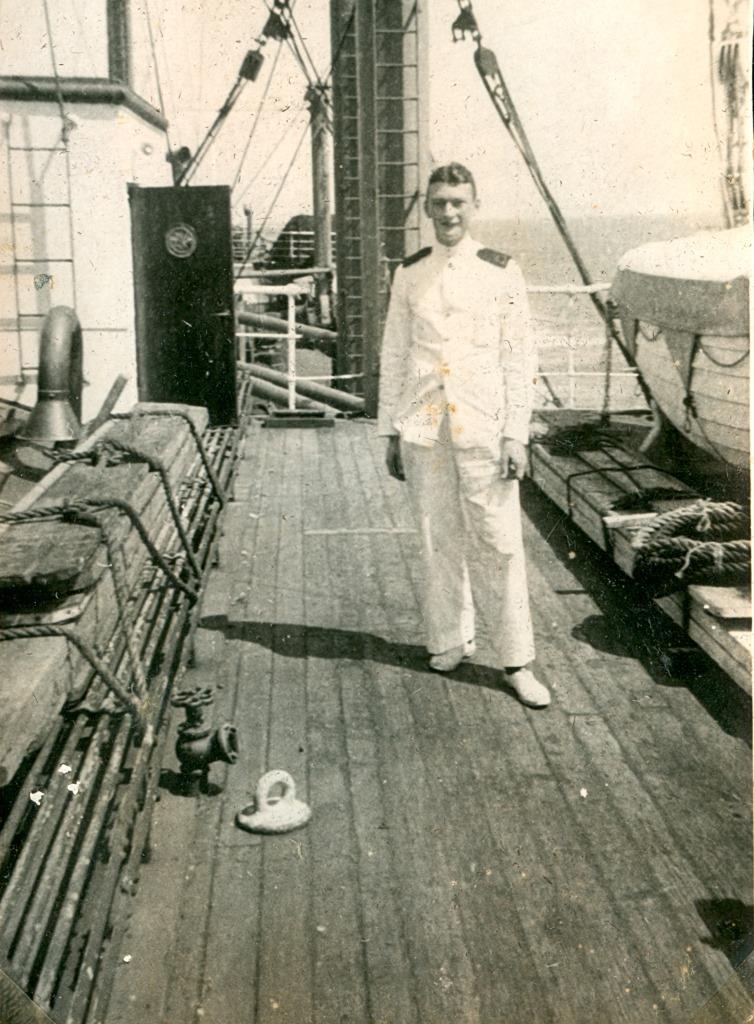
Van Deventer as Cadet on board the ss Binnendyk. Although cargoships could be very dirty, Holland America still insisted that a full white uniform was worn sailing in tropical weather.
In Aug. 1937 he was assigned as a cadet to the Holland America Line and left on 19 August 1937 with the cargo ship ss Binnendyk for the Gulf of Mexico. He remained his whole cadet year with this ship.
On 17 December 1938 he passed his exam for 3rd. Mate and was released from the Academy on 24 Dec. 1938 with both his school and sailing attests noted as Very Good.
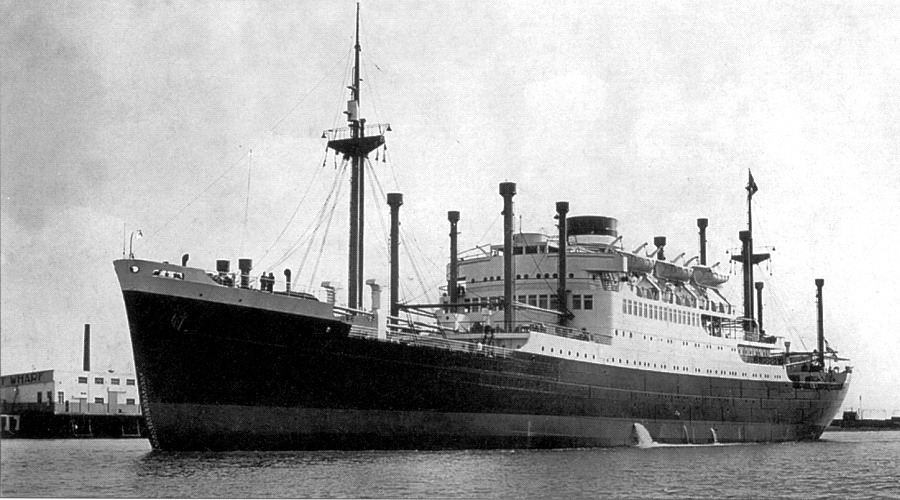
The ms Zaandam (II) seen here leaving Rotterdam for its maiden voyage with 4th. officer Van Deventer on board. (c)
He rejoined Holland America and was assigned to the ms Zaandam (II). This ship was the 2nd one of a class of 4 passenger cargo ships built for the intermediate service to New York. The large passenger ships were on the “Express Service” with calls at France and England and this intermediate service was meant to sail only between Rotterdam and New York. The first ship was the Noordam (II) of 1938 and the idea was to name the four ships after the compass points. Eventually there was also Zuiderdam (I) and a Westerdam (I) but for unknown reasons the 2nd ship was not an “Oosterdam” (that would have to wait until 2003) but the 2nd ship received the name Zaandam (II). He joined for the 3rd. trialtrip followed by the maiden voyage and then remained with the ship until the WWII started.
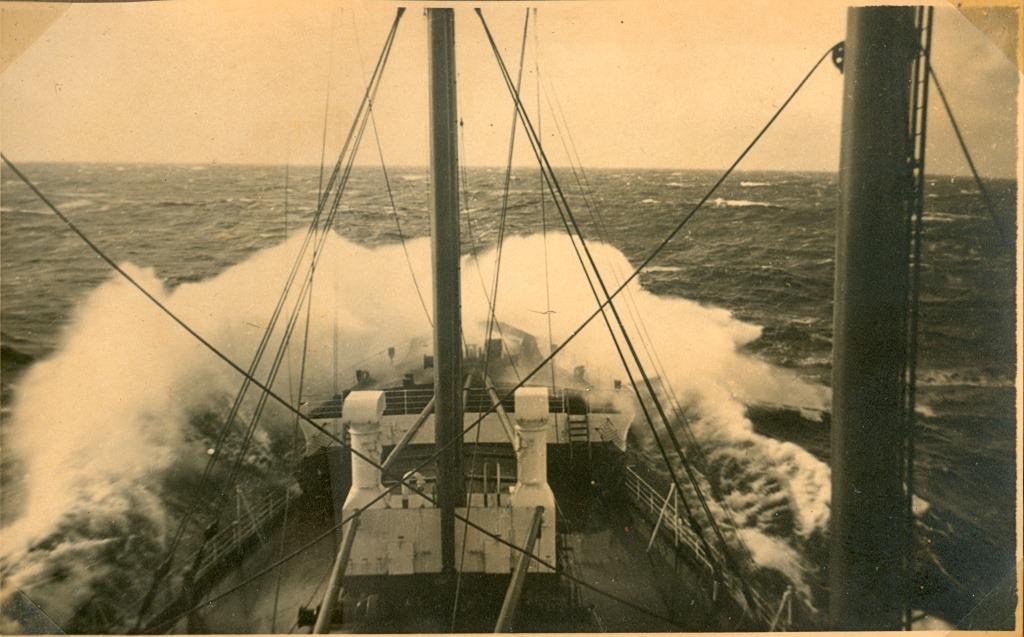
Van Deventer was a keen photographer and later filmer and this is a shot by him of the ms Zaandam bow seen here pitching into the waves during a stormy crossing to New York
Here he was somewhat lucky as just before the war started he was called for a commission as Ensign with the Royal Netherlands Navy but never made it as the war broke out. Had he stayed with the Zaandam, then he might have gone down with the ship in 1942. Now he was alive but was stuck in the East of the Netherlands for the duration of the war.
He found himself a job with the “Crisis Controle Dienst or “Crisis Control Department”, founded in 1934 (as Centrale Crises Controle diesnt or CCCD) by the Dutch Government to combat black marketeering during the depression .This entity had been sending out inspectors to check if farmers where reporting the correct number of livestock on their farms.
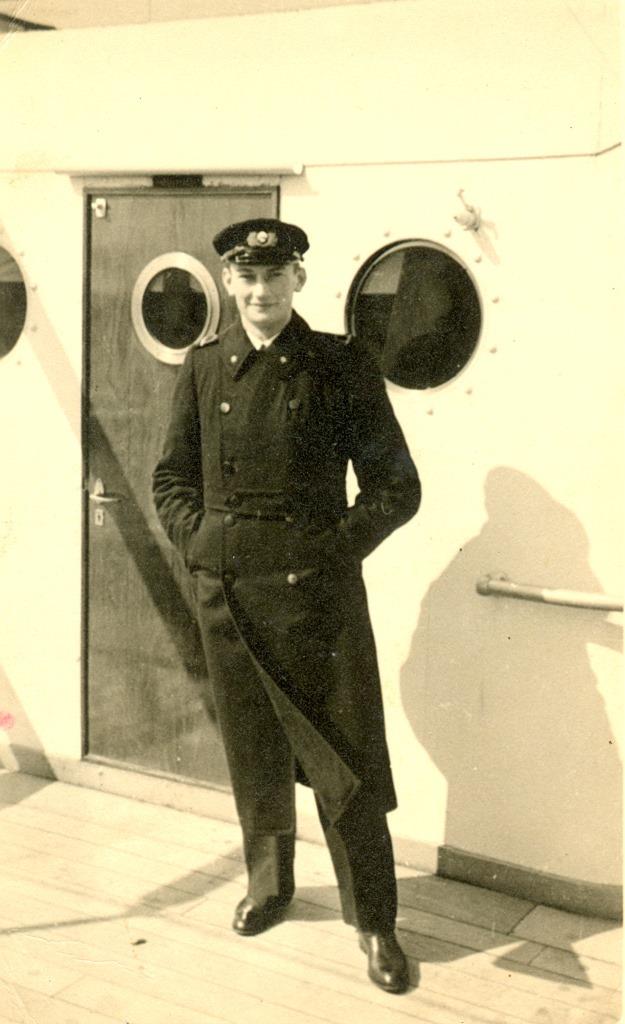
4th. Officer Van Deventer in his watchkeeping coat on board the ms Zaandam in 1939. This coat was called a “Bernous” and had elaborate embroidery of black tripe on the arms. (Just visible on the left arm). Holland America required each officer to have one for watch keeping in bad weather and it had to be purchased by the officer himself at a cost of nearly a months salary.
When the war came, the CCD was still active but now became a tool for the occupier. With everything rationed the occupier was afraid that milk, cheese and meat might end up on the black market or used to feed those in hiding. Surplus livestock was confiscated and used for the greater good of Nazi Germany. Black Marketers were arrested and often executed.
Taking a job as with the CCD could be considered “helping the enemy” but could also be used for helping the Dutch population. Van Deventer was assigned to the section East Arnhem which had many farms, but close to Arnhem, also forests which were very popular with the army for excercises. (The Allied Forces would learn this later to their regret when “Operation Market Garden” came across stiff resistance from German forces recuperating there and the “Operation” had to be aborted)
Van Deventer solved this problem of not colluding with the Occupier, very simply by letting the farmers, due for inspection, know that he was coming the next day. They could then remove “the surplus” out of sight for the day of inspection. He would arrive on his bicycle and then the “carousel” system was implemented. When it was not possible to hide the “larger surplus /above quota”, e.g. cow(s), horses and sheep, they were walked out of the stables at the back and around the farm while Van Deventer walked into front of the stables counted what was there and then left through the back door while farmer and animals re-entered through the front door. So he did not see anything and could truthfully note the numbers that he had officially observed. This worked both ways. Too many horses and the count went down. Not enough horses to balance the books and one or more horses made another circle through the stalls.
Because of his function for the CCD he had a travel pass issued by the Germans so he could travel freely through the area of his responsibility to reach the farms due for inspection. The pass also covered his bicycle, to avoid confiscation, as this as the only way to get around for his work. This also gave him the chance to “spy” on the locations of the enemies Anti – Aircraft gun emplacements and tank locations which were hidden, well camouflaged, in the fields and forests. Being a navigator he used his nautical skills to pin point these locations very exactly. By means of a pocket chronometer and a pocket sextant (most likely a “bubble” sextant which works without the need of a clear horizon for a measurement) he was able to note the locations down in Latitude and Longitude. (Not unlike air pilots did in the days before GPS).
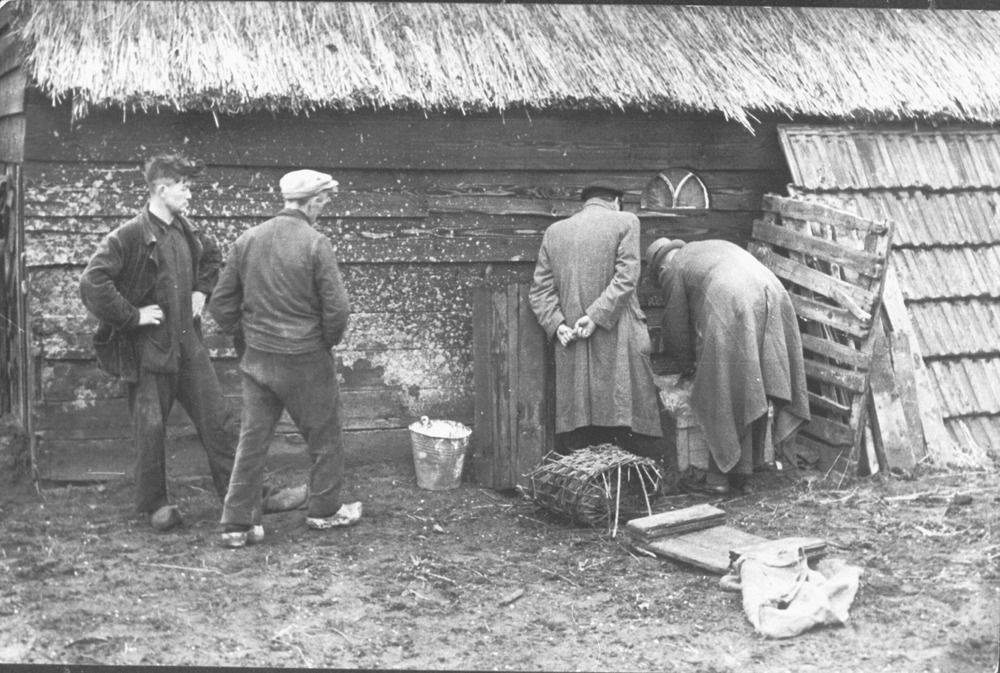
The CCD in action. This is a photo of how a visit to a farm would go. Walking around and looking at everything that might be suspicious. A good inspector would not find anything “suspicious” unless it was related to Black Marketering. (Photo courtesy: Website Oorlogsbronnen, for which my thanks)
The story goes that he even managed to do this once through the toilet window at a farm. This information was then delivered to a contact person of the Dutch Resistance who then forwarded the details to the Canadians who as part of the Allied Forces had been given oversight of The Netherlands. It was not unusual for Allied Airplanes to show up the next day to bombard or strafe the reported location. He was never caught and must indirectly helped to provide food on the table for many who were hiding in the surrounding areas and he also might have saved some Allied airplanes from being shot down.
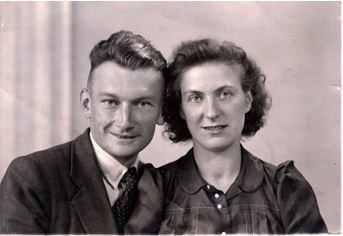
Henk and Nelly when getting married in 1946.
While of his travels he met his future wife Petronella Josephina “Nelly” Goris (born 02 March 1923 – passed away in 2013). She was employed in a distribution office for food and other ration coupons and she was also “creatively” dealing with her work. In the end they both came under suspicion and escaped across the river to liberated territory around the city of Nijmegen.
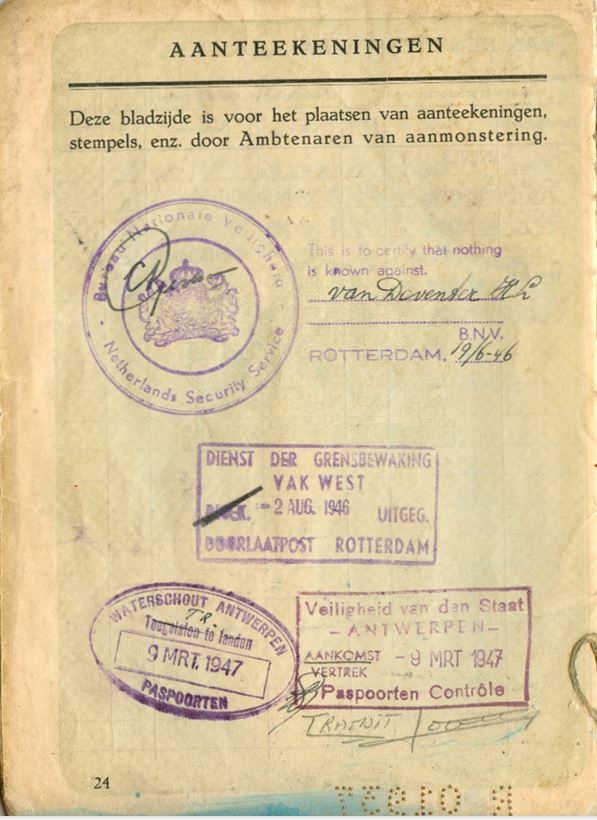
Page 24 of his seamans book with the Clearance stamps to confirm he was a “good” Dutchman.
Although The Netherlands was fully liberated on 10 May 1945, he could not yet return to sea directly, as he first had to proof that he had not been “collaborating” with the enemy due to being employed by the CCD. This took until 19 June 1946 before he had all his clearance stamps. Then he could also marry without any problems, what then happened on 01 August 1946 in the City of Nijmegen.
The above scan from the Dutch Seamans book is of interest as not many people know what was involved directly after the war to proof to be a “good Dutchman” again, when having worked through the war.
- Top stamp, Office of the National Security Service.
- Middle Stamp. Border Protection Office Section West.
- Security of the State (Belgium) Antwerpen 9 March 1947 Passport Control. (Normally they did not stamp a Seamans’book but the passport, so this must have been a special verification, while the ss Axeldyk sailed from Antwerp to Rotterdam.)
- Not documented, a letter by the Canadian Army command adivising the support work he did for them during the war.
After some years (1947 – 1950) having lived in the town of Zevenaar, where Nelly worked at the distribution centre, they settled down in the centre of Rotterdam, (Pleinweg 212c, this was a 3rd floot apartment above a shop, which still exists), but they moved in 1959 to Ede, as she could not really get used to the big city and its very “outspoken citizens”. Also it was much better for the childeren to grow up in a small town like EDE, surrounded by forests and farmland. The story goes that Van Deventer biked around the province of Gelderland (Arnhem and Nijmegen where both located in Gelderland), biked through Ede and decided that that was it. The Dutch Government had appointed several towns in the East of the Netherlands to absorb the “overflow” from the larger cities in the West of the Netherlands and had built a large estate in the old farm town with(for those days) large and modern townhouses that could be bought for a very good price. The town was very popular with HAL officers (and those of other company’s such as Rotterdam Lloyd) as it had an excellent train connection with Rotterdam. The funny part is that their house was in the Wilterdinkstraat again leaning onto an Estate named after Dutch sea heroes and now his own house was again next to a similar estate.
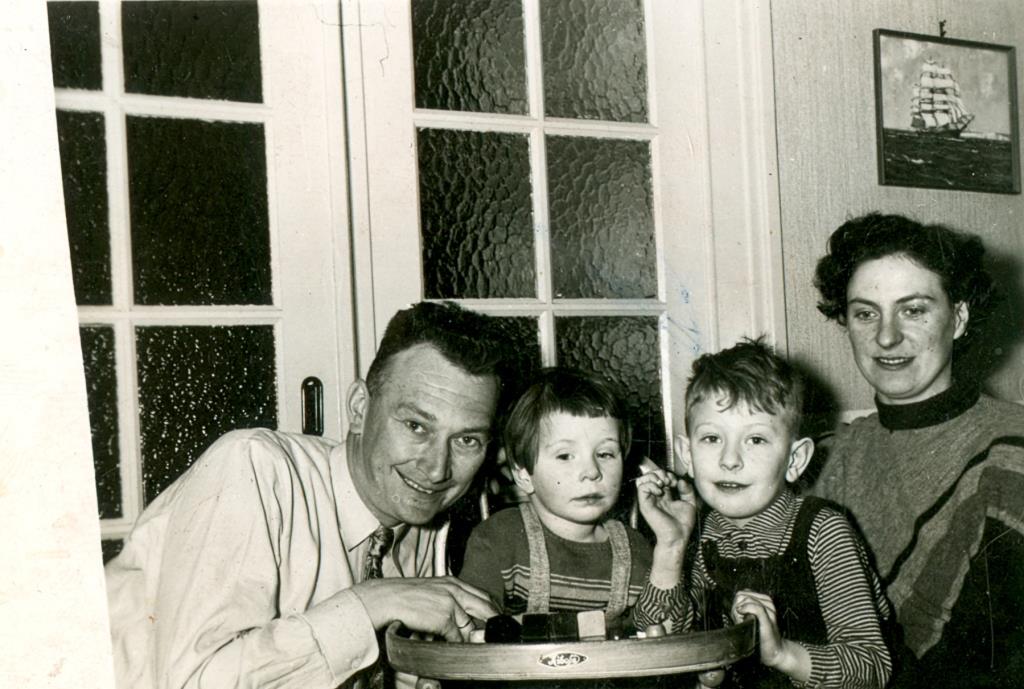
Photo from 1953 of the family with the Children Rob and Erna.
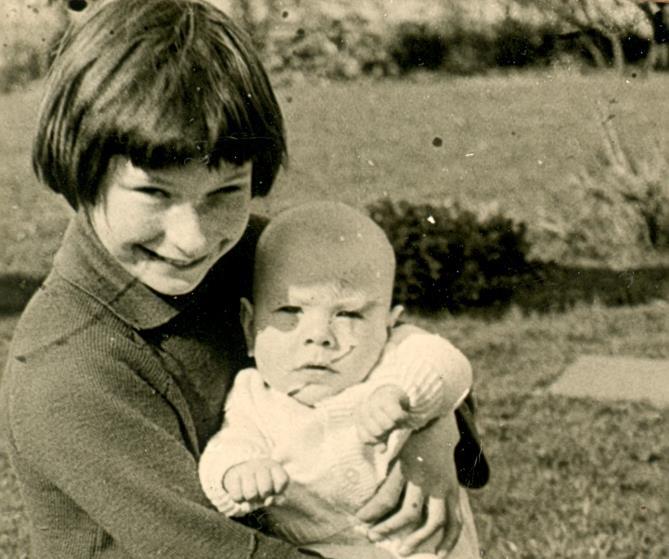
Son Ruud was born in 1960 and is seen here held by his older sister Erna in 1961
Eventually there were 3 Childeren: son Ron (1947) , daugther Erna (1950) and son Ruud (1960)
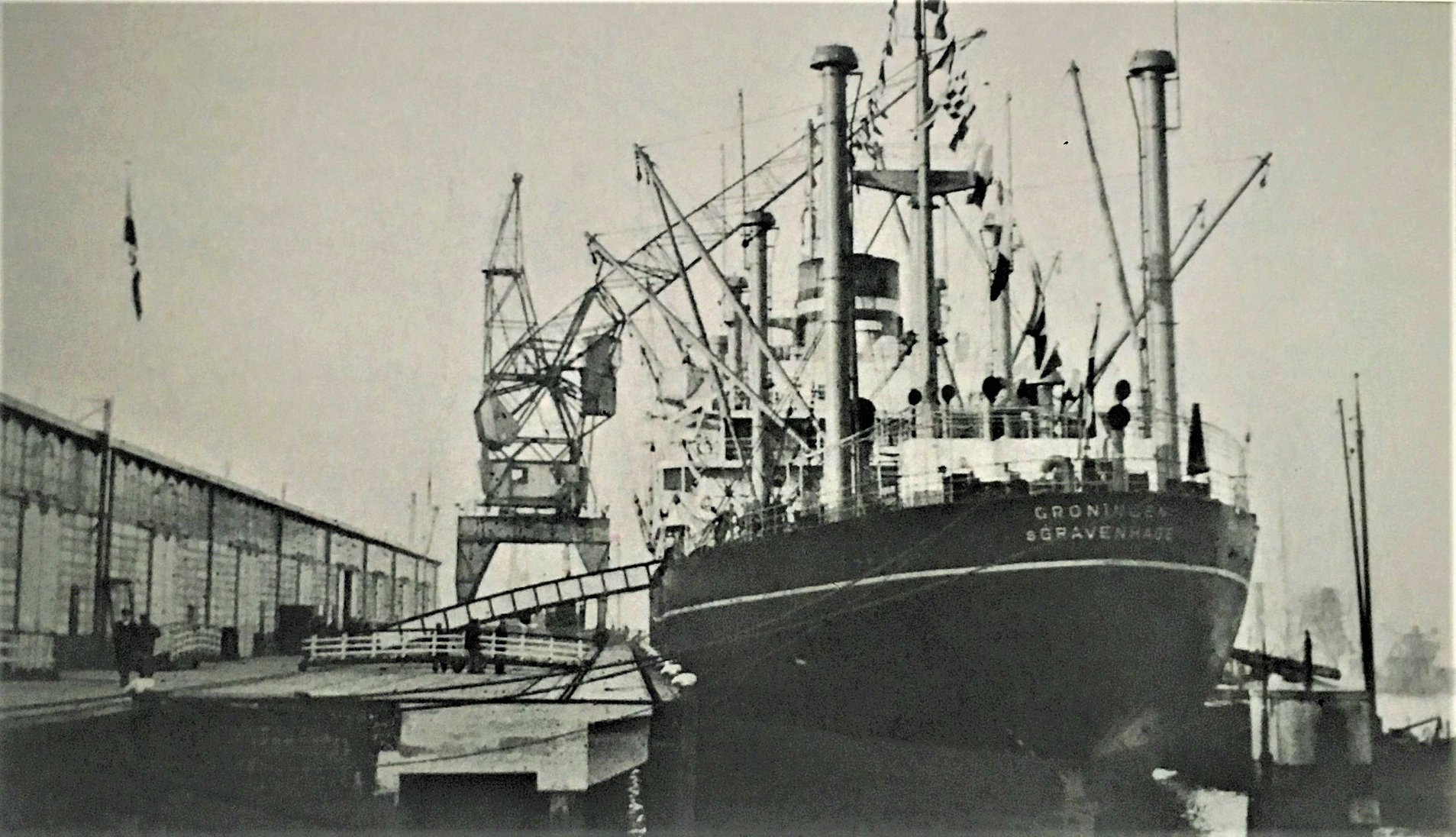
The ss Groningen on arrival Rotterdam. The funnel is already painted in HAL colours, the stern still bears the name Groningen. (c)
Holland America had lost of about 50% of their ships during the war and was very busy with getting new ones. Some of them came from the Dutch Government who had been shopping around before the war ended and some came out of the war surplus of American Liberty and Victory ships of which there were plenty available after the war. The Dutch Government assigned one of their own newbuilds to Holland America Line, a cargo ship named the ss Groningen ( This was one of a whole series of ships all named after the Dutch Provinces). Crews were needed and 4th. Officer Van Deventer had his job back, which included now travelling by ship to New York and from there by train to the shipyard in Chester to collected the ship which at that time was still owned by the Government. On 07 October 1946 the ship was taken over and under the command of a HAL captain (Captain Pieter Verhoog) the ss Groningen sailed for Rotterdam where it arrived on 05 November and was then duly bought by the HAL and renamed in ss Andyk (II) the next day.
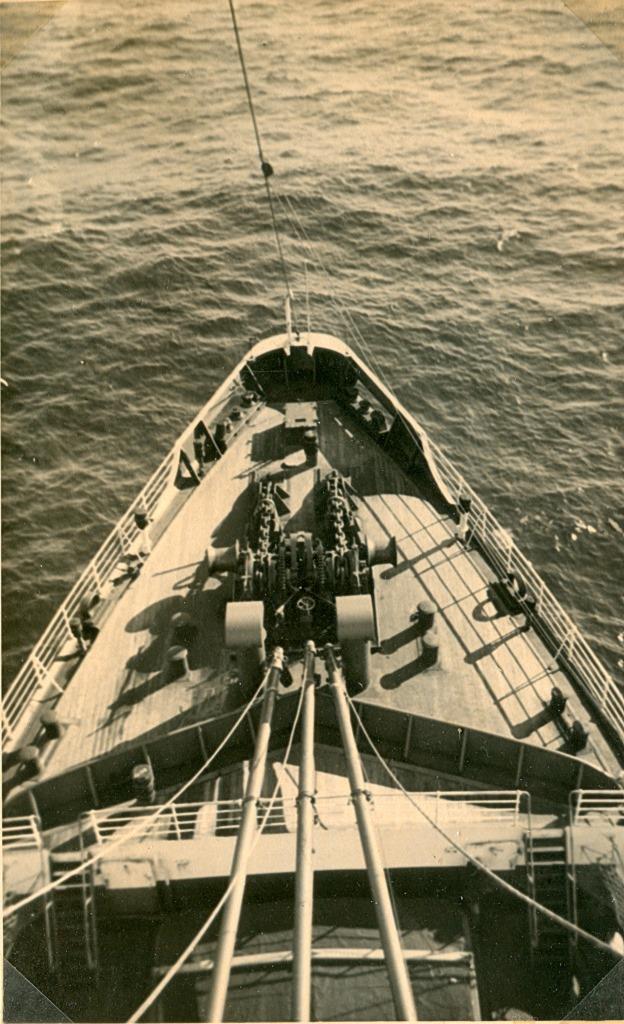
4th. Officer van Deventer climbed to the top of the mast on a nice day to take this photo of the bow of the ss Leerdam (II)
Van Deventer did not stay with the ship but was transferred to the ss Leerdam (II) who sailed a few days later from Rotterdam. Now the HAL “senority rotation” system started to kick in, whereby you rotated from the oldest / most junior ship to the more senior (passenger)ships. Then with promotion to the next rank, the rotation started again.
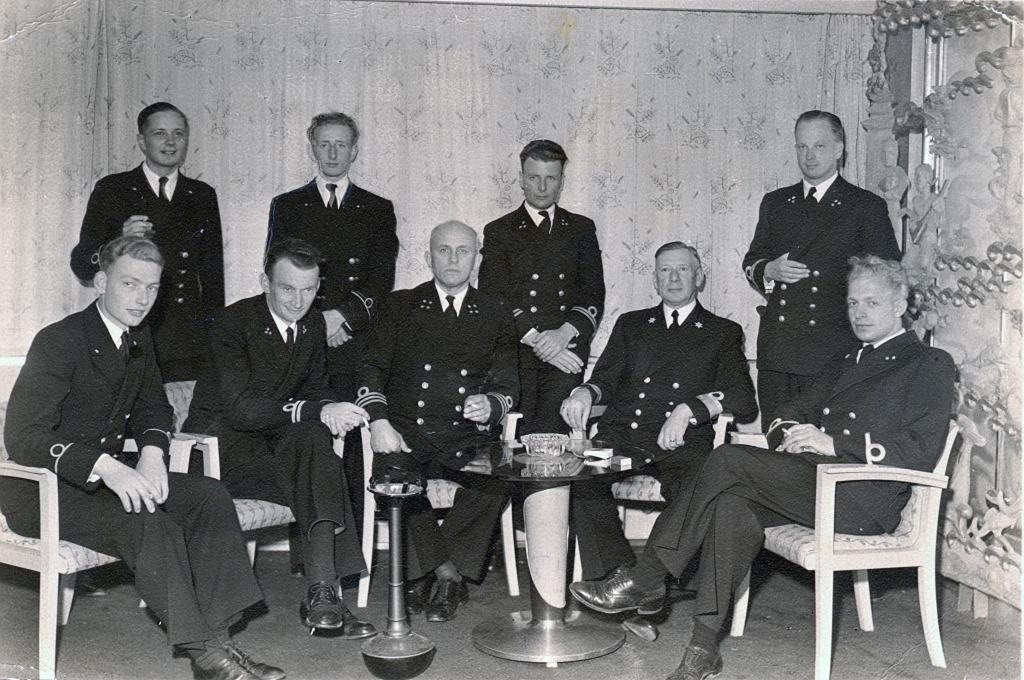
Commodore Vlietstra and the whole deck department of the Flagship Nieuw Amsterdam (II). This must have been a special occasion as cadets (see left ) would normally not be invited to the captains cabin. Van Deventer is the 2nd of left sitting down.
That rotation would bring him as 2nd officer to the Flagship Nieuw Amsterdam (II) in 1948 indicating that he was ready for his next rank -seniority wise- as long as he had his First Mate’s ticket. That he obtained in September 1950 and was nearly at once promoted to Chief Officer.
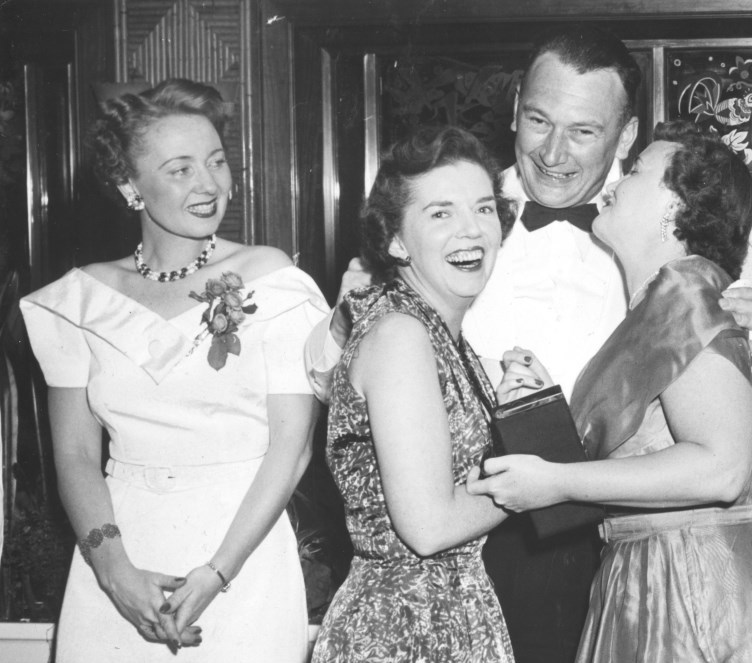
As Chief Officer on board the ss Maasdam (III) in 1954 during a Bermuda Cruise. Enough pretty girls around to not to be bored.
Again a rotation should have started but due to the influx of new ships, either bought or built, that did not happen and he went from the cargo ships Aardyk & Arnedyk directly to the passengerships ms Westerdam and ss Maasdam.
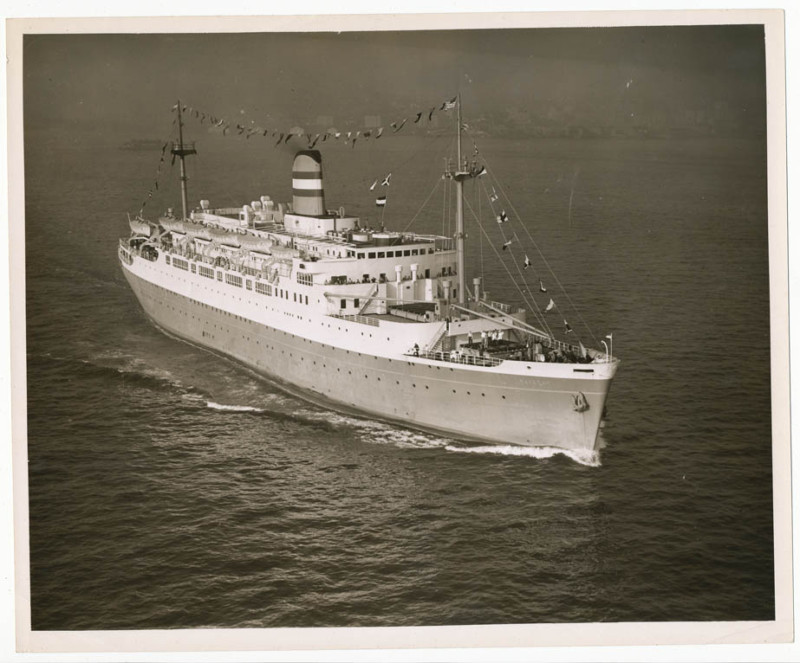
The ss Maasdam (III) from 1951 with 16,000 tons and 39 First Class and 854 Tourist Class. this was a high density ship but together with her sister she was very popular as the ticket prices were very reasonable.
This ship was involved with North Atlantic crossings in the summer and made a large number of cruises in the winter. These were from New York and mainly went to Nassau and Bermuda (Hamilton or St.Georges) for seven day cruises or when longer to the West Indies, often as far as Cartagena in Colombia.
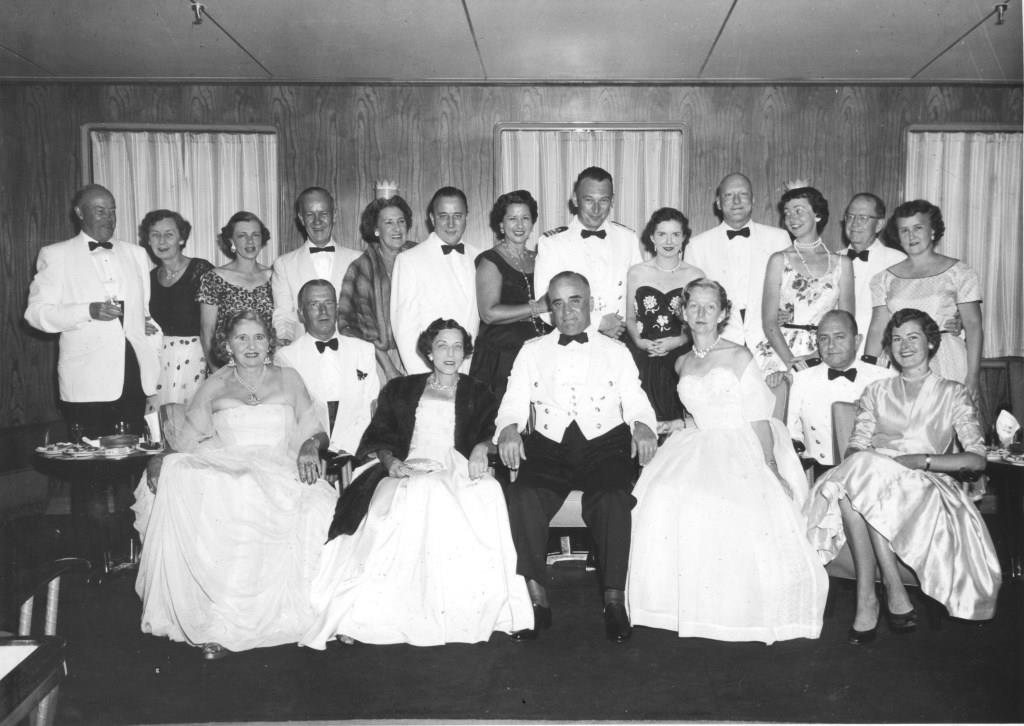
This photo was taken during a cruise from Norfolk in 1954. In the center Captain Gaart, commander of the ship with behind him chief officer van Deventer. Those were the days when dressing up was an importnat part of the cruise experience. Every Seaday ws a formal night, except sundays.
While on the ss Maasdam (III) he was present when the ship had a collision with the Swedigh cargo ship, the ms Tofevo while outbound from New York. Van Deventer was not involved with the navigation when it happened as the Captain was on duty during the fog navigation. But as Chief Officer he was deeply involved in the repair work at the shipyard when the ss Maasdam returned to New York on 3 October 1954 for repair work. The Maasdam had hit the Tofevo full in the side and te damage was considerable.
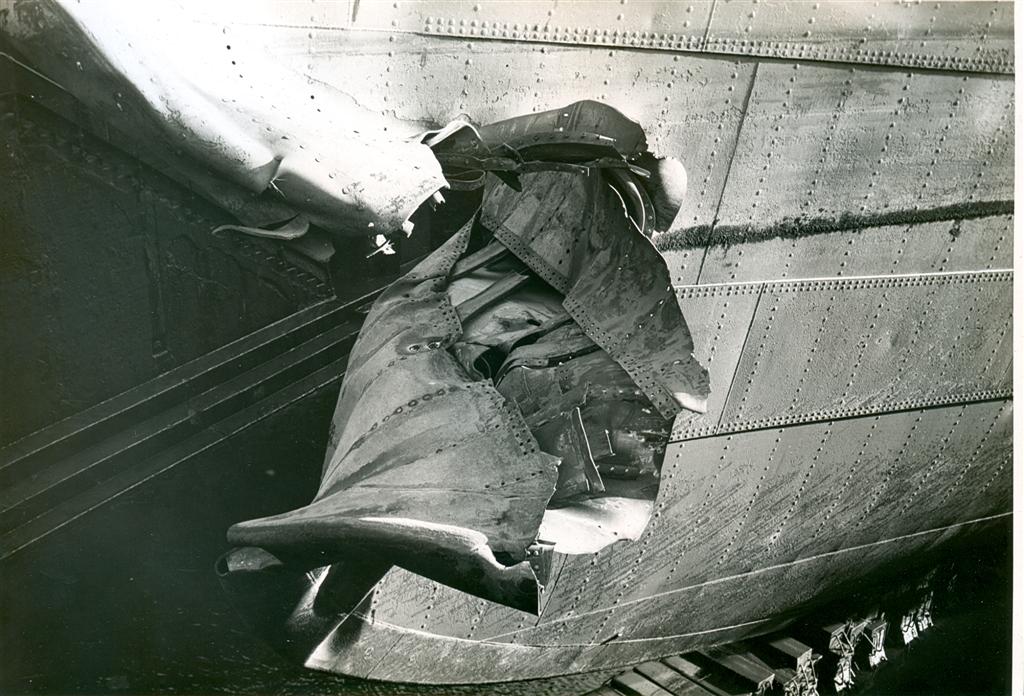
The Damaged bow of the ss Maasdam (III)
Because the bow had set in so much, it was necessary to rebuilt the whole bow section to bring back the structural integrity of the hull of the ship, so it would be able to withstand the North Atlantic Weather.
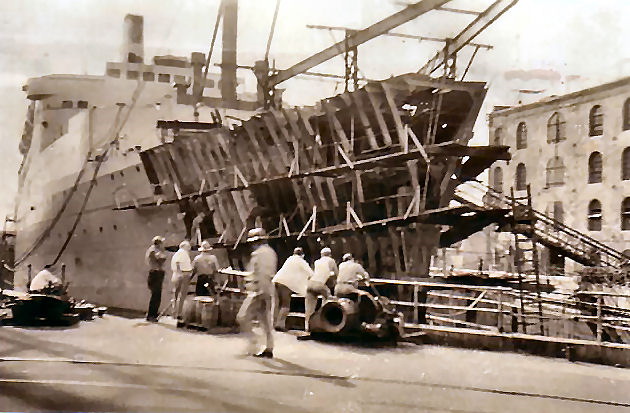
The bow of the ss Maasdam (III) Stripped back to Hold nbr 2. so that new hull plates could be attached to the repaired frame of the bow,
Just before in May 1954 he had also been present when the Maasdam was the first HAL ship to receive stabelizers. First there had been a Dutch prototype, invented by the Royal Netherlands Navy, which consisted out of a tipping fin at each side of the ship, forward of the midships. During testing, it became apparent that these fins sent the bow even deeper into the water as the ship normally already did by itself. (The Ryndam and Maasdam were known among the passengers as “the Submarines” as they tended to to dive into every wave that was out there).
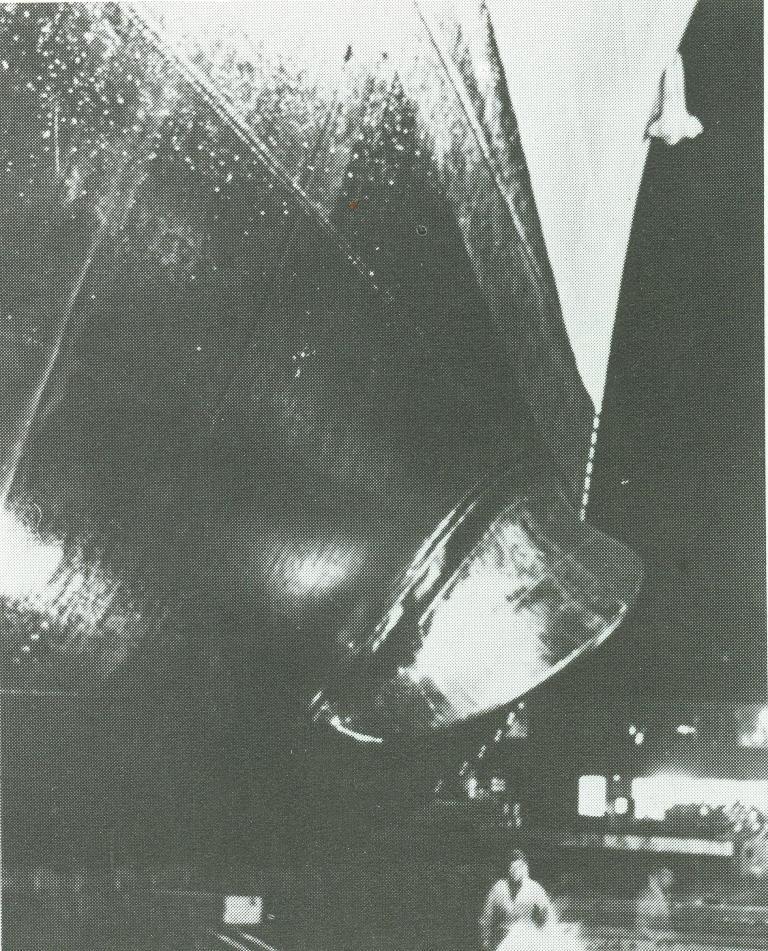
The first stabilizing fin attempt which almost made the ship dive underwater when tested.
These fins were removed at once and then Sperry Stabelizers were installed, which had already proven themselves after having been installed in 1951 on the intermediate liners Parthia & Media of Cunard. The fins worked well and then the rest of the passenger fleet also received them.
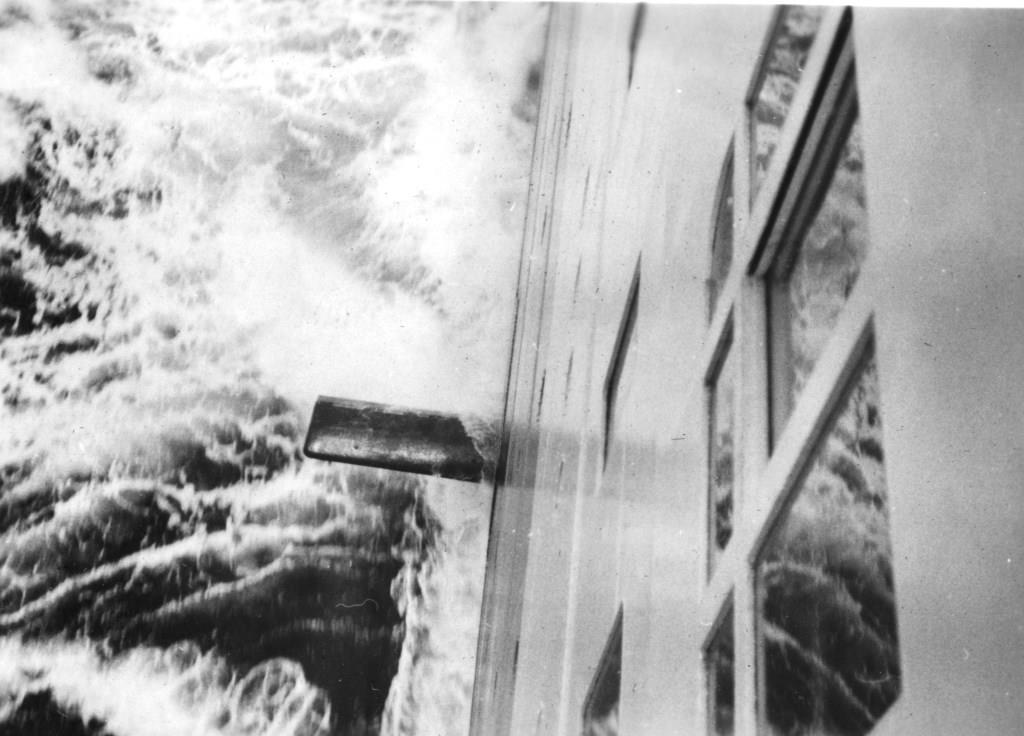
This photo was taken on 19 May 1954 during the trial trip with the proper stabelizer fins.
Stabelizers (one on each side) are operated by a gyroscope which measures the angle of the “upright” ship with the horizon. When that angle changes, it gives a signal to the fin motors to counter angle the rolling of the ship. The above photo was taken during the trial trip. During the testing there is the exercise to turn the signal around to see how much the stabelizer can make the ship roll instead of stopping the rolling. As one can see from the photo the stablizer induced roll brought the sb. fin well clear of the water. Then the signal is reversed again to see how fast the stabelizers can reduce the roll initiated. Normally stabelizers reduce the ships rolling by about 90%, as long the fins have enough flow, which is normally with speeds over 10 knots.
Van Devener remained on the ss Maasdam until August 1955 when he was promoted to Captain.
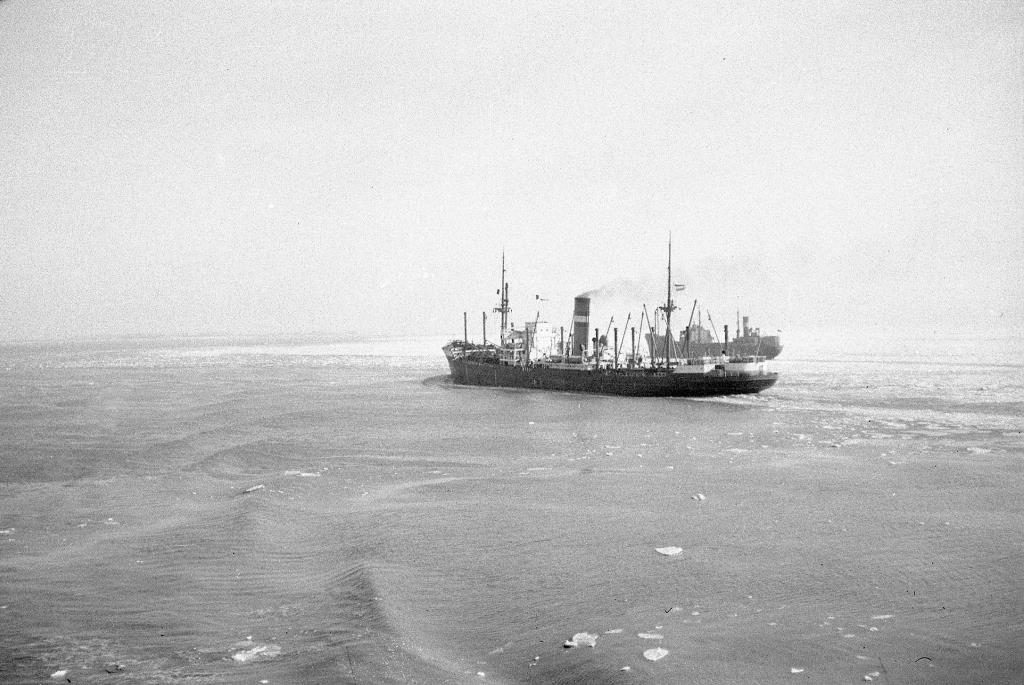
The ss Blommersdyk (II). A photo taken by Chief Officer Van Deventer in 1952 from the bridge of the ss Andyk (II)
On 14 September 1955 he was given command of the ss Blommersdyk (II) which was the oldest ship in the fleet. This was a sistership of the ss Binnendyk where he did his cadetship in 1937.
His next ship was the ss Duivendyk which was originally a German ship. Built in 1930 for the Hamburg America Linie as a passenger cargoship ss Vancouver with a passenger acommodation for 35. When the war broke out, she was laid up in Caracas Baai in Curacao and seized by the Dutch authorities when Nazi Germany invaded the Netherlands. In July 1946 she was handed over to the HAL as compensation for lost tonnage. The passenger accommodation made here eminently usefull for the North Pacific service to Vancouver and hence she received a name starting with a D, as all the regular ships on this service had D-names.
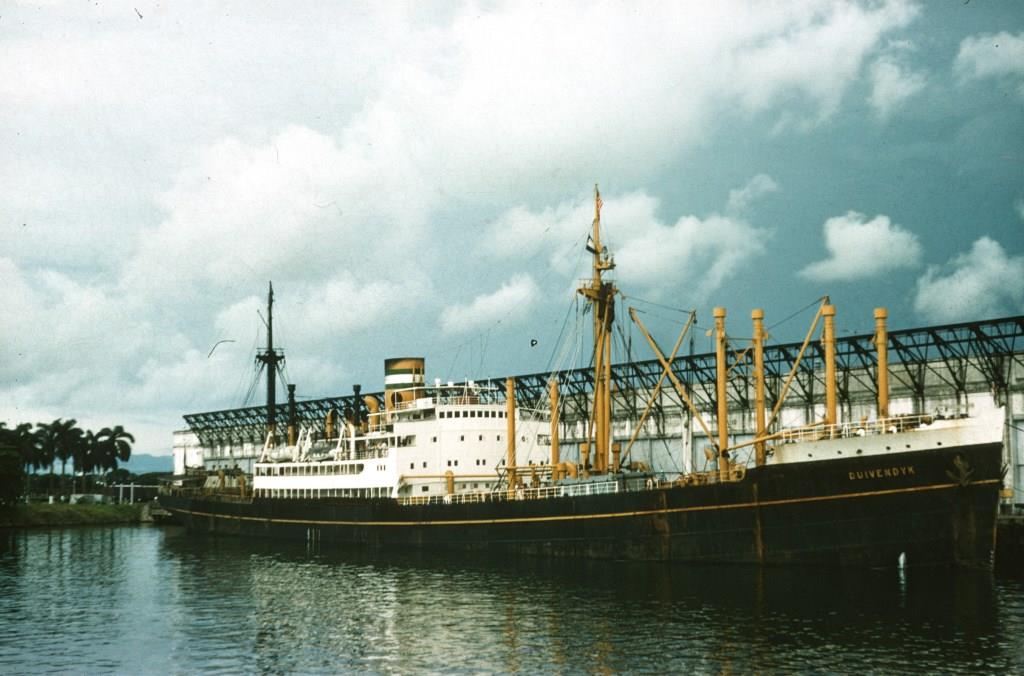
The ss Duivendyk seen here docked in Cristobal, Panama on 10 January 1957. (c)
Then the senority rotation started and slowly but steadily he moved onto ships with more and more passengers. But not before he had done a spell in 1956 on the Aagtedyk (II) which sailed in VNS charter (United Steam) and made 6 months roundtrip voyages from Rotterdam to the Far East, going as far as Bombay. This was repeated in 1958 when he sailed as a passenger with the ss Nieuw Amsterdam (II) to New York to take command of the ss Arkeldyk, which was employed on the New York- British Indies Line of Holland America. He made two voyages on this ship (voy. 68 & 69) and that meant he was away from home from June 1958 until April 1959, so nearly a year. This voyage went as far as Singapore and calls included Ceylon (later Sri Lanka) and ports in Indonesia. Once back in New York he sailed home again with the ss Nieuw Amsterdam as a passenger.
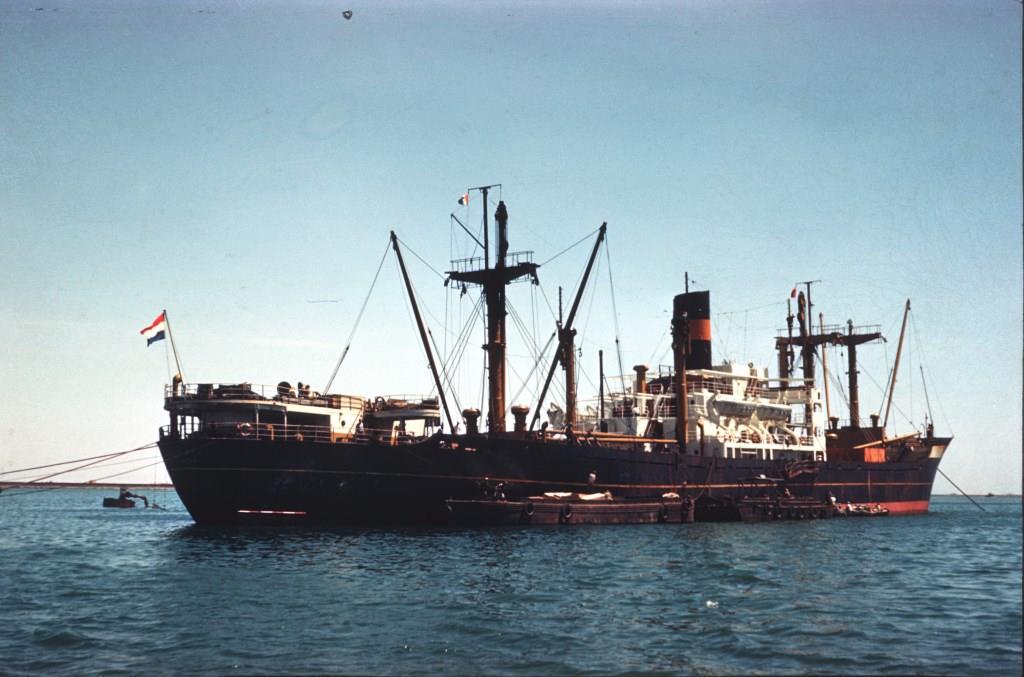
This photo shows the ss Aagtedyk (II) at anchor in Aden and loading from barges. This Victory class ship was built without air-conditioning and thus being here in the blistering heat can not have provided the summum of comfort.
Officers and sailors coming home from such a long time away, where then assigned to the ships sailing to New York and nearby ports on what was normally a month long voyage. Giving more time at home in between voyages. Van Deventer had the peculiar situation that he ended up on the ss Ryndam (II) for one voyage, although he was not senior enough for that ship. But Captain Van Dalen, the Master of the Rynam was ill and the ship had to sail.
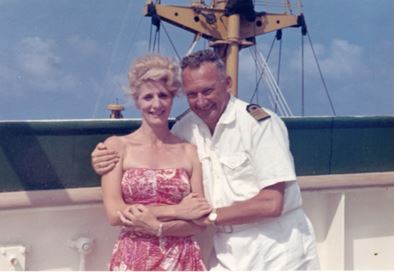
The recently promoted Captain Van Deventer with his english (future wife) Gloria Savoy.
By the mid 60’s Captain van Deventer had met an English widow called “Gloria” which caused him spent less and less time in the Netherlands. Initially his Dutch wife did not want to divorce him but in 1973 Dutch Parliament passed a divorce law which offered a lot of protection to wifes and children left behind and then she agreed.
His English “wife”, had 2 daughters and he settled down in Whitstable near Canterbury.
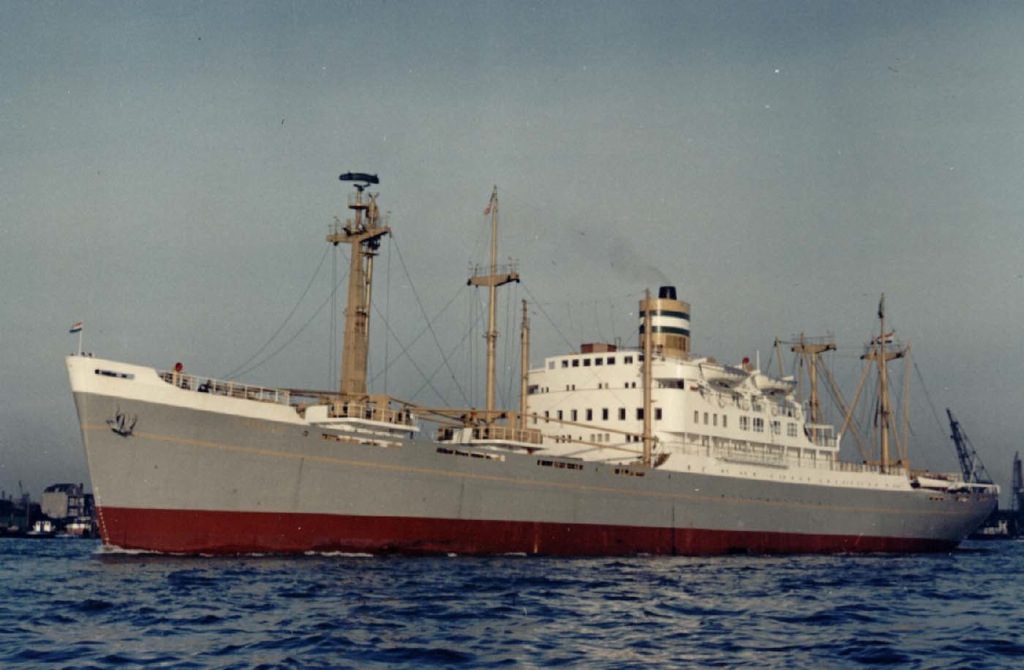
The ss Dinteldyk (II) which was apart from the passengerships, the first cargoship with a grey hull. Denoting that she was the flagship of the North Pacific service.
Then it was back to the cargships until 1963 when he was senior enough to be assigned to the passenger cargo ships sailing to Vancouver via the Panama Canal and he was given command of the ss Dinteldyk (II) This ship made 2 month roundtrips and had a capacity for 60 passengers in a one class accomodation. He remained with this ship for 6 months.
In the mean time Holland America had been extending their fleet with a new K-class and a G-class series of cargo ships and from then onwards his career was focussed on these ships, which mainly were in service to New York and the Gulf of Mexico ports.
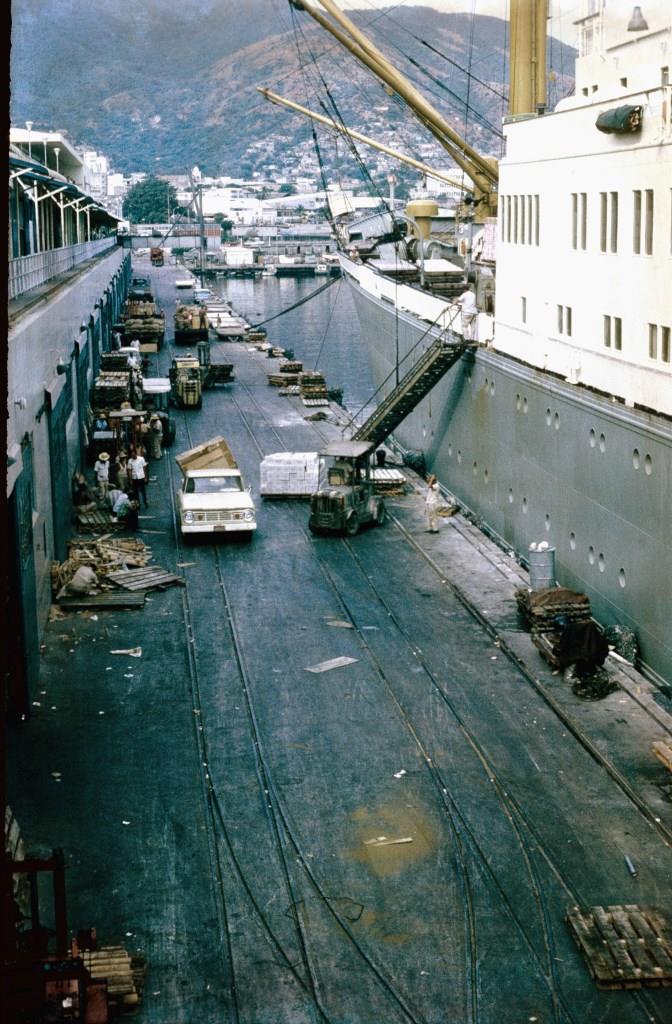
The ms Prinses Margriet alongside in Port of Spain, Trinidad. As a passenger cargo ship (111 pax. & 86 crew) she made 14 day roundtrips from New York. As every captain wanted to sail on her, Holland America rotated them after a few voyages Hence van Deventer never got a second chance for another spell.
In 1970 he was assigned for 2 months to a strange addition to the Holland America Line fleet, the ms Prinses Margriet. This was a ship (together with her sister the Prinses Irene) had been designed for the service to Montreal and the Great Lakes for a HAL subsidiary (50% ownership) called the “Oranje” or Orange Line as all its ships were named after members of the Dutch Royal Family of the “House of Orange”.
That service faltered and Holland America saw a possibility to operate a passenger cargo service from New York to the Caribbean. She remained in service until the end of 1970 and was never renamed as Prinses Margriet was (and still is now in 2026) the God mother of the Dutch Merchant Marine.
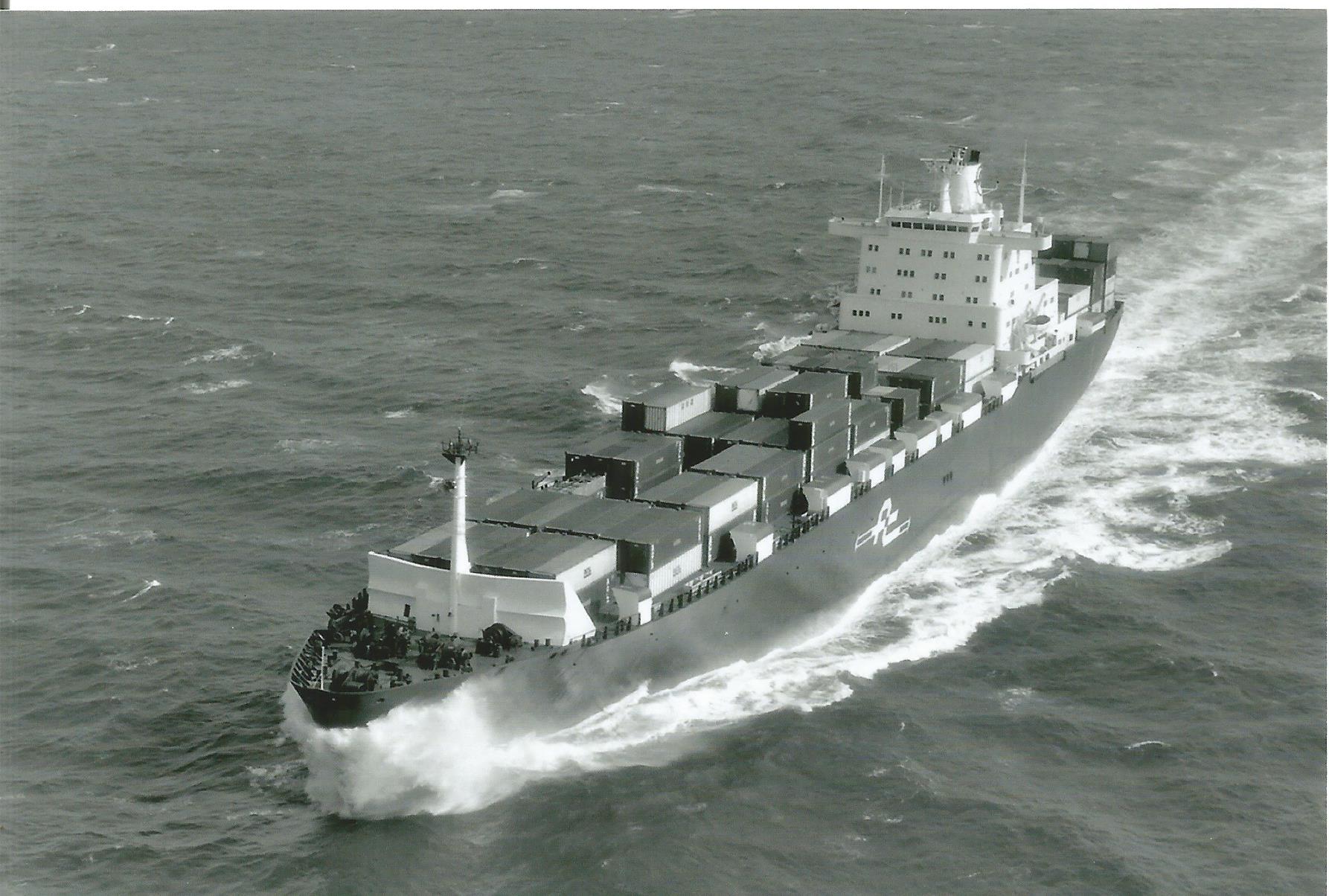
The ss Atlantic Crown. Because she was used for the express service, she was a steamship and could maintain 25 knots during her crossings. (c)
Also since 1967, Holland America had participated in the ACL or Atlantic Container Line. A consortium of several European company’s who saw their North Atlantic service diminishing and the containers taking over. Thus in 1967 HAL participated with two ships, the ms Atlantic Star and the ss Atlantic Crown. On 15 October 1970 Captain Van Deventer was assigned to the Atlantic Crown. He would return to these two ships on rotation.
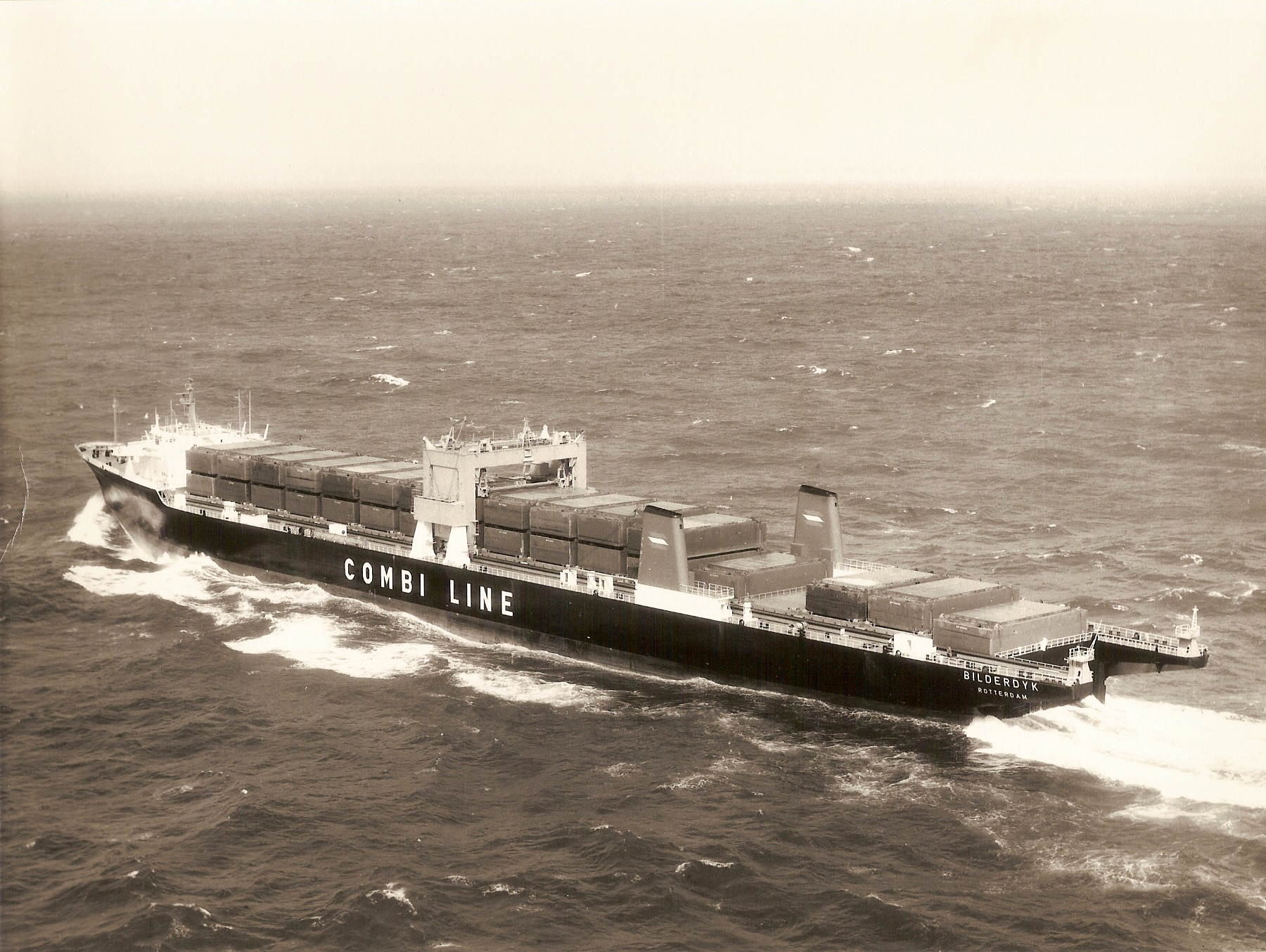
The ms Bilderdyk (II) going full speed through the English Channel.(c)
That rotation also brought him to the ms Bilderdyk (II). There was the demise of the conventional cargo ship trade to ports like Savannah and New Orleans where “Lash” ships and “Seabees” started to dominate, Thus Holland America had ordered two LASH ships. (Lighter On Board Ships). The ms Bilderdyk (II) entered service in 1971 but her sister was sold to the German company HAPAG-LLoyd and entered service as the ms Munchen. On 16 December 1972 he took command of the Bilderdyk for the first time and also would return to her several times on rotation. This ship carried 87 cargo barges on board and the idea behind the concept was to crane the barges of the ship while at anchor in a port. Then these barges would go up river to a shipper, while other barges that had come down river where hoisted on board and taken to Europe. The ship normally called at Bremerhaven, Rotterdam, Antwerp, Savanah, Houston, and New Orleans, making a 4 to 5 week roundtrip. The barges had the advantage that cargo once loaded at the shippers dock, could be sealed so there was no pilferage or damage during transfer in ports. And it reduced port time considerably, from sometimes several days to a few hours. The main products carried were paper products, grain and steel.
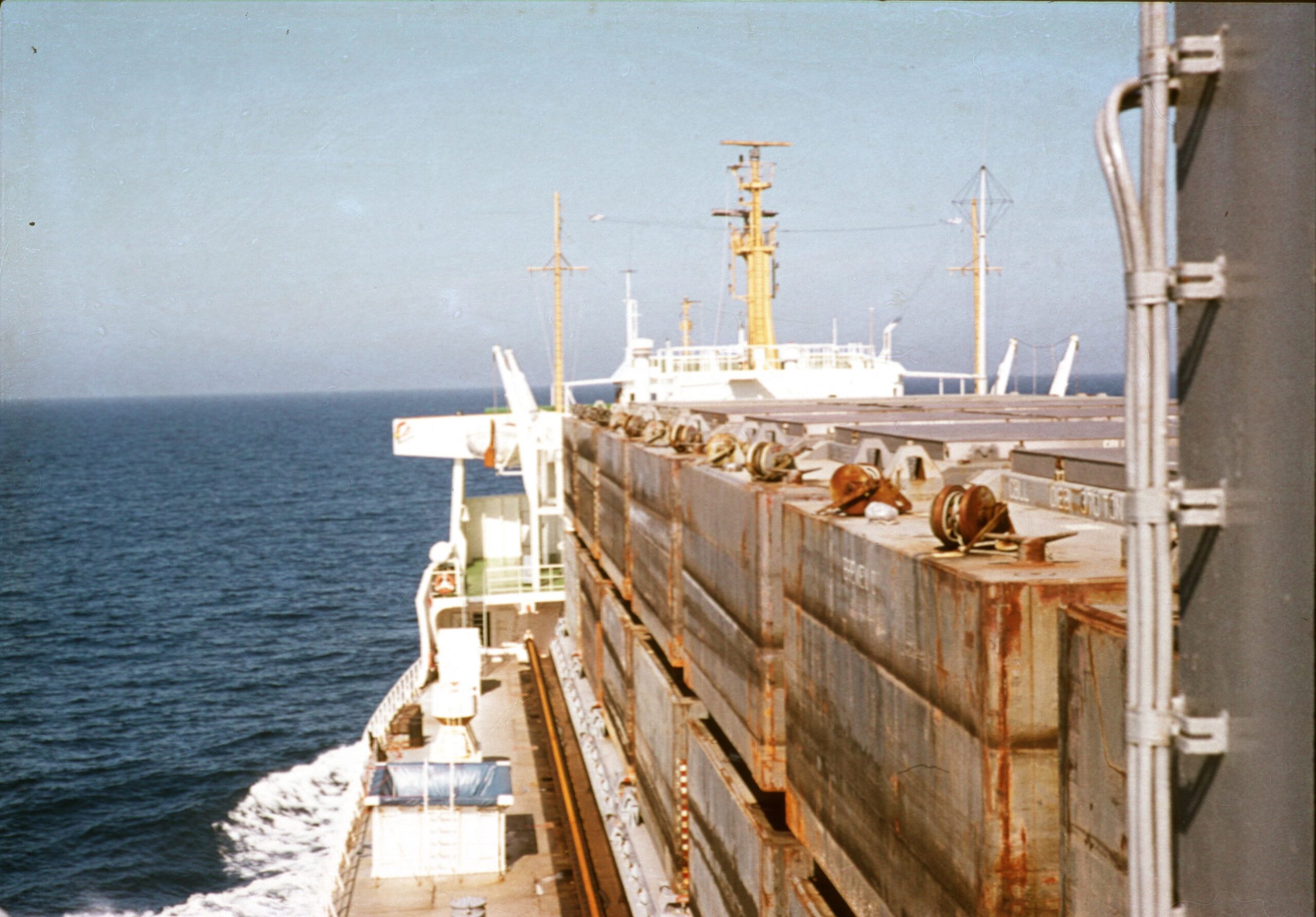
A view along the rows of barges stacked on the ship.
In 1974 Holland America decided to sell the whole cargo division to the Swedish company Bostrom, with a hand over on 1 January 1975. All Holland America Captains, Officers and Crew were given the option to decide whether to stay with the passengerships or go with the cargoships and started working for ICT. (Intercontinental Transport) of Rotterdam. Operational name Incotrans. The ships remained under Dutch flag and Dutch Labor laws applied. A good reason to go to ICT was that the pension plan was somewhat better than with HAL and also the basic wages. It is believed that this was the reason that Captain van Deventer decided to stay with the cargoships.
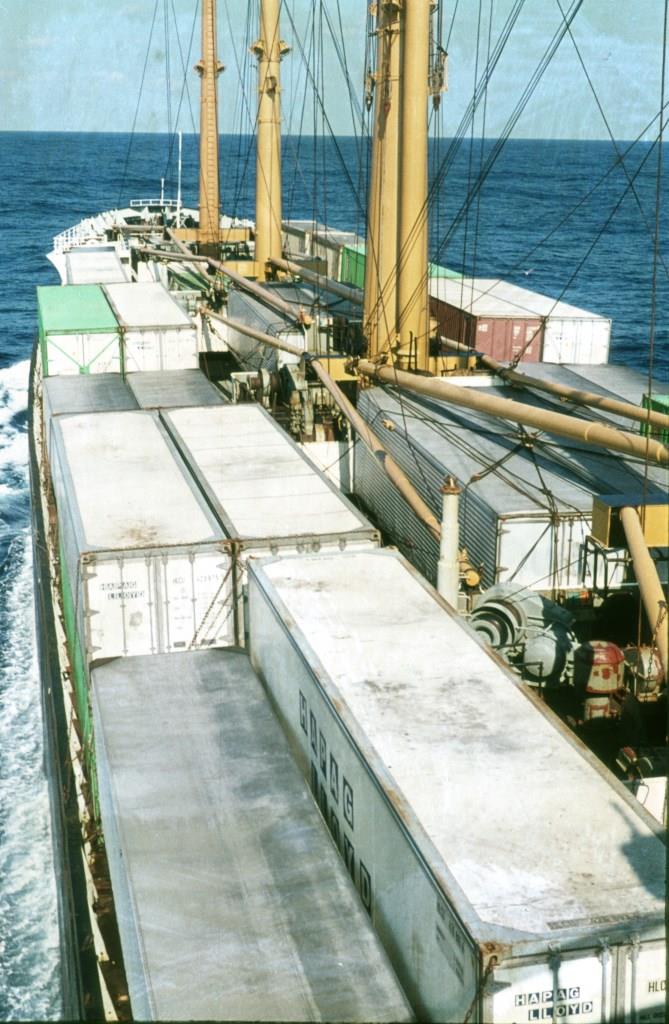
A deck photo taken on board the ms Gaasterdyk (II) in 1974. Although this conventional ship could carry containers, it would not be enough and eventually the containerships would completley take over.
When Bostrom terminated its Dutch Branch in the 1980’s, the archives were not donated to a Maritime Museum but destroyed. Hence there are no company sailing records from that period.
ED: I am still on the hunt for information as around this time the Dutch newspapers also published less and less sailing dates. So if there is a reader out there who has pertinent information about the sailing dates of the ex HAL ships, with or without Captain van Deventer in command, please contact me on CaptAlbert1@aol.com.
In 1977 Captain Van Deventer retired and remained in England. In 1997 he was diagnosed with Alzheimer and passed away on 12 August 1999 at the age of 82. He was buried in the local cementary at Whitstable.
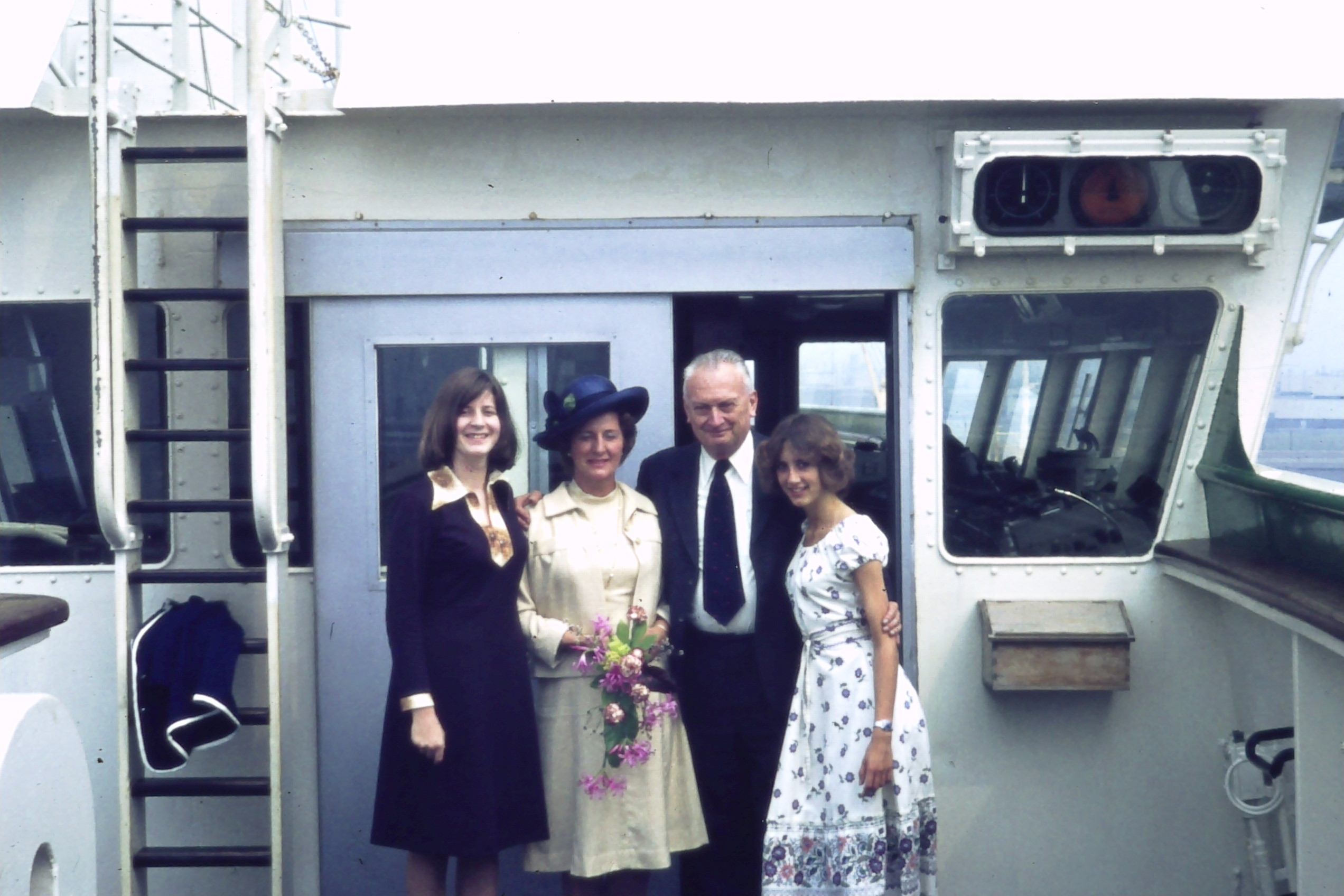
Photo taken on the bridge wing of the ms Atlantic Star Bridge. Captain van Deventer, his 2nd wife and the 2 step daughters. Occasion (see flowers) unknown.
Family and colleagues who knew him well, discribed him as a capable seaman but a very difficult person to work with. Also he was known to have a great interest in the Ladies and did not neccessarily restrict himself to a proper married life.
Sailing List: (c,d)
Date: Function: Ship: Wages and/or remarks.
16 Aug. 1937 Cadet Officer Binnendijk 30,–
01 Oct. 1937 According to new regulation 35,–
03 Jun. 1938 Cadet Officer Binnendijk Until 19 Aug.
15 Dec. 1938 Passed exam for 3rd. Mate License
28 Dec. 1938 4th. Officer Zaandam 29 Dec. 1938 3rd. Trial Trip
07 Jan. 1939 4th. Officer Zaandam 30 Jan. 1939 Maiden voyage
04 Feb. 1939 4th. Officer Zaandam 27 Feb. 1939
04 Mar. 1939 4th. Officer Zaandam 27 Mar. 1939
01 Apr. 1939 4th. Officer Zaandam 24 Apr. 1939
29 Apr. 1939 4th. officer Zaandam 22 May 1939
27 May. 1939 4th. Officer Zaandam 19 Jun. 1939
24 Jun. 1939 4th. Officer Zaandam 17 Jul. 1939
22 Jul. 1939 4th. Officer Zaandam 14 Aug. 1939
16 Sep. 1939 4th. Officer Zaandam 18 Oct. 1939
26 Oct. 1939 4th. Officer Zaandam 05 Dec. 1939
08 Dec. 1939 4th. Officer Zaandam 15 Jan. 1940
19 Jan. 1940 4th. Officer Zaandam 28 Feb. 1940
xx.xxx.1940 Called up for Royal Navy Reserve training but not assigned as the war broke out.
xx.xxx 1940 To school for his 2nd Mate’s license
26 Oct. 1941 Announced in the Newspapers as having passed for 2nd Mate’s License, but questionable if this true as he sat again for his exam in 1947/48
01 Oct. 1946 4th. Officer Groningen / nmdyk 06 Nov. 1946
11 Nov. 1946 4th. Officer Leerdam 22 Feb. 1947
With Westerdam on 01 March to USA to collect new ship
01 Mar. 1947 3rd. Officer Axeldijk 18 Mar. 1947
03 Jun. 1947 3rd. Officer Axeldijk 20 Aug. 1947
22 Aug. 1947 3rd. Officer Axeldijk 22 Oct. 1947
To School to obtain 2nd mates license
07 Jan. 1948 Obtains 2nd Mates License
22 Jan. 1948 2nd. Officer Nieuw Amsterdam 11 Feb. 1948
12 Feb. 1948 2nd. Officer Nieuw Amsterdam 03 Mar. 1948
04 Mar. 1948 2nd. Officer Nieuw Amsterdam 24 Mar.1948
25 Mar. 1948 2nd. Officer Nieuw Amsterdam 05 Apr. 1948
19 Apr. 1948 2nd. Officer Nieuw Amsterdam 13 Jun. 1948
13 Jun. 1948 2nd. Officer Nieuw Amsterdam 10 Jul. 1948
13 Jul. 1948 2nd. Officer Nieuw Amsterdam 31 Jul. 1948
02 Aug. 1948 2nd. Officer Nieuw Amsterdam 21 Aug. 1948
30 Aug. 1948 2nd. Officer Sloterdijk 25 Aug. 1949 at New York
25 Aug. 1949 2nd Officer Leerdam 27 Sep. 1949 NY – Rdam
17 Oct. 1949 2nd. Officer Axeldijk 09 Dec. 1949
13 Dec. 1949 2nd. Officer Axeldijk 08 Feb. 1950
16 Feb. 1950 2nd. Officer Axeldijk 25 Mar. 1950
To School to obtain First Mates license
28 Sep. 1950 Obtains First Mate Certificate (Captains license in the Dutch system)
07 Nov. 1950 2nd Off/ Ch. Officer Aardijk 06 Apr.1951
09 Apr. 1951 Chief Officer Aardijk 02 Jun. 1951
08 Jun. 1951 Chief Officer Aardijk 04 Aug. 1951
08 Aug. 1951 Chief Officer Aardijk 10 Oct. 1951
24 Oct. 1951 Chief Officer Arnedijk 20 Dec. 1951
27 Dec. 1951 Chief Officer Arnedijk 20 Feb. 1952
22 Feb. 1952 Chief Officer Arnedijk 19 Apr. 1952
21 Apr. 1952 Chief Officer Arnedijk 17 Jun. 1952
23 Jun. 1952 Chief Officer Arnedijk 05 Dec.1952
10 Dec. 1952 Chief Officer Arnedijk 02 Feb. 1953
06 Feb. 1953 Chief Officer Arnedijk 06 Mar. 1953
28 Feb. 1953 Chief Officer Arnedijk 08 Apr. 1953
17 Apr. 1953 Chief Officer Arnedijk 24 May. 1953
09 Jul. 1953 Chief Officer Westerdam 03 Aug. 1953
07 Aug. 1953 Chief Officer Westerdam 31 Aug. 1953
09 Sep, 1953 Chief Officer Maasdam 01 Oct. 1953
05 Oct. 1953 Chief Officer Maasdam 09 Nov. 1953
10 Nov. 1953 Chief Officer Maasdam 03 Dec. 1953
09 Dec. 1953 Chief Officer Maasdam 25 Mar. 1954
02 Apr. 1954 Chief Officer Maasdam 23 Apr. 1954
30 Apr. 1954 Chief Officer Maasdam 29 May. 1954
01 Jun. 1954 Chief Officer Maasdam 23 Jun. 1954
25 Jun. 1954 Chief Officer Maasdam 19 Jul. 1954
20 Aug. 1954 Chief Officer Maasdam 17 Sep. 1954
20 Sep. 1954 Chief Officer Maasdam 05 Nov. 1954
08 Nov. 1954 Chief Officer Maasdam 03 Dec. 1954
08 Dec. 1954 Chief Officer Maasdam 05 Mar. 1955
10 Mar. 1955 Chief Officer Maasdam 01 Apr. 1955
20 May. 1955 Chief Officer Maasdam 25 Jun. 1955
28 Jun. 1955 Chief Officer Maasdam 21 Jul. 1955
25 Jul. 1955 Chief Officer Maasdam 22 Aug. 1955
27 Aug. 1955 Chief Officer Maasdam CANCELLED
End of Seaman’s book entries & promotion to captain.
14 Sep.1955 Captain Blommersdyk 14 Nov.1955
GAP. Most likely ashore for medial reasons, gall bladder operation.
23 Aug. 1956 Captain Aagtedijk 06 Jun. 1957
06 Jul. 1957 Captain Duivendijk 11 Nov 1957
15 Nov.1957 Captain Kinderdyk 08 feb. 1958
26 Feb. 1958 Captain Eemdijk 04 Jun. 1958
26 Jun. 1958 Captain Arkeldijk 14 Apr. 1959
18 May.1959 Captain Ryndam 06 jun. 1959
26 Jul.1959 Captain Arnedyk 27 Sep. 1959
21 Oct . 1959 Captain Akkrumdijk 04 Jun. 1960
08 Aug. 1960 Captain Kinderdijk 18 Aug. 1960
30 Aug. 1960 Captain Andijk 05 Sep. 1961
Vacation. Relieved for one voyage.
12 Nov. 1961 Captain Andijk 23 May. 1963
GAP
14 Aug. 1963 Captain Kamperdijk 22Aug. 1963
25 Sep. 1963 Captain Dinteldijk 11 Apr. 1964
08 May.1964 Captain Dinteldijk 28 Aug. 1964
GAP stayed most likely with Dinteldyk until 1967, with voyages off in between but exact dates unknown.
28 Oct.1966 Captain Dinteldijk 11 Feb. 1967
15 May. 1967 Captain Gorredijk 12 Aug. 1967
29 Sep. 1967 Captain Gorredijk 20 Nov. 1967
21 Jan. 1968 Captain Gorredijk 21 Mar. 1968
GAP most likely continued on Gorredijk, until transfer to Grebbedijk but exact dates unknown.
xx.xxx. 1969 Captain Grebbedijk xx.xxx 1969
06 Mar. 1970 Captain Prinses Margriet 01 May. 1970
GAP most likley moved to Atlantic Crown on 21 July but dates unknown.
15 Oct. 1970 Captain Atlantic Crown xx.xxx. 1970
29 Oct.1970 Captain Poeldyk 05 nov. 1970 Coastal voyage.
07 Nov. 1970 Captain Atlantic Crown xx.xxx.1970
28 Dec. 1970 Captain Poeldijk 31 dec. 1970
GAP
28 Jan. 1971 Captain Atlantic Star 25 Mar 1971 (approx..)
01 Apr. 1971 Captain Grotedyk 05 Oct. 1971
07 Nov. 1971 Captain Atlantic Crown 08 Feb.1972
GAP
xx. Aug. 1972 Captain Veendam or Volendam Cancelled as ships still under US flag.
17 Aug. 1972 Captain Atlantic Crown 15 Nov 1972 (approx.)
23 Jan. 1973 Captain Bilderdijk 11 Apr. 1973.
17 May.1973 Captain Bilderdijk 29 Jul.1973
GAP
07 Jul. 1974 Captain Gaasterdijk 03 Nov. 1974
GAP
On 01 Jan. 1975 the cargo part of the HAL fleet was sold to Bostrom of Sweden. Captain van Deventer decided to stay with the cargo ships and moved over to ICT (Incotrans) BV. Rotterdam. When Incotrans ended as an independent Dutch company, the archive was destroyed and with it all the records. So sailing periods have to be traced from the company’s in house magazine.
What we have so far:
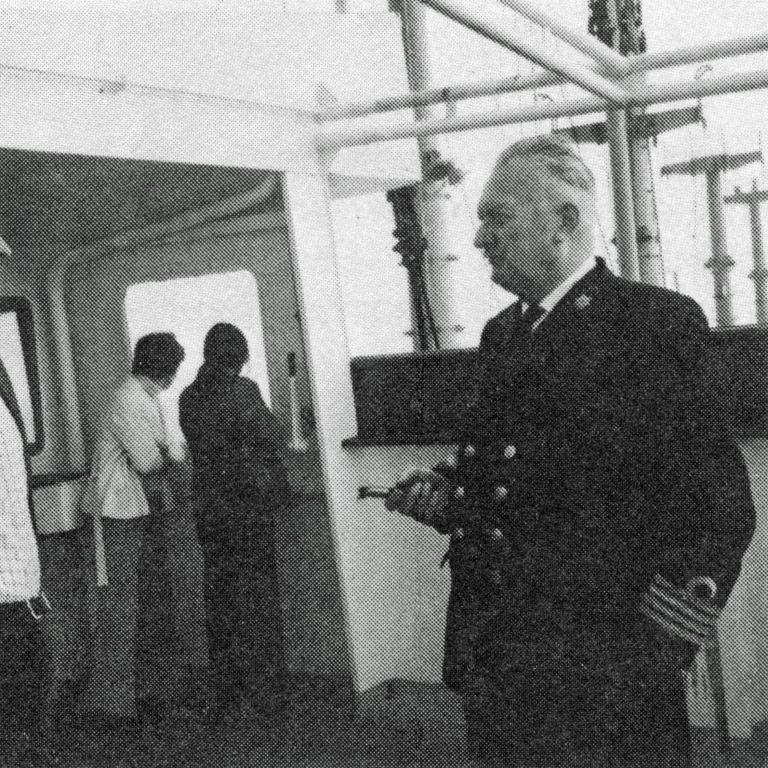
Captain Van Deventer on board the ms Gaasterdyk (II) in 1975. (From the company magazine “Samenspel”)
03.Mar.1975 / Apr/ Jjul/ Sep/Oct/Nov. Captain on board Gaasterdijk
1976 Feb / Jun / Oct Captain on board Bilderdijk
1977 Feb/ Mar/ Apr/ May Captain on board Gaasterdijk
1977 Jul/Aug Captain on board Atlantic Star
17 June 1977. Reached the age of 60 years, so he must have retired around this time.
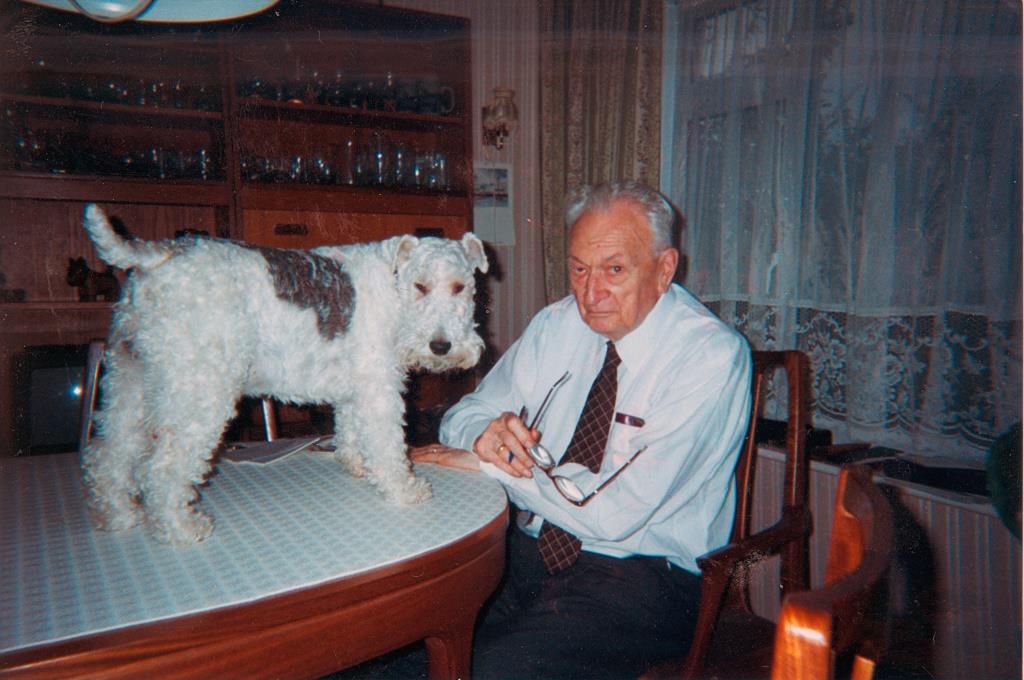
Final family photo of Captain Hendrik Leonhard van Deventer at his home in England in 1999.
Sources:
a). As Captain van Deventer documented his career with photos and films, the Editor could use an enourmous amount of material, made available by his son Ruud van Deventer. For which which my deepest gratitude. Hence everything used in this biography comes from his archive except were noted differently.
b) School records from the Comportementen books of the “Kweekschool voor de Zeevaart” as held by City Archives of Amsterdam.
c) Capt.Alberts Database and photo archive.
Last updated: 23 Febr. 2026
Leave a Reply