- Captain Albert's Website and Blog -

Ocean Liner History and Stories from the Sea, Past and Present. With an In Depth focus on Holland America Line

Page 66 of 242

19 May 2017; At Sea.

The low clouds stayed away, courtesy of colder air blown in with a steady breeze, and as this cooler wind was blowing over colder water, the fog never really could materialize. . It turned hazy but visibility remained more than the minimum 3 miles which meant the bridge did not need to go to battle stations and the captain did not have to get out of bed to pull the fog horn every two minutes. For tonight the same wind is expected and thus the Maasdam should reach Boston with everybody having a quiet night.

The route we have to take after the New York pilot station off Sandy Hook goes straight east and then we make a more than 90 degree turn to head North North West towards Boston. Before we get there we have to turn to a straight westerly course again until we come to Boston pilot station. If there would be a big enough canal between New York and Boston, the ship could have done it in a few hours, now it will take a day and two nights, although we are not going at full speed.

We used to go full speed in the old days and often that meant we could wriggle in another port call along the way. Now we offer the guests a quiet sea day as we try to conserve as much fuel as possible (which keeps the ticket price down) but also because we sail through Whale territory. The moment the ship has passed the Coney Island area there are whales. Whatever the world is doing to make the whales habitat better, seems to work as we see more of them every year. Because we do not want to bump into them we have to reduce speed. Preferably to 10 knots or less if there seems to be a danger of getting a close encounter. No problem to do so but it can play havoc with a cruise schedule if the average speed has been set too high. So the company has worked “whale speed” in their cruise schedules and that makes the life of all of us a lot easier.

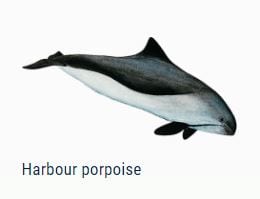
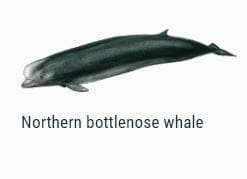
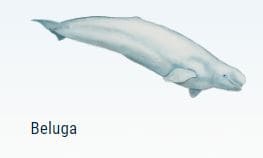
Between New York to Boston we basically pass through two whale areas. East of New York you see all sorts of whales and once getting closer to Boston we sail through the habitat of the Right Whale. During the morning we saw several whales sedately moving along on the starboard side of the ship and it took me a while to recognize the species. Most of the time you see humpback whales which are very easy to recognize as they have that hump and their tail comes out of the water often even when they are not engaged in acrobatics. This one was not doing this and also I did not see a dorsal fin. Plus the exhaust air plum was not distinct, but fuzzy. That meant that it could only be a Gray Whale and that is fairly unusual as there are only about 25000 of them around.

The whale we are very concerned about is the Right Whale. There are only about 400 left and one of their habitats is an area south east of Boston. As they do not pay any attention and or react to noise or vibration of ships they have a much higher chance of being hit. During the day we can keep a look out for them but during the night that does not work and thus sailing at a slower speed is the best preventive option we can take. To make things complicated this area is very busy with commercial traffic, so much that the IMO (International Maritime Organization) has imposed highways at sea here, or Vessel Traffic Separation schemes. Thus east and west bound ships are in separate lanes and when coming to a cross roads there we have a round-a-bout to prevent collisions.

With so many ships around and so few Right Whales the USCG has a broadcast and monitoring center in the area with mandatory reporting and announcements about sightings. If one ship sights a whale then the rest is being alerted and can exercise extra caution.

Tomorrow morning the Maasdam will dock in Boston at the Falcon terminal and she will be behind the Veendam, her sister ship. Arrival should be between 0700 and 0800 and we will have a partial disembarkation / embarkation of about 700+ guests. On departure the ship will have a full house with close to 1250 guests on board.

Weather in Boston, same as in New York, warm and sunny.

18 May 2017; New York, USA.

And thus real life began again. Yours truly arrived last night in the Big Apple and joined the ship today. This time I stayed in a hotel in Jamaica which is part of Queens and thus had an 80 minute taxi trip to make to get to the ship. On normal days that takes about 25 minutes but Queens has a bottle neck where all the roads are coming together to go over the bridge into Manhattan. And today it was a bottle with a very loooooooooong neck. Not that I minded this as I had never travelled the whole length of Queens Boulevard and as New York is a true melting port, there is always lots to see. Plus I can now remove one item from my bucket list and that was travelling over the Queensborough Bridge (Also known as Ed Koch Queensboro Bridge). My experience was thus far limited to the Brooklyn Bridge but my New York Bridge’s experience has now increased by 100%. Next to this bridge are cast iron pillars located for a cable car crossing but I did not see any cable cars so I have the impression that it is not operational.

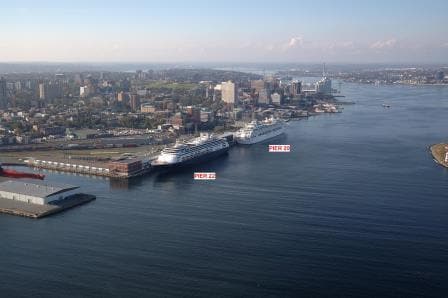
New York Cruise Terminal just after departure. to the left the Crystal Symphony is just visible.

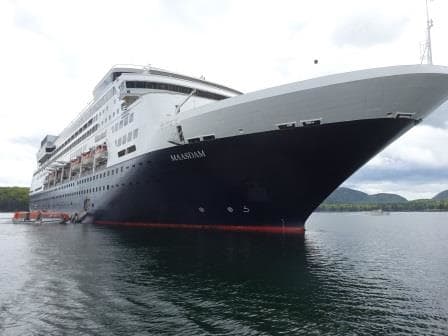
The good ship ms Maasdam was docked in port together with the Crystal Symphony. This ship was on a port call only stop but the Maasdam also had a partial embarkation today with guests coming on board for the Canadian Maritime cruise. They hopped on board in New York instead of having to travel to Boston. In the Boston we will have a change over again with guests finishing their Trans Canal cruise. The Maasdam is coming from the west coast where it also made a South Pacific cruise. Now it will start a series of cruises to Montreal from Boston and back.

Captain Bas van Dreumel, Master ms Maasdam.

The Master of the vessel is Capt. Bas van Dreumel who until recently was on the ms Nieuw Amsterdam. But he has the same take on the job as I have, you have to rotate ships to stay fresh and so he opted for the change of going from the one but newest ship to the oldest one (excluding the Prinsendam) and also a much smaller ship. But smaller ships have a charm of their own and the Maasdam is making some very nice cruise and varied cruises.

I will be on the Maasdam for three weeks, until June 10 and then transfer to the Noordam. (Subject to very much change as usual) During that period I will conduct a number of trainings, run a complete certification course of Lifeboat attendants and carry out some internal audit work for the Captain. In the coming days I will explain what a Lifeboat attendant course is but it involves messing around with boats big time, so I am keeping my fingers crossed for nice weather.

Today started well, the weather was almost too nice. 97oF with only later in the day a bit of S/E wind picking up. If that continues then I will be a happy camper, but my colleagues on the bridge will not.  Sunshine means very low clouds when in open sea and the whole area from New York to Boston to the St. Lawrence River is prone to a lot of fog if the weather is nice. The combination of warmer Gulf Stream water to the South, cold water to the North and warm air above land can create dense fog, very dense fog.  For the guests normally not much of a problem, unless you bought a cabin right under the whistle, as it normally are burns off in port…………. And then it comes back as soon as the ship returns to open water.

World Trade Centre Area. With to the left the Empire State building just visible.

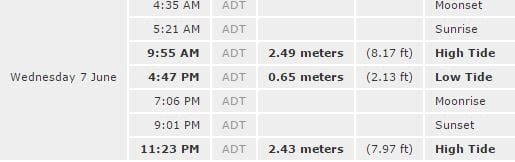
Today we sailed at 17.00 hrs. from the New York cruise terminal. That departure time being important as it is slack water at this time. I always call that “theoretical” slack water, as the time of real slack water seldom is the same as the real moment. But you try to arrive and leave as much as possible on the slack tide when the current is zero or almost zero as otherwise it is a lot more difficult to avoid bumping into the piers located on both sides of the ship.  Today we sailed at slack tide but even then the ship had drifted considerably by the time it was in the middle of the Hudson River where it could swing to the south and head for open sea.

Tomorrow we have a sea day and the weather looks good and if it warms up quick enough, then we should have good visibility and see some wild life. There are normally lots of whales in this area.

Note: the blog still has some challenges so the coming posts will be without photos until this has been corrected.

02 May 2017; Back in Business.

Over the past weekend the Holland America Blog was successfully revamped and transferred to a new server.  Apologies for the delay of what was supposed to be only a few days of disruption. But if a P.C can sometimes have challenges on a small scale, a web setup can have bigger ones on a more industrial scale I suppose.

I stopped blogging at the end of my Zuiderdam period and because of the transfer I could not do anything during my period on the Westerdam.  Most of that period consisted of a crossing from Ft. Lauderdale to Europe and then a number of Mediterranean ports before the cruise ended in Civittavecchia. I then went home and the Westerdam went into dry dock for a regular check up but also for a major revamp of the public rooms and the addition of some guest cabins on deck 10. As a result the ship is now similar to the Oosterdam which was the one but last of the Vista Class to go through the upgrade dry dock. The Westerdam is now the last one of the Vista Class that received the regular upgrades but also the best of the Koningsdam upgrades that were also rolled out earlier on the Oosterdam and Eurodam. This includes the Gallery Bar (ex Northern Lights Disco), the Billboard on Board (located on the starboard side by taking part of the Casino away) and a new feature, a small museum with Dutch Art sponsored by the Rijksmuseum from Amsterdam.    It is located opposite the Front Office on Main deck where once the Shorex office was. The shore excursion office has been moved to the Crows nest as part of the companies re-focussing on the combination of enjoyable cruising and cultural immersion at the same time.

The latest group of navigators to join Holland America Line

My activities on the crossing consisted of training a new group of Navigators who had joined Holland America in the previous weeks.  5 gentlemen (Dutch & Rumanian) and one Lady from Canada. The latter had sailed on the Canadian Coastal vessels and made about 20 cruises with her family on Holland America Line ships. Now she learned the other side of cruising and soon found out that there is a lot of hard work going on behind the glamour. By the time they made it to Civitavecchia , they were all well aware of what it takes to be a Holland America Line Officer  and can now walk onto their first ship with enough confidence to fit right into the bridge teams.

Thus I went home on April 13 as the presence of an extra captain during a dry dock only confuses the issue. I am now enjoying a month of vacation and then it is time for the ships sailing from Canada. I will update my schedule-tab as well but this is the plan for the near future………….. as usual subject to very much change.

18 May – 03 June ms Maasdam, Canadian Maritimes. Boston to Montreal and back.

03 June – 25 June ms Noordam, Vancouver – Seward – Vancouver.

27 June – 23 July ms Zaandam, Vancouver – Seward – Vancouver.

After that I will have another break in the schedule.

In the mean time I am keeping myself constructively occupied by supervising our phase 3 roof maintenance of the apartment building which I live in.

I will be back with the blog on the 18th of May.

28 March 2017; The blog is still in Dry dock.

Dear Readers,

My apologies but from a “few days” of the blog being down, it has now gone to more than a week.

The Holland America Line Community Blog site/layout was supposed to  migrate to a new location. All was to be accomplished in a few days but it seems that there is a hiccup somewhere.  Because of this migration I was asked to refrain from making my daily posts. When it has been migrated, then life is supposed to continue as normal.

Cyberspace is beyond my understanding so I just have to wait until the computer gurus have seen the light, or whatever they have to see, to make the migration successful.

I have just transferred from the Zuiderdam to the Westerdam and the plan is to facilitate a school class here for six new navigators. The ship is scheduled to be in Fort Lauderdale on the 30th. of March and I am keeping my fingers crossed that the blog issues will have been resolved by then.

Best regards

Capt. Albert

Watching approx. 18,000 guests & Crew going ashore in Grand Cayman.


20 March 2017; Blog in dry dock.

Dear Readers,

The computer gurus and experts who ensure that the Hal community blogs and related publications work and continue to work both night and day are putting the blog in dry dock for an upgrade.

During that period, I will not be able to post, my apologies, but same as a ship needs a new coat of paint once in a while so does the computer business needs to refresh its “electrons”.

I will be transferring to the Westerdam on March 24, so I expect that my next blog will be coming from that ship. You will get your “daily ping” again as soon as they allow me ” back on board”.

Best regards

Capt. Albert

The ms Westerdam.

The ms Westerdam.


19 March 2017; Fort Lauderdale, Florida, USA.

The weather today is according to the weather forecast and thus everybody is happy. Very little wind to bother the ships arrival and nice and sunny during the day. At the terminal the temperature was even a few degrees lower than listed and that made for pleasant travel for the guests. Larger numbers always have to wait for the buses / coaches and it is never fun to sit in the roasting sun. Luckily Pier 26, the normal Holland America pier, is quite shaded on the East side. By the time disembarkation is in full swing the sun is still behind the terminal building and does not appear around the corner until well after 11 am. when disembarkation is over. For those coming the other way it is less of an issue and they can go directly into the cool terminal.

The ms Zuiderdam arrived a bit earlier than normal. If we are assigned at berth 21 or at 26 with nobody at 25/24 then the ship normally has the pilot at 06.15 hrs. Then it is docked by 06.45 and ready for business at 07.00hrs. Today the Celebrity Equinox was scheduled for berth 24/25 and thus the Zuiderdam was requested to arrive earlier. It saves sailing past the Equinox if she had come in first. There is enough room to do so but why make things difficult if there is an easy option. Captains like easy options as they are normally safer than difficult options; and so our pilot time brought forward to 05.30 hrs. And we arrived accordingly.

Today was also the changeover between Captain Bart Vaartjes and Captain Wouter van Hoogdalem.  I was asked once in the past if this was a highly complicated and top secret evolution with the doors closed and reams of papers to be signed. None of that at all. The (electronic) paper work is limited to an entry in the ship log denoting that the handover has taken place and that is about it. The only other thing is a handover report in a checklist format. (There would be something wrong if we did not have one) The checklist is a standard form which all captains use, to ensure all pertinent issues are discussed. Then there is normally an attachment with “other items” and those normally have more focus than the regular list as “other” also means out of the usual. And I almost forgot there are about 10 pass words or so to hand over which lock all sorts of electronic devices, to avoid any electrons from escaping.

No and we do not hand over keys anymore either. Even bridge access is by key code.

And no we do not hand over keys anymore either. Even bridge access is by key code.

When two captains are rotating with each other, then a hand over is specified as having to last 4 hours. When nothing untoward has happened or is in the offing then 4 hours is more than sufficient with time to spare for gossip and multiple cups of coffee. If a regular rotation is not the case than we have other regulations. New function, New (class) ship. 14 days. So if a staff captain has been promoted and goes to another class ship that he (*) has been sailing on, then there will be handover of 14 days. If it is a new function, same class, or same function, different class, then there is a one week hand over period. This is also the case for other ranks.

The Zuiderdam is now going on a 10 day cruise, down to the South Caribbean and the Panama Canal. The only difference from the past 11 day cruise is that we will not call at Cartagena but go directly from Willemstad to Panama.

Thus our next call will be Half Moon Cay tomorrow as scheduled and we should make it as the weather is favorable.  A new cold front is already forming, which draws the wind towards the north but at 15 knots it should not be a problem. Temperatures at noon time 75oC or 24oC. with a sunny day, just pleasant for a day at the beach.

(*) sorry to say but we still do not have a female captain. We were all keeping our fingers crossed as we had a female staff captain who was gaining sufficient seniority to approach promotion but she recently decided to go into pilotage in England.  Bummer; now we have to wait a number of years again as the next female officers are all 2nd officers so they have some time to go.

18 March 2017; At Sea.

Well the weather did what was forecast and in the course of last night, the wind came down to something more acceptable. 20 knots or so and that is what we are used to in this area. By 08.45 we had past Cabo San Antonio and turned to a North Easterly course and entered the Straits of Florida. Now we are completely at the other side of the weather system and in the other counter flow, and that means we have the 30 knots of wind back. But no rain; the sun is nicely shining and all is well in the world as we expect the wind to die down again in the evening.

Where we are is never simple to describe as human kind with their penchant to give everything a name has also made it a bit of a confusion when it comes to naming the sea in these areas. So when we sailed away from Puerto Limon we were in the Caribbean Sea. But we before we entered the Straits of Florida we first sailed through the Yucatan Channel.  The same happens at the other side of Cuba. You are happily sailing out of the Windward Passage and into the Caribbean Sea but then you suddenly realize that somebody has decided to give that area another name: The Jamaican Channel.   My idea of a channel has always been a fairly narrow passage. A bit like a canal but then without locks. But these channels are not that narrow at all. There is something else wrong as well; scientists have officially decided that it cannot be a channel because it is not long enough. So there you go, but nobody is doing anything about having it changed. So a channel it remains although there are also factions who call it Yucatan Straits but that seems to be wrong as well, as it is not wide enough for that.

The Yucatan Channel named after the Yucatan, parked of Mexico. Somehow Cuba lost out here.

The Yucatan Channel named after the Yucatan peninsula, part of Mexico. Somehow Cuba lost out here in the naming process.

The Yucatan Channel or Yucatan Straits is 135 miles wide and has been recognized as the official connection between the Gulf of Mexico and the Caribbean Sea. It is the deepest at the Cuban side where the depth reaches down to 9000 feet which certainly helps with getting all the water through.

Although we only talk about the Gulf Stream pushing through there, there is also a Yucatan Current. Scientists have decided that another name was needed because not all the water from the Caribbean Sea flows directly into the Straits of Florida. Some of the water flows into the Gulf of Mexico and creates a circulation there with the water coming from the North American Plateau.  Some of this water curls around the Yucatan Peninsula and into the Gulf of Campeche, the bay on the west side of the Yucatan Peninsula.

The Yucatan Current average flow. (Diagram courtesy Miami.edu)

The Yucatan Current average flow. (Diagram courtesy Miami.edu)

For sailors it is important to realize that there is a Yucatan Current which goes West, North and East. Simply because Hurricanes tend to follow currents as they feed off them. An extreme example was hurricane Gilbert who did not follow the regular path of going north but travelled over the northern tip of the Yucatan straight in the Gulf of Campeche.  Normally when captains plan for hurricane evasion, they think primarily: will it go left around Cuba or will it go right around Cuba. Travelling straight over Cuba is not nice for the Cubans but no problem for us as we cannot sail over land. Based on that we are looking for a plan to stay clear. But if you would be coming down from New Orleans then it could become more complicated as the approaching hurricane coming towards Cuba could, because of the Yucatan Current, go left, right or straight up.

This is one of the reasons captains have issues with going to New Orleans in the Hurricane season. Due to the 10 hr. trip down the river and then having to sail down the Gulf of Mexico it takes a lot of time to get away from the danger area. Tampa or Key West are much better as you can get within 12 hours to the other side of Florida.  At the moment Holland America is not sailing from New Orleans and thus we do not have to worry about such things.

Who is worrying is the captain. My colleague is going on vacation and wants to make his plane on time, so nothing should stand in his way to get docked on time. He will be relieved by Captain Wouter van Hoogdalem who is the alternating captain for the Zuiderdam and who will be on board for the next three months. Makes me feel old: I had both of them as junior officers on my ship when I was staff captain. But I can still teach them a few things and that makes it feel good again.

Weather for tomorrow: 29oC / 84 oF. mainly sunny and a gentle breeze of 10 knots. What a better way to end  a cruise.

17 March 2017; At Sea.

Today we are having our first day at sea and are sailing on a North Westerly course heading towards the Yucatan Channel where the Caribbean Sea meets the Gulf of Mexico. It looks like that we were lucky with our call at Puerto Limon as the weather has turned for the worse. A strong cold front is moving over, bringing lots of rain, lots of wind and only an occasional moment of sunshine. And it is all moving in the direction of Costa Rica and thus the swell will start to increase again and will not make for a happy stay in the port for the ships arriving after us.

We really were in luck yesterday, because the moment we left the port, the heavens opened up over the City and the rain came down in large quantities. To maintain the rain forest, they will need that rain but our cruise guests do not exactly need it, and yesterday they were lucky. But today we have to face the weather and we are ploughing straight into it as well. The ship is making 20 knots, the wind velocity is 35 knots and on the exposed areas the combined relative wind reaches 50+ knots. So if you wanted to feel what a heavy storm feels like you would have to climb on the bow and do “a Titanic”. We do not want that so we keep the bow closed and on the higher decks we have wind screens.

The red arrows indicate the main flow around this weather front.

The red arrows indicate the main flow around this weather front.

It being winter means that cold front after cold front is coming over the area in a sort of washing machine pattern. Bad weather starts off at Cape Haterras where the cold air from the plains meets the warm air from the Gulf Stream. That gives a frontal system which moves to Europe or up to Iceland depending on how the Jet Stream flows.  When that wind flows away, it creates a vacuum and that is filled by air coming from North Mexico into the Gulf of Mexico. That creates a vacuum and that is filled by air following opposite, following the regular Trade Wind route.  On a sort of three day balance the directions move to and from which result in winter days of hot weather in Florida and days of cold weather.

Because things are quite forceful in the North Atlantic there is a strong weather front moving to the North East and thus also a strong counter flow under it. And we are right in the middle of it. The good thing is, we are moving, and our course is going right through it and thus we will emerge eventually at the other side of it. We expect that to happen when we come north of the Yucatan Peninsula which will be late tonight.

The Gulf of Mexivo. The blue red curve right under indicates the edge of the frontal system.

The Gulf of Mexivo. The blue red curve right under, laying over Grand Cayman  indicates the edge of the frontal system. The blue arrows are wind. The word Gale at the mid bottom is the Tehantepec wind which is blowing very strongly at the moment.

That should bring the wind down from 35 knots to about 20 knots. And then for Sunday, when we are in Fort Lauderdale it should come down to 10 knots.  In the meantime the seas which we are in are being pushed up by the winds and that makes the ship move a bit. Not rolling as the wind is nearly on the bow but more shuddering as the ship wants to pitch but does not know how to.  Not that it has any effect on the guests, according to reports received, the bingo was well attended.

Courtesy of both pictures, NOAA.  THANK YOU NOAA WHAT WOULD THE SEAFARING COMMUNITY AROUND NORTH AMERICA  DO WITHOUT YOUR WEBSITES ??

16 March 2017; Puerto Limon, Costa Rica.

Indeed the weather was with us today. Yesterday in the Canal the wind was already getting less and less and when we arrived this morning at the pilot station, there was no white cap to be seen. Just a little ripple indicating a wind force 1 to 2. That meant that during the night the waves had lost a lot of their height and strength and that made for a good day. Last cruise the swell had made it impossible for the ship to dock alongside the pier, this time there were no worries.

And thus the good ship Zuiderdam met a smiling pilot at 06.00 hrs. with only good news to bring and the ship sailed in at once. Puerto Limon is one of the more simpler ports to dock in (if there is no swell of course) it is just  matter of sailing in and then deciding if you want to go portside alongside or starboard side. Starboard side is preferable as A. it takes less time to leave and B. if there is swell, the bow of the ship is better in dealing with it than the stern. The bow can ride on the waves and also cut them apart, but the stern being square, gets the wave every time under the square end. Then there is the danger that the swell will lift the ship up and start riding along the dock. Not good for the ropes and even worse for the gangway and the guests.

The approach according to the electronic chart. The black shape to the right the Celebrity Equinox approaching the container berth.

The approach according to the electronic chart. The black shape to the right is the Celebrity Equinox approaching the container berth.

Thus we swung on arrival and went astern alongside. Later on the Celebrity Equinox arrived and she went nose in. I think because she was on the late side. But today it did not really matter for her, what side was chosen.

Puerto Limon as seen from starboard bridge wing. The country is low and flat, except for the middle part where there are high mountains.

Puerto Limon as seen from starboard bridge wing. The country is low and flat, except for the middle part where there are high mountains.

Puerto Limon is a tour call for us as with the beautiful hinterland it is a great place for seeing wild life and the tropical rain forest.  It is a country which is really trying to preserve nature and there are extensive nature reserves both on the Atlantic and the Pacific side. If you cruise on the Pacific Side then Holland America takes you to Golfo Dulce and Puerto Caldera /Punta Arenas where things are similar. Guests came back today with stories about having seen monkeys and “lots of noisy birds” so I assume the tours were a success.

With modern projection you can now simulate near real fires.

With modern projection you can now simulate near real fires.

I threw one of my specials today. Set the show lounge on fire and then have 30 or so casualties for Medical to try and save. We have an official disaster plan for this called the Mass Casualty Response Plan which provides guide lines of how too few doctors should try to save too many injured people. With a majority of entertainers as casualties (Natural Actors / and Actresses) there was enough mayhem created for the Medical Staff to be really focused and involved.  A major part of the evolution is the transport away from the disaster area to a safe location where a second triage can take place and from where the the final disposition is organized. (Either back to the cabin, stay in the hospital or be medivac-ed ashore.

Doctor, Nurse, On Scene Commander, Stretcher Team and a Scribe for keeping track, all part of the machinery needed to make it possible.

Doctor, Nurse, On Scene Commander, Stretcher Team and a Scribe for keeping track, all part of the machinery needed to make it possible.

My challenge is that I can only train on the flow of the drill and point out pitfalls to avoid. For the rest it all depends on the focus and organizational skills of the participating officers and crew. Today we had about a 100 crew involved varying from Fire teams, to wheel chair pushers and the very important stretcher carriers and casualties.  Hardly any of the crew had ever done a drill like this, so the focus was there and so as long as you have that, then the drill is already a 50% success. Plus you do not always get the chance to run a drill in the main show lounge, which is the largest public room on board.

The Gents and Ladies from Housekeeping had a heavy job today, carrying stretchers up the stairs and then to the medical centers. But they did very well.

The Gents and Ladies from Housekeeping had a heavy job today, carrying stretchers up the stairs and then to the medical centers. But they did very well.

Tomorrow we have our first of two days at sea and then we are back in Fort Lauderdale. If things go according to the last plan, then I will remain a few more days on the Zuiderdam before transferring to the Westerdam. If the cabin situation works out I will train 6 new navigators for 14 days while the Westerdam sails to Europe.

Weather for tomorrow: wobbly but not too bad.

Note: Under the Current Captains section, the Biography of Zuiderdam captain Bart Vaartjes has now been uploaded and also the sailing schedules of the Captains has been updated.


15 March 2017; Panama Canal and Colon 2000.

Today went sort of on schedule although we were not able to repeat the performance from last cruise when were docked by 15.00 hrs. in Colon. Now it was just before 17.00 hrs. and nothing we could do about it. It all depends on when we fit into the slot for the traffic going through the Gatun Locks. That is the traffic coming from the Pacific side. This time there was no early gap and thus the ms Zuiderdam had to wait until a gap became available. The PTA (Panama Canal Authority) cannot “hold” a gap for us as they do not know when we will be ready to return. Running a tender service is not clock work and getting 1100 guests off does take a bit of time.  Going out through the new locks is also not an option, even if there would be a gap there, as the PTA tries to limit the water loss by sending only the real big boys through.

This is supposed to change next year when they will take reservations for cruise ships who want to go in one way and out the other way. But there will be a price tag attached to it, first because of the extra water loss and secondly because that ship now has to be planned into the double system. All this makes the tariff system for the Canal very complicated. At the moment the basic charge per passenger berth for a cruise ship is which can use the old locks $ 138 a berth. For a cruise ship which has to use the new locks it is $148 a berth. (So if we have empty beds, the company still has to pay for it) Then there is a plethora of other costs, including a charge for the crew and for a ship of the Zuiderdam size it comes to a transit fee of about $ 348,000.

For some reason it did not look that busy today in the locks; ships were coming and going but there was a very lower number at the anchorage on the Cristobal side. Maybe it will be different again tomorrow. Although not all the ships at the anchorages are there to go through the Canal. Both the Pacific and Atlantic side have extensive fuel bunker facilities and ships stop at the Panama Canal roads just for loading fuel. Then there is the reason of not having paid the transit fee. The PTA charges upfront which is understandable as there would be operators who would conveniently forget to settle the bill. A number of years ago it was so bad that payment in cash was required for those ships that did not have a long standing agent in Panama who had the monies available in an escrow account.  Holland America has had the same agent (Fernie & CO) for as long as any of us remember and thus far we have never been delayed because of a non-timely transfer of funds. It had better not happen as the ship does carry a corporate credit card but I think it does not run to $ 350,000 —

The tender chart for all drivers. It is a pity the ship has not been drawn in on scale, then it would been easier to understand that there is not much space.

The tender chart for all drivers. It is a pity the ship has not been drawn in on scale, then it would been easier to understand that there is not much space.

The ship was sitting today or better said floating exactly in between the approaches to both locks. And we have to make sure it stays there. There is not much room at either side. Not only that, we also have to ensure that the tenders stay very close to “mother goose” as straying more than 300 feet away could cause them to enter the traffic lane for the Gatun Locks.  Next to where the Zuiderdam is drifting is the exact location where the tugboats catch the cargo ships approaching the Gatun Locks. Thus a little tender getting in between would cause havoc in the routine. Plus the tenders are made out of aluminum and fiberglass and those tugboats are pure steel.  So better stay well clear.

kkkkk

Our tender location in relation to the locks. The tenders go ashore exactly where the a of the word Gatun (Lake) is on the chartlet.

Tonight we will sail at 19.00 hrs. if everybody is on board that is coming back from the tour, and then it is a nights sailing to Puerto Limon in Costa Rica. Because that country lays a little bit further west than Panama, we will be going an hour back tonight. The only problem is we have to go forward again after we leave that port.  We will be at the entrance at 06.00 hrs. and should be docked about 20 minutes later as Puerto Limon is an open bay port (hence the reason we had to cancel last cruise because of the incoming swell) and the ship just can charge in swing around and throw the lines ashore.

Weather for tomorrow:  Partly Cloudy with a chance of showers. Warm with a temperature of 85oF / 209C and very little wind. And very little wind, means very little swell and thus we can make the port call.

« Older posts Newer posts »