- Captain Albert's Website and Blog -

Ocean Liner History and Stories from the Sea, Past and Present. With an In Depth focus on Holland America Line

Page 58 of 242

02 October 2017; At Sea.

An un-eventful day today while we sailed down the Californian Coast heading for San Francisco. We had a strong North Westerly wind blowing but as it was a following wind, it was very pleasant on the outside decks and after a gloomy start a lot of guests took the advantage of sitting on the sunny side of the ship on the Promenade deck. I spent a good amount of time trying to convince a guest that we had gale force winds but because the ship was running with the wind at 18 knots, we only had a relative wind force of 2 to 3 on the deck and that made it very pleasant. But he was having none of it, not being able to comprehend the concept of relative wind, regardless of any example that I tried to give. He lived somewhere south in Tornado Alley and it did not matter whether a Tornado approached his house from the west or the east, the wind was the same. So, he had a wind still day as far as he was concerned and the white caps on the waves (denoting 25 knots of wind) were only there for decoration.  Well, there are all sorts out there, you just have to find them…………………

I spend most of my day given refresher training to our Stairway Guides. For those of you who have made cruises you will remember these crew members standing in the staircases and their job is to guide the guests safely and quickly to their lifeboat stations. The Nieuw Amsterdam has about 70 of them and they are in every staircase (also the crew staircases as they are open to the guests during an emergency) and on every landing of each deck. If there would be an emergency, then it is their task to control the human flow of over 2000 guests coming out of the cabins in about 15 minutes time.  Sounds simple but it is not. Therefore this group of crew is the most important group of people in the whole evolution of a successful mustering at the lifeboat stations or in the case of the Koningsdam in the public lounges.

Stairway Guides in action.

Their challenge is that during a normal drill at the start of the cruise, on embarkation day, the guests find their own way quite leisurely. Although we ask the guests to follow protocol and wait in the cabins until the abandon ship alarm sounds, we always have already 30% or so on deck before any alarm is given. That is not good for teaching everybody the proper routines but it makes it a lot less crowded during the final flow with the other 70%.

The challenge starts in a real emergency. Then these 2000+ guests do come out of their cabins at the same time with their life jackets. And now the atmosphere is not convivial anymore. People are anxious, stressed, upset (especially if it happens in the very early morning hours or during dinner time) and sometimes panicky if they do not see family members who might be a bit further down the throng of people flowing up and down the staircases.  According to field studies by psychologists about 30% will listen to orders and follow them; nearly 70% will ignore everything and only tune in after repeated announcements and then there is a small group of 1% or so which might panic. They are dangerous as panic is contagious and if you do not stop it, it can ripple through the whole group.

Keeping Control, one stairway guide and many guests.

All these variations flow past the Stairway Guides and a lot of them want to stop, ask questions, complain or just vent anger and frustration. Our stairway guides are mainly people from the retail groups on board, Shops, Casino, Art, etc. Their background normally has nothing with what could prepare them for this safety function on board. So we train and we train. The company has dedicated power points and training material which the training officer delivers on a regular basis.

Because of the importance of the job, maritime law requires that each position of a Stairway Guide Is marked on the Muster List or Station Bill.  A requirement so the ship can prove that all locations where “flow guidance” is needed are manned.

When I am on a ship, I normally grab the chance to deliver an extra training as I bring a bit more experience and delivery qualifications to the equation. What do we train: tricks of the trade to keep the flow going. How to avoid discussions with the guests, how to quiet them down with short orders and how to select those who are allowed to use the elevators and those who can and should walk the stairs. The main challenge always is to find a common understanding among all the crew as they come from so many ethnic backgrounds and different cultures where the perception of panic and stress can be totally different. One thing they all understand is what a police officer is; so I train them to be the toughest and coolest police officer on the block.

Tomorrow we are in San Francisco. We should be at the pilot station around 05.30 and pass under the Golden Gate Bridge at about 06.15 hrs. depending traffic and then be fully docked before 08.00 hrs. It should be a perfect autumn day here, with temperatures in the low fifties or around 12 oC and sunny with some clouds. A good day to visit one of the most fascinating cities in the USA.

01 Oct. 2017; Astoria, Oregon, USA.

We had the wind in our back, gale force winds, and with that extra push, made good time to the Columbia Bar pilot station. From there it is about 2 hrs. until being docked. The river itself is really a Canadian river as its source water comes from the Rocky Mountains in Canada. And thus a sort of export of potable water in bulk instead of by bottle across the border. And it is a lot of water that makes its way of 1234 miles down to the open sea. As a result the estuary is nice and wide and the approach channel has ample space for ships to pass each other. It is just the swell that rolls over the Bar (the sandy bank where the river deposits all its debris) that can made it quite dangerous as the ships can violently roll here. But by charging full speed up the river and keeping the stabilizers out we did not have any problems today.

The Gale force winds had one complication and that was that the pilot arrived by helicopter instead of by pilot boat. The water was simply too choppy to make a good lee and it is also better for the ship itself to continue on the planned track than having to slow down and turn into the wind, or away from the wind and getting one side of the ship out of the swell.

This was arrival with the pilot landing. As you can see the deck has been completely stripped.

For pilots that are coming by helicopter it is always amazing to see what an organization it takes on a cruise ship to get him or her on board. On a cargo ship one crew member might show up, with an extinguisher, if he really feels in a safety mood. On a cruise ship there are between 30 and 80 crew involved to do it the proper way and the safe way. There has never been an accident with a pilot transfer on any ship but they say that Murphy also has a pilot’s license, so we had be better be safe than sorry.

Captain Jeroen van Donselaar is conducting the briefing for the Navigators about how it is all going to take place. I was on the aft deck supporting the Safety Officer who was in charge of the transfer operation.

Our main concern is for the safety of the ship, read the guests. In situations like this the guests are the biggest danger to themselves. They have no idea what is exactly going on and they all want to stand there and take photos.  Flashlight photos are dangerous for the pilot, and our equipment on deck and firefighting plans can be dangerous for the guests if they would be milling around. And our guests are extremely good in milling around. Arrival on board and departure by the pilot today was in daylight and that alleviated the problem of flashing lights but the rest of the dangers remained. So we enacted our trained battle plan. On the Signature Class (Eurodam and Nieuw Amsterdam) the outside aft pool deck (Seaview Deck) is the best place to conduct a transfer as it has the least obstructions. On other ships it is the bow but these Signature ships have “the bubble” there, the raised deck number 5 with railings which stick out and can get somebody entangled.

The two fire teams in position, one with a water hose and one with foam hose.

Security blocked off all the aft decks from funnel down to pool deck and posted sentries at all the doors. The starboard aft deck is also the smoking corner and security was quite busy keeping the smokers out as the craving to be in the vicinity of an ashtray seems to make people quite impatient. The deck stewards cleared away all the chairs and tables and lashed them to the railings as a helicopter which comes very low can create an under draft of up to 60 knots of wind pressure. The Bo ‘sun took away the dressing lights and the halyards so the aft deck was completely clear of any obstructions.  The fire support troops then rolled out the hoses, tested and charged them up and rigged up foam. Foam comes in drums and is mixed through the water hose to create a protective layer on deck in case there are any fuel leaks from a crashed helicopter. Foam will seal off the fuel and without oxygen it cannot burn. The chance that a helicopter crashes is remote and if it would happen then a pilot would always try to ditch the helicopter in the sea and not on top of a ship.

And away he goes. Either going home or to a next ship to take back in again.

Once the helicopter was within 5 minutes of the ship, the fire teams went on air, switching on the SCUBA and then took position. If something goes wrong, then they can be in 10 seconds near the helicopter and provide a protective screen of water and foam between the helicopter and the ship. And hopefully also save the sea pilot and the helicopter crew. Of course nothing happened and everything went as it should go. The whole evolution for landing or taking off of a sea pilot takes less than 2 minutes and goes in a way much faster than transfer by boat.

We stayed in Astoria from noon to 1800 hrs. just enough time to explore the nice city. Then it was back down river and to open sea where we sail all day along the coast of California until we reach San Francisco. On departure the wind started to die down and that will help a lot with the movement of the ship if it does not pick up again. We are now in October and that is the time for the autumn storms along the coast and some haziness at times as well.

30 September 2017; Vancouver, Canada.

Nearly all the crew took a depth breath and then gave a deep sigh, when we sailed into Vancouver. The Alaska season has finished. How beautiful Alaska is and can be, the season is long, especially on the seven day run; the weather varies greatly and after 10 times Ketchikan, you have seen it. This was my 249 visit to Ketchikan and the total number would have been even higher if there were not a number of cancellations due to the bad weather. I started counting about 20 years ago when the company asked me to report how many days, weeks, and years we had spent in BC and Alaska as part of a pilots dispute in relation to the experience of the navigators on board. The issue was shortly settled afterwards but since then I kept the count up.

We had a drizzly day in Vancouver but it did not dampen the spirits as sunny times are awaiting. We were also the only cruise ship in today and that make life also easier. Canada Place is a beautiful terminal but with 3 or 4 ships alongside it gets crowded, very crowded. When the terminal was built in 1986 as part of the Vancouver Expo, it was well ahead of the times. Then through the 1990’s it fulfilled all our needs but then the ships increased in size and during high season, when the count goes over 5000 guests going out and coming in, it is getting tight. A number of years ago the pier was extended but it did not solve the internal flow issue. But today no such issues, the Nieuw Amsterdam was by itself and the 2000 guests rolling off and 2000 rolling on, posed no problem what so-ever.

Macleod in Vancouver. This shows only a small section of a vast two story antiquarian bookshop. It looks chaotic, it is chaotic but it works and it is heaven.

I managed to run into town quickly and indeed found a book. There was probably much more of interest but Macleod on West Pender has so much that you can hardly look at the shelves; you have to move boxes and sometime dig through a low mountain of books to get to the lower shelves. Upstairs it is full, downstairs it is overfull. And Maritime Subjects are downstairs so a shovel might be handy, if you could handle books like that. I prefer gloves and then it is all time consuming. I go book hunting everywhere in the world and know some nice places, but this is the holy grail of book lovers.  I will be there again if I come to Alaska next season and will ensure more room in my suitcase.

The good ship Nieuw Amsterdam is now gearing up for the Trans canal and our first port will be Astoria on the Columbia River. As we will be back in the USA then; I had to go through USA immigration in the Vancouver terminal to prove that I am still a respectful traveler and still have a green dot behind my name in the CBP computer. As luck would have it, I have been approved again until Fort Lauderdale.

As it dried up in the late afternoon we had a large crowd on the top of Canada Place Forum to see us leaving including a large gaggle of school children all nicely in school uniforms. Either they had come from school or they were on an outing in downtown Vancouver but it was interesting to see this huddle of school uniforms assembling in front of the ship among a riot of other colors and less uniformed and well less dressed tourists. I just do not know if they were there for us or for the hop on hop off bus and other sightseeing buses which stop right there.

Bye bye Canada Place, it will be quiet here until next season.

We left at 17.00 hrs. and then sailed under the Lions Gate Bridge. We now have a high speed run towards Astoria. Disembarking the Canadian pilot around 22.00 hrs. and coming out of Strait Juan de Fuca around 01.00 hrs. tomorrow morning. Then it is a race down the coast to be at the pilot station of the Columbia River at 10.00 hrs. for a docking by noon time. The pilot is supposed to arrive by helicopter so that will be interesting.

We are looking at an overcast but dry day and temperatures of around 13oC and 55oF. The town of Astoria is a little bit away from the dock but there are all sorts of transport out there. For the crew a shuttle service has been arranged not to town but much more important, to Fred Meyers and Costco to stack up for the Trans canal voyage

29 September 2017; At Sea.

Sometimes I have the feeling that there is a sort of curtain between Alaska and Canada when it comes to the weather. Although I cannot really prove it as it can rain tremendously in Vancouver and Seattle as well. But yesterday was one of those days where it really looked like it. With every mile the ship sailed south the weather improved. From the remnants of Ketchikan misery in the morning, to a sunny afternoon in the Inside Passage. A very nice ending of the cruise for the guests as their whole voyage had not been that great weather wise.

Slack tide at Seymour Narrows this evening was is at 20.25 hrs. what we call an early tide. This implies that we have to be earlier than what our average schedule calls for and then sail with a very slow speed towards Vancouver. If we have a late tide than we sail slowly towards Seymour Narrows and then have to go full speed to Vancouver. A normal tide (anytime between 23.00 hrs. and 00.30 hrs.) means we can sail with the average cruise speed. Normally there is a window of about an hour on each side of the slack tide and this gives some leeway in setting the transit time so not all ships are there at the same time. Thus the captain had to bring the ship fairly early towards Seymour Narrows and thus we collected the pilot at Pine Island at 13.00 hrs. instead of around 3 or 4 pm. Pine Island is located at the North West side of Vancouver Island  and we use that pilot station if we want to sail without Canadian Pilots for the first leg of the voyage. Something we have to do if we want to make the early tide. If we go all the way inside, which is preferable during inclement weather, then we board the B.C pilots at Triple Island. Located just outside Prince Rupert at the USA border.  Coming from Ketchikan there is not much reason for contemplating to go inside when the weather is nice as it is all dark, so we cannot see the scenery and nobody is there to look at it as all the guests are in bed.

Arriving early afternoon at Pine Island is a good time as it gives all the guests ample time to be out and about, especially if the weather is nice. Plus nobody has to worry about packing as there is enough time for that as well later on. Thus we sailed through Blackney Passage for looking for Killer Whales, then through Race Passage looking for the racing current through there and finally transiting Seymour Narrows at slack tide.  No line of Ocean Liners or cruise ships going through this time, we were nicely by ourselves and tomorrow we will be the only cruise ship at Canada Place as well. The season is ending and most cruise ships are already on their journey south back to the warm weather.  The ms Volendam will be closing the season for us in Alaska as they will visit Alaska one more time while starting their crossing to the Far East. They are hoping for some nice weather as they have Dutch Harbor on their list and by October you really are in “bad weather alley” so you need a bit of luck.

So what do we do if we only have to make slow speed to Vancouver. There are various options and it varies from sailing on one propeller or one pod, to sailing minimum speed on two Azipods and with a minimum number of engines on line. Except for the Prinsendam, all our ships are now Diesel Electric and the speed made depends on the number of engines providing electricity. So we can sail with a speed which is too slow for a number of hours and then bring another engine on line to catch up again. In that way the engines on line are always ran on their optimum power which is the most fuel efficient. Squeezing an engine down to 70 or 65% of its normal output is not good for the engine and not very fuel efficient. Much better to have them at their regular capacity of 85% and then bring another engine on line also at its most fuel efficient setting and catch up again.

At sea we normally run with a minimum of two engines, so if one stops, we still have the other one and then when entering port a configuration of two or three engines is set depending on the power that is needed. Especially in windy weather when we might need all the horses we can get to push the ship alongside and much more than two engines are needed. And sometimes we have 4 out of 5 going to make it happen.

Tomorrow we are in Vancouver and we will be leaving the Alaska season behind. Although not completely as there is supposed to be chance of rain. I hope to get to my favorite 2nd hand bookshop on West Pender with a small hope that there is something which I still miss in my collection.


28 September 2017; Ketchikan, Alaska.

The ms Nieuw Amsterdam when new. (Holland America Line Stock Photo)

And thus I went from the “old” Amsterdam to the Nieuw Amsterdam by flying from Seattle to Ketchikan. As expected the plane was half empty while going up and very full while going down, as all fishermen, shopkeepers and other seasonal persons are leaving around this time of the year. And I cannot blame them as Ketchikan lived up to its reputation today as it was rainy and quite miserable. When I arrived, the Eurodam was also in port and thus we had the two sisters at one dock together. A bit strange to see as the Eurodam already has the new logo on the funnels while the Nieuw Amsterdam is still awaiting the change. That will come in dry dock next year. Then the ship will also get the “Koningsdam” revamp by installing the Music Walk. The casino will be reduced in size to make room for Billboard on Board with the two pianos, the Northern Lights disco will be removed and replaced with the very successful Gallery Bar and the Explorers lounge will be adapted to receive the Lincoln Art Centre for classical music. But that is still far in the future.

The ms Nieuw Amsterdam is under the command of Captain Jeroen van Donselaar whom I know since his day one as 4th. officer with the company and who I last saw when I had my Navigator Class on the Noordam two years ago. He will take the ship two days from now on the Trans Canal cruise down to Fort Lauderdale after which it will start first with a short charter cruise to the Dutch Islands in the South Caribbean and then cruises to the East Carib. How the latter will work out nobody knows as it will all depend on how far repairs have progressed. The Americans are in Puerto Rico and St. Thomas, the Dutch are in St.Maarten and the British are in the British Virgin Islands.  Although we all want to know what we are going to do, the company can only but wait to nearer the date to see what is possible.  If all those islands are still off limits then the whole cruise industry has to revise its operations as there are only a limited number of ports with a limited number of berths as an alternative. Uncertain Times.

I will be making sure that the ship has no uncertain times with me and I have embarked on my regular program of inspections and training’s to support the Master and the ship as best as I can. At the end of the Alaska season, there is always a larger crew change and that includes a number of new- new crew members so I will not be bored. New – new crew members are those who are new to the ship but also new to the company. With the arrival of the Nieuw Statendam just over a year way, the company already starts to gear up for crew alignment for that ship and to find a 1000+ crew out of the pool of 14 ships to go there.

Thus the fleet will absorb a 1000 new crew, plus replacements for those who are wishing to continue their career outside the company. Holland America is blessed with a very low turnover in general but it becomes more and more the norm that crew born after 1995 do not tend to stay that long. I think they call them the Millennials and they are moving around much more than my generation. Even if you want to stay sailing, the cruise industry is booming and there is space everywhere. When I started sailing in 1981 for Holland America; switching company was considered switching allegiance and was very much frowned upon. You did not do that, it was considered a weakness. Now it is considered the norm and good for building up experience. ………But if they keep sailing, they always tend to come back to us.

We will now be sailing from Ketchikan to Vancouver. Yesterday the ship had some bumpy weather with an over coming frontal system, hence the rain today, but tomorrow it should be nice and quiet. Then in Vancouver we will catch the last of the rain, but after 13.00 hrs. it should be sunny. Temperatures not bad for the end of the season: 14oC or 58oF.

27 September 2017 En-route from Seattle to Ketchikan.

Today just a few photos, as I left the ms Amsterdam to fly to Ketchikan to join the ms Nieuw Amsterdam.  A few days earlier than scheduled. The Amsterdam will leave wet dock tonight around midnight and then sail for 3 days until it reaches San Diego. There everything has to be finished as the same day the Grand Asian voyage starts which will last until December.  I think the work will be nicely finished on time as the carpeting was and is going very fast. I am not technical so I can not say what is fast and not fast in plumbing but the ceilings were open everywhere.

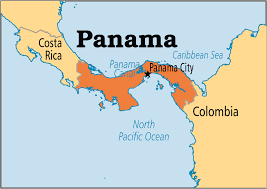
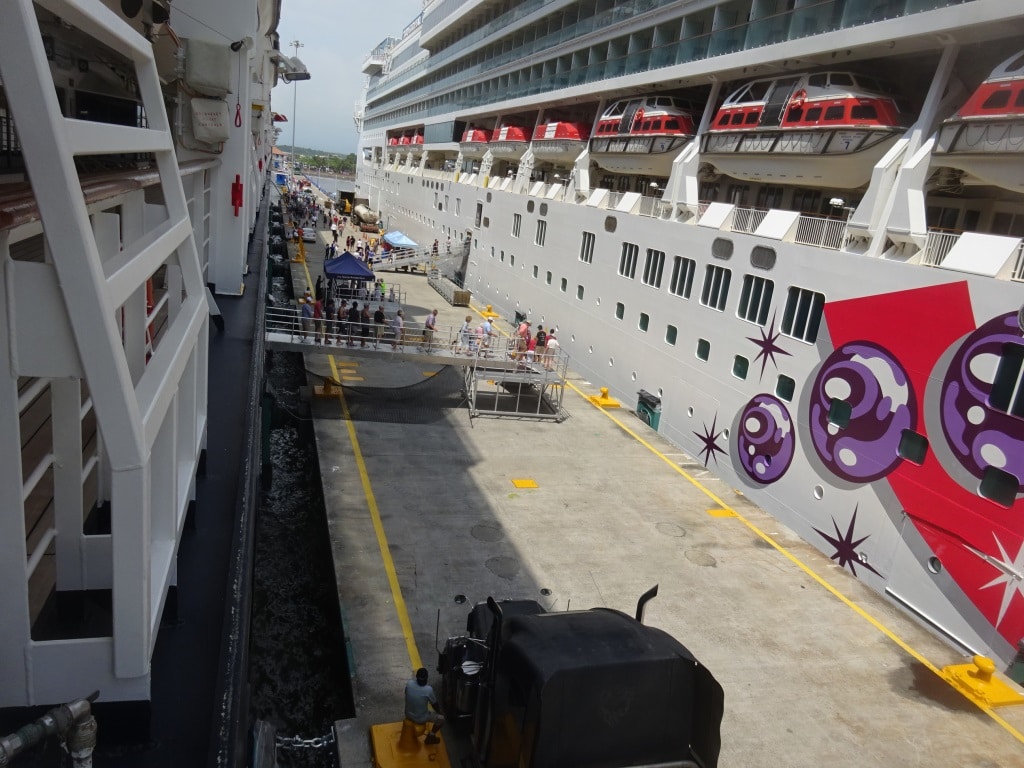
I will join the Nieuw Amsterdam for 3 weeks, until October 21 and she is making a trans canal cruise to Fort Lauderdale so we will be going from Rainy Alaska to Tropical Panama to sunny Florida. More tomorrow. For now a few more photos.

Old carpet in the Lido

The underlay of the new carpet coming in. It was all finished just when I left the ship.

It was not only carpet and plumbing, we are also getting a new dancefoor in the Rembrandt Lounge and Amstel Bar, and if my polish was correct, a re-alignment of the piano there.

We were not the only ship in the shipyard. There was also a Pudget Sound Ferry and two USCG ships. the Walsche and the Bertholf.


26 September 2017; Tacoma, Vigor Island Shipyard.

The main reason we are in this shipyard is because it close to where we ended our cruise and because we need Crane capacity to get all the carpet and other spare parts on board. Thus yesterday, we imitated the local ferry and raced across the bay. Then in the afternoon the containers were hoisted on board, emptied and exchanged for new ones again carrying even more carpet.  Then there are the waste containers which get removed and replaced if and when needed. That whole process should be accomplished by late evening of the 27th. and then the ship can sail; and it will sail as soon as it can.  From then on it will have 3 full days at sea to finish off all the work on board.

The last time I docked in Tacoma was in 1980 when I was a cadet on board a container ship of a company which was once the Hal cargo side. Holland America sold off its cargo side in 1973 when it had to make a decision between investing in expensive cargo ships (= container ships) or also expensive cruise ships. I came over to HAL when I had obtained my license. Being a cadet on a cargo ship is much more hands on than on a cruise ship, as a smaller team means that the cadet is given much more responsibility.  I do not remember much from those visits except that it was always cold there.

Early morning view of the Seattle sky line.

Now we are docked a bit further in the Bay and from the bridge we have a spectacular view of the skyline of Seattle, especially as we had a very nice and sunny day.

Arrival of the Carpet. Containers landed on around the Lido pool,

Life on board goes on in full swing and today the replacement of the potable water pipes started. That meant we were out fresh water everywhere, except in the Galley, for the whole day. We of course need water during the night hours and thus the replacement sequence is carefully planned. All pipes are laid out in the corridors and the ceiling (what we call under decks) is completely prepped for the exchange from old to new pipe. About 20 fitters work in one corridor at the same time to ensure that the replacement gets done in the allotted time and that testing is done before the full pressure comes on again. And indeed by 17.00 hrs. we had our water back. This process will be repeated in the coming days until all pipework has been renewed.

High work going on in the Dining room. all the carpet has been stripped for renewal as well.

It is not all carpet, pipes and furniture which has the attention, complete scaffolding has been setup in the Dining room to clean and inspect the glass ceiling we have there. The ships crew can clean the glass to a certain extend by dusting it but a detailed clean with soap and water is difficult if one wants to avoid damage. Thus we have a contracting company doing that. Another item is fresh wall paper in a number of cabins as well. For that reason one of the penthouses has been given over to a wall paper man.

A very posh wall paper man. He is not just using a cabin, no he is using the penthouse. (I wonder if he realizes he is working in front of a very expensive 17th century painting)

The crew is involved with all sorts of things, apart from supporting the needs of the contractors and doing their own work, a large number are also involved with trying to keep the ship as clean as possible. So as soon as carpets and underlay have been fully removed a whole Armada of sweepers moves in to make the area dust free. This is not limiedt to one group and this morning I saw Cooks, Waitresses, Housekeeping and a gentleman from the Front Office all busy with a broom to get rid of dust and small debris. And until the new carpet is down, they will have to repeat that every morning. Then the fight against the teak deck people will start. These gentlemen have now started with sanding the teak wood around the swimming pools and that creates dust everywhere. If it is wind still, then the dust stays where it is, but late this afternoon the wind started to pick up and that meant…………….

That wind is supposed to die down again during the evening. Tomorrow we are expecting a sunny day with noon temperatures of 24oC or 76oF. and that is supposed to last until we sail and even beyond.  The people of Seattle must wonder what has hit them. Summer in September. Maybe because we are in town ??

Late afternoon view of the Seattle sky Line.

25 September 2017; Seattle, USA.

We had a nice and early arrival and it gave the passenger terminal a busy time as behind us the ms Noordam slipped in as well. Our schedule was to have all the guests disembarked by 10.00 hrs. embark about 300 contractors and then sail to the other side of Elliott Bay just after 12.00 hrs. We will stay 2.5 days at Vigor Marine on Harbor Island as we need cranes to get all the containers with carpet on board and all the waste off the ship before we sail without guests to San Diego.  Sailing down the coast will take three days so the whole wet dock is just short of seven days all together.

A sort of unreal feeling pervades through the ship when it goes from the regular cycle of ending a cruise and starting a new one. Everybody is normally very busy to get all the work done between the last guest leaving and the first new guest coming and then the whole cruise cycle starts all over again. A wet or dry dock breaks that routine and although the work remains busy, for the Hotel Department the daily grind is replaced with a few new things. Although we have over 300 contractors on board Housekeeping can ease off a little bit as there is more time to do the work which is normally crammed into a very small time span.

The Bar Lounge and Deck Crew are suddenly out of work as it only takes so much time to clean the bars and pantry’s and do inventory and square everything away until the ship reaches San Diego. Their help is now needed in wet dock. Same goes for the Dining room. As everybody is eating in the Lido, a large number of Dining room stewards are out of a job as well. They all are now needed for wet dock work. I trained in the last week about 60 of the two groups in how to be fireguards; and to supervise all the welding going on for replacing fresh or potable water piping in the ship and a whole list of other steel work repairs.   Also the removal of carpet falls under their new job.

Carpet stripped and underlay and glue sanded off before New Carpet comes on.

The moment the last guest was off the ship; was the moment the first strip of carpet was ripped off the deck. We have a contractor company on board who will replace the carpet in nearly all the public area’s and also refurbish a lot of chairs and sitting areas. The ship’s crew is transporting all the lose carpet to the aft Lido Deck from where it goes into skips and is then hoisted ashore.  It is amazing to see how fast the carpet gets lifted and removed. The next challenge is then to get the underlay or padding off the steel decks. For that they use a sort of sanding machine as not all the underlay is easily scrapped off.  Everything has to be glued securely to the steel deck as with a moving ship the steel can flex and it also has to withstand the onslaught of daily vacuuming and wet shampooing on a regular basis.

The Upholsterers have setup shop in the Library and are in progress of re-upholstering all the settees in the area.

The Deck department runs the same watches as usual but now has the added challenge of the most dangerous situation a ship can be in: dry or wet dock. A lot of non-shipboard people are on board and all working hard but not all of them are necessarily working safely. Also a lot of work can be done that is hard to do when there are guests on board. One of them is the yearly life jacket check. Maybe hard to believe but life jackets travel from cabin to cabin for some unknown reason. Maybe guests are sleeping around and take their life jacket with them? I do not know but we always find life jackets from one cabin, sometimes 10 cabins or more down the hallway.

A small job but the work of experts is touching up the wear and tear to the railings of the dining room.

The by far the busiest group on board are the engineers. Wet and Dry docks are to a large extent technical happenings and apart from overseeing what the contractors are doing, there is also a lot of engine work which they want to do themselves as well; work that is difficult to carry out with paying guests on board. This time with all the pipe work going on all over the ship, it will need a lot of supervision and checking of all the work carried out to ensure that everything will work again by the time we reach San Diego.

So the big projects are this time, replacing piping in the corridors to the cabins, replacing a lot of public room carpet, refurbishing furniture, wooden deck repairs, upgrading a number of officer and crew cabins and carrying out a lot of small repairs to the guest’s cabins.

The Weather Gods are with us, it remained dry today and the weather forecast for tomorrow is similar. Not a bad way to start a wet dock.

24 September 2017 Victoria, British Colombia.

To comply with United States immigration and economic regulations (Passenger Services Act and Jones Act) we have to call at at least at one foreign port during our cruise. For ships that sail from Vancouver this is not an issue at all but for Seattle ships you have to select one. The fact that Victoria is a very nice port, and conveniently located near Seattle, makes it an obvious choice.  Getting there, depends on sailing around Vancouver Island and if the weather is nice, then the ships take the outside (South side) route coming down from Alaska as it guarantees a timely or even early arrival. Going the Inside Passage (North side) way, can cause delays due to traffic and in having to adjust for the slack tide times of the Narrows. Plus, as I explained in an earlier blog most of the scenic transit would be in the dark.

Thus we sailed early this morning into Strait Juan de Fuca although we did not see anything of it. A white cloud had reduced the whole area to very small world and the navigators relied on the Radar and the electronic charts to stay on the straight and narrow. But as the weather forecast had indicated partly sunny weather, it was almost certain that all that whiteness would burn away later in the morning. And indeed by 11 am the curtain was raised and we could see the whole Pudget Sound to starboard and Victoria to port in front of us.

The magenta dotted lines and arrows are there to keep the traffic apart and does not allow you to cut the corner.  Only when the pilot is on board you can leave the regulated track to sail into Victoria. There is traffic control which keeps an eye on all the ships. You have to report and you get told off if you do not follow the rules.

Because traffic for the whole area, Victoria, Vancouver, Seattle, Tacoma, etc. comes together over here, either to get in or to get out, this is a very busy place for ships. As a result the shipping community has long ago created traffic lanes to keep everybody apart. There where the ships need to cross each other’s track lines, a sort of roundabout system have been implemented, to make sure that ships do not cross each other’s bow but sail behind each other while crossing the area.

The pilot stepping on board. To ensure safety there is a deck hand on the pilot boat to help him up the pilot ladder and two sailors on our side to help step safely on board. Wearing life jackets is compulsory. Here the pilot has been safely transferred and walking towards the Security Officer to have his I.D checked.

Victoria throws another equation into this busy situation as it also has the pilot exchange point here. Either for boarding pilots who will guide the ships up to Vancouver, or for disembarking the pilots who come down from Vancouver and are destined for open sea. We are then a 3rd happening, by embarking the pilot for going into Victoria, which from the pilot station is barely three miles. So including docking it never takes much longer than 45 minutes from pilot station to being fully docked with the gangway out.

Victoria has a nice port but it can be very windy here so for captains this is always a mixed blessing. Yes we like to go here as it is a nice port and the guests like it very much but if the wind is under a wrong angle then it can be very complicated to get in and on occasion we have had to cancel a call because there was simply too much wind. That same wind is less of an issue for Seattle as it is further inside and then most of the wind has already lost its “teeth”.

If you push the ship in as far as it can go, then it looks as if you have parked in the local car park.

Today we had just a gentle breeze going, just touching wind force 3, and we sailed into port without any issues. The pilot hopped on board at 11.45 hrs. and 30 minutes later the ship started to ease into the berth. Here in Victoria we prefer to go nose in as it is a more natural maneuver to swing just 90o from an easterly course to a Southerly in the open harbor area, then to go stern way into a narrow space and bring the propellers or Azipods close to the dock wall. The dock is just long enough to accommodate the length of the Amsterdam and thus inching the ship forward as much as possible is also much easier than doing it stern way.

The ship will stay in Victoria until 22.00 hrs. and then will have a 6 hr. crossing to Seattle where it will start docking around 04.30 hrs. It will be a short night for the Captain and the Navigators as it will not be until midnight before the Pudget Sound pilot is on board and then 3.5 hours later the docking approach to Seattle will start already.

Once the guests are off, all mayhem will break lose with the ceilings being opened up for pipe replacement and carpets being torn out for renewal. While this is starting the ms Amsterdam will cross the bay to go to Vigor shipyard near Tacoma where we will stay for two days.

Unusual for Seattle, but good for us, is that we are not expecting any rain, or wind, and have a mild day with temperatures of around 13oC. 56oF. Not a bad way to end a very nice cruise.

This mural is painted on the inner breakwater of the port. Anybody who can decipher the language ??

23 September 2017; At Sea.

Today we spend most of the day in “hazy Weather”. Sometimes good enough to see the mountains of Vancouver Island and sometimes worse enough to only see the mast on the bow of the ship. Still I consider this a “ can be worse situation” as the ship offers enough diversion to keep everybody going and on this stretch of open water there is a limit to what you can see anyway. So the guests had to be a bit more inward looking, that is looking inward into the ship.

First of all the day started later than normal, as we had an hour forward during the night, so the ship could get in sync with Canadian time again. By the time breakfast was concluded there was quite a bit to do on in the ship.

Fitness, Shop sales (end of season T shirts going like hot cakes), Computer training, Americas Test Kitchen (with flavors of the Mediterranean), Art Auction, Black Jack tournament, Ask the Captain (now there are no longer bridge tours, the Captain gives a presentation and does a Q & A in the show lounge), Daily Movie, Games including Trivia, Afternoon Classical Music, High Tea and ………….. Bingo. And by the time you had participated in all those things, it was time to change into formal and to go for Cocktail hour.

I held my Holland America lecture on Hubbard Glacier morning and was blessed with a full house. 400+ guests in the main show lounge. If everybody sticks to one seat we can get about 600 guests in the show lounge but our guests like to spread out and for some reason shopping bags need a seat as well and thus I was fully booked, with guests and shopping bags………………. Because I only have 80 minutes, I leap frog through 143 years of history and I have to leave a lot of our colorful history out of the presentation. That always results in a number of guests stepping forward who want to know why I did not mention their ship. As Holland America had over 200 ships in their history, it is simply impossible. So I have a little Q & A session afterwards to focus on my omissions.

The ss Groote Beer departing from Rotterdam in 1952 for an emigrant voyage to Canada.

It is amazing that 50 years after we stopped carrying emigrants to the USA and Canada, there are still guests stepping forward who emigrated to the new world with Holland America. We must have done something good in those days as they are now willing to come back and cruise with us. One peculiar part of that emigration business which confuses most people were the emigrant ships of the Dutch Government. After WWII the Dutch government bought three victory ships with Troop accommodation and used them for taking military to the Dutch East Indies before they went independent in 1948. The government then wanted to use them for regular immigration and soon found out that running ships is totally different than running a government. So the three ships were given into the management of the three largest Dutch Shipping Company’s. The Groote Beer (Big Dipper) went to Holland America, the Waterman (Aquarius) went to Royal Rotterdam Lloyd and the Zuiderkruis (Southern Cross) went to the Netherlands Line. Holland America later on bought the Groote Beer and operated it for many years specializing in emigrant and student trips.

The ss Groote Beer had been built as the American Victory, then ss Costa Rica Victory. She was later on extensively rebuilt. Here she is seen in the 1960’s docked at Hoboken where the Holland America Line had its piers. For some reason the ship always kept the funnel colors of the Dutch Government Line (Trans Oceaan) she started out for.

What was confusing for the passengers was; that when any of those ships made a trip to New York or Canada, the name of Holland America was on the first page of the Passenger List. Then later on they would find out that they had not been on a Holland America Line ship but on something else. Reason was that Holland America ran the management and were the port agents for all these voyages to North America while Rotterdam Lloyd and the Netherland Line did so for the rest of the world.  So this Constellation Class of ships caused and still causes a lot of confusion among those who started their new lives by going across on any of them.

We will be sailing South of Vancouver Island for the remainder of the day and night and then enter the Strait of Juan de Fuca around 07.00 hrs. By noon time we should be at the Victoria pilot station and be docked by 13.00 hrs.

I expect that we will continue to have very low clouds until late tomorrow morning, unless the sun burns it all way. The weather forecast calls for a partly cloudy day 12oC / 54oF and that should just be nice for visiting the most English of all the Canadian ports.

« Older posts Newer posts »