By 06.30 we were approaching the Puerto Chiapas sea buoy and by now it is standard procedure that the pilot boat was already bobbing around on the swell. This is the only pilot in the whole of Mexico that I know of who is early at his station. Most are on time, some meet you half way in, some on the dock but this one is there at least 30 minutes before the ship arrives. Good reason to take advantage of and so instead of adjusting the speed for 0700 at the sea buoy, the OOW let the ship continue and we had the pilot on boat 15 minutes early. As mentioned before, I sail the ship into port here myself as with the current and the swell it is a tricky operation, but the pilot is very useful for an update about the last changes. The port entrance is nothing but a widened and deepened river estuary. Near where we are docking there are 3 rivers coming together and they deposit a large amount of silt in the river. That brings a challenge to the port as the entrance is continuously silting up and two dredgers are fully employed with keeping the fairway open. That means the deep water is only there where the dredgers have been. When you sail in, you try to stay on the leading lights which give you the centre of the channel. However with the silting and the dredging that is not always the best option. So the pilot sometimes advises to favor the red buoy side or the green buoy side, depending where the dredger has last been. Continue reading
Page 148 of 241
With a long swell rolling towards the shore we arrived at the Huatalco pilot station. However the angle was just right and the dock itself only had a gentle wave running of no more than a foot, so the ship would lay steady alongside the pier when inside. No moving gangway and thus no danger to the guests. There was a lot of swell in the little bay where I normally turn the ship around to go stern but I prefer to dock stern in, as it is easier to leave in an emergency and also because the bow “cuts” the swell when it comes in, while with the stern exposed it “bangs” under it. The only danger is, that during the swing, the swell gets hold of the ship and makes it roll. There is a simple cure for that; swing so fast that the swell does not get the chance to get a grip on the ship and start that pendulum motion. Luckily the S class swings the best of all the cruise ships I have been on or seen and thus we spun around like a caroussel on a high. The pilot is still amazed everytime he sees me doing it. 45 minutes after he was on board, we had swung around, backed up to the pier, put out the ropes and the gangway and got the authorities on board. The latter is always the hardest one, because invariably there is one among them who seems to be convinced that if not all 10 lines have been made fast, the ship will drift away and he/she might fall in the water due to a shifting gangway. So the faster we are, the quicker the ship gets cleared and the quicker our guests can “invade” the port. Continue reading
Until noon time it was completely wind still with just the occasional ripple. We call that in the nautical language “still of wind”, varying to “a light air”. Expressions dating from the days of sail that we still try to use, although it is slowly fading. Now with modern instruments we can measure wind forces of more than wind force 12, so a wind force 16 does exist in principle although it is not on the Beaufort Scale. Mr. Beaufort was from the sailing days so he could only go as far as he could observe changes with the naked eye. That meant for him it all stopped at wind force 12. “Such winds that no canvas can withstand”. In other words; if it is all blowing to pieces then that is the worst wind you can have and he was of course completely right there. Now with ships of steel, the chance of having things blown to pieces is much smaller. Now the danger comes more from the swell that comes along with the wind. That also means that we approach bad weather in a slightly different way. Strong winds do not affect the ship very much as long as everything is properly secured and we keep everybody inside. Only with a moving ship there is the chance of accidents and if the ship starts taking over water, then there is the chance of damage and danger to the ship. Continue reading
Because Puerto Vallarta is such a quick arrival, we do not have to arrive that early and so I could set my pilot ETA for 0700 in the morning. Sunrise is about the same time and that is always a perfect time to arrive. Although Puerto Vallarta does not have the problem; there are many ports where quickly after sunrise the wind starts blowing and that makes docking less easy. The air gets heated up over land and creates a sort of local high pressure system and a strong wind blows for as long as the sun is shining. It is a typical phenomenon in Greece, where they call it the Etesian winds. Although the Greek islands can be a windy affair anyway, especially around ports such as Rhodes and Mykonos, it really pays off here to try and dock before sunrise. Dubrovnik & Kotor Montenegro are similar places where the local “Bora” wind can really make your life difficult. The problems with those two ports is that you want to arrive in day light because going in and out is so scenic. Puerto Vallarta is protected by mountains and that means that the wind funnels over the mountain tops and only touches the sea surface about 3 to 4 miles from the shore. We saw that again this morning. 8 miles from shore it was blowing 25 knots but at the pilot station 1 mile offshore it was wind still. Continue reading
The weather remained the same as yesterday; with a strong Northerly breeze and a following swell. Only by mid day, when we were almost at Cabo San Lucas did the wind die off and the swell lose its strength. There was a very good reason for this. Cabo and Cabo Falso quite often referred to as the “Cold Cape, did honor its name this time. Today it really separated two weather systems. The boundaries were so sharp that I could point it out to the guests and even the most inept weather observer could see it. Behind the ship wave tops were indicating NW 4 to 5 winds; around the ship it was nearly wind still and ahead of the ship the wave tops were E to ESE 4 to 5 winds again. It is seldom that you can see this phenomenon so clearly defined. For us it was good, as although it being a Sunday, it kept all the six pack navigators tucked away in port and we could just sail around the Cape for a bit of sightseeing without having to keep changing course to avoid them. For Cabo itself, things where not so pretty. Easterly wind is only observed here when there is a strong cold front coming over and that does not happen too often here. If it happens then wind and the waves generated as a result of it, run straight over the anchorage into the harbor and then you have a problem. Continue reading
With a following swell we spent the day sailing southwards along the Mexican coast. Our average speed to maintain for a 0700 arrival at Puerto Vallarta is 17.5 knots and is just too slow to completely surf away from the influence of the swell. So on occasion the ship made this heaving movement that we call the corkscrew motion. Not rolling, not pitching but this swaying motion. Not very bothersome but just enough to remind you that you are on a ship and not in a land based hotel. Our speed was just enough to create a very pleasant weather condition on the deck. We had a following wind of 21 to 26 knots and with a ships speed of 18, it created a gentle breeze of about 6 knots. With sailing in the cold California current and the cooler northerly air flowing through the outside temperatures just touched the mid 60’s so it was a pleasant day, before we have to brace the warm weather of the tropics again. The weather forecast for the coming days looks good as well, until we come to Tehuantepec. In the Gulf of Mexico the weather is horrible at the moment and that wind funnels through the gap in the mountain range near Salina Cruz. Thus it is not very pleasant there and that will have my undivided attention for the coming days. Continue reading
Nicely on schedule we were heading for the pilot station for 0500, only to come across a very eager pilot and thus we had the pilot on board at 04.50 Not something I will complain about, it all helps with docking on time. I could understand why the pilot was early; it was just a magical morning for being in the bay. A bit on the crispy side, but wind still, cloudless, and the San Diego sky line as clearly defined as a high resolution post card. Just magnificent. There were two aircraft carriers in port, the 76 and the 70, which I think are the Nimitz and the Kennedy and as they looked completely stripped, not only of aircraft, they must be in the overhaul cycle. In contrast the museum aircraft carrier USS Midway CV 41 was lit up as a Christmas tree with every bell and whistle you can think of being on display. I am always amazed that a city, county or region is able to maintain such an expensive exhibit, even if draws large crowds, I doubt if it can finance itself. So there must be a great supporting group out there, looking after the old lady. Continue reading
One peculiar thing about the courses that we run between Cabo San Lucas and Sand Diego (and vice versa) is the fact that we see so little traffic. There is the occasional yacht passing by but that is it. The main reason behind this is, that just north west of Cabo there are a number of reefs. We stay on the inside of them, as it saves a number of miles on a more direct line to Cabo. For non cruise ships there is very little to do in the Cabo area and thus they take the wider route, staying west of the reefs. Going inside the reefs is not dangerous as there is plenty of water between those reefs and the coast line of the Californian Peninsula and thus we happily sail there. Our courses are being set out in such a way that after we have established the safe boundaries we try to squeeze the mileage to a minimum in order to save fuel and or save time. Most of the time it is a combination of the two with sometimes the emphases on fuel saving and sometimes on time. This time I leaned towards time saving as I wanted to arrive earlier than normal in San Diego. In arrangement with Customs and Border Protection, Port Operations and a whole other number of stakeholders we have a normal docking time of 0700. This time I was asked to arrive earlier as the ship had to go through a few crew inspection. That means that all crew has to see the CBP face to face and that takes place on a 90 day cycle. With a limited number of inspectors available plus the turn around that the crew also has to achieve, it would be beneficial to dock earlier and so I agreed. Continue reading
Then just before I retired a nice email came in from the local agent. The captain of the Sapphire Princess had decided to stay on anchorage nbr. 3. The ship had an overnight call and the first day it had been assigned anchorage 3 due to two other, more frequent calling, ships being in. However for the 2nd day, he had the right to move to anchorage nbr 2, as the SP is a lot bigger than the Statendam. He did not and thus I was given the option to move. That gave me the opportunity to anchor a lot closer to the port and so reducing the tender distance considerably; which for our short call helped a lot. The only downside is that anchorage nbr 2 is still exposed to ocean swell and the embarking and disembarking of tenders goes slower than when there is no swell at all. Still it is a lot better that being at anchorage nbr.3 or having to drift outside the marina and hoping that the wind does not pick up. That wind was not in the forecast but the weather forecast at Cabo is seldom completely right and especially the wind can un-expectedly pick up from zero to a wind force four or five, without much warning. Continue reading
I was indeed woken up to a hazy morning with hardly any wind outside and that remained so until noon time. Then we left the shelter of the Mexican coast behind us and started to cross the lower end of Bahia de California. Here within two hours the wind force increased from nearly zero to wind force seven, which is called a Moderate Gale in sailor language. So much wind was not predicted at all but as with the tehuantepec wind this is a funnel wind coming down the stretch of water between the Californian Peninsula and the Mexican main land. With a good high pressure system above Arizona and a low pressure system in the North Pacific a strong air flow is created that is nicely guided through this natural North-South stretch of water. It is not as strong as tehuantepec and not as common, as it needs a good low pressure system in the Pacific. This time there was one, as further out in the Pacific Tropical storm Kenneth is blowing and that storm created a nice “ pressure hole” off the Mexican coast. With us being in the open sea part it meant that we kept this windy weather for the remainder of the day. The good thing is, if this wind remains blowing from the same direction, then we will have no wind in Cabo San Lucas, as the mountain ridge, north of the bay, will provide a good shelter. That means that we then have won half the battle. The other part is the Pacific swell coming in and about that I will only find out when we get there. Continue reading
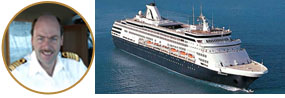
Captain Albert
© 2026 – Captain Albert's Website and Blog –
Theme by Anders Noren — Up ↑