PREV.NAME(S): British Empire, H.M.S. Hecla.
TONN. BRT: 3,329 NRT: 2,361 DWT: 4,069
BUILT AT: Harland & Wolff, Belfast, Ireland.
BUILT IN: 1878 YARD NO: 118
ENGINES: One four cylinder compound (28 x 60/54) steam engine by George Forrester & Company, Liverpool , England.
ENGINE OUTPUT: 1,500 Ihp. PROPS: One (fixed)
SERVICE SPD: 10.5 Knots MAX.SPD: 11 Knots.
LENGTH.O.A: 122.30 Meters. LENGTH.PP: 118,75 Meters.
BEAM OA: 11.74 Meters. DEPTH: 9.22 Meters.
DRAFT: 7.39 meters
PAX.CAP: 87 First, 70 Second and 650 Third Class.
CREW: 67 CALLsign: PRNB
SISTERSHIPS: None.
.REMARKS: Bunker capacity 1240 tons of coal.
——————————————————————
HISTORY:
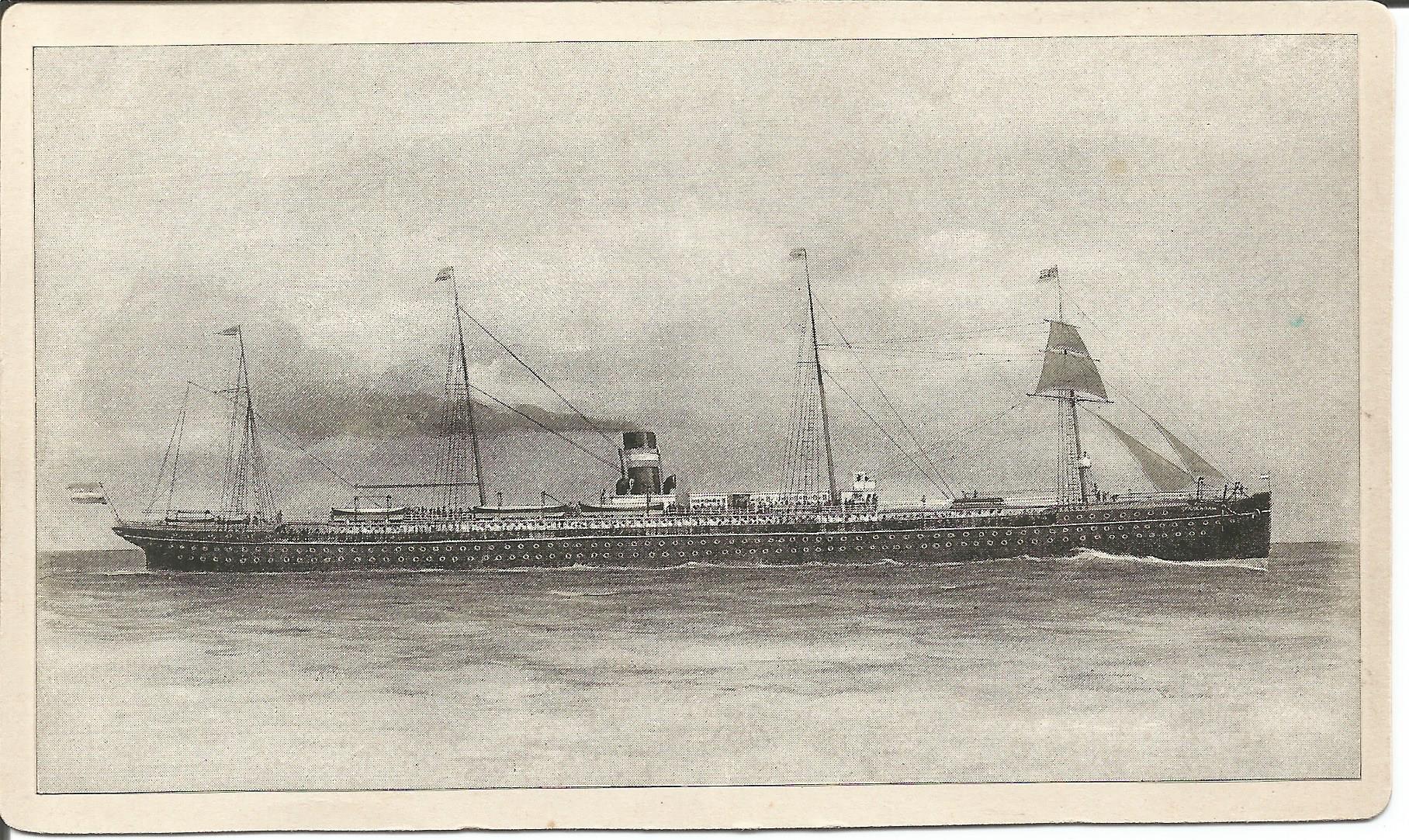
The ss Rotterdam (II) Seen here on one of the earliest illustrations known.
Constructed of iron with two full decks as a passengership. Could be rigged as a four masted barque.Keel was laid on 01 may 1876 and launched on 7 March 1878 / 18 May 1878. Delivered on delivered 10 or 24 Aug./September 1878 to the British Shipowners Company of Liverpool as the British Empire (3,361 Brt.) Commenced her maiden voyage on 25 September sailing from Liverpool to Philadelphia in charter of the American Line. Sailed in charter for various company’s and was for short while requisitioned by the British Admiralty to be used as a an Armed Merchant Cruiser and renamed H.M.S. Hecla. there are no records that she was officially commissioned as in 1878 the Royal Navy brought into service another H.M.S Hecla, a torpedo boat carrier and depot ship purchased in 1878and remained in service until 1926
Went in charter on 30 May 1885 for the Guion Line of Liverpool sailing between Liverpool, Queenstown and New York but made only one round voyage.
As far as is unknown, there are no photos or illustrations of the ship as ss British Empire and as H.M.S Hecla.
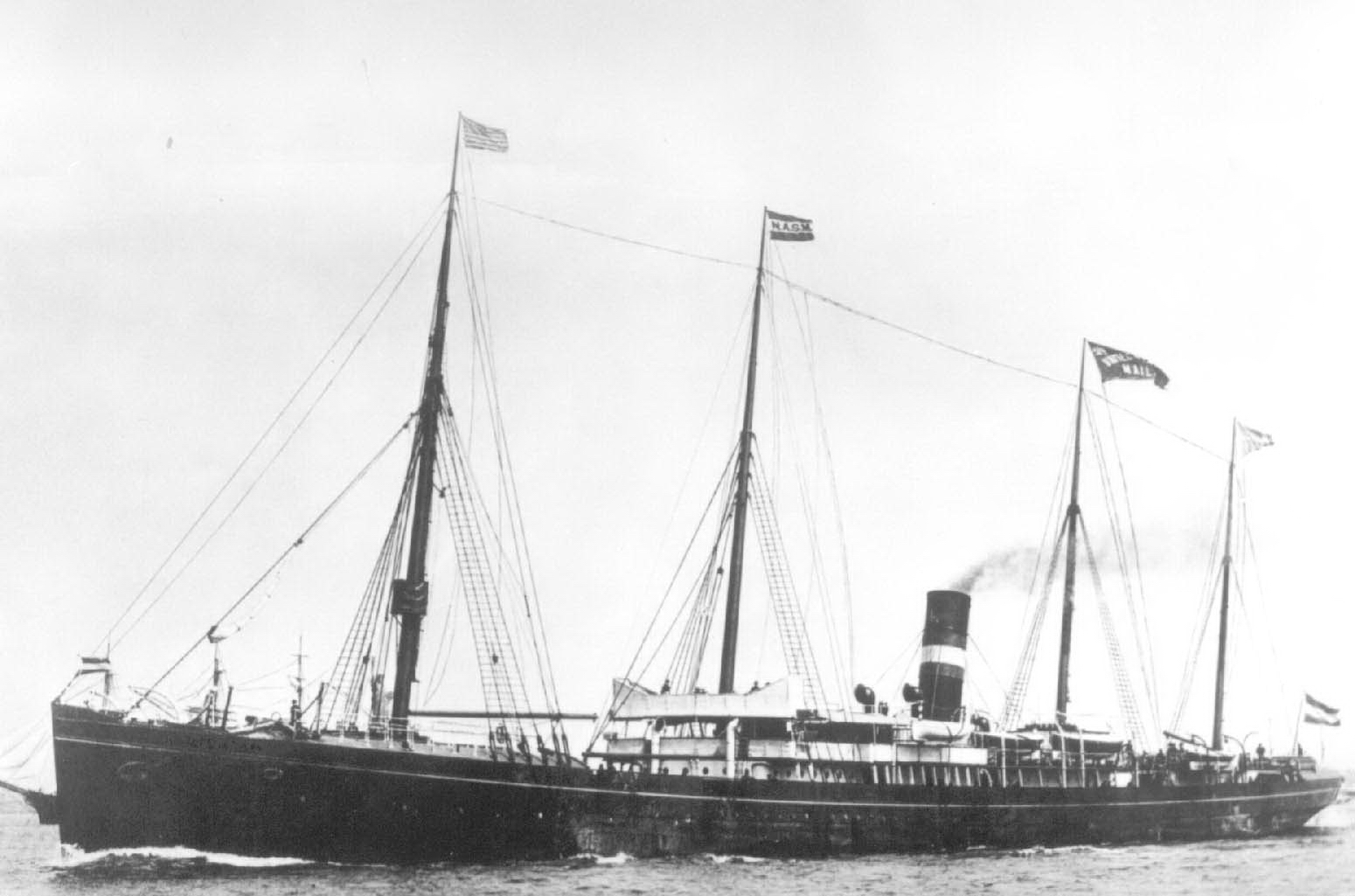
The ss Rotterdam (II) seen here at the New York pilot station of Sandy Hook.
The ship was bought by the NASM on 11 October 1886 for £ 25,000 and was the first one in the company with electric light. During this refurbishment before the maiden voyage a dynamo was installed which could power 176 electric lights. Renamed in Rotterdam (II). Left for her first voyage from Rotterdam to New York on 6 November 1886 under the command of Captain Gerardus Vis. She arrived in New York on 21 November and departed again on the 27th. beng back in Rotterdam on December 10.
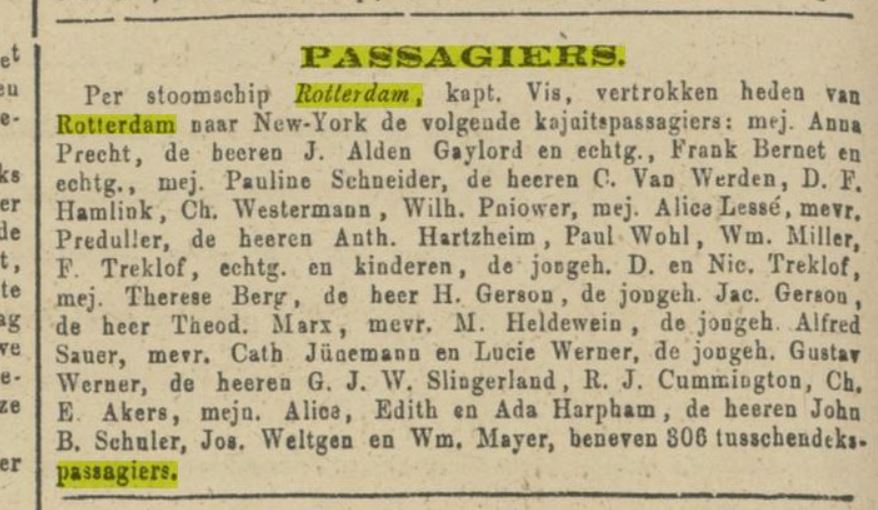
This is a newspaper listing with all the first class passengers on board during the Maiden voyage.
She remained on the Rotterdam service until December 1889. Voyage 28 (departure from Rotterdam on 28 December 1889 ended on 31 January 1890 in Amsterdam. She made 24 roundtrips from Amsterdam and returned to the Rotterdam to New York service.
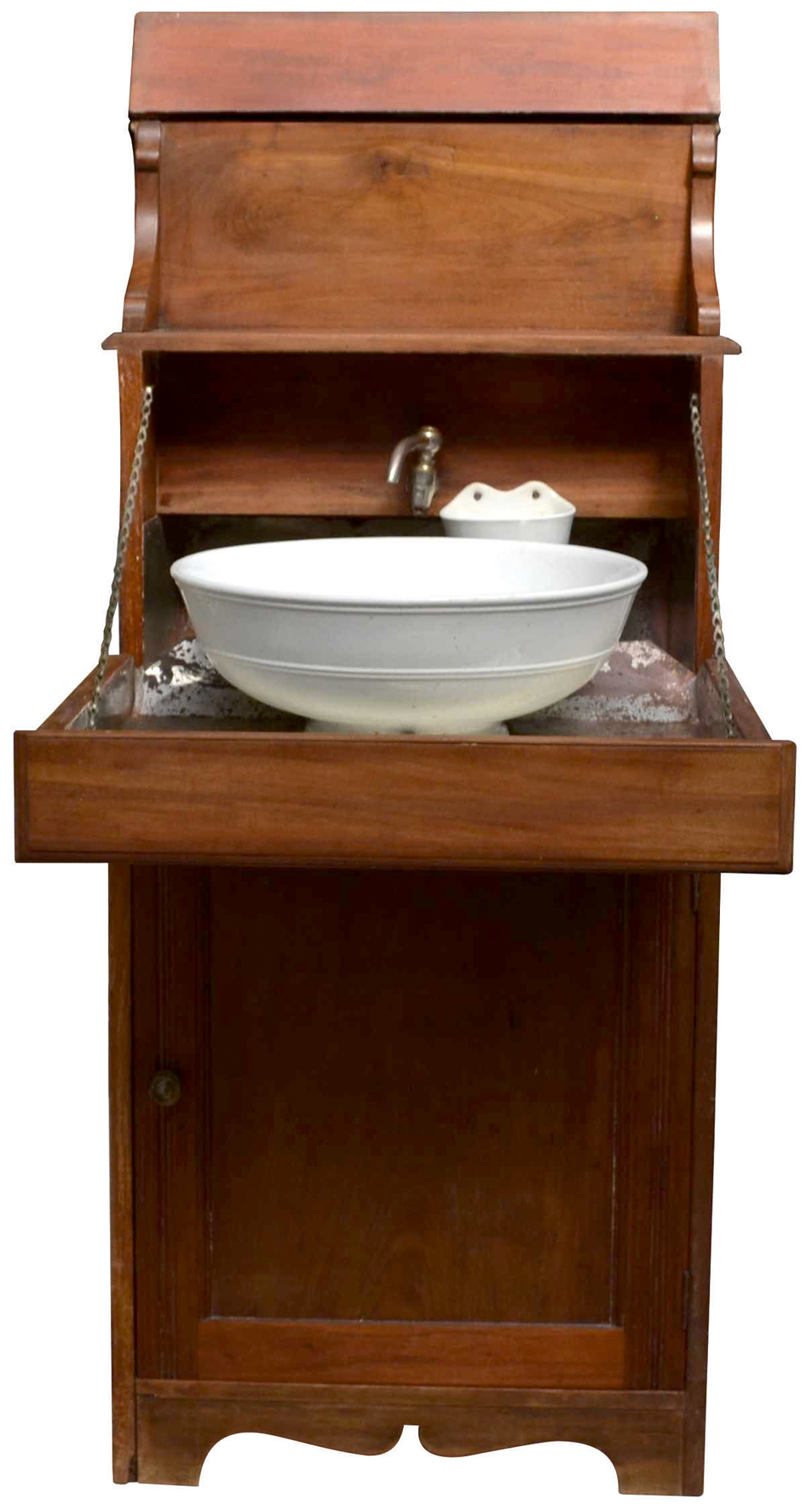
From the Rotterdam (II) a curious artefact remains, a first class wash basin. (Collection of the late Clive Hellinga). Above the washbasin was a brass container which the Steward filled with water. The used water was drained into a container under the washbasin and then later removed. This was quite luxurious for the 1880s’s.
Between 01 January 1895 and 02 June she was refurbished at the Nederlandsche Stoomboot Maatschappij at Rotterdam. This included the installation of a new engine, a four cylinder triple expansion steam engine which gave the ship a service speed of 12 knots. The accommodation was changed to 70 First, 70 Second and 800 Third Class by reducing the cargo space.
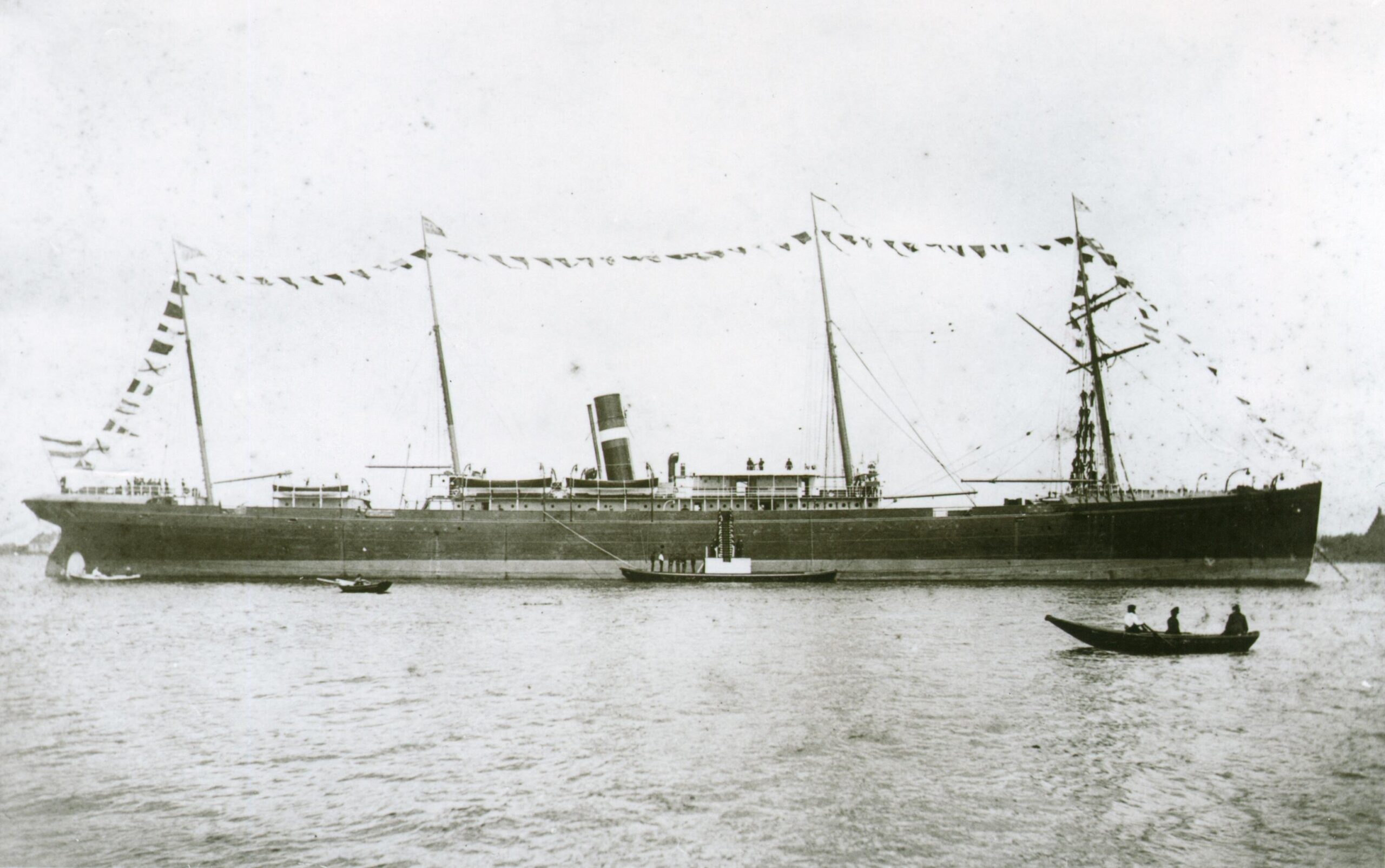
The ss Rotterdam (II) at anchor in Kiel, with a tender platfrom alongside to enable guests to go ashore.
She did not return to the North Atlantic but was assigned on the 2nd, of June to make an “excursion” the first company cruise to the opening to the Kieler Kanal. (Officially the Kaiser Wilhelm Kanal and later Nord – Ost see Kanal). For this auspicous occasion the company send over the Sr. captain of the company Commodore Bonjer.
She left Rotterdam on the 15h. of June and called at Copnehange (17/18 June) and then Kiel between 19 and the 22nd. The ss Rotterdam was the first foreign merchant vessel to transverse the canal on 21 June. And she was chosen as the Kingdom of the Netherlands was a neutral State and thus there would be no diplomatic incident with the greater powers in the world of “who would go first”. On board were 180 guests and the ship was back in Rotterdam on 15 June. The company had hoped that 400 people would have signed on, but the Netherlands were not yet ready for cruising and thus it was not until 1910 that HAL made the next cruise, but that was a foreing charter)
After her cruise, she made 2 more roundtrips to New York from Rotterdam and after the last one she ended up in Amsterdam again (14 November 1895)
On 28 November 1895 the ship was renamed in Edam (III) due to the arrival of a new Rotterdam (3). Passenger accommodation became 87 First, 70 Second, and 650 Third Class. The ship sailed then on the Amsterdam to New York service. Call sign: NMTD.
In June 1899 after having sailed for the two previous months from Rotterdam to New York, the ship was sold for scrap on 27 July 1899 to the firm of Micheli & Wassmuth of Genoa Italy for £ 9,600
Sources:
movement book group 1 nbr 4 hal archief.
Leave a Reply