For the morning we sailed under the coast of Panama, seeing various cargo ships on the port and starboard side. By 11.00 we turned into the Gulf of Panama and then it is 70 miles to go to the pilot station. That is caused by this strange curve, or crook in the land of Panama. When you head for the Panama Canal anchorage, you get the flow of all traffic, to and from the canal. Basically on two routes or track lines. The one we are on; which is followed by the ships coming from or going to the West coast of North America and the track line that is used by for the ships coming from or going across the Pacific. The closer you come to the anchorage the more these two routes converge and the more interesting it gets navigation wise. Continue reading
Page 132 of 241

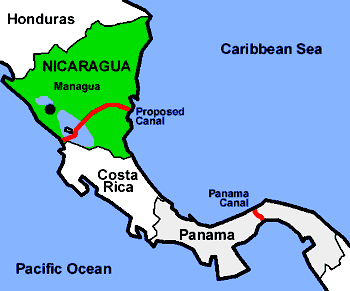
It got quite windy by the time we started passing Nicaragua and for a while we had a good wind force 5 to 6 blowing from the landside. By 11 am we came into the lee of Costa Rican mountains and nearly wind still weather came back to the ship. With it was the return of the black starlings and the brown boobies; who started to drift on the upstream of the wind around the bow. We were doing 19 knots and that was too much for them to try and find a place to sit on the railing but they might try tomorrow when we most likely will slow down a bit, depending on whether we get the current much against us or not. As mentioned before, when we were sailing along the Mexican coast, the current is not behaving according the established patterns at the moment and thus I am building up some time and mileage “on the sleeve” to ensure that we will be on time. If the adverse current does not show itself, then we can always stop an engine and adjust speed accordingly. Continue reading
They were fully awake in the port; and at the correct time the pilot boat came speeding out of the port. On board hopped a pilot who was all excited about our visit and the prospect of having breakfast on board. After the master – pilot conference, during which we decided that the ship would be in good shape, if I kept it in the middle of the fairway, we sailed into the port. As explained yesterday, the lifeboat and davit committee had requested a starboard side docking and that meant making a swivel maneuver. The approach course to the port is 292o then when inside the breakwater you make a turn to 017o, and then a sharp turn back to port to 270o. (When you go portside alongside it is 292o, a continuous turn inside the breakwater to 090o and then backing up to the dock). That happens of course with slow speed, while the pilot keeps two tugboats buzzing around the ship. Officially “to assist” but I think they are more concerned with avoiding ships from run aground and block their beautiful port. Everybody has their priorities of course. Continue reading
As the Tehantepec wind blew itself out by 11 pm last night, I could get a good night’s sleep before facing the next challenge of getting into Puerto Chiapas or not. All depending on the swell that might run, or not run, into the harbor entrance. The swell in this area is hard to predict due to the proximity of the tehantepec and it’s out flowing wind, which can really disturb the regular wave patterns. It did so this morning as well but for all the good reasons. The long pacific ocean swell was nowhere to be seen and we only saw the occasional breaker thrashing against the piers sticking into the sea but nothing on the inside of the fairway and thus we had nothing to worry about. Our pilot had made it in time to the pilot station, coming all the way from his mango farm in the interior and hopped on board all excited about the weather. He was also happy that next year there would be 33 cruise ship calls instead of the 19 of this year. More money in the pocket and less having to rely on a good mango crop. Continue reading
With a partly cloudy sky and no rain in sight we approached the Huatalco pilot station. The peculiar thing was that during the night the current kept increasing. A strong following current, while we were supposed to have a slight current against us. By the time I was lining up for the approach, the ship was set considerably to the East. Not pleasant when you have to enter a bay that keeps getting more and more narrow. When the pilot hopped on board, he brought the exciting news that at the start of the outer bay, the current was going the other way, so even more fun. Now I had to figure out where the easterly current stopped and the westerly current started, without knowing how strong that current was going to be. I discerned a ripple through the water and thus I knew where the first current was ending. With an educated guess I steered more northerly to offset the expected counter current. I had to give more and more current angle (e.g. degrees away from the regular course) and in the end we were drifting under a 30 angle into the bay. Continue reading
Our developing tropical storm behind us and the moving away of Sandy on the other side of North America, have created quite a bit of unstable weather here. The day started as forecast with sunny but hazy weather, but then by lunch time a long and wide band of rain started to come across us. Or better said, we were sailing into it. The deepening of the Pacific tropical low creates a westerly flow and in the Caribbean Basin, the weather patterns are trying to return to normal after Sandy has raced through it. As a result we saw heavy rain clouds appearing on the ships radar, and not much later in reality near the ship. In the beginning the navigator tried to steer around them, as the boundaries of each cloud where quite sharply defined but later on we had to give up as the clouds turned into one wide band of precipitation. Continue reading
The weather did have a surprise in store for us but it was a nice one. To the West of Cabo San Lucas, there are two tropical lows developing. They might even merge and turn into a tropical storm. Not much concern to us as they are far to the West and we are sailing away from it anyway, as we are going south. However based on the principle of the “giant vacuum cleaner” these lows are now starting to suck/pull all the moisture in their direction. That resulted in a sky with a light cloud cover and that brought the temperatures down with about 10oF. Down to the low to mid 80’s. A lot better for the guests than during our call 5 days ago. We were again the only ship, and the pilot expects that we will have that privilege for the rest of the season. So we docked at the Cruise terminal again and today we went portside alongside. Continue reading
This was our 2nd sea day and it was a very quiet and sunny day. Hardly any wind but still clear skies due to the cold northerly air from the last few days. We could see the haze increasing slowly during the day and that meant that regular Mexican weather is returning. It also means that the warm air out flow from the Mexican mainland can continue again and that will mean that it will not be as warm in Puerto Vallarta tomorrow as it was during our last call. Then this cold air acted as a sort of barrier over the Baja California and kept a wind still weather condition off the Mexican main Land. Now there should be a regular flow again, resulting in a more regulated air temperature. We will see tomorrow if that theory is correct. Continue reading
The two days of strong winds from the north must have played havoc with the currents in the area. We had it all against us on the way up to San Diego and so I was expecting that I would have a bit more with me on the way down, but that is not the case. The only theory, without anything scientific to prove it, that I have is that those Northerly winds pushed a lot of water south and that water is now trying to get back to where it came from, a sort of balancing the scales. We have 17.5 knots to maintain, what we normally can do on three engines, but in this case I have four engines running to keep up a speed of 18 knots so we can counteract the push of the adverse current. It must change sometime tomorrow as eventually a long standing current always wins from short term disturbances, but in the mean time I do not get any to get the oil back that I had to burn to get to San Diego on Time. Continue reading
The interesting thought of the morning was will the Santa Ana wind affect us at sea. Last night warnings came in about this dessert wind, which was expected to pick up in the early mornings of today and which was going to make the life of everybody living in the canyons and deserts a bit challenging. Most of the hills around San Diego run north south following the coast line and that should mean that we are well shielded. Only when we passed Ensenada there was suddenly a 30 knots strong wind coming from the landside through the mountain gaps there. It was only for 45 minutes and then the wind died down to zero again. Out in the open, off the coast, the wind was still fiercely blowing but was forecast to die down during the day. Continue reading
Captain Albert
© 2026 – Captain Albert's Website and Blog –
Theme by Anders Noren — Up ↑