It was a very windy day today. With a strong northerly outflow from the Oregon area we had wind force 5 to 6 blowing along the coast of the Californian Peninsula. The general curve of the wind was slightly off land so we did not have to sail in the middle of the wave field, but we still had 10 to 12 feet of waves. Not enough for the ship to start slamming onto the waves, but enough to get that bow up/down motion that we call pitching. Luckily it was only a small movement. The wind has been blowing here for a few days so much that the weather guru’s thought that it might form into a hurricane. That forecast fell apart again yesterday and now it is just windy. However this sustained wind caused the nice current that we have with us in two areas’s to completely go away and so we were bucking wind and current all the way since we left Cabo and we will do so until we reach San Diego. Not good for my fuel consumption and not good for any plans for arriving early. Continue reading
Page 133 of 241
Just before I turned in for the night, the agent in Cabo San Lucas provided a bombshell piece of information. During our call, there would be a sport fishing contest going on, with about 200 boats participating. Can you imagine, 200 Sunday sailors coming out of the bay at the same time? It is called the Bisbees Black and Blue and it is the largest fishing tournament in whole California. (American California included according to the locals). The contest was to start at 0700, just as we were supposed to arrive at the anchorage. So I brought my ETA forward by 30 minutes to make sure that we would be in position before the exodus was going to start. On arrival we were informed by Port Control that the first 50 were already coming out and they all streamed past by going under the ship’s bow. Normally there is one leader and the rest follows; and that was also the case here. Luckily there was a Port Security boat in attendance to ensure that no collision situation was created because some boats will blindly follow the leader, regardless of having a big blue steel wall in the way. Continue reading
It was indeed going to be a hot day in Puerto Vallarta; we could already see it when we approached the port. Wind still weather, not a cloud in the skies, and a gentle breeze but from the landside. So a warm breeze. The pilot was a very proud man today, as his boat was now equipped with a flashing light. Somebody had decided that it would be very official if the pilot boat had one of those flashing bars on the top, the same as you see on American police cars. And it did flash. You could see the boat approaching from miles away. The fact that the new flash bar (or whatever the official name for it is) completely obscured the required pilot lights was another matter and had most likely not figured very highly in the decision making process of the authorities. So when the boat came out, we first thought that Puerto Vallarta had been enriched with a security boat as the flashing light was the only thing we could see but when it came closer we could see, very faintly, the white above red lights in the mast indicating the fact that it was our pilot boat. But at least he was on time and without delay we sailed into the port. Continue reading
This is really a great cruise for people who like sea days or those who do not want to be worn out with ports every day. I think this cruise has a nice balance of a day at sea; a day in port and a day at sea again. On the Prinsendam I once did a back to back cruise where we managed to do 18 ports in 21 days. It looked great on paper, but when you have to do it, it gets very tiring very quickly. Fascinating to see all those ports, but when each port is in another country, the mental impact is enormous and then it is great to have a sea day inbetween. Experienced travelers realize this, which might account for the very high numbers of repeat guests that we have on board. This cruise it is just short of a 1000 and with 1160 guests on board that is around 85%. Thus part of my day was taken up with addressing the Mariners Brunch, handing out medals, having lunch with the high medal wearers and then hoisting another party in the evening to make sure that nobody was left out. In the afternoon I held my Holland America History lecture for a full Showroom at Sea and by the time that I was ready to go to bed, I had been talking nearly non-stop from 09.00 to 20.00 in the evening.
Tehantepec lived up to expectations. I was expecting 45 to 50 knots based on the weather forecast of Salina Cruz a town right in the pathway of this wind and I was not mistaken. We measured a top velocity of 48.2 knots. The only thing that was different than predicted was the expected time of the occurrence. Based on the forecast, we had been expecting the strong winds between 2 am and 5 am. But it was in the end between 5 and 8 am. During the night the axis of the wind must have shifted more to the west. Worked out fine for me, it meant I did not have to get up that early. We were all prepared for the rest, having advised the guests, closed all the outside doors, and added about 1500 tons of sea water ballast to the Starboard side, step by step, when the ship started to list on the increasing wind. Most guests followed the sound advice of the announcements but there is always one who has to be different. I heard that one guest insisted on opening the balcony door to see the wind and was then busy for the next 10 minutes cleaning up the cabin. When 40 to 50 knots of wind blow into your cabin, your clothing is not staying put in the place where you dropped it. Continue reading
The company has changed the cruise schedule for this season compared with last winter by adding the port of Puerto Vallarta North bound as well. That means that we will not have an evening stay in Huatalco de Santa Cruz any longer and it also means that now we have two high speed runs in our schedule. Sailing from Puerto Caldera to Huatalco and from Huatalco to Puerto Vallarta. So today we are sailing with the pedal to the metal towards Hualtalco also because I do not know exactly how much speed we will lose while going through the Gulfo de Tehantepec. There is a depression building up in the West Caribbean again and that means that by tonight it will start to blow again in Gulf of Tehantepec. At the moment I am forecasting about 45 knots of wind there; but it will depend on how early it starts whether the seas will have had time to build up and thus give us a wobbly crossing. That will all happen between 03.00 and 08.00 tomorrow morning and the time it starts depends on the angle of the wind axis coming from the main land. We will prepare accordingly for it, as explained in previous blogs, but it should not affect the guests very much. Continue reading
After yet another rainy night we approached Puerto Caldera while the skies were getting slowly lighter. Sunrise was around 06.00 and that was also the time that we had to be docked as the tours were leaving around 06.30. Thus we approached the pilot station at 05.30 to find the pilot happily waiting for us. He brought some good tidings; during the time that we were in Alaska they had dredged the whole port basin to 13 meters, giving the larger ships (and the Statendam is a large ship for this port) more room to maneuver. Some old wrecks were cleared and the approach to the basin had been made wider. The area is prone to shoaling but for the coming two or three years we will be in good shape. The dredger was still there, working at the edge of the port basin but that was slow going as it had to work around the arriving and departing tug boats and the patrol boats of the Customs. Costa Rica is not much of a drug user country as far as I know, but Puerto Caldera is a container port and thus there is a fair chance of the stuff coming into the country that way. Once somebody gets it out of the container it only takes a fast boat to get it away and thus the Local Customs Officers have fast boats as well. Continue reading
Today was what one could describe as a rainy day. Shower after shower came on the ship and I started to worry about the visibility in Golfo Dulce. It is not a problem for me to sail there without seeing anything, but we go there to see something of the shore side. Luckily by 11.00 hrs. we could see the mountain ranges and that meant the Gulf was not completely clogged up. And so we sailed into the bay. Golfo Dulce is part of Costa Rica and we clear the ship here for today and for tomorrow (Puerto Caldera). This means that the agent, the local immigration officer and a lot of family come out to the ship. The officials clear the ship while we do our scenic cruising and the family eats ice cream in the Lido. At 16.30 we then return to the drop off point and everybody goes home happy. During last call my boatmen (the sailors who rig the pilot ladder) were also very happy. One of the visiting family members was a young and very well endowed lady and when she pulled herself up the pilot ladder, everything popped out, giving the boatmen a glorious view of all that Costa Rica can offer. There were of course plenty of hands available to help to put it all back.
It was very busy at the anchorage with waiting ships, as well with ships going in and coming out. In the past there was only the West anchorage above the military area opposite Cristobal. But since they have built the Manzanillo container terminal to the East of Cristobal things are not that straight forward anymore. If you went through the canal and you had to wait you were ordered to anchor at the anchorage. Main reason for that being was Traffic Control at Cristobal signal station, then at least knew where you were and how to reach you. Now ships destined for Manzanillo do not anchor anymore but just float off the entrance area. Most of them are clever enough to stay out of the main approach and exit route, but not all of them. That can make it quite tight to get to the sea buoy on busy days. One day there is going to be a horrendous collision and then everybody will scramble to create another anchorage. At the moment the Panama Canal authority can only regulate what goes to or comes from the Canal and Manzanillo port does not get involved with what happens outside their port boundary. Continue reading
Today we were under the influence of a minor weather system full of rain clouds. As there was no trade wind to push the Rain clouds from the Panama area up into the Western Caribbean Sea, the clouds kept hanging around in the Colombian Basin and on a regular basis emptied their contents on the decks. The clouds were too wide to sail around and thus people got wet if outside on a few occasions. Still the weather for tomorrow in the Canal is forecast to be quite good and any rain that falls now cannot fall tomorrow. Continue reading
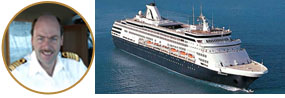
Captain Albert
© 2026 – Captain Albert's Website and Blog –
Theme by Anders Noren — Up ↑