- Captain Albert's Website and Blog -

Ocean Liner History and Stories from the Sea, Past and Present. With an In Depth focus on Holland America Line

Page 115 of 241

12 June 2014; Seattle Head Office.

Once inside the main entrance door, there is a large waiting area and on display is the Bell of the ss Rotterdam V. It is I think the biggest bell that has ever graced a Holland America ship as it weighs over 300 pounds.  How it got there is a nice story as well. Yours truly was assigned as Chief Officer on the Rotterdam V when it was going out of service after having been sold to Premier Cruises.
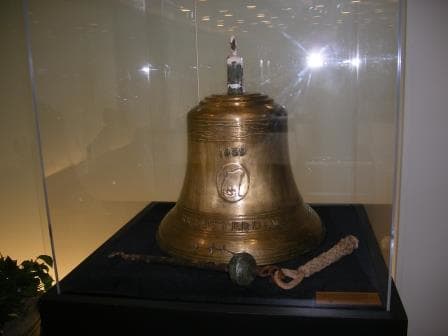
Rotterdam bell in the Foyer

Rotterdam bell in the Foyer


So apart from doing my CO’s job, my interest was directly peaked into the direction of the artefacts on board. It is not unusual that a new company throws everything out that does not fit in their corporate style and also does so because it does not have any affinity with the history of the ship.  Still the New Owners wanted to keep everything so in principle everything would have to stay, but our legal counsel said that everything that had the name Rotterdam on it would remain property of HAL.  Well that gave me some options. Because the ships name was Rotterdam but also the ships registration was Rotterdam.

The ship was going out of service on 30 September 1997 a deadline that had to be adhered to as the new Rotterdam (VI) was coming into service on October 1st.  You cannot have two Rotterdam’s in one company at the same time, it is too confusing. It was already confusing enough during the new build period, as we on board were getting mail meant for the Rotterdam under construction and the construction team in Italy was receiving things meant for us in Alaska.

The final cruise was a Trans Canal cruise which had been booked solidly with Rotterdam aficionados more than a year before. Everybody who was anybody on the regular world cruises, had to be on board, to say goodbye to the “Grand Dame of the Seas”, as the ship had been nicknamed for quite a few years already.  I was a bit wary about all these particular guests coming on board as it could be expected that they would bring screwdrivers with them to “procure” a final souvenir. We had during the final voyage extra security on patrol, just in case of. However they all found out that every valuable decoration had been very strongly attached to the ship. A mere screw driver was not enough……. and luckily nobody had thought about bringing a hammer.
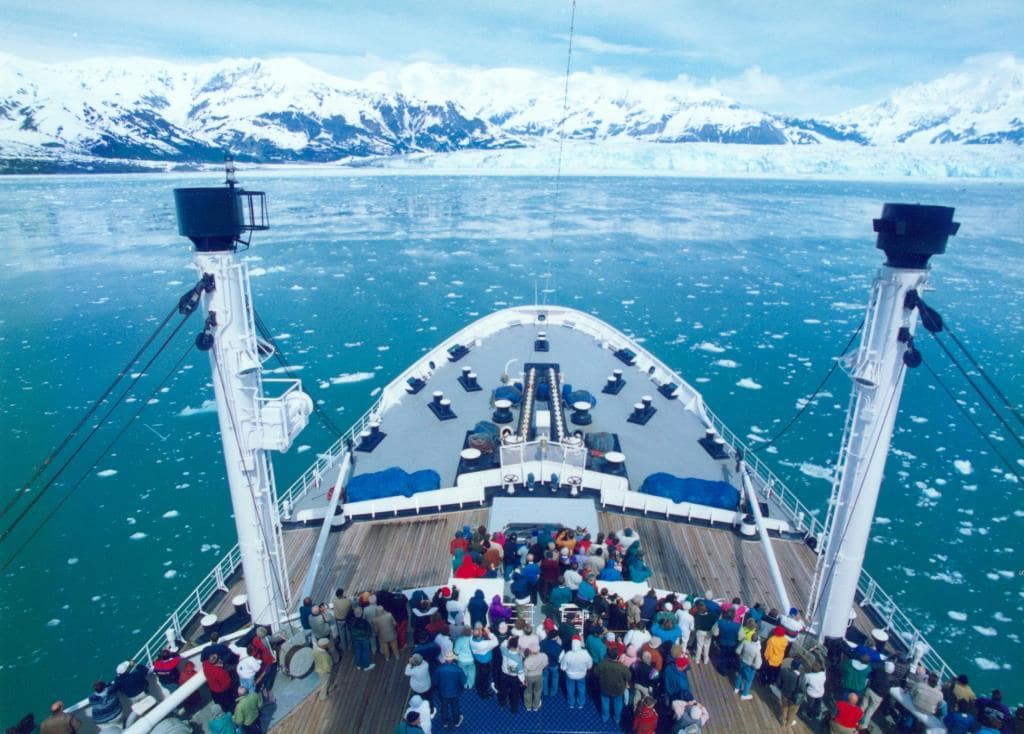
Bow of the ship with the bell in the center

Bow of the ship with the bell in the center

Just to be on the safe side I made arrangements to have everything off the bulkheads that was screw driver accessible before the last cruise started. In the end we only lost a Japanese Samurai helmet and whether that was a guest or a crewmember, we will never know. The First Port Call plaques hanging in the ship, and some of them were very nice, we auctioned off to the guests and we raised about $ 12000 for the Old Sailors Home in Holland. The plan was to buy a billiard for it but I never saw the result as a few years later, the sailors home was closed. Nowadays retired sailors prefer to live in regular Retirement Homes.

Anyway I had to ensure that all that could go off was saved before the last cruise started.   There was still quite a bit of stuff that carried the name Rotterdam, such as the builder’s plates, Chinese vases, the bust of Queen Juliana who baptized the ship, etc. etc.

And also the Bell. Nicely cast into the bell was the name SS Rotterdam.  So it was ours.  The carpenter made a beautiful box and the bell was duly landed in Norfolk dry dock.  Solas requires that each ship carries a bell on the bow to give danger and fog signals. It also describes that the minimum size of the bell mouth should at least be 300 millimeters in diameter. Otherwise there would be ship owners who would hang a Christmas ornament on the bow, just to save money.  The diameter of the Rotterdam bell is 1000 millimeter or one meter.  So when the replacement bell was installed, it looked a bit poorly and the new owner was not very happy.  But we conformed with Solas and to the contract and I had saved the bell.

And now it stands here in the entrance of the office building as a reminder of one of the greatest ships the company had ever built.
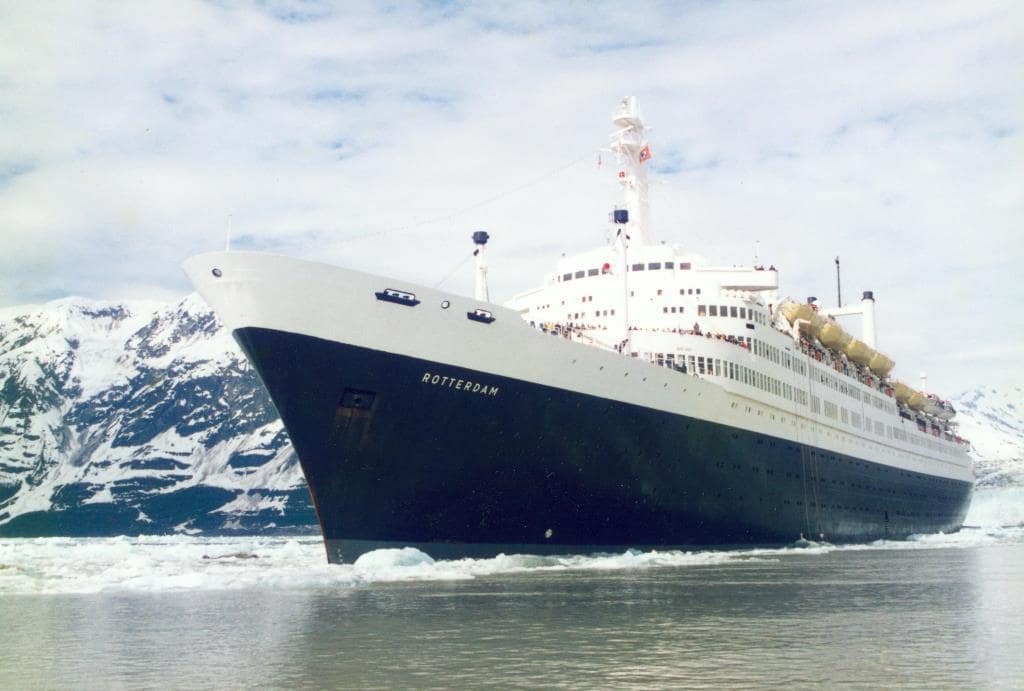
The greatest HAL Ship ever ???
The greatest HAL Ship ever ???


10 June 2014; Holland America Head Office, Seattle.

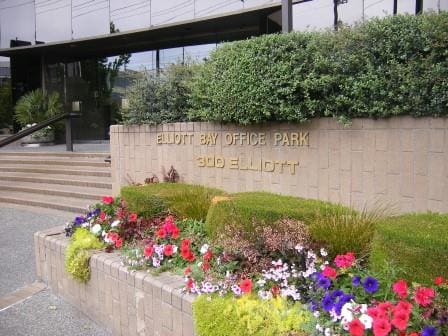
office bay park blogBefore we go inside there are two other items of interest. First off all, the building has an official name and that is: Elliott Bay Office Park. That was a new one to me as well, as most people simply refer to it as the Holland America Building. Courtesy of the fact that the companies name is on big letters on the front of the building.  But as there are other companies having offices inside, I suppose calling it the Holland America Building would not be correct, however nice it may sound. Continue reading

06 June 2014; Head Office, Seattle.

And so began my next adventure within Holland America. Part time in the office, part time at sea.  It took a little bit longer than expected but that was due to the fact that it was realized that I needed a different sort of Visa. There are about 10 different sort of US non-immigrant visas out there and as I am going from being a full time sailor to a part time sailor, I was upgraded from a C1-D visa to a L1 visa which gives me the right to leave the ship without being required to fly directly out of the USA. I am also allowed to do work ashore. Hence my arrival in the office without having any issues when I came through Immigration at Seattle Airport. Continue reading

06 May 2014; The Never Ending Need for Training, Part II

What HAL does in Asia? Holland America employs since 1971 Asian Crewmembers. This came about due to the rather progressive tax regime that the Dutch Government embarked upon in the late 60’s. Contrary to some other countries, the Dutch crewmembers had to pay full tax on their earnings. This meant that the wages had to go up and that made the cost of a cruise ticket prohibitive.  HAL management had the option to forgo the passenger ships and concentrate on cargo only or, to do something that would keep the wage cost under control. As a result Holland America experimented with Indonesians, who were from a culture that was used to the Dutch (and vice versa). Indonesia had been for 300 years part of the Dutch Empire until Independence came after the 2nd world war. That made it easier to understand and work with the Dutch Officers who remained running the ships. The change over was very successful and the situation has remained the same until the current day. In the late 70’s and early 80’s Philippinos came on board as it was found that certain skills could not sufficiently be sourced in Indonesia.  Carpenters, locksmiths, Upholsterers, Bar tenders etc. A situation that also continues to the current day. Continue reading

25 April 2014; The Never Ending Need for Training.

25 April 2014; The Never Ending Need for Training.

Training has always been a necessity to be able to do a job, or to be able to apply for a job. From the mists of time there are stories about people being trained to be ready for later life. The Romans who could afford it had slaves who taught their children, in the middle ages the Guilds would have extensive apprenticeship programs and since the 19th. Century schooling for everybody is a right laid down in the law. What has changed from the past is the pace in which things are changing and thus the need for constant updating; e.g. more training. Not too long ago a Master Craftsman could survive on his skills learned long time ago, augmented by his/her talents. Life itself would virtually remain the same and you could reach a ripe old age by “just doing a good job in the same job”. That has changed significantly; not only at Sea, but also Ashore. Since the seventies a whole industry has sprung up with as main purpose keeping those who are at work, at work. Continue reading

05 April 2014; the law is there to Protect, Part 2.

The current situation with international law as far as it concerns the seafarer has made it in a way easier; but also more difficult. The addition of MLC 2006, which you can call the human element in the whole scheme, has brought separated rules. With the result that obscure laws and scattered regulations were brought together in one frame work.  Which is really great as we can now find it, and we know if it really pertains to us or not.  The other side of the coin is that now we have this frame work, there can be compliance and thus it will be audited. Resulting in extra work on the ship, and thus also for the captain. Continue reading

03 April 2014; The law is there to Protect.

While here at home, I am busy with creating a number of training modules that will eventually be presented on the fleet to support the Master in his work. One of those modules is dealing with Flag State legislation. This legislation ensures that only qualified seafarers are working on board the ship. The legislative world in which ships are operating can be a complete nightmare as is usual in the shipping business, the Master is directly responsible for everything. That does not mean that he is not supported and protected by the head office. Far from that, but, in the same way as in European football or soccer, the keeper gets the ball first shot at him and behind him is a safety net. Continue reading

26 March 2014; The magic world of Checklists part 2.

Thus with all the brands under the Carnival Umbrella doing their own thing in developing checklists, somewhere along the line the enlightenment came that Emergency’s are not exactly Brand specific and thus checklists do not need to be Brand specific. That insight came from an un-expected angle; a training centre in the Netherlands. Continue reading

23 March; 2014, The Magic World of Checklists part 1.

 23 March; 2014, The Magic World of Checklists part 1.

The work that will form the bulk of the Travelling Trainer Job will be in relation to the safety drills and implementation of new procedures on board.  There is a slow but constant shift going on in the cruise industry and that is mostly due to the fact that more electronic support is becoming available. The old paper log book has disappeared and instead the assistant of the Watch is now typing directly what is needed into an Electronic file; which we call an E- log.  The same is the case for fire fighting. We are moving away from the safety plan under a Perspex plate (so we can draw on it) to a large screen that displays everything digitally.  The challenge for all of us in the Industry is to manage this process in the most effective way possible. Continue reading

20 March 2014; Back on Line and later at Sea.

Dear All,

I have been quiet for much too long for which my apologies. However in the past period an un-expected and exciting development took place with the result that my career is making a partial turn. Not that I will leave the sea behind but I will be at sea in a different way.  Continue reading

« Older posts Newer posts »