- Captain Albert's Website and Blog -

Ocean Liner History and Stories from the Sea, Past and Present. With an In Depth focus on Holland America Line

Category: ms Prinsendam (page 5 of 6)

Captain Albert: 24 May 2009, Santorini, Greece

Captain Albert SchoonderbeekCaptain Albert Schoonderbeek

When I approach Santorini with the ship I always have to remind myself that, no we are not crazy and yes in this case it is normal to sail into a Volcano crater. It is big enough and there is plenty of water but still it is a bit strange to do so. However it is an impressive experience when you sail around the central volcano cone towards the East shore where the most important villages are located. There are two entrances to the area, one from the South West and one from the North West. As we were coming from the Lower West we used the SW entrance as it was the shorter route.

The routine is for most cruise ships the same; first you go to O’Athinios to disembark the overland tour and then you slowly sail to Skala Fira where the tender docks for access to Thira which sits on top of the Cliff. As mentioned yesterday, the Prinsendam would have to drift all day, as a warship was at the anchorage. So I was intrigued to find out what sort of warship that would be. When we came around the corner we saw that it was a USCG cutter, taking on bunkers and doing some R&R.

Confusion reigned as they identified themselves as warship 917, while we could clearly see it’s was a USCG boat. Maybe the department of Transport was starting their own navy or something. However 917 rang a bell, I remembered that number from something and thought it could not be. But it was. The 917 was the same USCG cutter Boutwell that had played a very significant role in the sea rescue of the guests of the first Prinsendam in October 1980 when it caught fire in the Gulf of Alaska. It was thus a bit strange to see the Boutwell here in the Mediterranean and to have it meeting up with the 2nd Prinsendam. I joined the company a year later but I remember that there was a great feeling of gratitude among everybody for the work of the crew of the Boutwell during that operation.

Continue reading

Captain Albert: 23 May 2009, Navplion, Greece

Captain Albert SchoonderbeekCaptain Albert Schoonderbeek

It was busy during the night when sailed around the south point of the Peloponnesus. I counted 75 ships on the radar at one given time in a radius of 24 miles. They all behaved as they should but we had a little excitement when 3 miles ahead of us a little German coaster suddenly flipped on all his red lights. Five seconds later a very German accent came on the VHF announcing that he was not under command (e.g. could not control his ship) as there was air in the fuel lines to the main engine. Main engines do not like that very much so his engine had stopped operating. While they were solving that issue, the little coaster was drifting help less right in the middle of the shipping lane.

We had been in the process of overtaking that ship and to avoid any problems and excitement on his side we changed course a bit more to starboard and over took him at a safe distance. Shortly after our passing the red lights went out and we saw him making speed again. Once through the channel we made a wide turn to the North, a very wide turn to stay away from all the south coming traffic and then headed towards Navplion.

This town is located at the top end of Argolikos Kolpos or the bay of Argolikos. Argolis is the county or area where Navplion is located. Just to the north at the other side of the mountain is Corinth with the Corinth Canal. Unfortunately the canal is not wide enough for the Prinsendam otherwise we could have gone around the north side instead of the South side of the Peloponnesus. Apart from a few fishermen the bay was empty and without delay we dropped the hook as close as we could to the breakwater of Navplion. I wanted to go closer, but there was the proverbial fishing buoy right on the anchor spot. As you never know what is exactly hooked up to the end, and you do not want to foul the anchor, I had to stay a bit further out. By 9 am. A fishing boat came out to check if his buoy was still there and after a bit of argument between the occupants it was decided to remove the buoy with its cage located at the other end of the line. It seemed that we were not trusted to leave the buoy alone.

Continue reading

Captain Albert: 22 May 2009, Katakolon, Greece

Captain Albert SchoonderbeekCaptain Albert Schoonderbeek

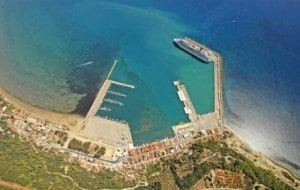
With a flat calm sea and the sun rising over the horizon we arrived at 07.00 at the pilot station of Katakolon. Ahead of us was the MSC Musica which was scheduled to dock at the outer breakwater. This is a 90.000 ton ship and carries 2500 lower beds and over 3000 when full. That spoiled it a little bit, as Katakolon is a little bit too small to take such an invasion. However she was only going to stay to until 2 pm. and thus our guests had the town all to themselves during the afternoon. The good news was that we, being the smaller ship, could dock at the downtown pier and that meant less then a 1000 feet to walk to the town with it’s shops and tavernas. Katakolon is a very nice place to go to.

The only thing with the downtown dock is, is that it is sitting on a crack in the earths crust and sulpher fumes come up through the water. Not much, but just enough that when you step of the gangway, you get a whiff of rotten eggs. I announced that yesterday to the guests so that they would know it was not sewage or something. It is a sort of low density sulpheric gas. If you go to thermal bath you have to pay an arm and an egg smell but here in Katakolon you get it for free.
katakolon-air-photo-300x190
The new pier is one sticking out from the promenade of Katakolon. The bigger ships dock at the inner breakwater.

A peculiar thing was today that my blog was involved in bringing two old friends together. A while a go I received on the Captain Albert email a request from a gentleman who was trying to trace the pilot in Katakolon. He had spent a long period in the town in 1998 when he was there stationed with a tugboat. However he did not know if the pilot was still the same and where he lived. So this morning I gave a print out of the email to the same pilot as then and of course he remembered this particular young man. When the pilot returned to the ship on departure, he told me he had already sent an email to Romania to get in touch again.

As with most small ports, the pilots are multi taskers who run several operations at the same time, just being a pilot does not bring enough money in the kitty. So he has a very nice restaurant in the town on the promenade. He owns the pilot boat and he has a share in the tugboat stationed in the port. The pilot boat can also be used as a ships tender and quite often employed by the cruise ships at anchor. I remember using it with the old Noordam in 2001, when I was pressed for time. I got my own tenders home early and then used the pilots tender for the final run which saved me at least 30 minutes on departure. You have to announce it early though as the pilot has to make sure that his boat driver does not go for a “happy day” ashore. Most of the time a “very happy day”.

I always have to laugh when this pilot is standing next to me, as you can put the clock on it, that by 07.30 his cell phone rings with his wife on the line. Telling him to hurry up with docking the ship as he has to take the children to school and to open up the restaurant. So I try to have the gangway out by 07.25 to make sure that he does not run into a domestic argument with his wife or his mother who is the cook of the restaurant. You can spend a leisurely day in Katakolon but the main attraction is going on tour to Olympia. There is also a good train connection for going in land but while there were close to 4000 people in town, the railroad workers thought that this was the most appropriate time to go on strike and so the trains were not running.

We were ready to sail on time and with a bit of a windy departure, I backed the Prinsendam out of the harbour and 20 minutes later we were on our way to Navplion which is located at the other side of the island. The Peloponnesus was originally a peninsula but since they dug the Corinth Canal it is now an island. We will travel during the night around the Southside of the island and by midnight go through the channel North of Kythira. This is the shortest route from the West Med to the East Med and to the Black sea and so we normally meet about a 100 ships here. As those ships are not always behaving I will have to be on the bridge for most of the night.

However the weather tomorrow in Navplion looks great. Sunshine all day, little wind and temperatures in the high 70’s. to low 80’s.

To access Captain Albert’s historical writings on Holland America Line as well as photos and additional information about Prinsendam and his sailing schedule, click here.
Captain Albert: 21 May 2009, at Sea

Captain Albert SchoonderbeekCaptain Albert Schoonderbeek

On this cruise we will be sailing through the Straits of Messina twice as the cruise is a loop cruise to and from Civitavecchia. As the stretch to Katakolon is not a very high speed run, I set the speed in such a way that we would be passing through the Straits around coffee time. That meant Stromboli at 8 am. so those who went for breakfast around that time could see the volcano cone on the port side. It was a bit hazy when we passed by with the smoke being absorbed by the clouds so we did not see any plume at all.

Pilotage for Messina is compulsory for big ships but it only takes about 20 minutes and it all goes very fast. Sometimes I wish that I could send the pilot boat drivers from other ports in the world for a course to Messina as it is amazing what they are able to do here with their boats. Most places you have to slow down to 6 – 8 knots, make a lee, change course again etc etc. Here the pilot boat comes alongside with 16 to 18 knots of ships speed and only request is that we keep the swell away from the pilot ladder area. Basically you can just continue your journey while doing a pilot transfer.

Continue reading

Captain Albert: 20 May 2009, Civitavecchia, Italy

Captain Albert SchoonderbeekCaptain Albert Schoonderbeek

Today we ended our 20-day cruise from Ft. Lauderdale to Civitavecchia. The cruise was called “off to Rome” and to Rome we made it, at least to the port of Rome. We were blessed with yet another good day full of sun shine and little wind and as we were saying goodbye to about half of our guests, I approached the port early. Luggage had to be taken off and then there was the ride to the airport near Rome. Traffic in the Rome area can be horrendous and thus a timely departure from the ship is of the essence and then it helps if I dock the ship on the early side to give the Hotel department a good head start.

We were not the only ship in port. Apart from the regular ferry traffic was an Apartment of the Seas (Voyager with 3100 guests on board) and the Grand Celebration with 900 guests. (This is the old Carnival Celebration which now sails for the Carnival subsidiary Ibero Cruceros of Spain. With a base capacity of 1500 beds, the ship was not very full). What also was not full was the container terminal and the new car receiving area next to our dock. It was distinctly empty, a sign that the recession is still in full swing. The port has recently extended the terminal area by filling up part of the North side of the harbour but it looks like that they will have to wait for an upswing in the economy before more cargo ships are coming in. However the container dock is shared with cruise ships and thus the investment is at least partly paying off.

Continue reading

Captain Albert: 19 May 2009, Monte Carlo, Monaco

Captain Albert SchoonderbeekCaptain Albert Schoonderbeek

Another beautiful day and another beautiful port. As Monte Carlo is facing east, it is always a pleasure to approach the port in the morning as the rising sun shines over the whole area. Apart from a few fishermen there was nothing in the way. The Sunday sailors and gin palaces were still happily tucked away in the harbour and so we could proceed unhindered to our anchorage. As we were banned to Fontveille, due to the preparations for the Grand Prix, I had to find another anchorage. Our regular anchorage is just to the North of the new pier. Right abeam is the Hotel under which the race cars run their race, but using that location now would result in a much too long a tender distance. When going further to the South, the water gets deeper and the only shallow place that is really nice for anchoring is prohibited. The Oceanographic museum has some sort of water inlet system at the bottom of the cliff and thus we cannot drop anchor there.

The Captain of the Azamara Journey was obviously suffering from the same problem and decided to anchor all the way to the south. So far that I thought he was going to run his tender service into the marina of Cap Agile. However the boats were also going into Fontveille making it a long distance for them. As it was nice weather and no wind expected, I had no problem with dropping the anchor in 80 meters of water (240 feet) and could thus keep the tender distance to the port to a minimum. Dropping the anchor is really the wrong phrase here; with such a water depth we lower the anchor on the windlass, shackle by shackle, all the way down. (A shackle is one link of the chain, which is about 30 centimeters) Because of the depth most of the chain is hanging vertically and thus you are never certain if the anchor has dug in when the ship is in position. You can simply not see how the chain is leading and where to.

Continue reading

Captain Albert: 18 May 2009, Portoferraio, Elba, Italy

Captain Albert SchoonderbeekCaptain Albert Schoonderbeek

The distance between Naples and Elba is just too long to have an early morning arrival and so we were scheduled to be there at 10 am. That is a decent time anyway. Time for a leisurely breakfast on board, followed by a nice stroll into town. Having the best of both worlds. It was indeed a beautiful day and when we approached the island from the West, the sun beamed its rays over the green hills of Elba. We approached from the West as the entrance from the East side is a bit tight. Although there is enough water, it has several death angles (e.g. you cannot see around the corner) and if suddenly a fisherman comes in the way there would be nowhere to go but to put on the breaks very hard. Engineers do not like that very much so I prefer to go through wide open waters if the ship has a high average speed to maintain.

By 0850 we were at the pilot station and a very happy pilot came on board. We were his only job for the day and so he was bringing some money home that day. We were directed to the middle of the anchorage just in view of the harbour. There was a pier available but it was just too short for the Prinsendam to fit at. Next time when we come back it should be ok as they going to extend this pier during the coming winter. However as mentioned yesterday, the tender run into the port is very scenic and gives a nice overview of this most charming Italian town.

Continue reading

Captain Albert: 17 May 2009, Naples, Italy

Captain Albert SchoonderbeekCaptain Albert Schoonderbeek

It turned out to be a beautiful day in Naples. Almost no wind, sunny skies from arrival to departure and temperatures in the mid 70’s. Just the weather that a cruise should have. The Prinsendam arrived as scheduled at 7 am. at the pilot station and as the pilot was already waiting we could just continue directly to the berth. Sometimes the pilot likes to do some work but not today. Which meant that I just continued conning the ship into the harbour and after swinging around docked starboard side alongside the cruise terminal or Stazione Marittima as they call it here.

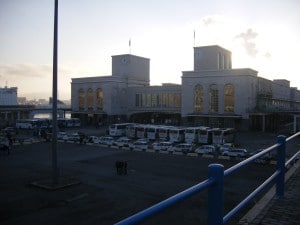
Certainly impressive 
if you arrive from the city side.

Certainly impressive if you arrive from the city side.

This terminal was constructed in 1936 with the official reason that there was such an upswing in traffic from the port that a new dedicated passenger terminal was needed. What however played in the background was that Mussolini had started to push for a merger of several Italian passenger liner companies’ in what eventually would become the Italia Line and later Finmare. In the thoughts of the Fascists, this also meant that the terminals from which the passenger liners would depart had to be big and impressive. This resulted in an indeed very impressive terminal here in Naples that can deal with up to 10 smaller passenger vessels. Nowadays as the ships are bigger there is normally room for a maximum of four.

Continue reading

Captain Albert: 16 May 2009, Messina, Sicily, Italy

Captain Albert SchoonderbeekCaptain Albert Schoonderbeek

There was less wind during the night than expected and so I was starting to wonder whether this whole bad weather thing was going to happen at all. It would not have been the first time that a weather front changed direction and throw the meteorologists completely off track. By 5 am. in the morning it even turned wind-still for a little while. However this was the “silence before the storm”. When we approached the Messina pilot station the wind gradually started to pick up and kept picking up. The pilot came on board while it was wind force four; when we made the turn into the Strait of Messina it was wind force six and by the time we were in the strait it was wind force 10.

Wind force 10. That is heavy, heavy storm. The wind meter gave a peak wind of 52 knots. This was going to be very interesting I thought. The pilot, who had just announced that he was going to retire in six months after 25 years on the job and thought he had seen it all, was slowly getting nervous. I had already ordered a tugboat for arrival to off-set the drifting of the stern that would be caused by the then predicted wind on the funnel and now the pilot was calling this tugboat every 5 minutes for a wind update. Luckily you can approach Messina to about 1.5 miles from the harbour entrance and still turn safely away. We call this the abort point and as long as I am not past such a point I am never unduly concerned. As long as there is a plan B, I am always willing to try something.

The wind in the port was about 25 to 30 knots, but full on the beam when docking, and that can be done but it can be marginal for the Prinsendam. The main problem here was that the dock is 220 meters long and the Prinsendam is 204 meters long and thus there would not be much room to play with. However some luck a man must have in life and while we were approaching the port entrance; and I was watching the distance to the abort point very closely, my plan B, the wind started to subside to fewer than 20 knots in the harbour. We were in business. At the entrance to Messina harbour is a large statue of Christ the Savior located at the end of the break water and the pilot spoke a few thank you words of relief while we were passing.

Continue reading

Captain Albert: 15 May 2008, At Sea

Captain Albert SchoonderbeekCaptain Albert Schoonderbeek

Today we were in transit to Naxos. Not the Greek island Naxos but the little town of Naxos/Gardina which gives access to Taormina with the Volcano Etna. This port is not much more than a Marina hidden behind a small breakwater in a wide curved bay. The bay is basically a dent in the coast line and fully open to the Ionian Sea. It is located about 40 miles south of the Messina Straits. This is a port that has only recently appeared on the Holland America Calendar and was a new port for the Prinsendam. In order to get there we had a fast run from Ibiza across the middle part of the Mediterranean to the Strait of Messina. The course line took us about 12 miles south of the island Sardegna and by late evening it ran north of Sicily for the approach to the Strait of Messina.

However during the day alarming emails started to arrive from the Naxos agent about very inclement weather expected in the Ionian Sea. That is the part of the Mediterranean directly south and east of the lower part of Italy and also to the east of Sicily. South Easterly wind was expected wind force 8 and that meant that waves would be rolling directly over the anchorage area and into Naxos bay. So I called the pilot and he estimated that the waves would reach a height of approximately 8 feet and that is much too much for a tender service.

However there was a dock available in Messina so we had the option to deviate. As Messina is basically located at the other side of the mountain range, it would be possible to divert not only the ship but also the tour busses to Messina and in that way minimize the impact of the decision. So by 1700, I decided that we would go to Messina. As we were going to pass this port anyway while sailing through the Strait of Messina, we could keep the same route and courses and that made the life of the navigator a lot easier.
Also as we now had about 40 miles less distance to travel, I could slow the ship down and that would make for an easier ride when these winds would start to blow. Although most of the wind was expected in the Ionian Sea, a wind force six was expected north of Sicily which could whip up the waves opposite to our travelling direction. With the reduced speed, the Prinsendam could ride the waves very steadily and was hardly moving during the evening and night.

Continue reading

Older posts Newer posts