Tehuantepec behaved itself and the maximum wind we observed was 27 knots and that is very little for that area. I would be very happy if we had that all the time. As soon as we came under the lee of the land again, the wind died away completely. And with that I mean wind force zero, calm of wind, not a ripple on the ocean. Hualtalco is protected from the wind on all sides except from the entrance side to the South East and that normally means that the wind in the port is very light, but to have a flat calm is something you seldom see. Even in the afternoon, when normally a land wind rises, the wind velocity did not go above 8 knots. Perfect Easter weather as far as I am concerned. By 10.45 am we were at the pilot station and by 11.30am the Chief Officer had safely docked the ship, while I did his job for a change. All of course under the watchful eye of the pilot, who made the appropriate noises in his walkie talkie to keep the linesmen under control and the navy boats out of the way.
Page 144 of 241
With the Pedal to the Metal we sailed away from Puerto Caldera soon making up for the lost time. I knew the weather was going to be as smooth as could be and that would all help with making speed. With no adverse wind around, nor having been around for the last 7 days, the currents would be predictable and they were. Along the coast of Costa Rica and Nicaragua they gave us an extra push of 1.5 knots until we came abreast of Guatemala. By now we were about 80 miles from land due to this curve in the continent, while we were on a straight course. Here the current keeps following the land but when near Puerto Quetzal the land becomes straight again so the current is directed back to the south and then we get that 1.5 knot against us for about 5 hours. Still over the whole distance between Puerto Caldera and Hualtalco we have on average the current with us and that is always pleasant. Continue reading
By 05.00 I dropped the anchor as close to the dock as possible and by 05.30 we had our tender service in full swing. There was hardly any wind as was forecast and little change was expected, so although we did not dock we could live with it. The dock was occupied by a self unloading bulk carrier and a car carrier. Hence the reason that we had to anchor. I had tried to arrange for the tours to return in the same way as they departed bus by bus load but most busses came back at the same time and although we had a perfect tender service running, it delayed the return of our guests to the ship as you can only load one tender at the time. As a result it was passed our official departure time before the last guest was back on board. Then we had an un-expected disembark and that meant that we left the anchorage more than an hour late so I was not a happy camper. Hopefully we can convince the port authorities that we have to dock next time. Still I will be able to make up the lost time and reach Hualtalco on time. Continue reading
A sea day with something to do in the afternoon is a nice way to relax after a long and dynamic day in the Panama Canal. I had been keeping my fingers crossed for Golfo Dulce as with the start of the rainy season it can rain here very hard. So hard that visibility can be reduced to less than a quarter of a mile. That does not help with scenic cruising of course as I have to stay half a mile from shore when doing so. The area is not very well charted for close- to-shore sail by’s. We know where the deep water is, but we do not know how deep the shallow area’s are and thus we keep a good distance. There are many rivers ending in Golfo Dulce and they all deposit sediment along the shores and that means that banks are forming everywhere, especially where the tidal movement does not churn the deposits away again. This is happening to the great delight of the fishermen as the forming backs seem to be ideal for clams and oysters. I can never get very excited about sand banks especially if I do not know where they are, and that means that I keep a good distance. We saw some heavy rain clouds nearby depositing a lot of water on the land but luckily it was to the west of us and we had a dry experience with good visibility. Continue reading
As usual it was a bright and early start with my telephone ringing at 03.30 with the wakeup call. When I arrived on the bridge it was a very nice morning, overcast, but no wind and with lots of ships around. The majority at the anchorage but also with ships approaching, ships coming out of the Panama Canal and traffic and in out of the container port of Manzanillo next to the Panama Canal entrance. It kept us all on the bridge happily occupied trying to figure out the best way of getting through it all. The air was full of conversations with varying degrees of understandable English spoken. Chinese English, Panamanian English and a very Greek voice that sounded as if its owner had been eating gravel for breakfast and had then washed it down with a least a litre of Scotch. As requested we entered the breakwater at 0500 hrs only to find our way blocked by a enormous dredger. We could not miss it, as it was lit up like a Christmas tree but Cristobal signal Station only advised to keep clear of it after I had already done so. We had been made aware of its existence by a rather heated exchange over the VHF between the Skipper of the Dredge and the Panama Canal Control about sitting on one side of the Canal fairway or on the other. When we entered the breakwaters it had just moved to the West, so we sailed by on the East side and then we drifted while the whole clearance routine took place. Boarding Officer, Fumigation Officer (disappointed again as we did not have Yellow Fever, nor cockroaches nor rats on board) Panama Canal Technician, Ships Agent, narrator and then finally the Pilot. Continue reading
With the wind in the back we sailed away from Aruba and that following wind, nearly Gale force wind will remain with us until we come in the lee of Panama. For most of the day we will sail above an area (about 10,000 feet above) that is called the Colombian Basin. Basically the name indicates a fairly flat area (if you compare hilly ridges of a few 100 feet with the average depth of 10,000 feet) surrounded by high mountain ranges. The South and Eastern side are Panama and Colombia which come as land above sea water level but are basically nothing else than but tips of these mountain ranges. Because some of these tips are so wide and large we call them continents. As we are approaching Panama on a straight course, with somewhere behind us major ports and also the only route for ships to follow to get to the East side of South America, it is busy with shipping. Ships either coming or going to the Panama Canal itself, or to the port of Manzanillo just to the East of Cristobal. Manzanillo is a recently created container port which came into life when Panama started to redevelop the Panama – Trans Continental – Railroad. Now there is for container services the option to land containers at one side of the Canal, send them across by train and load them back on ships at the Balboa side. It saves the Panama Canal transit. Tomorrow we will see several times during the day one of the trains with containers coming by. Continue reading
For those who are interested and want to try and catch our transit on the webcams:
http://www.pancanal.com/eng/photo/camera-java.html
The below was received today: Please note Panama Canal Authority has scheduled your vessel to commence Panama Canal transit at 0500hrs (GMT minus five hours), therefore you should adjust ETA to be 0500 hrs @ breakwaters entrance @ this time to pick transit pilots up. Once at radio range please contact Cristobal Signal station on VHF channel 12 for latest traffic and transit information.
Transit will continue as follows:
Gatun locks (East Lane) Arriving 0630 hrs Departing 0815 hrs
Passing by Gamboa 1110 hrs
Pedro Miguel Locks (East Lane) Arriving 1240 hrs Departing 1320 hrs
Miraflores locks (East Lane) Arriving 1415 hrs Departing 1515 hrs
ETD Balboa 1700 hrs
Note: after 08.15, this schedule might be subject to extremely much change as it depends on the speeds of the other ships in our convoy and that of the opposing one. Time difference: 6 hours earlier than in Holland, 5 hours earlier than in England. 1 hr earlier than East Coast USA 2 hrs later than West coast US.
It was very windy upon arrival OranjeStad. Luckily the wind direction was in line with the approach to the harbor entrance and meant that the drift was controllable. Because the harbor entrance is nearly perpendicular to the direction of the current you are always set one way or the other. If the current is the dominating force you are set to the West, if the wind is stronger you are set to the south. One to 2 knots of sideways set is not unusual. Today is was only 0.7 knots and with steering a course of 105o against the entrance course of 110o I was able to sail in exactly on the dotted line. The pilot had more problems with the weather than I had this time. Even with the best lee possible, there was enough swell along the ship to making boarding an acrobatic adventure. By the time he made it to the bridge I was already entering the harbor. Not my fault for not waiting but the pilot station is so close to the entrance that by the time that you are there, you cannot stop or abort anymore. Continue reading
When we entered the Caribbean Sea proper, it was windy, very windy. With the summer coming, the sun is burning heavier on the area than in the winter and thus the thermal flow caused by this is going up. That means that the gentle winter breeze of the Trade Winds is strengthening to near Gale force winds and that becomes the standard for the remainder of the summer. As Aruba and the rest of the ABC islands are located at the far West of the Caribbean Sea, they get the most of it with the longest open sea area to the East of them. As we are heading in that direction we will enjoy the full brunt of that as well. It has been blowing in this area more than usual as well and means that also the current is stronger than normal. On our way North, last cruise, we suddenly had much more current with us than expected and thus I was bracing myself for the opposite when going this way. I was not disappointed. Nearly 3 knots of adverse push and that meant that I had to bring another engine on line. That costs more fuel and makes my chief engineer very unhappy. He had hoped to buy a New BMW this year from the savings but it looks now that he will have to settle for a new spare tyre only. Continue reading
We had a very peculiar day today as far as the elements were concerned. I had expected a steady current against us of about 0.75 to 1 knot but instead it fluctuated between zero and 1.5 and there was no discernible pattern to it. It was similar with the wind, sometimes it followed the forecast of 10 to 15 knots and sometimes it suddenly breezed up to over 20 knots. I had not often seen that before in this area. “This area” was the Old Bahamas Channel that runs all the way above Cuba towards the Windward Passage. With a speed of 18 knots it takes about 24 hours to sail the whole length of the island before we can turn to the South. This time we were sailing closer to Cuba as we were sailing in the Eastbound – right hand lane- of the various VTS systems that regulate the shipping here. The closest we get to the Cuban land is about 5 miles. 3 miles is the territorial waters boundary and the borderline of the VTS is another two miles away. The closet point we see is called Pta Lucretia, which I assume is named after a Roman Catholic Saint. I thought that with the Fidel Castro era all these sort of religious names would have been erased but they are still there. With the recent visit of the Pope I am not that amazed anymore either. Continue reading
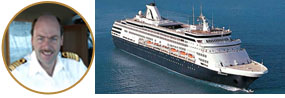
Captain Albert
© 2026 – Captain Albert's Website and Blog –
Theme by Anders Noren — Up ↑