It was a perfect arrival at Hualtalco with perfect weather forecast, as long as you could deal with a hot and sunny day. Forecast was for 30oC/86oF but it went in the end a few degrees higher and the mercury rose to well over 90oF (32oC) Beach life, under the bow of the ship was in full swing all day long. Apart from being a cruise port, Hualtalco is also a major resort for the Mexicans themselves and that made the beach and adjacent bars and restaurants booming. We were the only ship in today and thus we had the port to ourselves. It would be nice for local economy if there would be more ships calling than just Holland America Line but for us it is of course perfect as least we always have a berth. As soon as a port becomes more popular, the small ships (and believe it or not, the Statendam with 1200 guests is a small ship nowadays) are assigned to the anchorage. That means a rather long tender ride as the authorities (read shopkeepers) require us to tender into the port itself instead of into the nearby Marina. So let’s keep this hidden gem of a port away from the lime light so we can continue to happily dock here. Continue reading
Page 143 of 241
As soon as we turned the corner to a more south easterly heading, the wind fell away completely and it turned into a hot and hazy day. The ships speed of 18 knots caused a gentle breeze on the deck and made it very pleasant to be outside. As long as you were careful with your sun block; as you tend to forget how hot the sun is burning down when there is a breeze. Not only down, but also reflecting off the white superstructure of the ship. Our visibility was no more than 11 miles and that made is impossible to see the shore line. Which is a pity as it is always nice to see the resorts of Zihuatenego and Acapulco coming by. Even if we cannot call there at the moment, it would at least be nice to see something. But the lack of wind prohibited that and thus we had to be happy with the wild life and the occasional tanker coming by. This is the regular shipping route between the port of Salina Cruz, just to the south of Hualtalco and all the Mexican ports further to the north and that means we pass them on a regular basis. Continue reading
We received a royal welcome today in Puerto Vallarta at least that was the way that it felt. But it was not meant for us. The President of Mexico had descended on the town for the World Forum and it had all the local authorities in a frenzy. As it is well known that Holland America guests are great in invasions (mainly into tourist shops……) so we had to be carefully checked out and thus we had a navy patrol boat buzzing around the ship and a helicopter hovering above. It seemed that we were not considered dangerous and we could continue our journey to the pilot station unhindered. As is normal early in the morning, there was no wind at all in the Port and that made arrival a real doddle. On request of the chief officer I docked today the other way around than normal, nose in, so he could do a lot of maintenance on the starboard side. Apart from San Diego, nearly all our ports are portside dockings and that leaves the starboard side hull a bit neglected. So when possible the chief needs the ship the other way around to keep up with it all. Continue reading
With strong winds in the back and following current we made good progress down the coast. To such an extent that I could run on one engine less, or less than normal would have been the case. So what we lost in extra fuel going up, we were now gaining back going south. My chief engineer was a happy camper today. For the guests the following wind has a benefit as well, as it creates a nice gentle breeze of about 10 knots over the deck. We are doing 18 knots and the wind is blowing with us 28 knots. I had asked the quartermasters to count the whales for me that they saw while on lookout and as expected, the number of observations went down the closer we came to Cabo San Lucas. The whales are definitely on the move. While we sailed by Cabo we spotted only two of them. One was breaching but did not repeat its performance, the other flipped a fluke and that was it. I still do not know whether whales like to play in rough water or not, but subjectively I seem to see less of them if we really have high waves. Maybe they can get affected by the motion of the ocean as well.
The only challenge with a following wind is that the smoke is flowing over the ship as it is being pushed forward. That is with regular sailing not a problem but once a day (middle of the night), the engineers start soot blowing. E.G they clean the exhaust pipes of the engines and the boilers from the accumulated soot of the last 24 hours. Regular smoke comes out in small particles and gets quickly dispersed by the wind but soot can come out in bigger lumps when it is “scraped” off the pipe surface by the wind. Those bigger lumps (looking a bit like orange peels but then in black) tend to settle quicker and quite often descend on the decks. Then the next morning the bo’sun has a hard time getting the stuff off and that results in a tantrum against the engineers. So we try to prevent that and that means that the officer of the watch has to discuss with his/her counterpart downstairs what is a good time for soot blowing, so if needed, we can change course and bring the smoke plume under an angle off the ship. Which way the ship then deviates from course depends on how close we are to the shore or if there is traffic or reefs and banks in the vicinity. As we do this run every 14 days, up or down, we pass the same areas at the same time. Thus we can plan for this soot blowing quite well but still we find sometimes soot on the deck resulting in a very unhappy bosun and subsequently chief officer. I wish inventors could come up with an underwater exhaust that would solve all our issues.
On the night of the 14th to 15th 1912 the titanic sank after hitting an iceberg at excessive speed. I do not think that there is a single tv station or newspaper who are not paying attention to this some way or another. I am still fascinated and at the same time a bit repulsed by all the hoola-baloo around it. I have about 75 books on Titanic in my library and those are the ones I could buy cheaply. If I would buy all that was out there, the total would climb to over 300. There is simply not that much to tell about one ship,but it has the attention of the world and thus the books sell.

The Statendam (II) that never was. With 33,000 tons she was 12,000 ton smaller than the Titanic. In comparison the Statendam (V) is 54,000 tons shorter, but higher and wider.
There are two Holland America Line connections to the Titanic. First one of our Directors, Viscount Reuchlin, was dispatched by the company to go on its maiden voyage to spy the ship out. Holland America was planning to order a very large ship at Harland & Wolff in the near future, so it was important to get a feeling for the work quality of the shipyard. Eventually we did order a new ship, the Statendam II, but it never sailed for the company as the war intervened and the British took the ship over as a troop transport. She was torpedoed in 1917 as the Justicia. Viscount Reuchlin perished on the Titanic as one of the three Dutch people on board.
The other connection is that the ss Noordam (I) sent a telegram to the Titanic warning them of ice ahead. That telegram was received but not acted upon and the rest is history. Why am I a little bit repulsed by all this Titanic fever ? Look at the list below. Who remembers these ships and those who were on board ?
1912 Titanic 1496 died
1945 Wilhlem Gustloff approx. 6000 died
1945 Cap Arcona approx. 6000 died
1987 Dona Paz ferry over 4000 died
Why do we not remember the last three…… ?????
As my Grandfather used to say: It is a funny old world.
It is becoming a common complaint among my colleagues about all the wind that we have at the moment. Not only where the Statendam is sailing but nearly everywhere. From Down under, to deep into the East Mediterranean. It is blowing everywhere and much harder than what is normal. Even the weather forecasts cannot keep up with it. Since we have left San Diego it has been blowing at least 10 knots more than forecast. Luckily we now have it all with us. Although we suffered when we were Northbound to San Diego of course. It already started when we sailed out of the port. The forecast had indicated this frontal system coming by, with rain squalls but by the time we were outside, that band of rain had just passed over. When we poked our nose out to sea, sailing past Punta Loma, we got the full brunt of the wind on the Starboard side and with 30 knots it was more than expected. And not much has changed since then. Continue reading
It was wind still weather when we arrived at the pilot station. The ominous situation of the “silence before the storm”. Although we were not expecting storm, just a lot of wind on departure. Ahead of us was a car carrier and to our amazement the Carnival Spirit who had unbeknown to us had changed their pilot time to 05.30 Unbeknown as on the agents ETA list it still gave 04.30 As she slipped in just ahead of us, it put us back by about 15 minutes as it takes some time for the pilot boat to get from one ship to the other. We were still docked on time but not as early as I had hoped for. It is important to have the gangway(s) out in good time as at exactly 07.00 hrs the longshoremen roll on board to start off loading luggage. As soon as that is done disembarkation can start and with the inclement weather coming, the aim was to get everybody off the ship and out of the terminal, before the rain would start. That worked out quite well and as the rain did not show until 3 pm; we also managed to get most of the luggage of the joining guests on board. Continue reading
There is a very strong wind flow coming down the North American coast, initiated by a high pressure system off the coast. Unfortunately for us that wind flow is against us and that does not help with making a good ships speed without going full out. We already have the push against us of the California current here and together with the adverse wind; the engines are getting a real workout. I have all the ships power on line, 5 engines full output and that gives me on paper a speed of 21 knots. However we are barely making 18.5 knots. That is the speed that we have to maintain to be on time in San Diego. We are losing 1.5 knots from the current and another knot or so that the wind is holding us back. We had 40 knots yesterday on departure and this morning it was 30 knots. During the day it diminished a little bit but in the evening hours it perked up again. During the night it is to die away completely and on arrival San Diego it should be wind still. That wind still is then indicating that we will be sitting in the core of that high pressure system and thus no wind. That core will move over San Diego in the course of the morning and then the wind will start to flow the other way, bringing wind and rain over the port. But at least we will be docked by then and I will worry about departure when that time comes closer. Continue reading
We arrived at 06.00 hrs at the final approach point to the anchorage and I was happy and not happy at the same time. Happy because the swell was not running into the bay and unhappy that there was still about 15 to 20 knots blowing inside the bay so I could not stay on the engines to enable a close tender distance and speed up the tour departure. The only option was to go directly to the anchorage and get the tender show underway as soon as possible. The authorities were so nice to pre- clear the ship from the dockside and that meant that we could start while they came on board a little bit later to do the paperwork. The Carnival Splendor showed up an hour later at 07.30 and the Carnival Spirit shortly after. They being the bigger ships and being on a more frequent run were assigned to the better anchorages. The Carnival ships do not use their own tenders at all, only shore tenders, but as there are plenty of them we normally also rent two so we can cover the long distance to the shore with six tenders, 4 of our own and 2 from the agency. Continue reading
It our utter amazement it was a very small world outside when the dawn arrived. As soon as it became daylight we ran into a very low hanging cloud. We never use the F word on the bridge F.O.G. but prefer to talk about restricted visibility or about very low hanging clouds. We had such a cloud this morning and it was hanging very low. The bridge called me just at sunrise when they saw it lying in the distance. I had a good look at the weather outside and then I realized what it was: Arctic Sea Smoke. Due to the nearly wind still weather in this area for the last few days it had created the perfect environment for this sea smoke to develop. Further to the north, abeam of Cabo San Lucas, it is a phenomenon that we expect because cold and warm current come together and with the right wind it can develop here quite easily. In the same way as there is a lot of restricted visibility on the Grand Banks east of Canada. But south of Cabo, just off the coast of Mexico, before we cross the Golfo de California, it is a different story. However today the conditions were just right. Continue reading
The very calm weather that this area has been having here for the last ten days or so, results in some peculiar situations. The visibility is varying greatly without really following any pattern. Coming up to Hualtalco we had a very clear horizon for a while and today it is really hazy. Acapulco only 12 miles on our starboard side cannot be seen at all. Still it is a lot better than stormy weather and we can have a nice cruising day at sea. Tomorrow there will be a 2nd one when we transit the Golfo de California. There we can expect some cold air flowing down from the upper area that is mostly known as the Sea of Cortez. Quite often that flow can build up to a wind force 5 or 6, only to die down again when we come into the lee of Cabo San Lucas. Continue reading
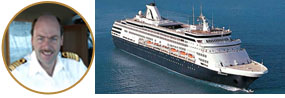
Captain Albert
© 2026 – Captain Albert's Website and Blog –
Theme by Anders Noren — Up ↑