- Captain Albert's Website and Blog -

Ocean Liner History and Stories from the Sea, Past and Present. With an In Depth focus on Holland America Line

Category: excludeRecent (page 29 of 82)

15 June 2017; Juneau, Alaska.

I have been visiting Juneau with the ships from 1982 onwards until now. It was never right to say that Juneau was a sleepy backwater as was and is the capital of Alaska with all the major offices located here, but outside the area which forms a sort of Government district things were still very much frontier like. When I walked up the main street for the first time 35 years ago, I had the feeling that I could expect Clint Eastwood to walk out of one of the Saloons at any moment. Most watering holes did indeed cater to the locals and some of the locals did leave their “home from home” flying out of the door or window or did not leave at all on occasion.
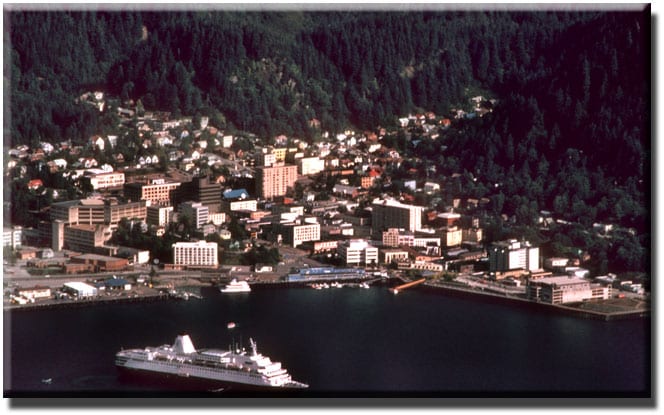
 

Good Old days? 1990 and the ms Westerdam is at anchor. Note the docks are empty. It was cheaper to anchor than dock, so there we went.

Tourism has been coming to the area since the late 1890’s as the Alaska Steam Ship company and the Canadian Pacific Rail road ferries sold excursion tickets to “The Great Land” as the nickname for Alaska has always been. But in 1982 Juneau it still did not look like a touristy town, apart from a few stores that sold T shirts, postcards and nick-nacks on the side of their regular business. Part of the focus of the crew in Juneau (as this was the port with a late departure) was the Alaskan Hotel with its steam baths, the Red Dog Saloon at that time still a real Saloon bar, and Bo ’winkles where they served carriage wheel size pizza’s. None of these places were very sophisticated and thus we loved them and “invested” a lot in the local economy there.
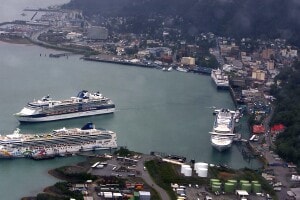
 

Phase two: Two extra docks have added. A Celebrity ship has just left the Cruise terminal and a S class is still at the Alaska Steam dock.

Fast forward 35 years and everything is tourism. Running all the way from the far out dock, to up the hill where in the past there was only regular housing. Bo ‘winkles has closed. A number of years ago they modernized and the crew stopped going as the atmosphere was gone (and everybody had to behave themselves), the Red Dog Saloon now makes more money on food and logo wear than on booze and a lot of the other Bars have quieted down as well. Last year the Alaska Hotel was still what it was, music and good beer but at that time the steam baths were closed so I have to check next cruise how the hotel is doing.
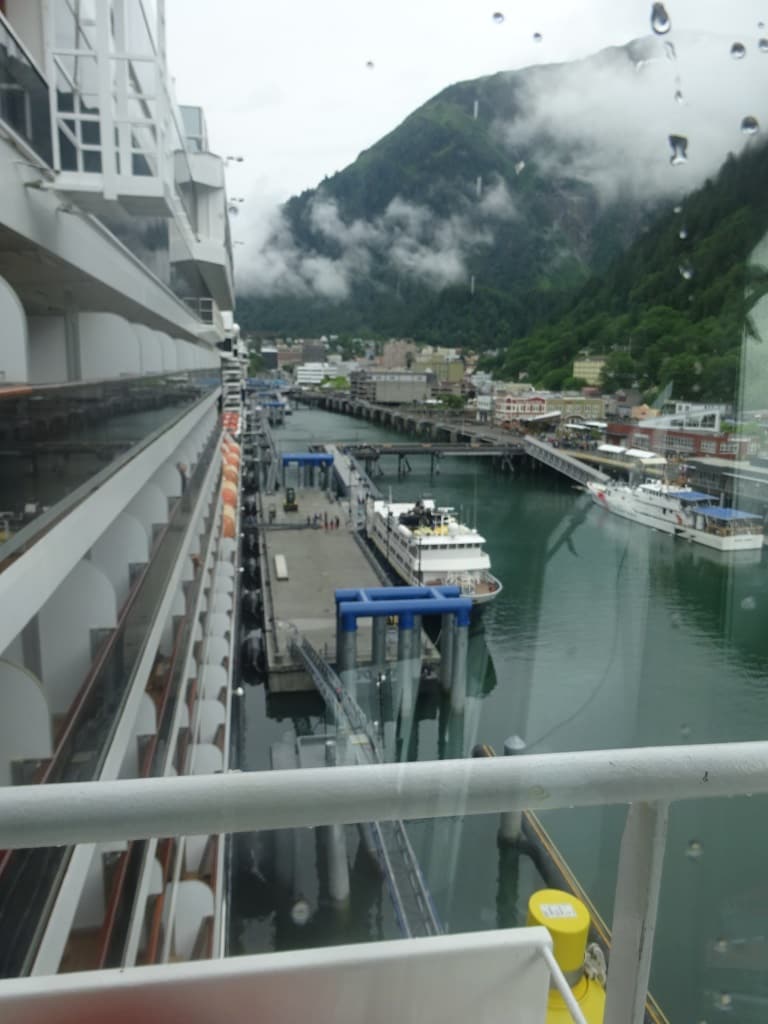
 

A view of the new dock from the bridge of the ms Noordam. Floating pontoons now hold the gangway and long ramps bridge the tides. The weather looks a bit gloomy but that has to do with the tinted bridge windows. The rain had already stopped earlier in the morning.

Although there is a lot of politicking going on, the city fathers have been wise enough to see that the cruise industry is a goose with a lot of golden eggs and they have plowed a lot of tax money back into the port. Latest addition is the extension of the Alaskan Steamship Dock and the Cruise Terminal (the old ferry dock) deeper into the harbor. The old docks are still there but a new one, able to take two 1000 foot ships has been put in front of it. With floating pontoons in the middle for the gangways, so the guests do not have to negotiate the steep gangway towers anymore which were needed to bridge the height during high water. Part of the old cruise terminal dock is now a smaller dock and today a USCG cutter was docked there. On the inside of our dock we had a small cruise vessel, the Sea Bird, which has been around since before 1982.
Today we had the Celebrity Infinity in, docked behind us an NCL ship, the Sea Bird and our good selves, altogether bringing about 8500 cruise guests ashore, which is just an average day for Juneau. Although it never became very sunny, it was mainly dry for the day which is not bad at all for sightseeing. A sunny day is nice but with sightseeing it gives glare and thus overcast weather has its advantages if you are planning to stand on top of a glacier.
We sailed at 18.00 hrs. and our next port of call will be Ketchikan. Due to the distance, we will not dock there until 11 am. in the morning so it is a short stop. We should be in port together with the Oosterdam which is on the seven day run from Seattle. It will be a very busy day there as apart from the two DAM ships, also the Norwegian Pearl is there, the Celebrity Infinity and the Seven Seas Mariner. That means about 12000 cruise guests will be running ashore to get the local T shirt.
Weather for Ketchikan: 51oF / 11oC overcast with a chance of showers. The guests should be very happy with that because Ketchikan is the rain capital of the world (with 332 days a year) and today it should be mainly dry.
12 and 13 June 2017; At Sea and Glacier Bay.

From Seward we sailed into the Gulf of Alaska which is the most northern part of the Pacific Ocean. And yes the ocean was very pacific, very peaceful this time. Apart from the long rolling swell (but only 7 feet high) there was nothing to bother us. That long rolling swell is something we cannot do anything about; we have open water here all the way to the South Pole more or less, so nothing stops the waves from being under the influence of the wind and the sun and moon. Swell is mostly created by wind that is not there anymore. That is the definition. Otherwise we call it waves.  Most of the swell in this area can have been created as far away as Hawaii or Japan.  Then there is the sun and the moon which has the influence on the water which results in high water and low water.  Although that only creates an up and down effect which we do not feel on the ship while sailing, but to get that water higher up the beach and to pull it away again there is a form of current in the water. And that also helps the swell to be more or less pronounced. But it must have been quiet further south as we had a very smooth ride.

We are now back in pilot country and during 6 of the 7 days of our cruise we have pilots on board. Two American pilots between Cape Spencer (near Glacier Bay) and Twin Island (east of Ketchikan) and then from either Triple Island (near Prince Rupert) or Pine Island (North west edge of Vancouver Island) all the way to Vancouver. As we sail in stretches longer than 8 hours, there are always two of them and they divide the hours between the ports up in an equal way. Why do we have pilots; because it is compulsory.  Without too much detail: if you had a big garden, and suddenly somebody wants to race around in there with a big truck, would you not like to sit behind the driver to make sure all went well, of even prefer to drive the truck yourself ? Governments all over the world think the same way and thus the USA and Canada require pilots for the Inside Passage.

Thus yesterday morning we embarked two Alaskan pilots at Cape Spencer and our first port of call was Glacier Bay. As we are still early in the season, it means that there are no “whale waters” yet. This is a phrase which indicates for the sailing fraternity that there will be no speed restrictions. Glacier Bay is a National Park and thus there is oversight by Park Rangers. At the entrance of the Park is a Ranger station called Bartlett Cove. From there the Rangers monitor the Park but also sail with the ships to narrate to the guests what there is to see and how to interpret what they say. As we still have guests who think Alaska is a foreign country and a whale is something only to be seen on TV, their presence is much appreciated.

But they also count the wildlife. (When we sail up and down the Bay, we often have a spotter on the bow who counts everything that flies, floats or swims by or is visible on the shore side) When too many whales have returned from their time in Hawaii, the Rangers order the ships to slow down when entering the lower bay (entrance of Glacier Bay) to make sure that the whales have time to react to the ships and the ships have time to take evasive action. Today there was only one whale messing around, but he/she gave quite a show for the guests. As the weather remained overcast and a bit rainy, it was a bit of a challenge for the guests to remain outside……………. But those who did, saw Mountain Goats and Moose. (What is the plural of Moose? Meese, or Mooses ??) The latter are not seen that often in the Bay but we had two clearly visible coming down the mountain ridge.

Tomorrow we are in Haines, with an expected over cast day with no rain, as far as we know as of this moment.

11 June 2017; Seward, Alaska.

Dear Readers, we have issues again with the blog. Now it seems that the system does not like it when I move from ship to ship. Once again the IT guru’s are investigating and eventually “all services will be restored”. Until that time I will start uploading again, only it will be without photos.    My apologies………….

Seward.

And thus I travelled from Montreal via Chicago to Anchorage. Leaving behind the Maasdam with her captain who was busy being involved with the opening of the new Montreal cruise terminal. When we arrived we found out that the terminal was far from finished and looked from outside and inside still very much like a building site. Thus a lot of work will still have to be done. Apart from finishing the inside they still need new access gangways, luggage facilities and a few mooring bollards at the stern would not be a bad idea either. Hopefully they will work hard and the Maasdam will reap the benefits during the remainder of the season.

I stayed overnight in Anchorage and was then transported to Seward the next morning. Seward is about a two hour drive south from Anchorage but the transfer time really depends on how many campers there are on the road. Today we were lucky they were all going the other way it seemed. If you are ever contemplating to buy a camper or R.V, then sitting along the road to Seward will give you the option to see about every model and size coming by to make up your mind. I counted at least 54 different versions before I gave up.

The Noordam had arrived at 06.00 in the morning and was docked nose out as that works better for the gangways and the operational setup. There was also change over day, which works totally different in Alaska than anywhere else. As about 90% of the guests are continuing their journey by going on overland tours, they leave the ship at the time the tour coach is ready for them. So it is a very gradual disembarkation process. The guests who are joining are mostly coming back from overland tours as well and they trickle in by the coach load in the course of the afternoon until just before sailing time.

So there is not the initial mad rush that we see in regular cruise ports where at least 50% of the guests are already sitting in the terminal and then together “invade” the ship within 30 minutes and because they are on a roll, do the same in the Lido Restaurant. The Alaska change over process makes for extra-long hours for the crew and thus they have to work different shifts to cover the whole period of 06.00 hrs. in the morning to 21.00 hrs. in the evening.

We also had a changeover of Captains today. Captain Henk Draper went on leave and Captain Peter Bos joined. Peter and I joined Holland America Line about 3 months apart in autumn 1981 on the good old Statendam and sailed a lot of years together. Always just one rank apart as he joined as 3rd officer and I as 4th. officer. We even sailed out the ss Rotterdam together in 1997 which was a very memorable cruise as we pulled out all the stops of our imagination to send the 1000 guest’s home with the best memories possible.

The ms Noordam is employed on the 14 day Alaska Service, which starts in Vancouver and then goes to Ketchikan – Juneau – Skagway – Glacier Bay – ending with a turnaround in Seward. Then the ship retraces its route but substituting Haines for Skagway on the way back to Vancouver.  The ms Zaandam is the alternating ship which goes the opposite way. Holland America has been operating these cruises since the early 1990’s when for a number of years the ss Rotterdam inaugurated and maintained the service. Holland America then opted for Seward instead of Whittier (The Princess stronghold) as it liked the dock and it had an easy option there to connect with the railroad system to take the guests into the interior.  Also the Seward dock is much more sheltered than any other port in the area, it being surrounded at all sides by mountains.

We left at the scheduled time of 20.00 hrs. and then sailed out into the Gulf of Alaska. Tomorrow we are at sea and then we will be in Glacier Bay. Seward gave a rainy and chilly day and the Gulf will not be much different. Luckily very little wind and only a low swell which helps with everybody staying clear of the “Mal-de-Mer”

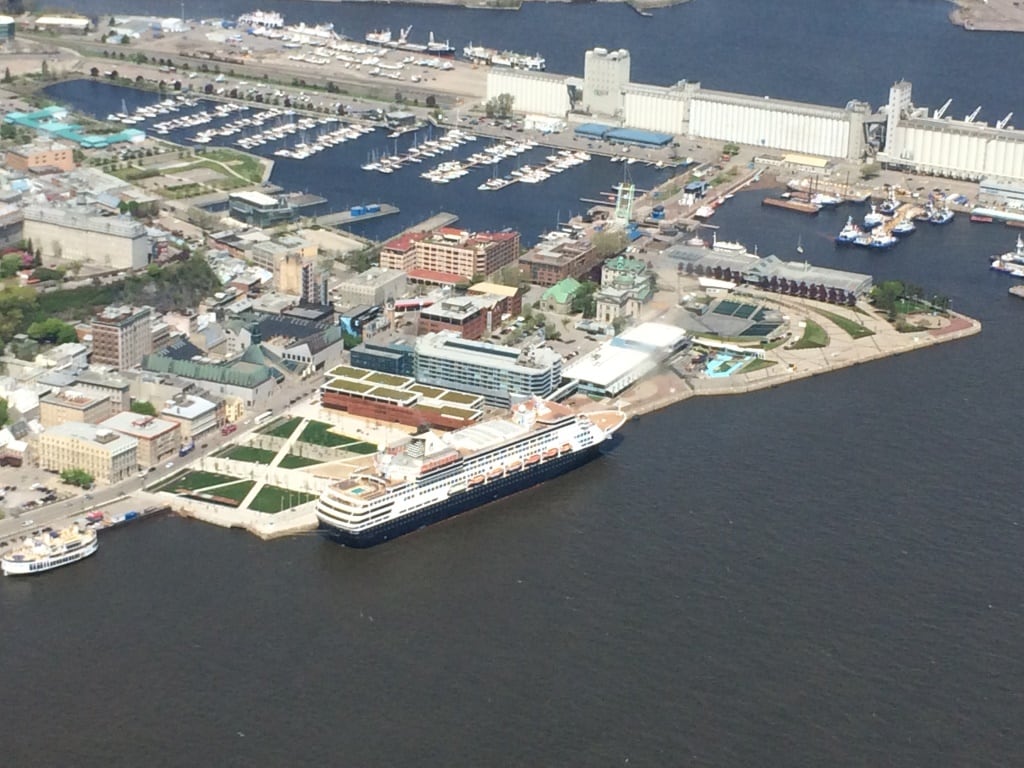
09 June 2017; Quebec, Canada.

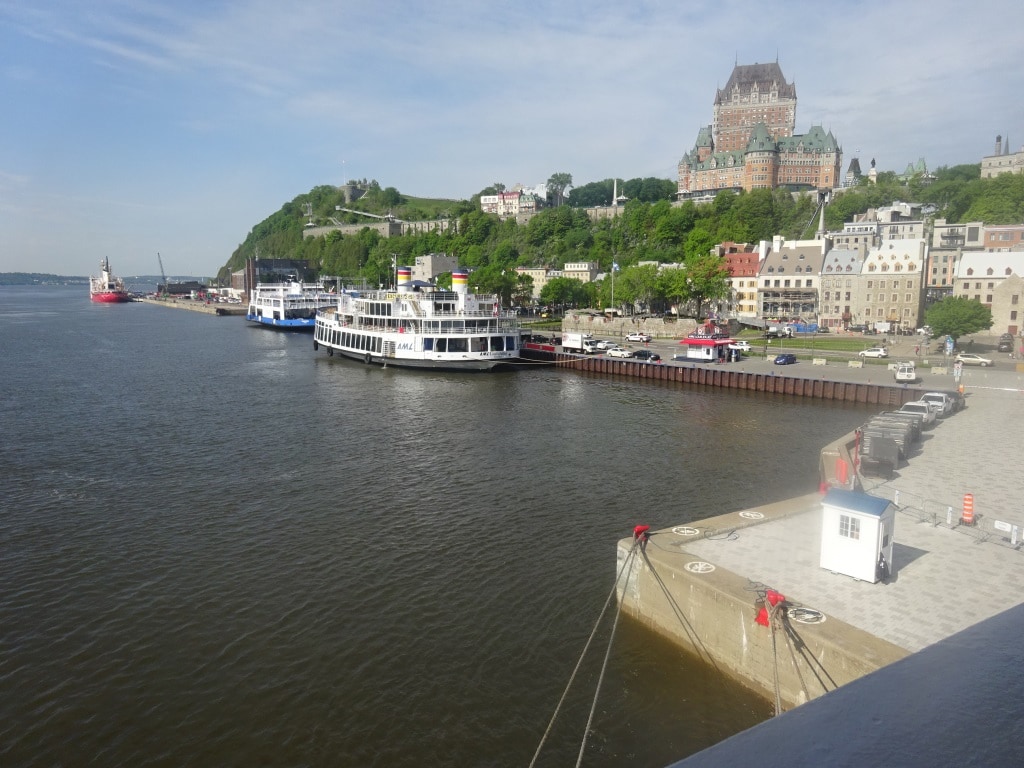
The city looked very nice when the ship came around the corner and approached the berth. As mentioned before, the St. Lawrence makes an almost 90o turn just south of Quebec and thus the ship has to come around a corner before it can make the final approach to the dock. As we had the sun behind us, it shone over the North bank of the city, and gave us the best view possible of Chateau Frontenac on top of the hill. It is not a real castle but a Hotel built by the Canadian Pacific company about 150 years ago but it looks like a French castle on steroids. In those days people were willing to invest in hotels that made a statement and thus the interior is breath taking as well. So nice that they charge couples getting married 450 dollars just for the privilege of having a photo taken on the stairs. If that is the cost for a photo, I wonder what a complete wedding there will cost.

Chateau/hotel Frontenac on top of the hill. Also note that the dock walls are much more visible now. The water has receded considerably. The white ship with the multi colored funnels is a sightseeing boat and the blue one behind it is the local ferry for crossing the river to the southbank. Which is a short cut to avoid the Quebec Bridge a few miles further upstream.

We arrived today with the full flood current running and thus the decision was made to dock with the nose in the current as it is a lot easier to control the bow in the current than the stern. The sharp bow is much easier pressed/pushed through the current than the blunt stern is. This meant swinging around on arrival and dock with the nose downstream. It will mean for tonight that the ship will have to swing around again before it can head up river. Not much of a problem it is just that while swinging around the ship is carried about a mile by the current while making the turn.  So this morning the turn was started early and by the time the turn was completed we were just passed the assigned dock and only had to sail a little bit forward to get in position.

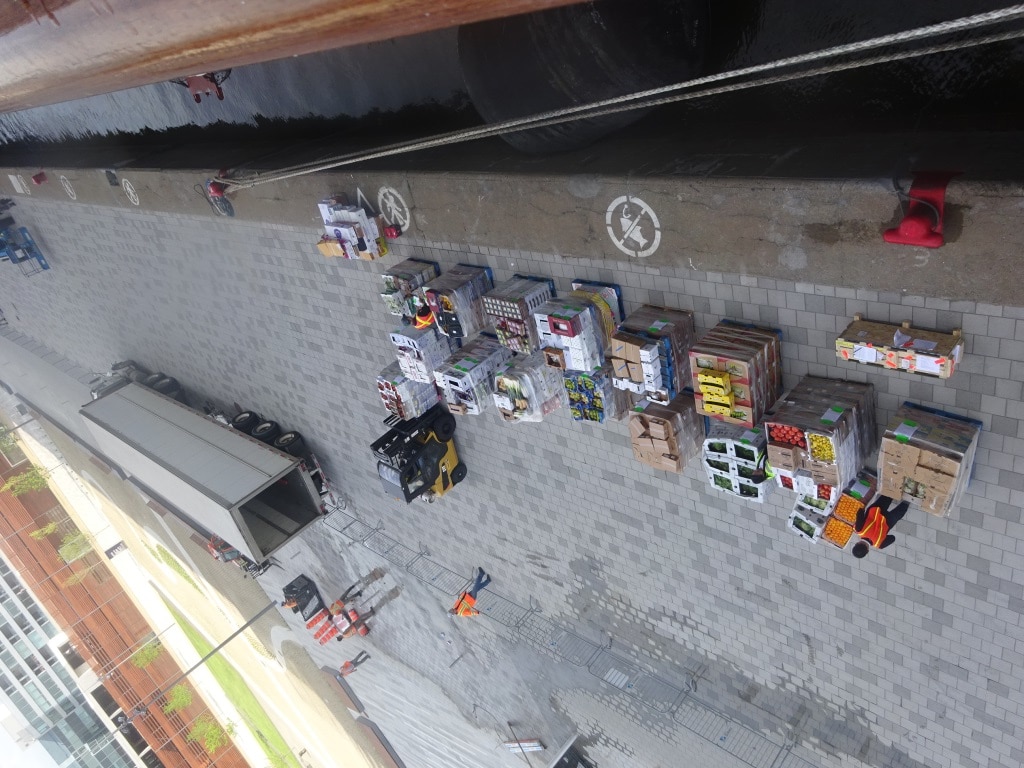
Fresh fruits and vegetables coming on board. Everything is unloaded to be counted and then lowered into the ship by forklift.

I blogged last week that the river level was very high and floodings were happening shore side. Well upstream the torrential rains have abated and the river is now 6 feet lower than 7 days ago. The parking garage opposite the ship is back in use so all is well in Quebec again. The ship took the opportunity load fresh vegetables and fruit this morning as the dock here is ideal to have a truck and a forklift on the dock. There are wide fenders and that makes it easy to lower a cage with the pallets in it to the provision break of the ship. A cage is needed as with the river level going down, B deck is now under the pier again. Last week we could just shove the pallets in.

We docked the wrong way around to day because of the current. (Photo courtesy Safety officer Wouter Koolhaas)

Tomorrow we will be in Montreal and if all goes well then we will be docking at the regular passenger terminal again. In the last 16 months they have spent 78 million dollars on it to upgrade it so I hope it will be wonderful. Nobody really knows as until today our agent had not been able to get inside as they were not finished yet. So tomorrow there will be the Mayor and a host of other important people present to cut the ribbon and speak some wise words.

I will not be part of those festivities as I will be leaving the elegant and beautiful Maasdam and transfer to the ms Noordam. Flying from Montreal via Chicago to Anchorage. I will spend the night there and then travel the next morning by car to the ship which is docked in Seward. Which means there will be no blog on the 10th and the 11th. as I do not find airport terminals very inspiring. I will be back on the 12th.

Note: I had a remark from one of the readers a few days ago that when you clicked on a photo — to make it larger — nothing happened. That might have to do with the way I upload photos as the bandwidth on the ship was not that great. Holland America is working hard on improving that and it also benefits me. So I am now trying to upload higher dpi photos. Let’ see if that works and if it solves the challenge.

08 June 2017; St. Lawrence Estuary, Canada.

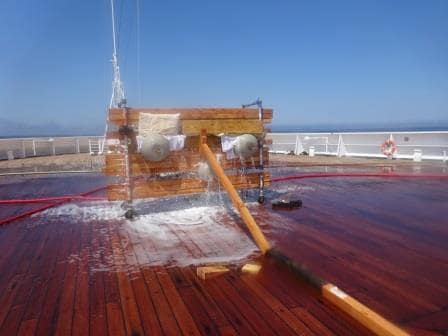
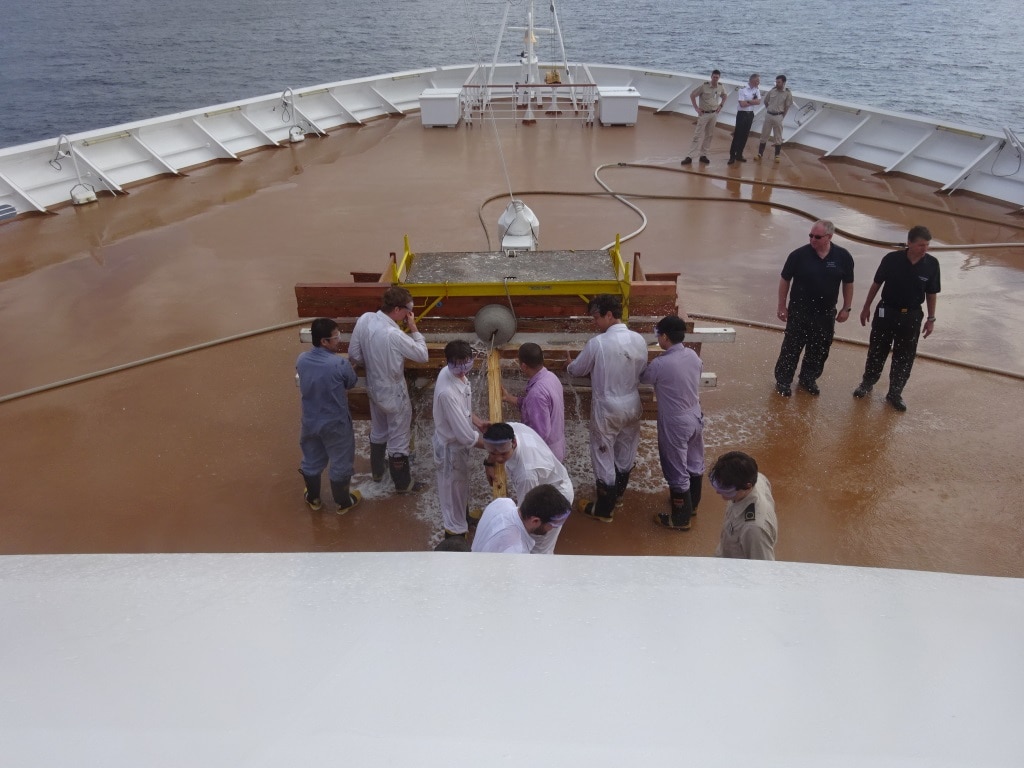
This morning I thought for a moment that my weather forecast of yesterday was going to be completely wrong. It was overcast and a Near Gale was blowing down the river estuary with fog patches swirling around the ship as we had forgotten to get the glass curtains back inside. I was on the forward deck setting up the wall for the Damage Control Drill of this morning and at one point the (empty) firehose with brass nozzle was just lifted off the deck. Not that amazing as the ship was sailing against this wind with 17 knots and thus the combined winds were close to hurricane force winds.  Ever tried to rig up a fire hose in a hurricane?  You can do it but you have to take precautions otherwise you feel like a jet skier skidding along behind a hose.

But by 9 am. the sun came out and the wind died down to almost nothing. A brief respite as tonight the wind is supposed to pick up again but I do not know how much we will notice it. The wind forecast is for S/W winds up to 25 knots. That is roughly in line with the NE/SW direction of the St. Lawrence River. This could mean that if the wind is blowing exactly in line with the river then the funnel effect might give us even more, but if it is just a little angle off the straight then we will hardly notice anything at all as we will be in the lee of the land.

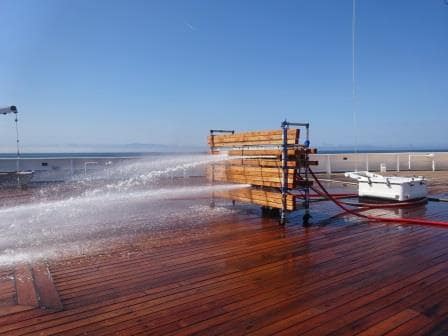
This is what they had to face, 5 hoses blasted water out under about 5 bars of pressure.

With the wind dying down, I could with peace in my heart, open the hydrants and have 5 water hoses blasting water. Tests have proven that a 15 cm x 5 cm hole about 7 meters under water can result in an ingress of approx. 400 tons of water in an hour.  As I cannot make a hole in the hull, I have to simulate it with fire hoses, even if the jets coming out do not look that realistic it is the only way to get close to those amounts of water coming in.

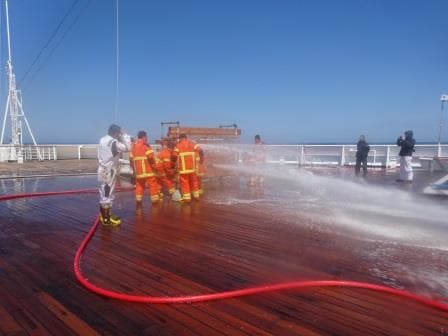
The First Engineer guiding his men. The first hole is always the most difficult as you are still figuring out what to do with the rest.

The wooden wall that I have created does not really simulate a ships steel bulkhead but that is also not the purpose of the drill. The purpose is for the Engineers to think outside the box and come up with a solution to plug the holes with the Damage Control Equipment they have available. In real life each situation will also be different, so you cannot take a book and use chapter 7 to keep the ship from sinking. You have to write your own manual while assessing the situation.

Now there is a plan. The ingress is getting reduced and we just have to make sure it stays reduced.

The responsibility for Damage Control lies with the Engineers as they are technically trained and know about steel strengths, pipes, hoses, flanges and all related. This is a situation where the deck department can only be on standby and help when asked and needed. Normally the First Engineer takes the lead, assisted by other engineers but quite often a big role is played by machinists and carpenters who on a daily basis have to be creative to stop little holes in pipes and stop flooding’s without the fluid in the pipe being stopped. So it needs a combined effort of skills, creativity, insight, experience and leadership to figure out what in this particular situation works best.

Job Done. The water ingress is reduced to a mere trickle.

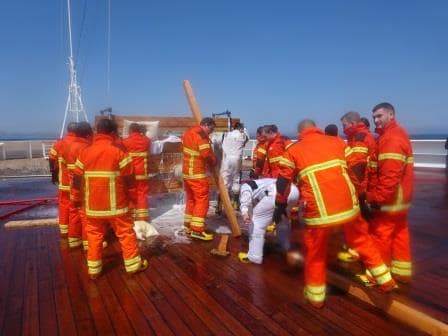
And so they did. Today the solution was a combination of Domes (we have those on board as part of the Damage Control Equipment), Towels, Pillows and Wood. The ingress of water does not have to be stopped completely; it just has to be reduced to such as extent that the ships pumps can handle it without problems. And so they did; and it worked and thus they did a very good job. I was impressed with the solution as the water came in this time at the edges of the wall and thus it was not easy to get it plugged with the regular equipment.

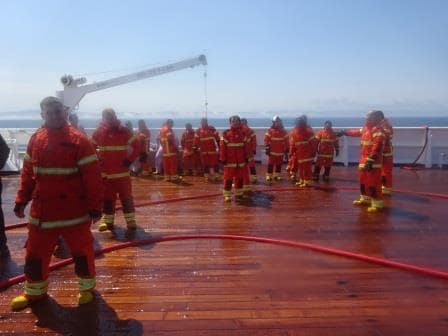
The complete Team, wet but happy about a job well done.

In the meantime the good ship Maasdam continued its journey upriver and all on the bridge will keep an eye on the weather. This evening we will embark two pilots at the pilot station of Escomins and then tomorrow morning at 07.00 we should be docked at Quebec.

Weather for tomorrow: Summertime. 26oC / 78oF with a gentle breeze in the mid afternoon and for the rest nearly wind still. Time for shorts and flip-flops.

07 June 2017; Charlottetown, Prince Edward Island, Canada.

I think summer has really arrived in the Canadian Maritimes. We have had sunshine since the cruise started and if the weather forecast is correct we will have sunshine all the way to Montreal. It will come with fog of course and the occasional thunder storm but that is the price you pay for nice weather when you are a sailor and when you are in this area. Thus with very nice weather we docked in Charlottetown. There was not much we could see of the town until we were there as the island was surrounded by a white and very low hanging curtain. But once alongside the air warmed up and we looked at a beautiful day. No wind at all and that was good for my tender practice. Although the sailors have to learn how to maneuver tenders in windy and rainy weather; but for initial training, the calmer the weather the better it is. If there is wind then it will push the boat one way or the other. No wind and the trainee can immediately see what effect his/her actions have on the direction and behavior of the boat.

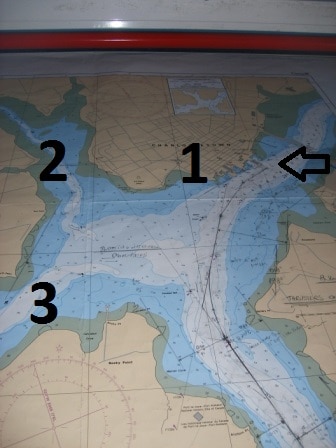
We docked on river 1. where the cruise dock is located near the arrow. The black line is the course of the ship coming in from open sea. (Going out we use the same entrance/exit)

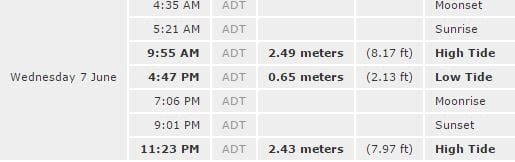
Even while it was nice weather the sailors were struggling with the tender today, courtesy of the current. We are docking in Charlotte town in the flow of one of the three rivers of the island; the three rivers, see one of my previous blogs, all meet just south of the harbor area. Today high water was at 09.55 in the morning and low water at 16.47 in the afternoon.  This means that around high water the current changes from flooding to ebbing. It is never exactly at the same time, as the water has to come to a standstill and then turn and that also does not necessarily mean that the water level changes from going from up to down at the same moment.


The tidal prediction for Charlottetown today. (Courtesy: www.tide-forecast.com)

Then when the tide has turned the current will slowly increase as the water starts to return faster and faster to the sea. Also that is not exactly predictable as it depends on the width of the channel, depth of the channel, obstructions in the channel or bends in the channel. While high water was predicted at 09.55, all of us in the tender could see that this published time was for somewhere down river as at the ship it happened at approx. 10.20.  Also the flow built up much faster than should have been the case. There is six hours between high and low, so normally the maximum current velocity is around half way. Say between 13.30 to 14.00 hrs.  But now it occurred one hour after high tide, we had 3 knots of ebb at 11.30 in the morning.  Half an hour later it already became less fast. Why that is ?, that is a 1000 dollar question as every port is different.

I finished the training class for Lifeboat Handlers yesterday and today 20 dining room stewards graduated with good results. They are now qualified to be assistants to the lifeboat commander when it comes to lowering and operating a lifeboat. For lifeboat commander they need another certificate and that course is only allowed to be given shore side and by specialized trainers who do nothing else but “teaching lifeboat”.

The sailors will have a written exam tomorrow to show that they also know the theoretical requirements and then they will be qualified Tender Operators. This might be the last time that I am giving this course as it seems to be the plan to go to a standard training course for all the brands under the Carnival Umbrella and  to give this course while the guys are still ashore in Djakarta and are attending our training school ms Nieuw Djakarta. Twice a hurrah from me as it means standardization and you get better focus when you set a complete week apart for it and don’t to have to do it between other work.

This photo is from February 2017 when we held a similar drill on the Zuiderdam resulting in some very wet Engineers.

Tomorrow we are at sea and in the morning we will have some fun. I am organizing a practical damage control drill. That is hard to do on a ship as you cannot flood the inside; so I built a wall on the outside deck and put 5 fire hoses behind it. We will see some very wet engineers no doubt.

Expected weather on the river estuary: low fifties Fahrenheit / around 10- 12 degrees Celsius, sunny and a gentle breeze from the south west.


06 June 2017; Sydney, Cape Breton, Canada.

Today was a really nice day in Sydney; our first call without a cold wind blowing and with the sun shining for most of the day. Our past calls were not that bad either but then it still felt more like a chilly spring than real cruising weather. But now it seems that summer is arriving in  Sydney as well. Certainly for the locals. The entertainers Sydney provides on the dock side in the afternoon for our guests were without coats so for them it must be summer.

I do not know much about whales, just enough to ensure that we on the ships can avoid them when we sail through what is really their habitat and not ours, but it seems that we see more and more whales in this area. I came to Alaska for the first time in 1982 and compared with then we see much more wildlife there now. Preservation is starting to pay off.  I have been coming to the St Lawrence since 1991 and then we did not see any wildlife at all; now it is also becoming much more frequent.  The real challenge for us in this area is that are many more species swimming around than on the Pacific side.  Makes it much harder to keep them apart. In the Gulf of Alaska and coastal waters you see Humpbacks and Orca’s or killer whales. There are other species but they are not very prevalent.

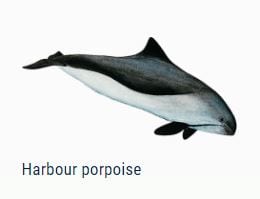
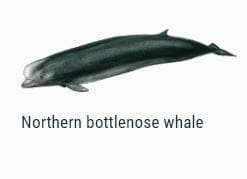
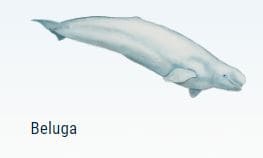
Now here in the St Lawrence estuary and the related waters we have at least 13 species which are all drawn in by the immense richness of fish in the river and the plankton in the coastal waters. According to the local website what should be out there are:  The Atlantic white side Dolphin (*), the Beluga (*) (all year around),  the Blue Whale, the Fin Whale (*), the harbor porpoise (*), the humpback whale (*) (I would be amazed if he wasn’t ), the Killer whale (*), the  Long finned Pilot whale, the Minke Whale (*), the North Atlantic Right Whale, the Northern Bottle nose whale (easily confused with the Beluga), the Sperm whale (*) and the White Beaked Dolphin.

Those with an (*) I have seen for sure. As a matter of fact we saw harbor porpoises this morning before we entered Sydney Harbor. For the rest you have to be more of an expert. Take the Beluga for example, they are sort of whitish but if the sun is under the wrong angle then they look similar to the Northern Bottle Nose Whale and the only difference you can then see is the dorsal fin on the back. The Northern Bottle Nose has a much bigger one than the Beluga.

The Beluga Whale we see very often near Saguenay fjord just up the St. Lawrence River. And when I see them, then I am confident enough to make an announcement to the guests, as most of the time they stay with the ship for a while. Nothing is more frustrating than to make an announcement and by the time the guests have made it to the deck, the wild life is gone. Similar to Humpback Whales, the Beluga’s “don’t run away that fast”. It seems that they are very curious so they tend to hang around a bit to find out what that big blue thing is that is swimming through their pond.

The fact that we see more and more of them does not mean that they are not endangered animals anymore. Far from that but it seems to me that they are starting to re-cuperate slowly but steadily. But we have still a long road to go until we reach the numbers before the large scale whaling started in the 18th. Century. Then we have a new challenge out there caused by ourselves, the big Plastic Garbage patch. One in the mid-Atlantic and one in the mid Pacific. I am still waiting for an inventor out there who comes up with an industrial sized vacuum cleaner and just sucks all that stuff out of the Ocean. Question is then, were do we put something like a 100 million ton of plastic particles?

I am just happy that our guests can see more and more of the wildlife out there. And if we can bring them closer with a ship then that is very gratifying. We on the ships just have to ensure that we respect their habitat and cause as little interruption as possible. After all, they were there a long time before us.

For those of you who are interested: http://baleinesendirect.org/en/whales-of-the-st-lawrence/

The three small drawings also came from this website.

Tomorrow we are in Charlottetown, Prince Edward Island and it is supposed to another sunny day, with little wind. Temperatures in the mid 50’s or around 13oC.

05 June 2017; Halifax, Nova Scotia, Canada.

Nova Scotia lived up to its reputation again as the captain had to sound the horn every two minutes to let the world know the Maasdam was around and sailing through the fog. As we all now know it normally has a positive end result; it means nice weather in the next port. And yes by the time we came in the white curtain had gone and we could also see the lone piper on the dock and not just hear him.

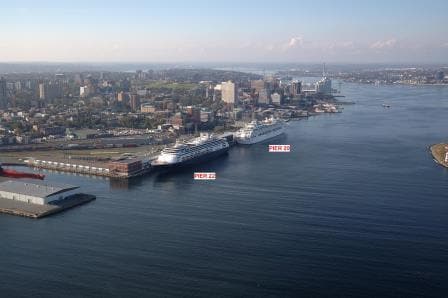
An overview of Halifax Passenger Terminal. If there is only one ship in then we call it Pier 21 and we dock in the middle. Pier 21 is also the immigration museum of Canada. (Photo courtesy Halifax Authorities)

Sometimes I think that Halifax is more Scottish than Scotland itself. They always have a bag pipe player on arrival and often a larger group on departure.   I stress the word always, as one during one call a number of years ago, the bag piper had broken or sprained his leg or foot and thus he serenaded us from a wheel chair. I did not know you could play the pipes from a wheelchair but he did and he produced the same amount of noise sitting down, as he would have done standing up. I love bag pipes and Scotland is one of my favorite countries to visit, but I prefer Bag pipe music late afternoon with a pint in my hand instead of early in the morning while drinking my first cup of tea.

I was in the naughty book today as I forget to clock in my working hours. Normally I do that first thing in the morning at 06.30 but this time I got distracted by exam papers and I completely forgot. Clocking in my hours might need some explanation as it is something you relate more to a factory than to a cruise ship. But since a number of years, everybody who works on board has to log their daily hours. From the Captain, to the Dining room waiter, to the Ships Cast, who do not work more than two shows a week and a bit of rehearsing.

We have a maritime law called MLC 2006, the Maritime Labor Convention agreed upon by most seafaring countries in 2006. This law sets rules about the quality of crew quarters, food, payment, travel but also about how many hours you are allowed to work. As with every sea related law it was instigated because something went wrong. Titanic gave us Solas so the ships are much safer now, and unscrupulous ships owners caused MLC 2006 because there were collisions due to fatigue and on some ships they found living conditions which were worse than the poor houses described by Charles Dickens.

To verify that all ships owners are behaving themselves, each company is required to keep records of the working hours of their crew. Those working hours have to be filled out by the crew members and then filed for future verification. Each company and ship is subject to regular auditing by Lloyds, by Flag State or during a Port State inspection. Holland America has a computerized system for this, with terminals in crew areas for those who do not have their own computer. Officers who are normally hooked up to the ships intranet can do it from their office. As I live in a passenger cabin, I have to make the trek down to the crew corridor on B deck and today I forgot. Tomorrow morning I will receive a nasty message from our 3rd officer administration telling me, not to do it again; otherwise the captain will take disciplinary action.

We are allowed to work 13 hours a day with a maximum of 91 hours a week. That is the law. A Holland America Line day has 10 hours maximum. Within each 24 hours, there shall be one rest period of 6 hours and one of 4 hours, un-interrupted. My working day is normally around 11 to 12 hours a day and most of the time   06.30 – 08.00 then 08.30 – 11.30 then 12.30 – 17.30 and the  18.30 – 20.00. I am in compliance because I then have an unbroken rest period from 20.00 – 06.30 which is 10.5 hours, so I do not need to comply with the 6 and 4 rule.  If the company requires you to make more hours in a day, then more free time has to be given the next day to make up for it and if that is not possible than the work load has to be reduced.  The captain supervises this all and takes action if there is somebody who does not follow the rules.  If I forget to clock my hours a 2nd time, then he might have to call me in and ask what is going on…………………………………..

Tomorrow we are in Sydney, arriving there late in the morning for what is supposed to be another beautiful day. Chilly, 54oF / 12oC, but sunny and with very little wind. More messing around with boats is being called for.

04 June 2017; Bar Harbor, USA.

We had a light air (wind force 1) when we arrived and that went later down to wind force zero, what we call Calm of Wind. So I was a very happy camper as it was perfect weather to train the 20 dining room stewards in lifeboat handling. So we happily pottered around the ms Maasdam with lifeboat 12 carrying out various maneuvers. When all goes well with the next training, they will all receive an official certificate saying that they are now qualified Lifeboat Handlers.

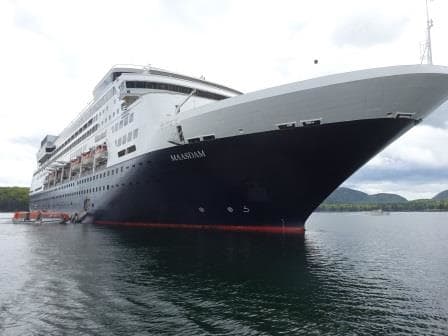
The Beautiful and Elegant ms Maasdam at anchor in Bar Harbor.

It was also a special day for me, as this was the first time in 37 years that I set foot ashore in Bar Harbor. The locals were of course suitably impressed and everything came to a grinding halt. ….. Not everything, basically only the cars and they were stopping for the traffic lights. There is a very nice 2nd hand book shop in town, but luckily I went without money and thus I was not tempted.

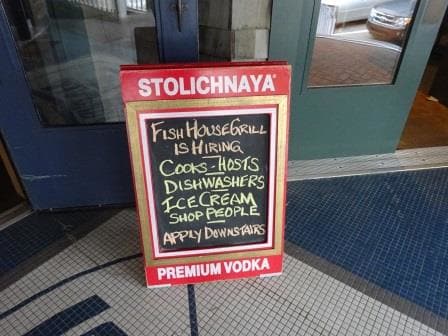
Anybody tempted to move to Bar Harbor ?? There is plenty of work.

I was more tempted to sign up as Ice Cream attendant. Labor was sought by means of a sign at the entrance of the boat landing and someone who is advertising on a Vodka sign for ice cream cannot be a bad person. But it shows how much cruise ships add to the economy.

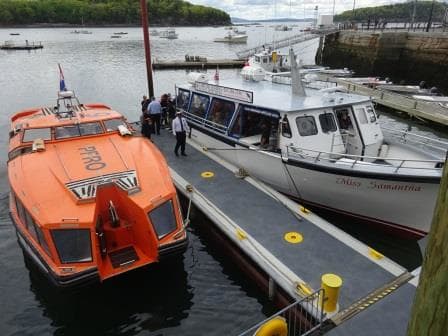
Although the Samantha looks bigger she can only carry 69 guests while a tender can carry a 100 when in tender service.

We were running a tender service as usual, with our ships tenders and with one shore tender the Samantha, which is otherwise used for Lobster fishing tours.  I suppose a day of steady income is more worthwhile than waiting for customers to show up or not.  I grabbed the chance to go ashore with the Samantha, looked around, and then come back with a ships tender, to see if the operation was in line with all our companies’ standards and requirements.  I always find something but it is of course better that I find it than the auditors find it and put a mark against the ship. It is part of my job to minimalize this where possible.

The little coastal cruise ship the Independence of American Cruise Lines was in port again and she is so small that she can dock against the largest pier in the port. There is a larger pier, the ferry dock, but it is no longer in use and its future is rather vague; although one of the options is to convert it into a cruise terminal. In the past a ferry would sail from here to Halifax and thus it has all the immigration facilities already available for a ship coming in from Canada. We were coming from Boston so today so we did not need to be inspected by CBP.

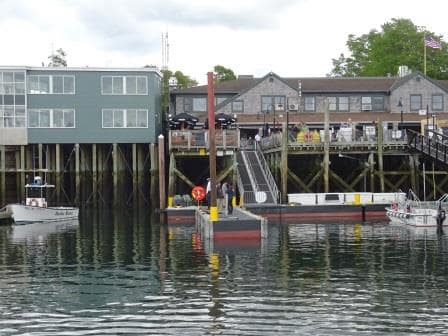
The first view of Bar Harbor when coming into port. The tides can be considerable here and thus the long ramps and floating docks.

Bar Harbor turned out to be a very nice little town and would indeed be perfect if we could dock there. Now the need for tender service takes a little bit of the edge off the whole happening as guests have to wait to go ashore and come back when the tender is ready.

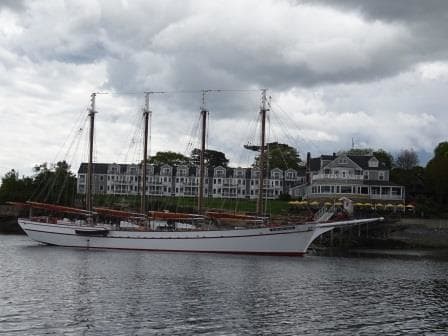
The four Mast Schooner the Magaret Todd, docked in the port between sightseeing trips.

Another ship in port is the schooner called the Margaret Todd. This schooner sails three sightseeing trips a day from Bar Harbor through the bay. She was built in 1998 as a purpose built sightseeing vessel with four masts. Because she was purposely constructed it makes it possible for her to sail with the same speed, whether there is wind or not. Today there was no wind and she still happily sailed around the Bay. Last week there was wind and she happily sailed full speed against it. Having an engine on a real windjammer somewhat takes the edge off things a little bit but it is still a very nice way to get acquainted with a four mast schooner of which there were so many in the old days. I wonder where the name comes from as according to Wikipedia there is a Margaret golfer, a Margaret Scottish writer and doctor and a Margaret American Film actress. (Or maybe it is just the mother in law of the owner……….)

As usual we sailed late from Bar Harbor as the guests without exception all try to get back with the last tender. And as our tenders do not increase in capacity during the day, that does not work and so we always need to make a few tender trips after the deadline of 14.30 hrs. Tonight we will sail under the coast of Nova Scotia and we should be docked by 08.00 tomorrow morning in Halifax. The weather looks good again, slightly chillier then today 13oC / 56oF, but again with little wind and that is what I need to continue with the boat handling classes.

03 June 2017; Boston, USA.

Our turn around call took place during a very nice day. The sun was shining and it was not too warm. If there is no huffing and puffing because of the warmth, then that is already a good start of the cruise. We are having a sold out cruise again with now also the 4 berth cabins filled. As a result we have almost a 100 guests more on board than what we consider normally capacity: all lower beds filled. Club HAL is going to be busy this cruise.

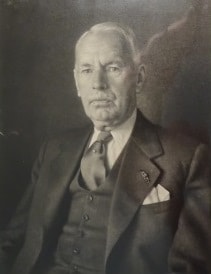
Mr. Adriaan Gips. Was involved with the company from the turn of the century until after the 2nd. world war.

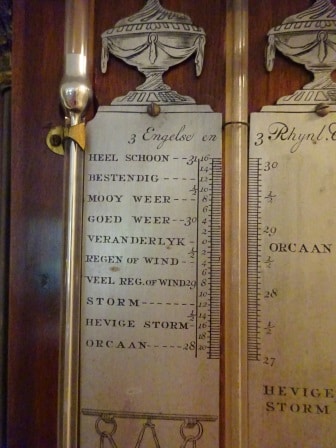
I was a man with a mission today. Recently I was contacted by a family from Hannover (North of Boston, not in Germany) who advised they had in their possession a Barometer. According to family lore this barometer was given by Holland America Line to one of its Board of Directors members Mr. Adriaan Gips, who was also the man who basically ran the Holland America Line and half of the Dutch Merchant fleet from New York during the 2nd world war. Mr. Gips passed away a long time ago but the Barometer remained in the family. Now the current owner is entering the twilight of her life and wondered if it would be interesting if it could be preserved for future generations by one of the museums in Holland.  For it to be of interest depends if there is a story to it.  Thus I went to have a look.

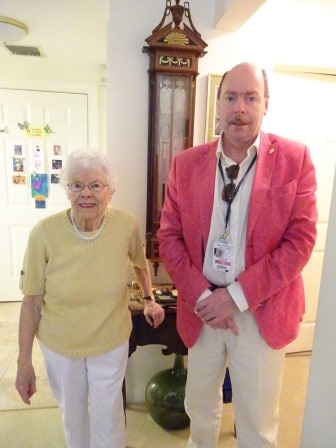
I was collected from the ship at 08.00 hrs. by the son and daughter in law of the current owner and it took more than two hours to get there. As a Dutchman I am still amazed how little American people think about spending time in the car. From my old home in Holland, I could make it in two hours to Antwerp and in three hours to the outskirts of Paris. Now driving for two hours and I was barely outside the Boston. (And they had to take me back again as well) What was I expecting a nice barometer on a board with maybe an inscription or another indication indicating a gift by the Holland Amerika Lijn.

The current owner is 95 years old and still doing very well. I am still looking a bit shocked as I had only just seen the Barometer for the first time.

What did I find, was a probably early 19th century high quality barometer which would have hung in a well to do house or a shipping office. I was quite shocked, then mightily impressed and then puzzled. I do not know what age the barometer exactly is, apart from somewhere after 1795 to 1840 but it predates the company by a lot of years.  So now we have a puzzle:

  1. Did the HAL buy the barometer as an expensive retirement present for Mr. Gips?
  2. Did Mr. Gips have it all his life and bought it himself sometime or does go back even further as his predecessors were sailors?
  3. Did it come from another shipping company Mr. Gips was involved in?

The text is in old Dutch grammar. Writing Orkaan =Hurricane still with a C as Orcaan,

I have no idea what to think of this as there is no documentation as of yet. First step is now to contact the Maritime Museum in Rotterdam to get the expertise from the curators and also reach out to all the historians and shipping researchers as they might have somewhere a photo of the retirement party of Mr. Gips and with a bit of luck the present might be on the photo.  It is going to be an interesting journey and I have no way of knowing where it will end. I hope there might be a reader among you who has a contact somewhere or knows somebody who has some insight.

As traffic was not too bad in Boston today I made it back timely to the ship. Next call Boston for the Maasdam on 17 of June it is going to be mayhem as the Tall Ships are coming in. I will not see this as I will be looking at Glaciers by that time in Alaska. But Captain van Dreumel from the Maasdam and Captain O’Driscoll from the Veendam are already making contingency plans in case Shore operations cannot get all the buses in on time in the afternoon.

Today all the buses were on time and thus the ship sailed on time and we are on the way back to Bar Harbor where we were yesterday.  The weather looks very good. 18oC / 65oF partly cloudy and little wind. It might be time to start messing around with boats again.

Older posts Newer posts