Snelleman, Cornelis Marinus.
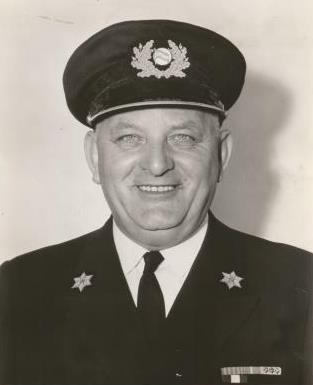
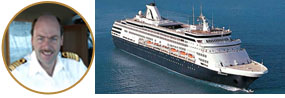
Captain C. Snelleman, DSC on 30 Oct. 1961 when the company decided to photograph all the captains.(a)
Cornelis Marinus Snelleman was born on 2 September 1910 in Rotterdam. His father Marinus Snelleman (04 Dec. 1884- 30 Apr. 1934) was a shoe repair man in the same city. His mothers name was Teuntje Brandwijk (22 Aug. 1880 – 06 Jan. 1938). They had married on 11 November 1909. There was one sister, Cornelia Gerardus (Born 14 August 1912) (e).
Cornelis went to the Maritime Academy in Rotterdam and was enrolled in the 3 year course, which meant that his previous education had little or no mathematics included in the curriculum.
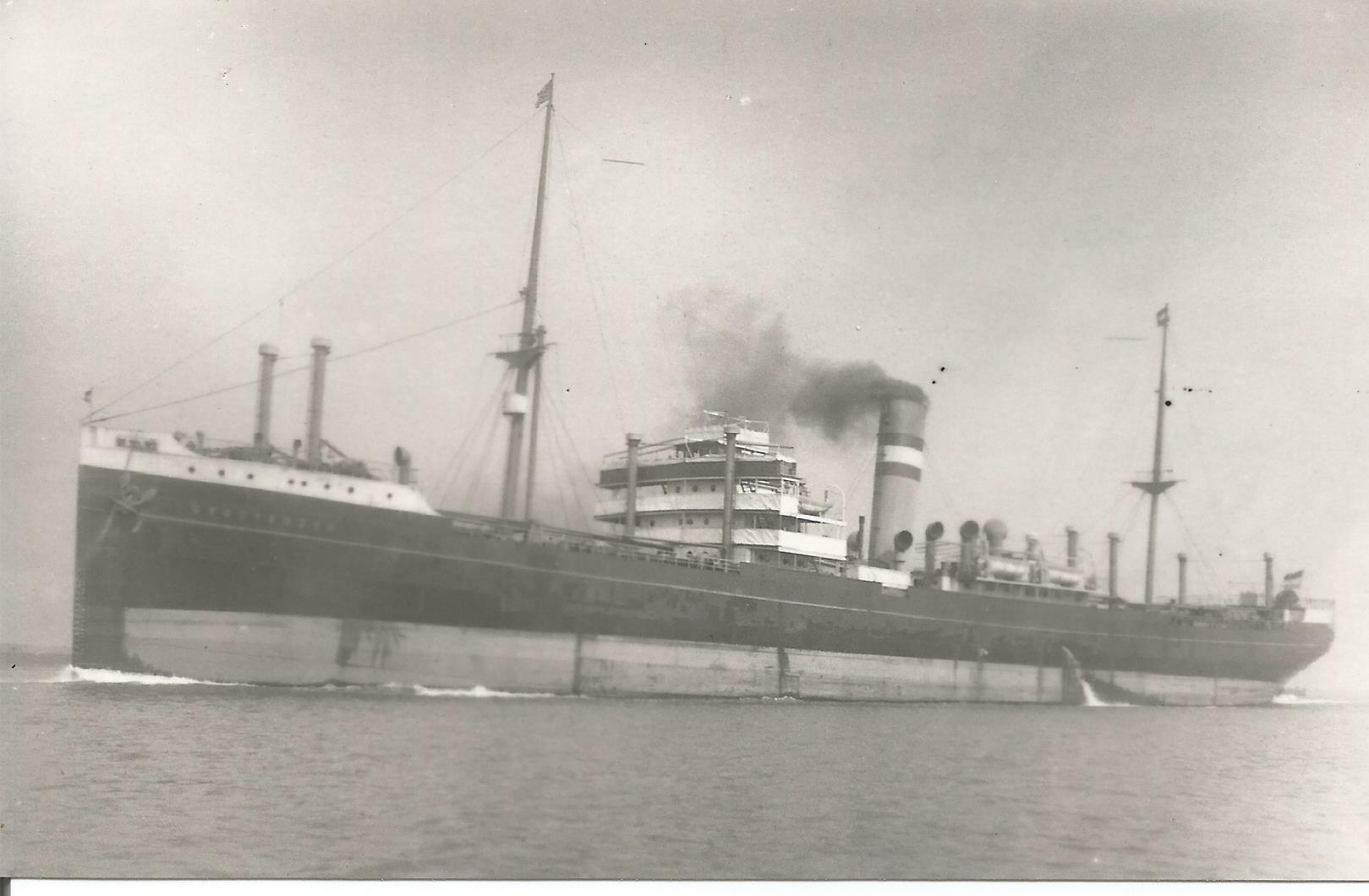
The ss Grootendyk (I), seen here sailing out of an unknown port ” in ballast” (no cargo on board). (b)
He Joined Holland America on 27 July 1927 as cadet on the ss Grootendyk. This ship was employed on the Rotterdam – North Pacific service and sailed through the Panama Canal all the way to Vancouver. He made one voyage with the ship (Nbr. 15) and is then sent on leave on 01 January 1928. Then his company records have a criptic message. ” on 12 January 1928 in service for the VNS (Holland Britisch Indisch Lijn” as cadet. (until 25 May 1928) The Grootendijk however remained on the Vancouver service so it is unclear with which ship he sailed.
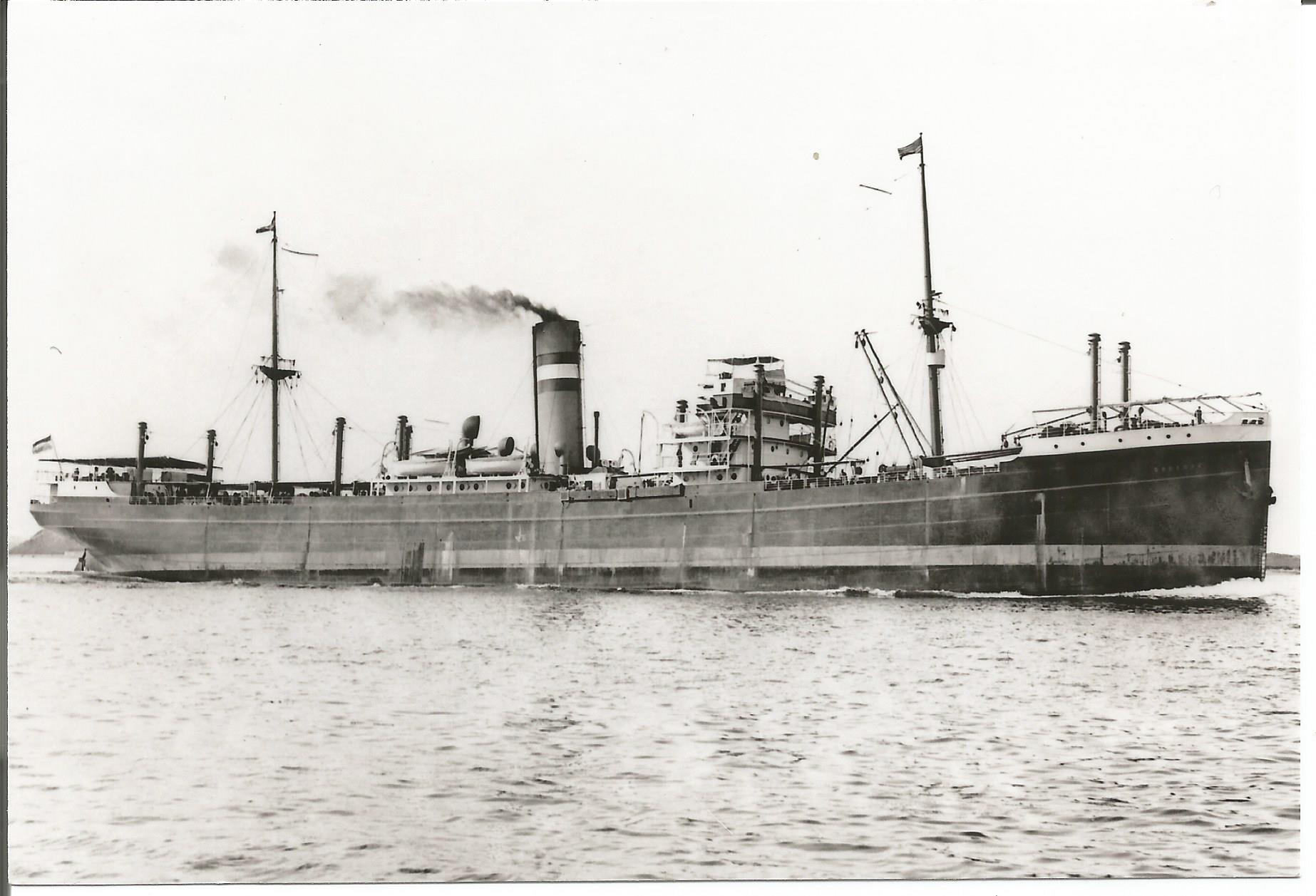
The ss Breedyk was part of the B class series of cargoships built in the early 1920s. although she looked somewhat similar to the Grootednyk she was of a different design. (b)
But on 25 July 1928 he was assigned to the ss Breedijk, to go to the Dutch East Indies from New York. He must have gone over by ship as the Breedijk did not sail from Rotterdam but arrived in New York on 10 August 1928 and left again on 21 August. That assignment stopped on 9 November when he was transferred in New York from the ss Breedijk to the ss Rijndam to return home on 10 November. (voyage 201 Eastbound). He arrrived in Rotterdam on 20 November and was granted study leave 2 days later. On 17 May 1929 he obtained his 3rd Mate’s ticket and was assgined on 24 May to the ss Vechtdijk. This ship was also engaged on the service to the Far East, going as far as Calcutta and Madras but sailed from Rotterdam.
Then we have an anomaly in his sailing dates as the ship was handed over to a new owner on 29 June 1930 and his assignment according the company listings ran until 2 October. On that day he received 16 days of leave and then joined the ss Leerdam (II) on 18 October.
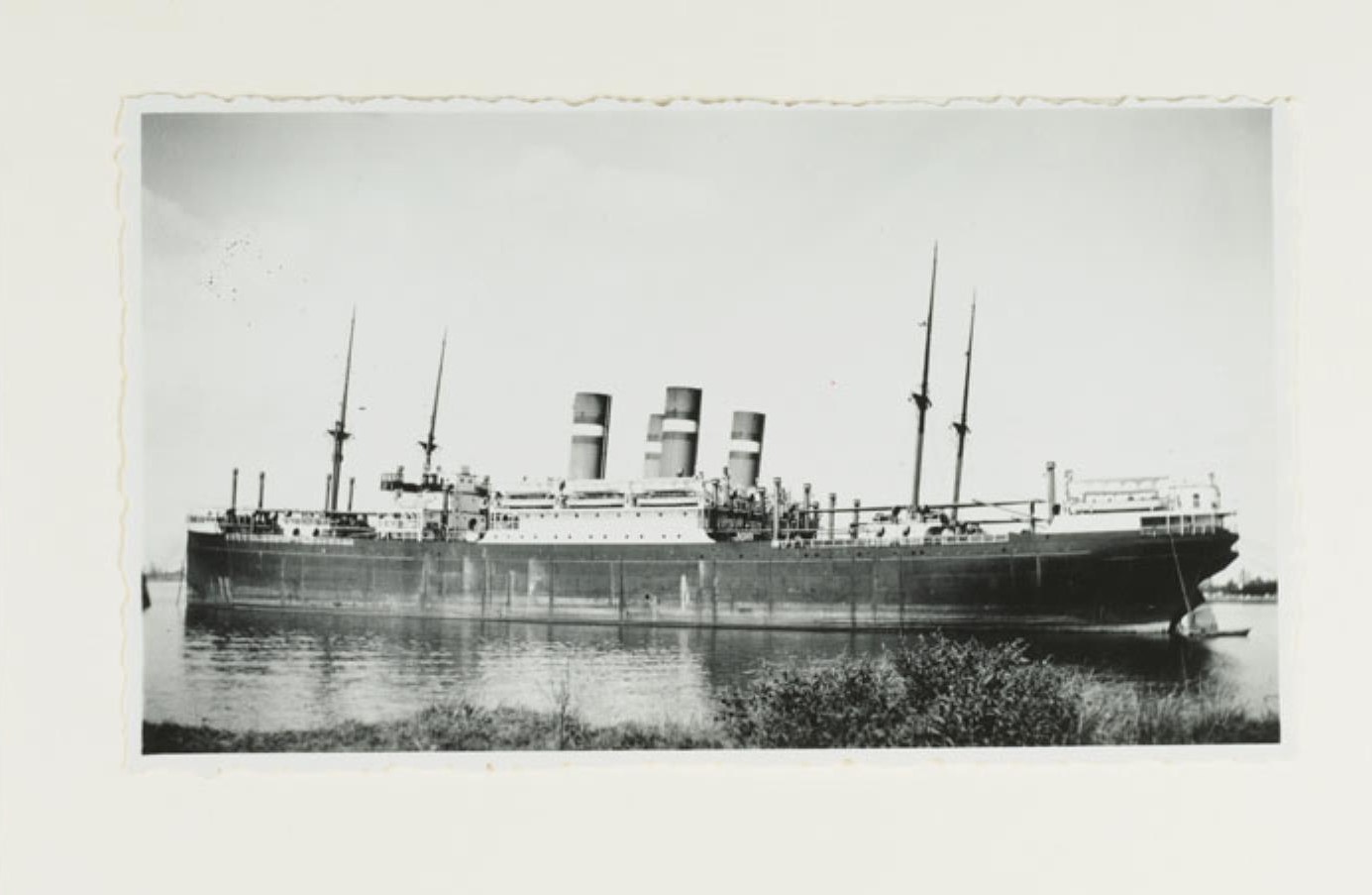
This photo shows the ss Leerdam (II) laid up in the Waalhaven in 1933 with behind her a sistership (b)
That ship was in lay-up in the Waalhaven so he was employed as Officer /Watchman. A job that many 4th. officers did, mostly when in between ships. This must have been the case here as well as between 03 November and 15 November he was on board the ss Kinderdyk (I) which at that moment was between voyages. On 15 November he transferred to the ss Edam (IV) and left Rotterdam on 19 November for two voyages to the Gulf of Mexico via Spain and Portugal. Calling at Antwerp, Boulogne Sur Mer, Bilbao, La Coruna, Vigo, Havanna, Vera Cruz – Tampico – New Orleans – Havanna – Vigo – La Coruna and back in Rotterdam on 1st. of April 1931.
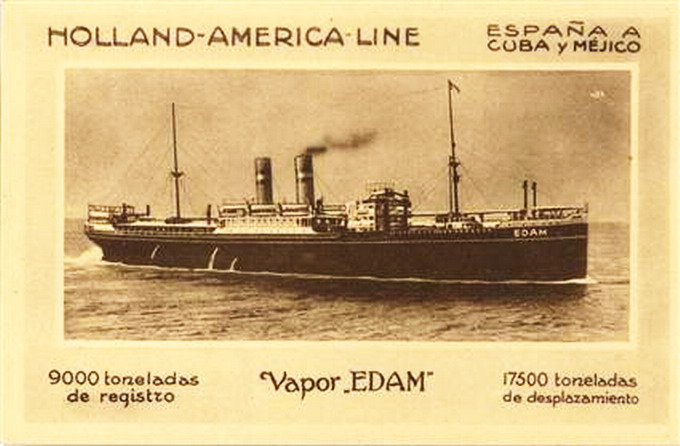
The ss Edam (IV) on a contemporary company postcard for the Spanish market. (b)
A week later he was dismissed as being “surplus to requirements” as more and more ships went into lay up. Marinus Snelleman, was selected due to being in a junior position and not married. The company kept those who married and had childeren as much as possible in service, either in the same rank if very senior or by setting them back to a lower rank. He was placed on the waiting list, hoping for better times. Although not listed in his saling records, he must have been called back again as in the family photo albums, there is a photo of him in tropical uniform dated 9 May 1931 on board the ss Breedyk, while at Surabaia in the Dutch East Indies.
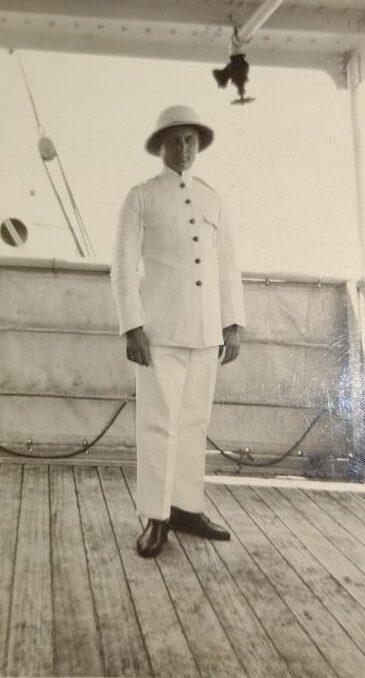
4th. officer Cornelis Snelleman in tropical uniform on board the ss Breedyk on 9 May in Soerabaia, Dutch East Indies. (c)
The Breedyk sailed (voyage 46) from Rotterdam on Febr. 14 for a voyage to the Dutch East Indies via Norfolk, Jacksonville, New York and then the Suez Canal to the Dutch East Indies and docked on 19 July in New York again. Then on 24 July it commenced its next voyage to the East, only returning to Rotterdam on December 30. Subject to confirmation it must mean that he left the Breedyk on July 19, came home with another company ship, so was able to marry on 25 November 1931 Anthonia “Toni” Pieternella de Graaf (then 21).
Photo of the young couple???
It is unknown, as of yet, what he did in 1932 and 1933.
On 06 October 1933 the company had space for him again and he was signed on to the ss Damsterdyk sailing the next day on a 3 month roundtrip to Vancouver. The depression was now at its severest and the company officially dismissed him again on 02 Feb. 1934 after arrival back in Rotterdam on 13 January. They must changed their mind quickly as 5 days later he was assigned to the ss Leerdam (II) with promotion to acting 3rd. officer. He made with the ship one roundtrip to New York and was back in Rotterdam on 16 March. The ss leerdam went into layup and Cornelis was again dismissed on on the 24th.
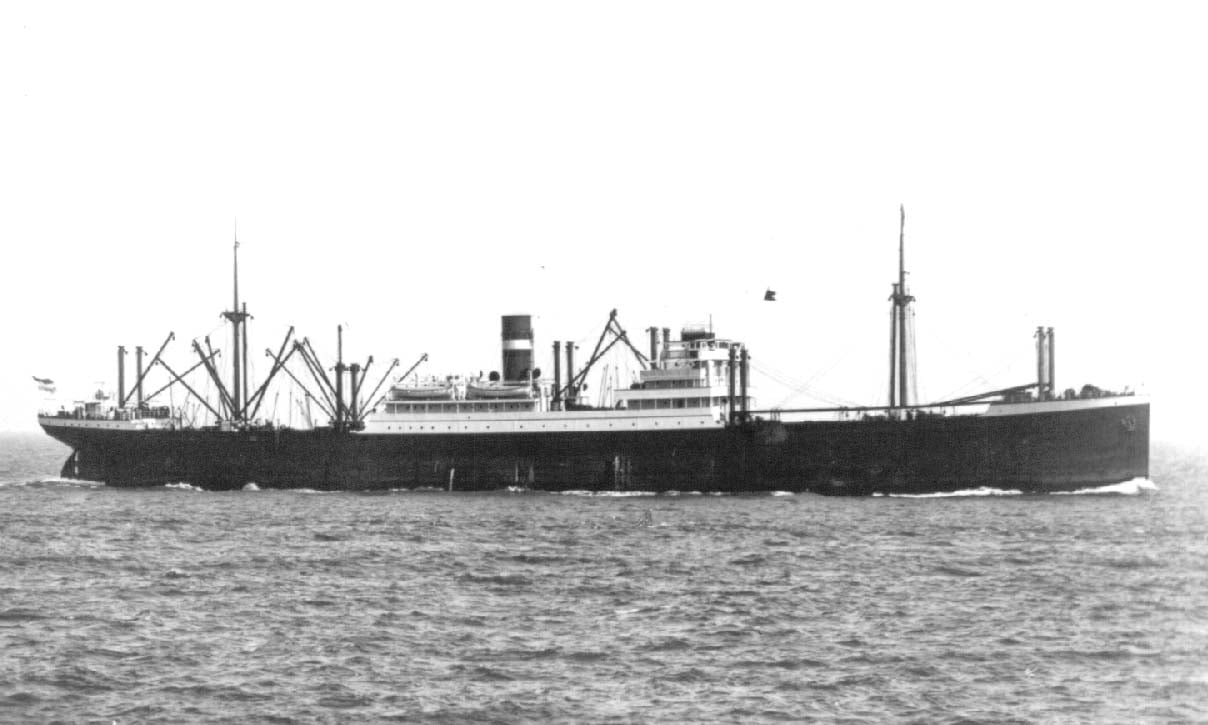
The ss Dinteldyk (I) seen here on the North Sea. She was a D-class ship and was employed on the route Rotterdam to Vancouver via the Panama Canal. (b)
On 29 April 1934, the company decided it needed a 4th. officer and he was back, again as Officer / Watchman, on the ss Breedyk again, which was laid up. But on 03 May a 4th. officer position became available on the ss Dinteldyk and he left Rottedam on the 5th. of May for a voyage to Vancouver. Maybe due to being married now but this was the last time he was sent home without a next assignment. From now on he sailed without interruption until the 2nd world war. In Dec. 1935 he went for 35 days to the Royal Netherlands Navy and was assigned to the Duty ship HrMs Den Helder which seemed to have been involved in sailing along the Dutch coast. There are no records of his rank or any indication that there was any other involvement with the Navy or the Military later on in his career.
Holland America started to brings ships back in service by 1936 and from Acting 3rd. officer in January 1936, he went directly to Acting 2nd officer in 1937. Without even having a 2nd officer ticket. To alleviate this he was sent to school in April 1937 and passed his 2nd mates exam on 11 May 1938.
On 13 May 1937, he signed on as 2nd Officer on the flagship of the company the ss Rotterdam (IV). Here he was part of a more unusual occurence in the company’s history as the ship was sent on May 19 to England to be in attendance for the Royal Navy review at Spithead on May 20th. 150 Royal Navy ships had been gathered to honour the coronation of King George VI. The ship came back to Rotterdam on the 22nd. The ship was at anchor nearby the British Fleet and guests on board went shore side with local tenders. This was followed by a voyage on the ss Veendam (II), but Snelleman returned home sick with a lung infection.
GAP in the sailing list, as the company changed in October 1937 to a new administration system, and those records are held by the Holland America Line pension fund which does not give access to historians.
On 27 April 1937 he received a pair of Binoculars from the Royal Netherlands Meteorological Society (KNMI) for the way he had maintained Meteorological Observations logs.
From photos we know that he was in 1938 on board the ss Dinteldyk and in February 1939 on board the ms Noordam (II)
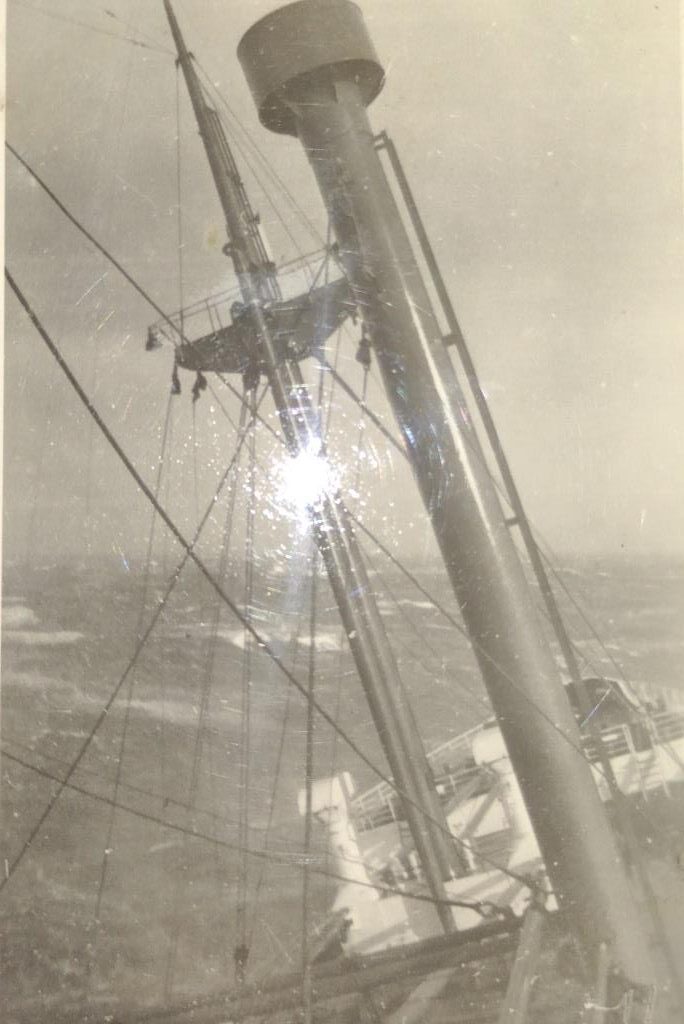
The ms Noordam (II) rolling in the North Atlantic swell in February 1939 . Photo taken by 2nd officer Snelleman (c)
By the start of the 2nd World War he lived at the Prins Hendriklaan 39, Vlaardingen-Ambacht. (Near Rotterdam) Eventually there were three childeren, Cornelis, Anthony and Marina. The two sons also went to sea, one as Engineer and the other one as Deck Officer. The son did not stay until captains rank.(c)
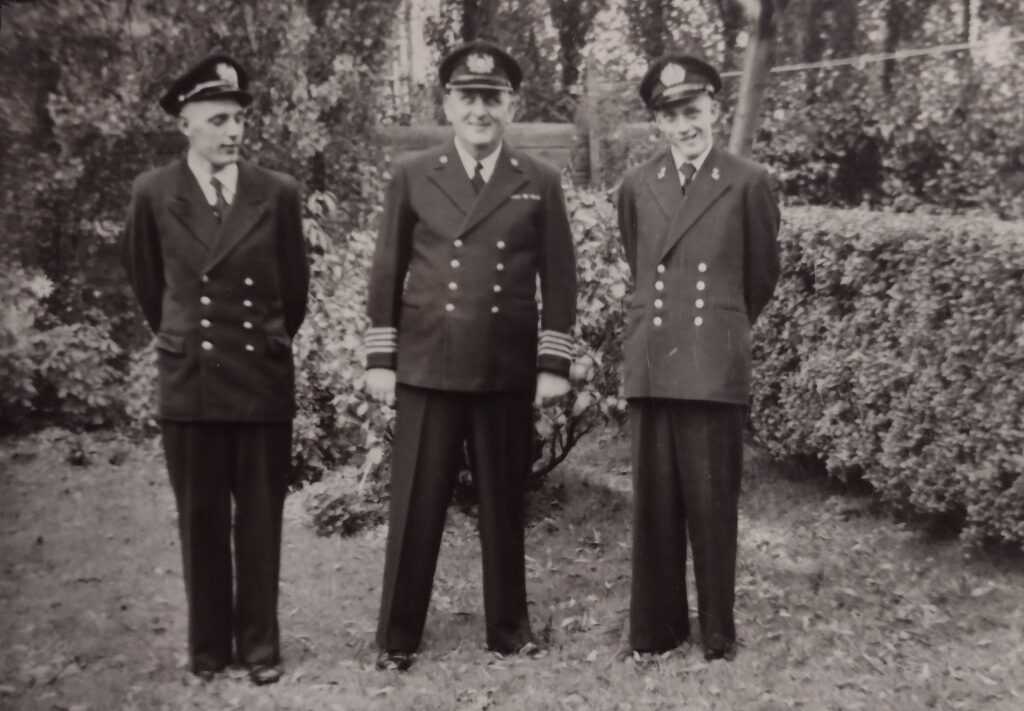
Here we see all three men in uniform. To the left Engineer Cor (Cornelius) already in service of HAL and to the right son Ton (Anthony) who had just entered the Maritime School in Vlissingen. (Photo by Mrs. Snelleman on 04 Oct. 1953) (c)
The Dutch National War records started on 10 May 1940 and lists him as second officer on board the ss Pennland. This ship had come over from the Red Star Line in June1939 when Holland america bought that company. Hence there is the possibility that he was asigned to that ship from 01 June 1939, when the HAL crew was sent to Antwerp to take over the ship.
If so, he was 2nd officer on board for the regular trans atlantic crossings from Antwerp via Boulogne Sur Mer, Southampton to New York, making 23 / 24 day roundtrips. When the Netherlands were invaded on 10 May 1940, the ship had just departed Southampton for a crossing to New York. That voyage had started on 26 April in Antwerp so he must have been on board at least from that date onwards.
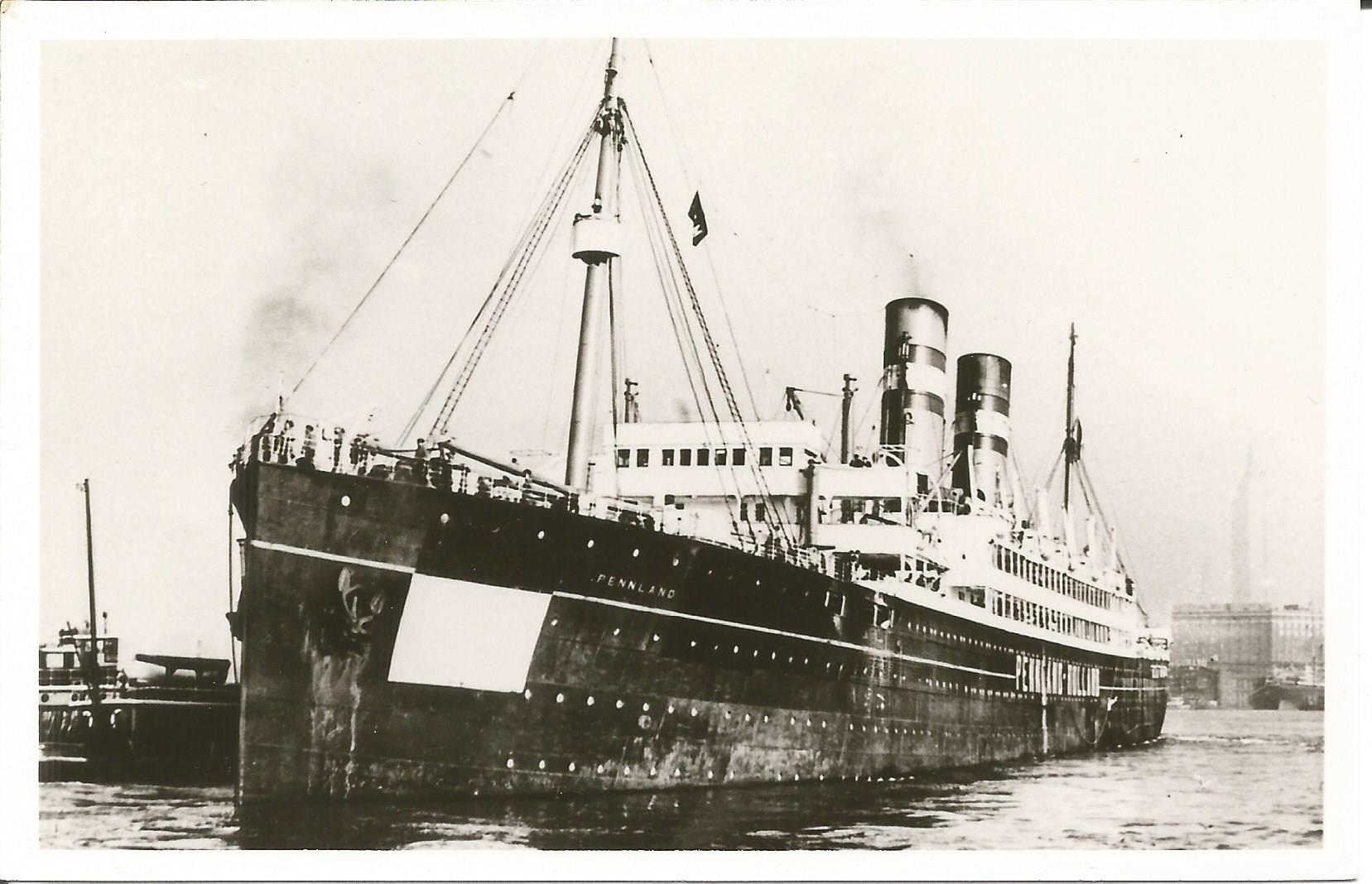
The ss Pennland here seen in neutral colors after 05 Sept. 1939. She had been built in 1920 for the American Line for the service from Liverpool to the USA. After several owners she ended up with the Red Star Line in 1936 and then carried 486 in Tourist Class with 220 crew.
Upon arrival in New York the ship was seized by the Dutch Government on 16 May and chartered out to the British Ministry of War Transport for troop transports with the HAL crew remaining on board. As it was totally unclear how the Dutch Government was going to handle the crew situation (Sailing for the British, involved in war activities, pay situation etc. etc.), meetings were arranged by the crews in shore side hotels in New York and 2nd. Officer Snelleman acted as one of the official delegates to represent the crew while negotiating with a deputation of the shipping owners and other shipping officials.
An agreement for a 70% wage increase was agreed, which was then promptly rejected by the Dutch Government in London. They had already arranged that the Dutch Crews would get the same pay as their British Counterparts with an extra fl 5,– (guilders) a month. The crews in the USA then refused to sail.
Before Snellemans “committee” could formulate a plan of action, the Dutch Government on the 23rd. of June arranged by Royal Decree, that the regular sailing pay regulations would be applicable (e.g. no difference between war and peace time sailings). Also that the crews were required to sail and refusals would not be accepted. The Government Shipping Committee in London would review the rules when needed. Ignoring a Royal Decree could have resulted in being arrested for muntiny and so the crews returned, grumbling, to their ships. The ms Pennland left New York the next day .
She had been ordered back back to Liverpool (via Halifax to join a convoy (HX 54) for the crossing, to go dry dock for conversion into a troop ship. (13 July – 28 August). She then left for her first voyage on 31 August sailing from Liverpool to Freetown on the West coast of Africa. As the German submarines were not that prevalent yet in the lower latitudes of the North Atlantic, there was no official convoy to protect the ships.
Then the French Government in exile decided, with approval of the British, to invade the French colonies in Africa and from there start the liberation of France. These colonies were under control of the “Vichy Government” which controlled the parts of France that had not been occupied by the Germans but this “puppet” Government had to follow the orders of the Nazi leadership.
The two sisters, the ss Pennland and ss Westernland, were appointed to carry General Charles de Gaulle with 1200 “Free French” soldiers. This was called “Operation Menace” and on 31 August the convoy left Liverpool and sailed for Freetown and Dakar. When at Dakar (26 – 29 September), General de Gaulle found out that the local French troops, army, navy, civilians, (including some french navy ships) did not wanted to be liberated. They were quite happy with the status quo. General De Gaulle did not want French fighting against French and the ships returned to Freetown where the French troops were landed. From there the two ships split up and the ss Pennland sailed to Barbados (29 Nov.) and then to Kingston Jamaica (02 – 06 Dec.) to collect prisoners of war which were landed in Halifax (12 – 16 Dec.) Then the ship sailed across the North Atlantic back to the Clyde carrying regular (Canadian) troops. (Convoy TC 8). From there the ship went for drydock in Belfast over the New Year period.
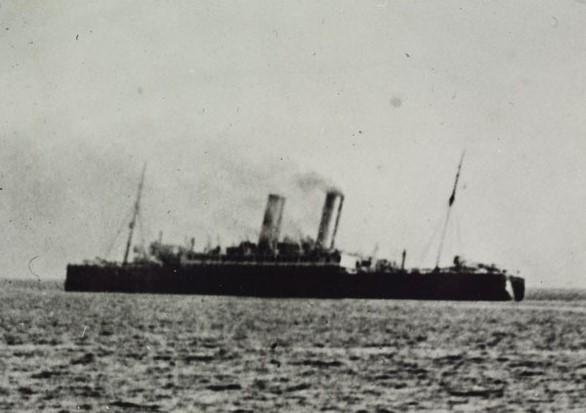
This is supposedly the last photo of the ss Pennland. Taken when she was sinking. It was taken from one of the lifeboats. (c)
The Pennland left Belfast on 04 January 1941 for a trooping voyage (Convoy WS 5B) from Gourock, Scotland to Freetown. From here the convoy continued to Suez (via Durban) were around 10 March the troops were disembarked. Now followed a short drydock at Alexandria for repairs and on 01 April 1941 the ship embarked 2400 British Troops to take to Pireaus, Greece, to stem the advance of the German Forces. Between 10 and 13 April it made another such a voyage and was then kept in Alexandria from 16 to 23 April as things were not going well in Greece for the British Forces. On the 23rd of April the ship was ordered to sail empty back to Greece to embark the British troops who were driven out of Greece by the rapidly advancing Germans.
On the 25th. of April 1941 the ss Pennland was attacked by German airplanes and was hit by seven bombs during several air attacks. One bomb exploded inside the engine room, killed four crew and ripped open the hull. This caused the ship to start taking on water. All officers and crew disembarked via the lifeboats and the ship is sunk by cannon fire of the HMS Griffin to avoid it from falling into enemy hands. HMS Griffin also took al officers and crew on board.
While the ship was under attack and the bomb in the engine room exploded, Snelleman went into the ship and managed to save two wounded seamen trapped below decks. For this act of heroism he received the Dutch Cross of Merit from the Dutch Government and from the British Government the DSC. (Distinguished Service Cross)
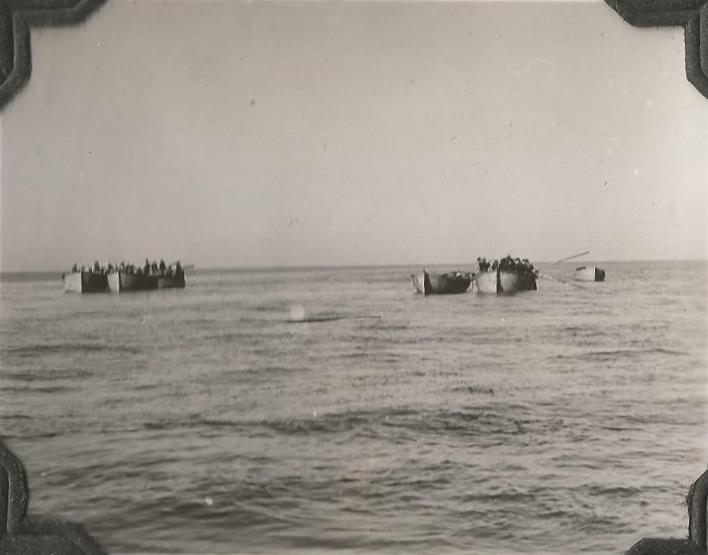
The Pennland lifeboats being gathered together. 2nd Officer Snelleman was in command of one of these lifeboats, seen in the photo. (Photo courtesy: Estate of Captain A.M van Gemert who was 3rd officer on board the ss Pennland and in command of one of the other lifeboats)
The HMS Griffin landed all the crew in Crete and then they had to walk to the first port, where they embarked on the passengership the ss Duchess of Atholl (17 May) who took them to Suez (16 June – 17 June), where the crew was split up to join various transports. There is an anecdote by him from this period.
As all the crew had left the ship in a great hurry, none of them had any extra clothes or money with them and the clothes that they were wearing were stained and often torn. No clothing was given while on transport to Egypt. There arrangements were made via the Dutch Consul that money would be forwarded from London but that could take up to 5 days. Snelleman went to a local tailor and said, I need a new uniform but I can not pay yet. The tailor looked at him and said, we will work through the night and your uniform will be ready the next morning. In the mean time , here is 50 (Egyptian) pounds so go and get something to eat. The uniform was ready the next day and 5 days later the money came in and Snelleman could pay the helpful tailor.
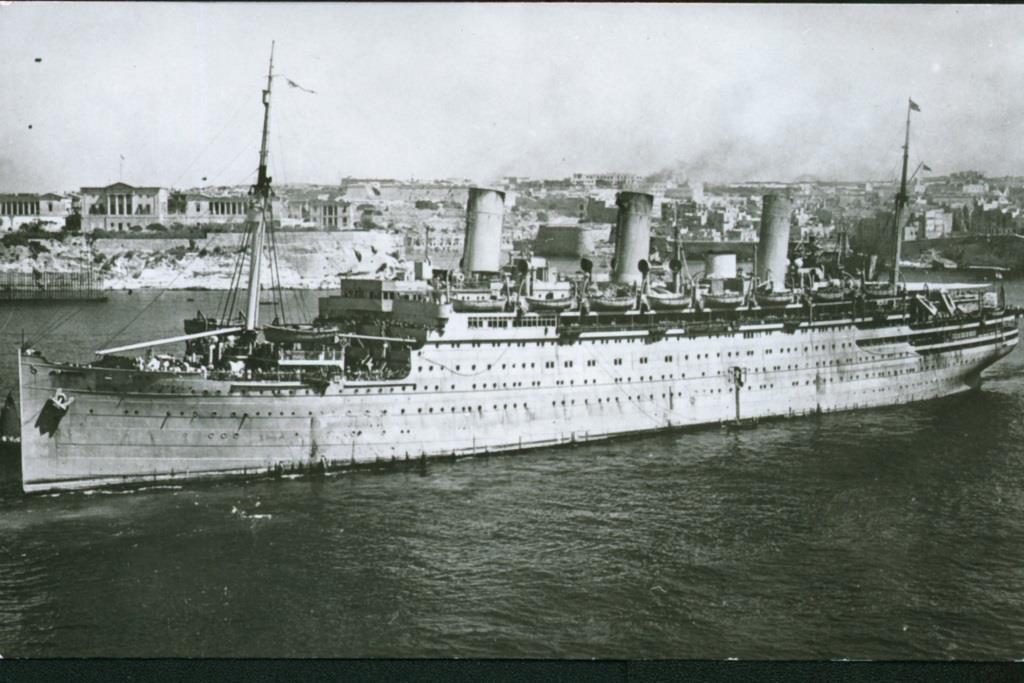
The ss Empress of Australia (II). She had been built as the ss Tirpitz for the Germans and was seized after the First World War and allocated to the Canadian Pacific Line. Apart from troop voyages, she was also involved in a sort of liner service carrying various war personell from one area to the other. This photo shows the ship in Valetta Harbor, Malta, during WWII. (c)
Snelleman boarded the passengership ss Empress of Australia on 17 June for the Journey back to London where he arrived on 07 August 1941 and was given leave until 03 September 1941. He stayed in a local hotel. (Note ED: The Empress of Australia did not sail directly to London but worked its way through various troop assignments before heading back to England)
He then joined the ms Delftdyk which had arrived in Liverpool in June and was temporary laid up there for repairs. She eventually transferred to Newcastle (Upon Tyne) and Snelleman joined her on 3 September with the ship leaving the next day for a voyage via Methil and Oban, to Freetown in Africa. (Convoy OS 208)
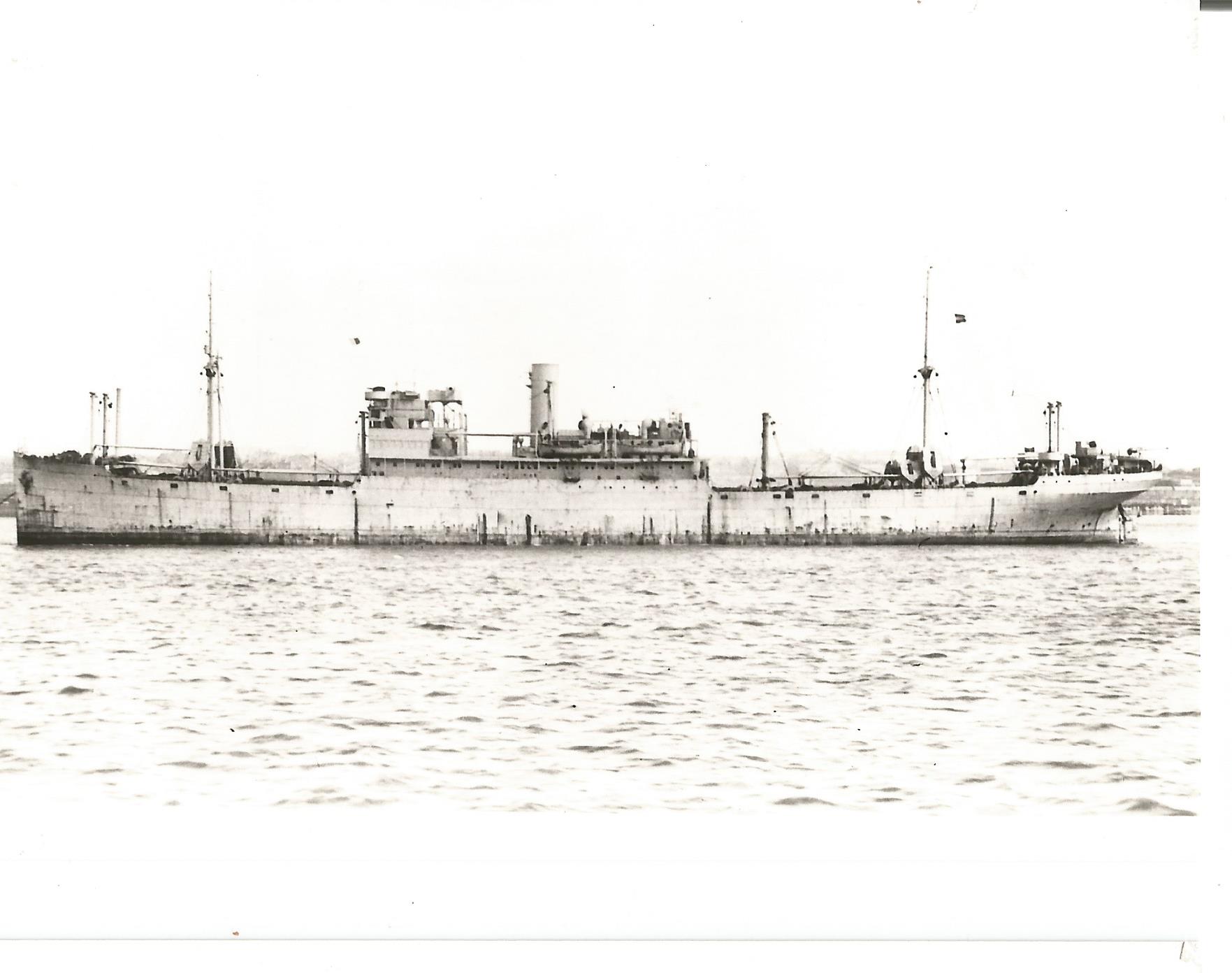
A side view of the ss Delftdyk painted in war time grey. In peace time she sailed on the service from Rotterdam to Vancouver. (b)
He sent each month an allotment home of Dfl. 160,– (plus premium of Dfl. 1.35 a day). The money was not going directly to the Netherlands as the occupation did not allow this. It was offset against the pay outs of the “Zeemanspot” The Dutch illegal payment system ran by Captain Abraham Filippo of the ss Veendam (II), whose ship got stuck in port when the invasion started. (See the Captain Filippo biography for more information)
While the ms Delftdyk was docked in New York between July and August 1942, he received, on 27 July 1942 ,the Dutch “Cross of Merit with clasp” at the New York Office in September 1943. However the official presentation came on 03 April 1946 when he was presented to Queen Wilhelmina at her palace in The Hague.
For the remainder of the year the ms Delftdyk was mainly making convoy voyages between North America and England. Then on 04 Jan. 1943 he was given a long leave until 28 March in New York. On that day he left with the ss Edam (IV) for regular convoy duty from Halifax to Liverpool or Glasgow and back.
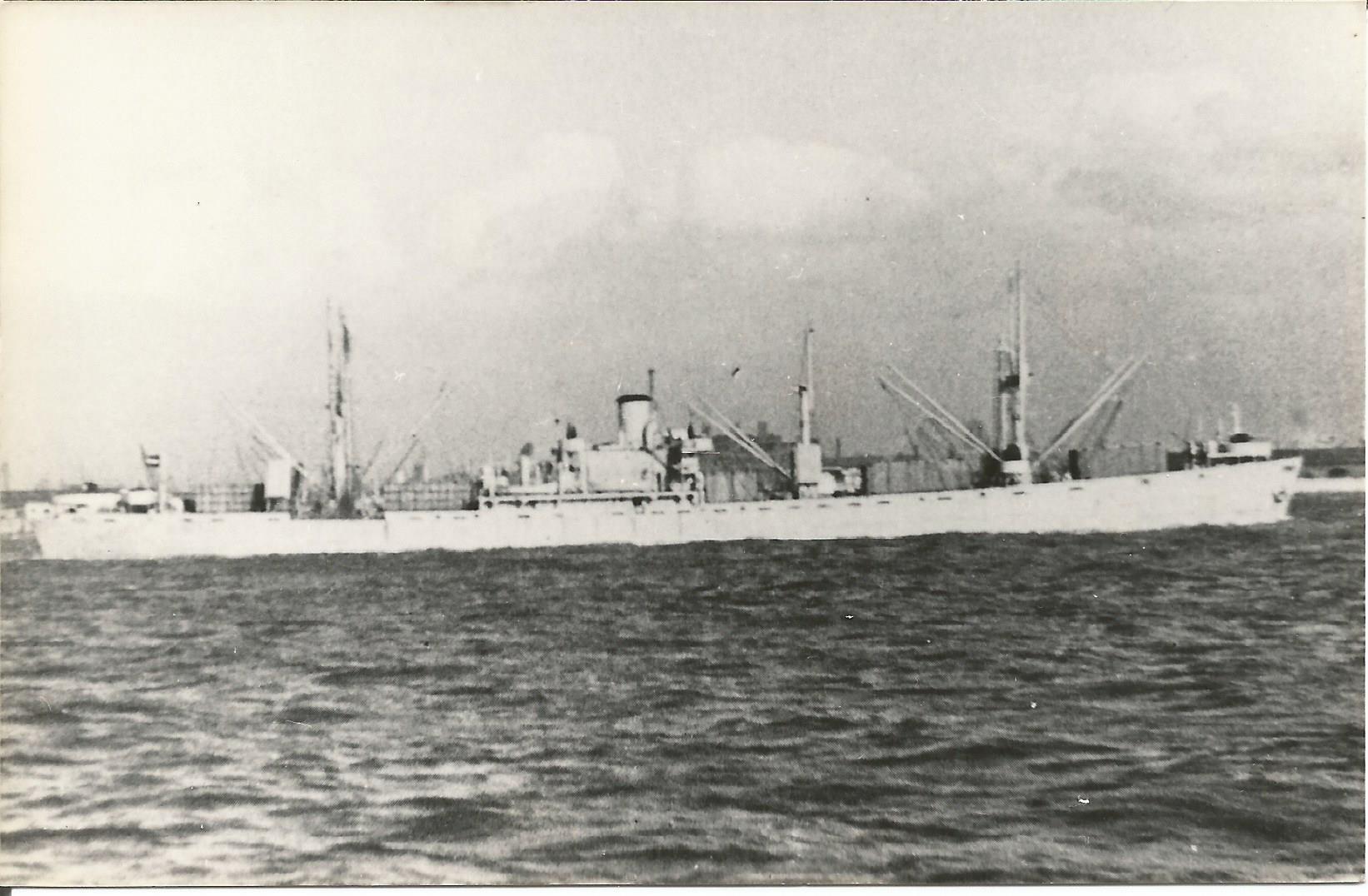
The ss Fort Orange in grey war colors. She became the ss Blydendyk in 1947 when she was bought by Holland America (b)
Then on 15 September 1943 he was assigned to the ss Fort Orange. For this he travelled to Portland (Maine, USA) to join the ship. This ship was owned by the Dutch Government and given in management to the Holland America Line. He remained with this ship for one voyage (Portland, Boston – Halifax – Liverpool – Manchester) and disembarked there on November 2. Then he was given study leave for his First Mate’s / Master License at the nautical school in London. He passed his exam on 03 April 1944.
The company must have been waiting for this as on 15 April he was promoted to Chief Officer and was sent to the ss Philips Wouwerman, another ship of the Dutch Government that was given in management to the Holland America Line.
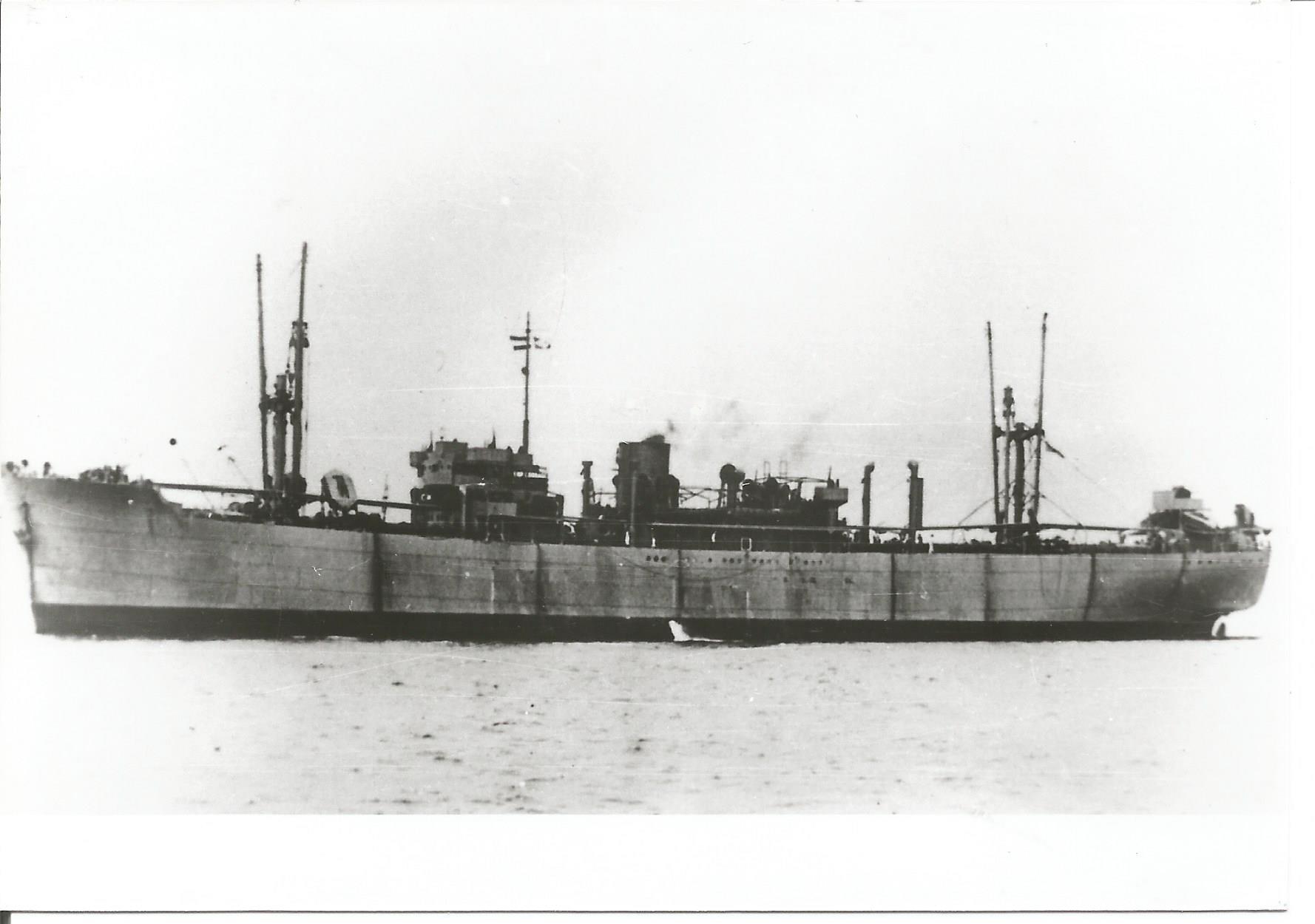
The ss Philips Wouwerman during the war. This was another ship which Holland America managed on behalf of the Dutch Government. (b)
He remained with this ship for the remainder of the war, seeing mainly convoy service between ports in North America and the United Kingdom. On 23 June 1945 he arrived back in the Netherlands for the first time after the war. But before he is granted a long leave he has to make one more voyage with the ship to Quebec and Montreal and is then back in Rotterdam on 23 July.
Sometime near the end of the war he also received the Dutch “Bronze Lion” medal. This is the highest Dutch order (established 30 March 1944) for: “Deeds of extreme bravery and leadership (in battle) favouring the Netherlands”. Sofar (2025) it has only been issued 1214 times. Apart from given to the Military it can also be issued to non-military persons as long as the act for bravery was in support of the country.
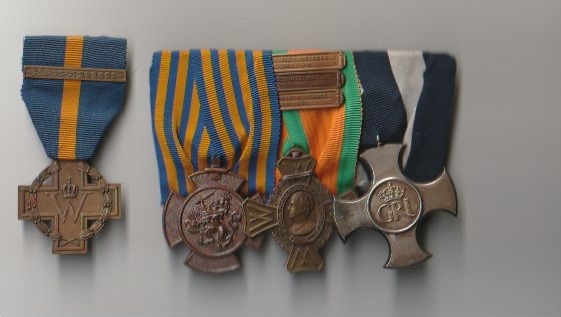
From L to R: Dutch Cross of Merit with clasp, Dutch “Bronzen Leeuw” /Bronze Lion, War cross with 3 bars, the DSC medal (c)
(Note: I am still tracing the citation for the Bronze Lion as his name is not on the (incomplete) Dutch Register)
GAP in the records until June 1946.
All officers & crew who had been away for 5 to 6 years, those who wanted it, were given a long leave and thus we do not know yet, when he returned to sea.
But on 25 June 1946 he was assigned to the ss Edam (IV) for one voyage to the Gulf of Mexico ports until 29 August. This was followed by a crossing with the ss Sommelsdyk (II) between 12 September and 24 September from Rotterdam to New York.
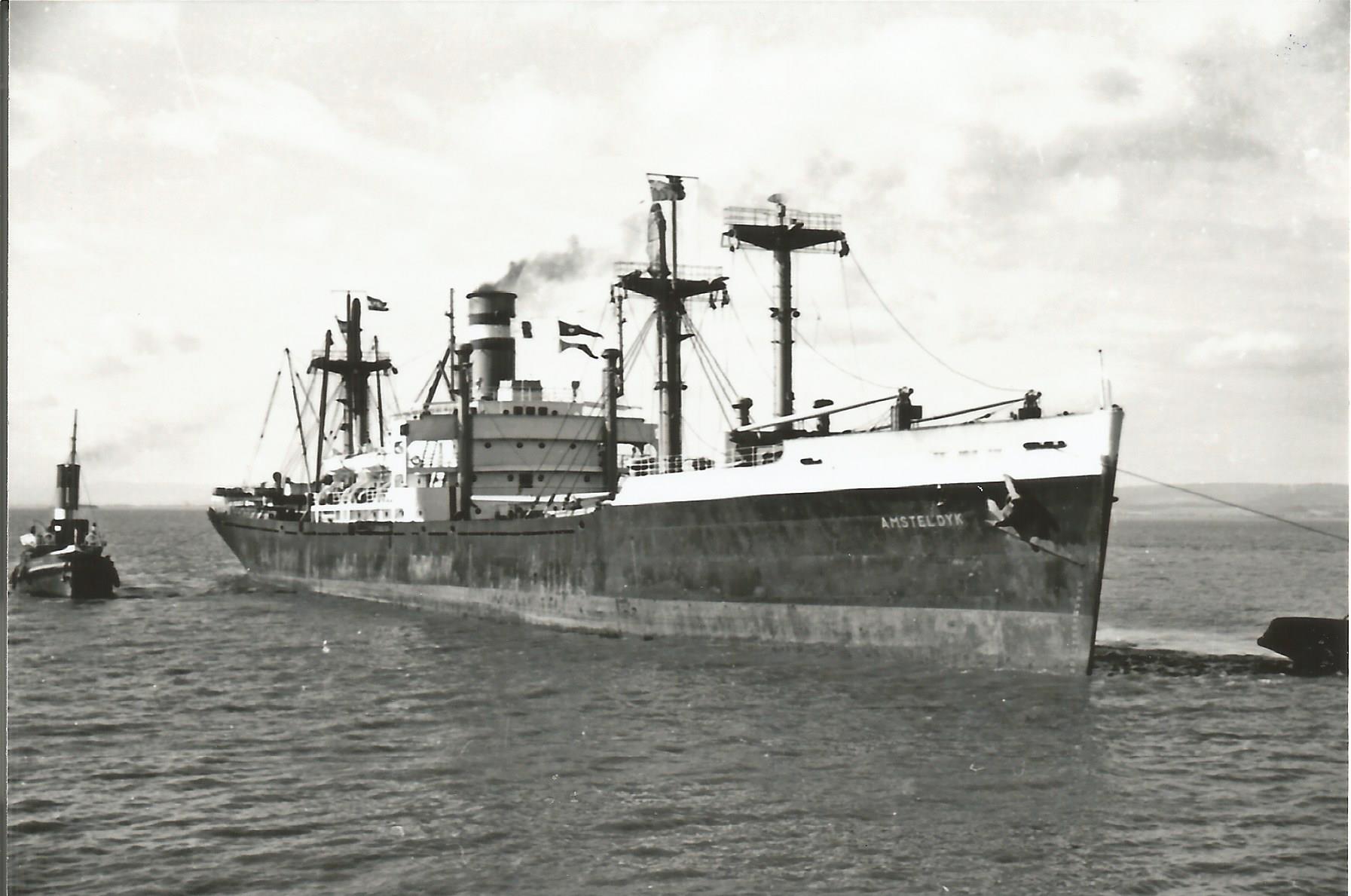
The ss Amsteldyk early in her career. (b)
From there he travelled to San Francisco by train, as part of a larger group of Officers and Crew to collect a new ship for the company, the ss Amsteldyk (II). This ship had been built by the US Government as the ss Panama Victory as one of a series of over 560 Victory class ships during the 2nd world war. She had been bought by the Dutch Government as part of a policy to make ships available to get the Dutch Merchant Marine and the Dutch economy back on its feet as quickly as possible. The ss Amsteldyk was taken over on 14 November and was the first of a series of 10 Victory ships (the A class) that the company would eventually buy.
The ship arrived in Rotterdam on 31 December 1947 and then sailed again on 17 January to New York followed by a long voyage to Singapore and the Dutch East Indies / Indonesia and then returned to Rotterdam via a loop voyage to New York, ports in the Gulf of Mexico and Antwerp. On July 8th., he was relieved after ending this 6 month long voyage.
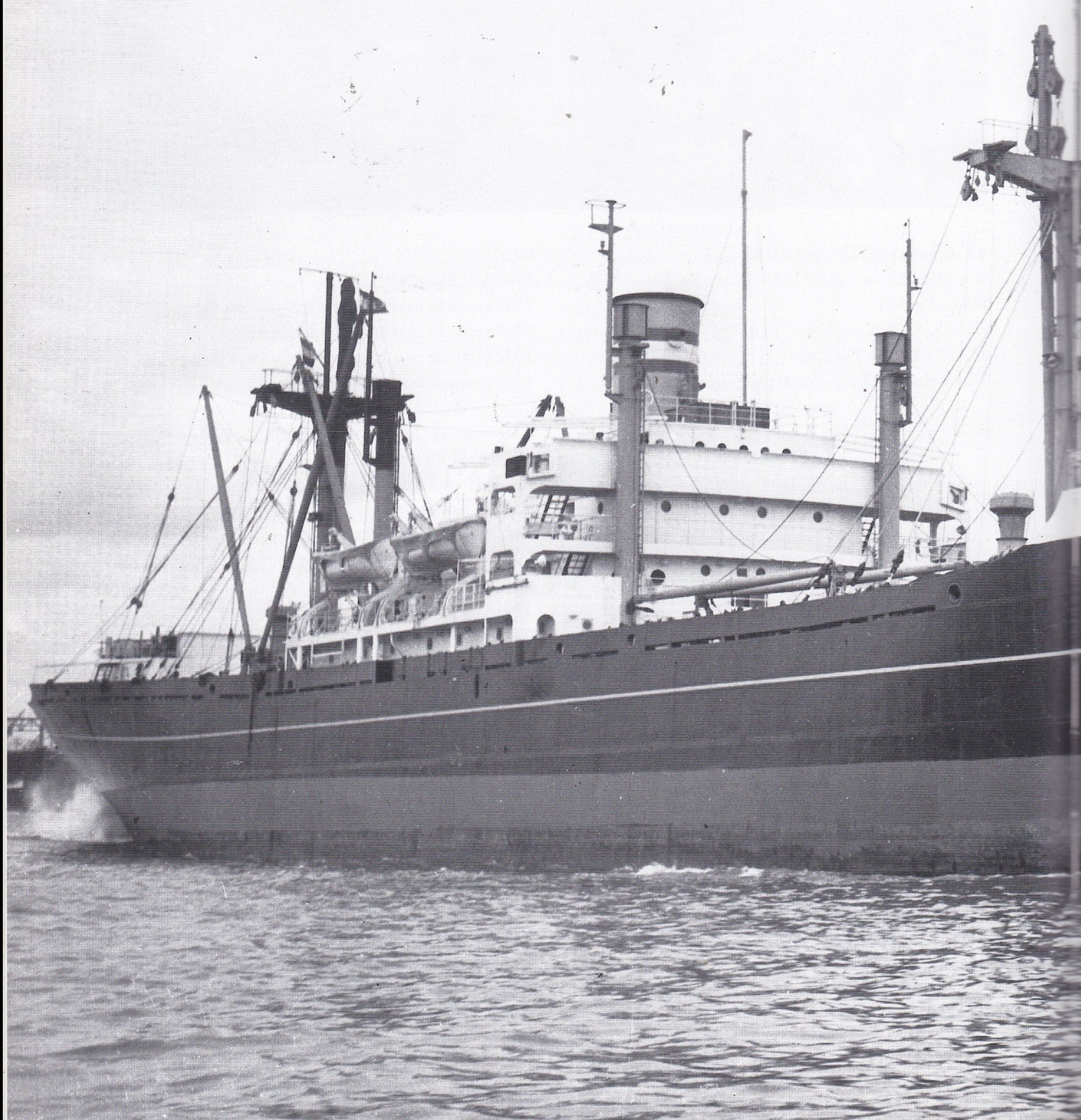
The ss Arnedyk. ex India Victory. Looking at the bridge one can see that see that she had a different lay out to the Amsteldyk as the Victory ships were not identical 9b)
On 02 August he sailed with the ss Edam (IV) from Rotterdam but left the ship upon arrival in Philadelphia on the 14th. He must have travelled from Philadelphia to New York because he joined there the ss Arnedyk. This was another Victory Class ship that had been bought by the Holland America and had been laid up in New York awaiting a buyer since 02 July 1947. The company purchased her on 18 July and then sent a crew out to collect her. She departed New York on 06 September and sailed via Phildelphia back to Rotterdam (Arr. 23 Sep.) Chief Officer Snelleman remained with her until 27 July 1948, making voyages to New York and to the Gulf of Mexico.
The followed one voyage (nbr 70) on board the ms Delftdyk making a 3 month roundtrip from Rotterdam to Vancouver and back through the Panama Canal. This was followed by one voyage on the ss Axeldyk (yet another Victory ship bought by the company in 1947) for one voyage to Havanna and the Gulf of Mexico. By now seniority status kicked, not in the least as many senior chief officers had been promoted to captain due to the influx of A-class ships and Snelleman is assigned to the passengerships.
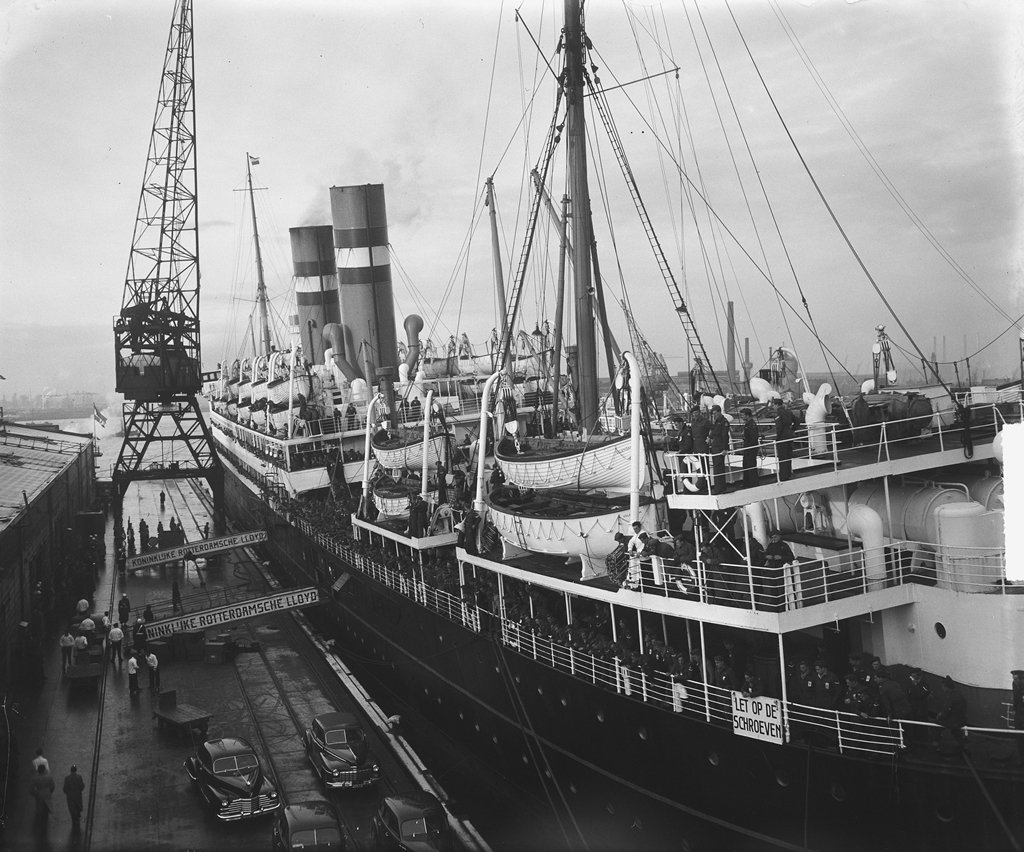
The photo shows the ss Volendam arriving at the Lloydkade in Rotterdam on 22 November 1949 with a full ship of repatriees. The ship docked at the Rottedam Lloyd pier as the ss Nieuw Amsterdam was alongside the Holland America passenger terminal. (b)
On 25 March 1949 he departed for a 9 weeks voyage to the new country of Indonesia to collect Dutch citizens who were evacuated back to the Netherlands now Indonesia was independant and the relations with the old mother country were not very good. He was back in the Netherlands on 01 June, remained with the ships for two emigrant voyages from Rottedam to Quebec. On 28 September the ship made another repatriation voyage to Tandjong Priok (port of Batavia / Djakarta) to bring back another 1500 Dutch peoples to the Netherlands. The ship was back in Rotterdam on 29 November and then followed by 2 months vacation.
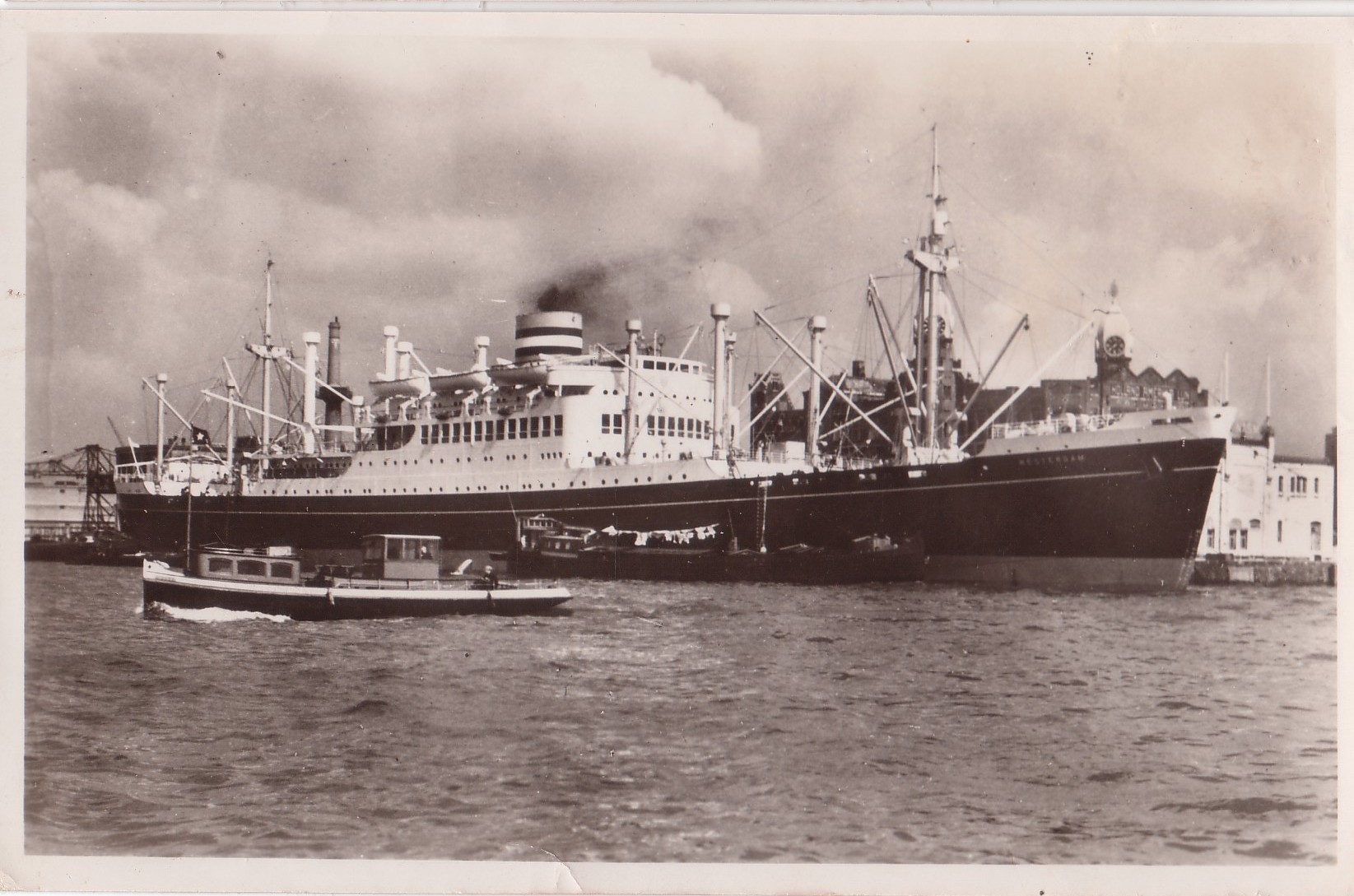
The ms Westerdam (I) seen here docked at the Wilhleminakade in Rotterdam. (b)
Then followed two voyages with the ms Westerdam (I) (Rotterdam – New York) and another period of 5.5 months on the ss Volendam. The ship was now back on the Rotterdam – Halifax – New York service and landed each westbound crossing larger number of Dutch emigrants at Halifax. ( 1260 of them on 13 April). On the return the ship carried regular passengers / tourists and students who were going to see Europe. Holland America had special budget arrangements for these students and their large numbers (sometimes up to 500 during one crossing) brought in a tidy income for the company.
This was followed by a short coastal voyage on the ss Almdyk, sailing from Rotterdam to Bremen, Amsterdam and back to Rotterdam (27 Nov. 1950 – 05 Dec. 1950). These European coastal voyages became a standard for the company after the 2nd world War. It gave H.R the opportunity to give the officers and crew who made the longer voyages a week or so off in between. The ships were then manned by those at home on a longer leave or those in between ships due to going to school, marriage or other family circumstances.
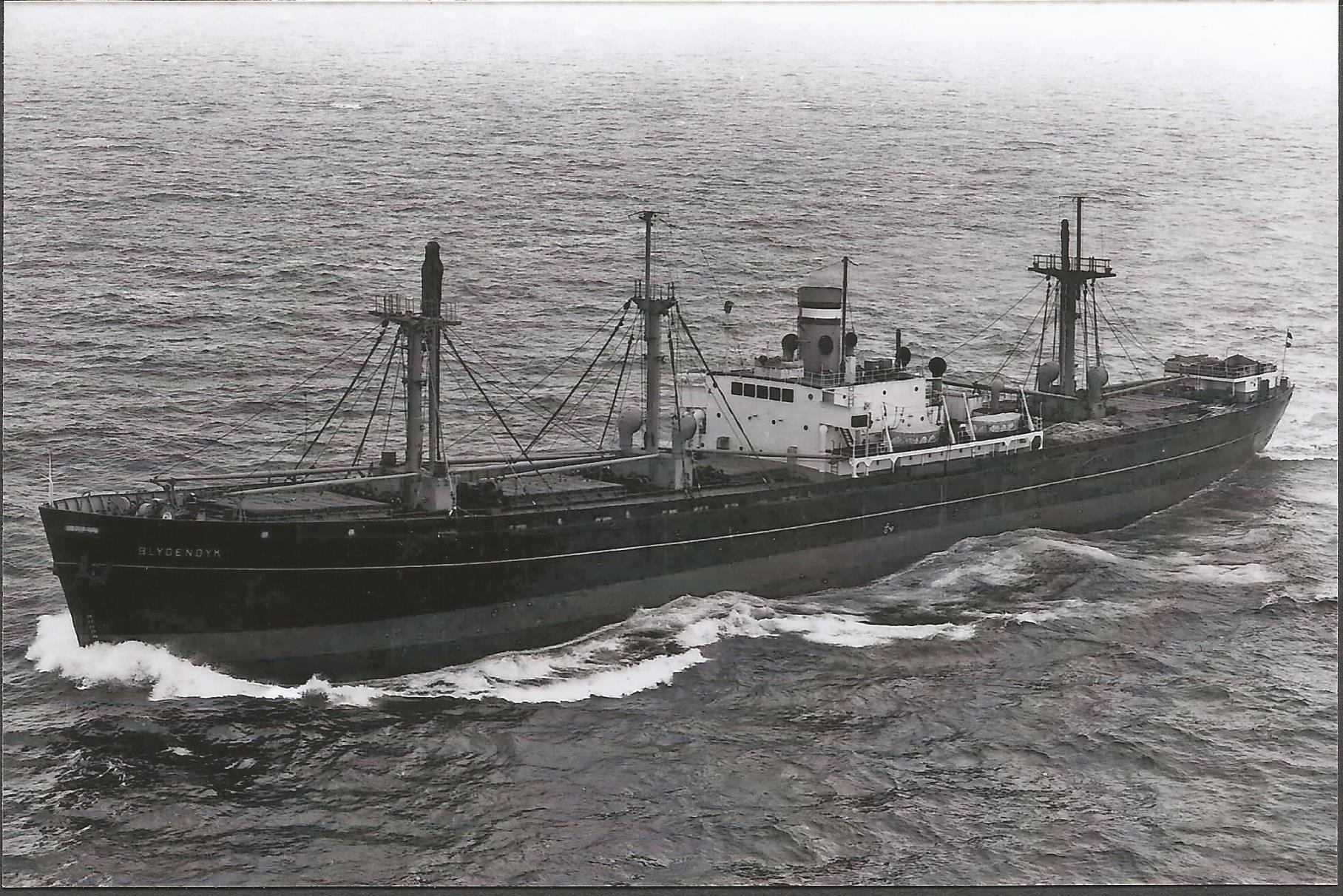
The s Blijdendyk seen here sailing on the North Sea. (b)
Then on 18 December 1950 promotion to Captain followed. In accordance with the company’s seniority system, Cornelis Snelleman now being the youngest captain, was placed on the oldest or smallest cargoship in the fleet. In this case the ss Blijdendyk (II) on which he had sailed when she was still called ss Fort orange. This ship was employed on the North Atlantic outport service. The “outports” were the ports on the US Eastern Seaboard outside New York, so the voyage went from Rotterdam to New York and then to Philadelphia, Chester, Baltimore, Norfolk, Newport News, back to New York, and then via Antwerp to Rotterdam. He made 3 voyages on this ship and then transferred directly to the ss Blommersdyk. He was transferred as a new “youngest captain” had been appointed, Captain Jan Albelskamp, who took over. The Blommersdyk was the oldest ship in the fleet (apart from the passenger ship ss Edam) but own built in 1922 and that made a difference in the pecking order.
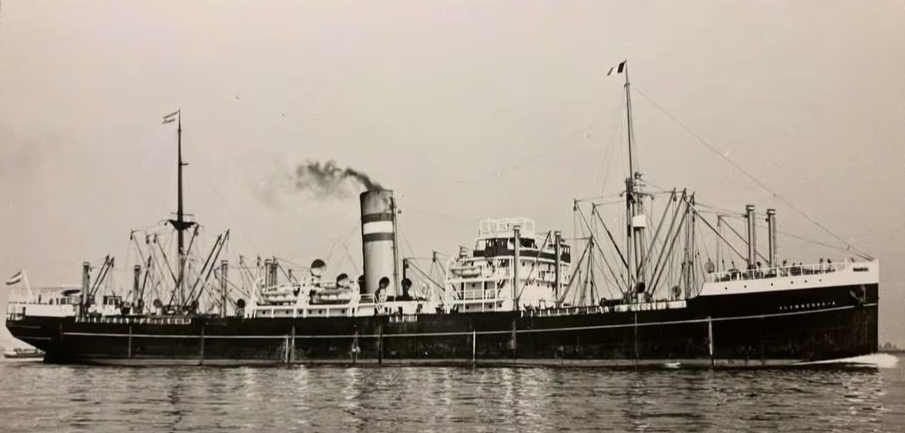
The ss Blommersdyk, one of the B-class ships built around 1922 (b)
With this ship he made one voyage on the same route as above but the ports now also included Boston, Baltimore, Albany and Tilbury in England. He was back in Rotterdam on 30 July and was then given leave until 15 September when he joined the ss Abbedyk. This ship was employed on the Gulf of Mexico service with port calls at Havanna, Vera Cruz, Tampico, New Orleans, Brownsville, Corpus Christi, Houston, Galveston, Le Havre, Antwerp and Rotterdam. Sometimes Coatzcoalcos and Mobile were also included. After 5 roundtrips and a coastal voyage he was relieved on 17 September in Antwerp. Within the A class fleet, there was less of a picking order as they were all similar and none of them carried more than 12 passengers and most of them none at all.
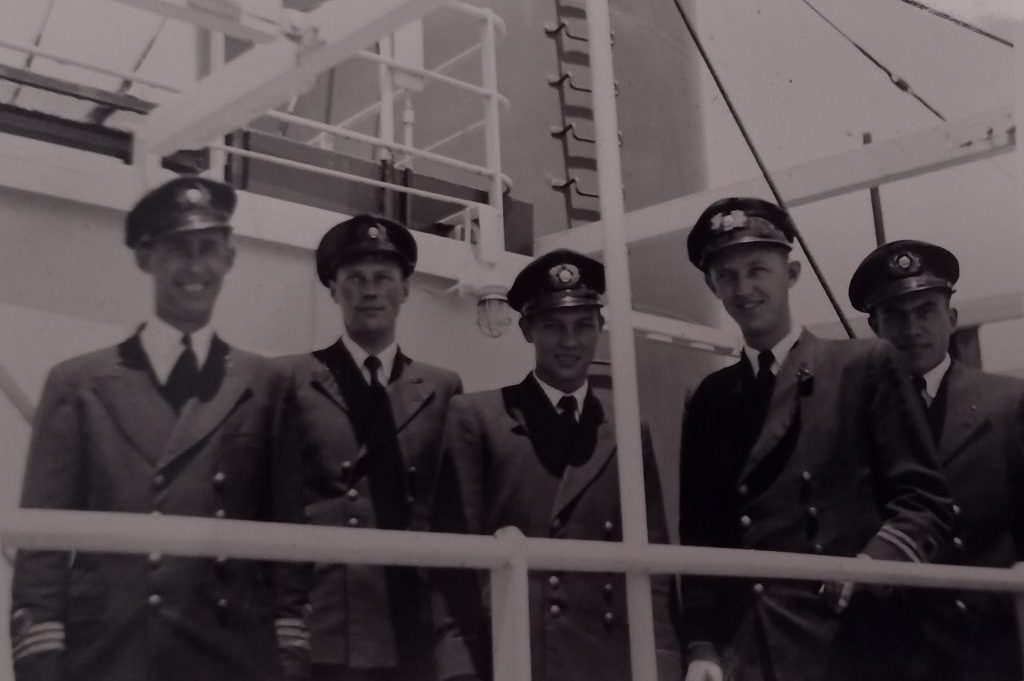
Captain Snelleman liked to take photos of his “Bridge team” on board and this is one from the ss Abbedyk taken on 1 July 1952 while at Hamburg. Left to right: Chief Off. Van Balen (later captain) and the navigators Trenning, Brak, Linde (later captain with ICT) and Roggeveen.
Assignments to the Abbedyk and Arnedyk followed and then there was the transfer from the Arnedyk in New York on 24 October to join the ss Schiedyk (II).
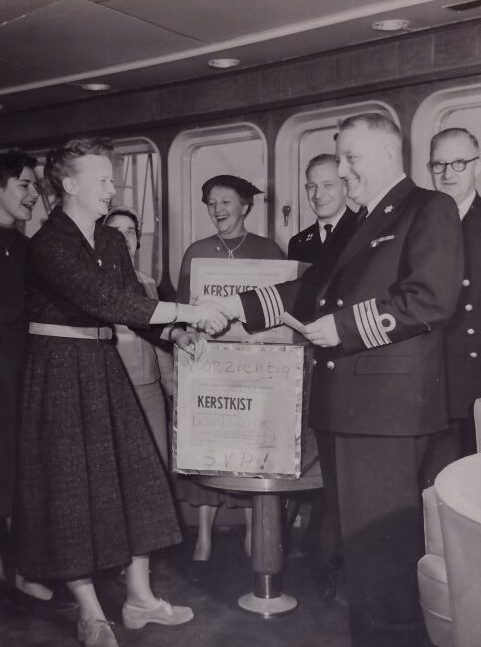
Christmas box presentation on board the Dongedyk.
Captain Snelleman took command the next day. The ss Schiedyk was sailing on the New York – Far East service (The Britisch Indisch Lijn as the company called it in Dutch). In the days before airplanes, a regular leave rotation was difficult to arrange and hence the company had decided that all crew, officers and also captains “going up the ranks” would be a year away from home. Hence he was relieved on 28 August 1953 in New York and then went home the next day assigned as Staff Captain on the ss Maasdam, arriving in Rotterdam on 07 September 1953.
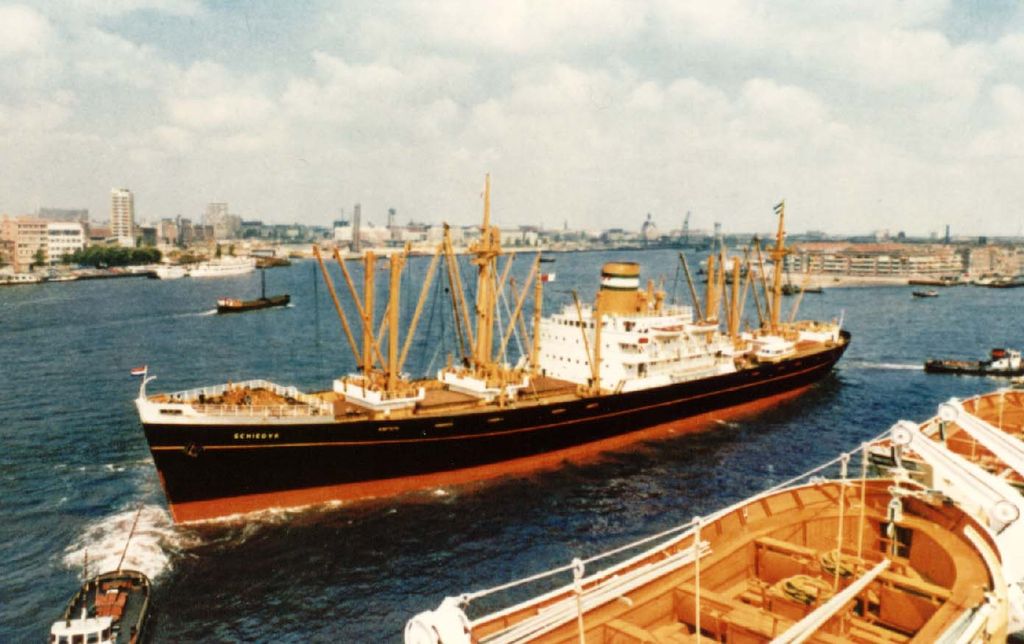
The ss Schiedyk (II) seen here docking in Rotterdam. A color photo taken from a Holland America calender.
The ss Schiedijk long voyages from New York included sailing through the Suez Canal as far as Djakarta. Then there was island “hopping” for cargo around the Indonesian islands and then returned via the same route it had followed outbound from New York. A voyage lasted more than 5 months, with a coastal voyage to the Gulf of Mexico, in between, split up between the two longer ones.
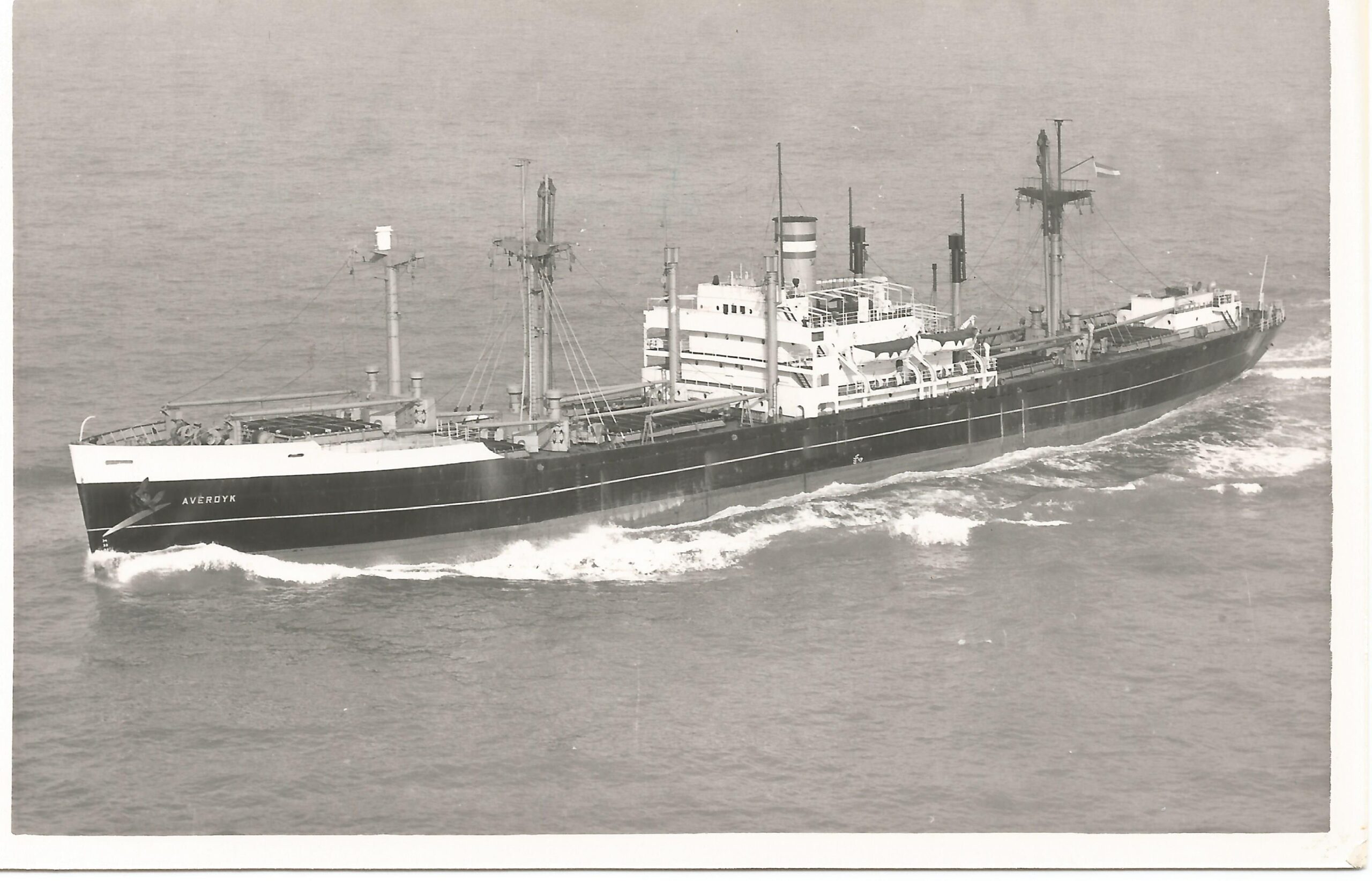
The ss Averdyk. Also this ship showed slight variations with her A class sisters. In this case visible, with the larger bridge windows. (b)
After almost a month vacation he stepped on board the ss Averdyk on 12 October 1953. Togeher with the ss Aardyk it made 4 to 6 weeks roundtrips on the North Atlantic with mostly 4 or 5 days in between in Rotterdam when the captain could go home for a few days.
Then on 18 May 1955 he was assigned to the ss Arnedyk again but now the ship made a voyage to Vancouver via the Panama Canal on the North Pacific service. Normally D class ships sailed on this route, as they had passenger capacity but the British Glenn Line which participated in this service had a shortage of ships so HAL moved a cargo ship in to fill the gap. The one round voyage made, lasted 4 months, with the ship stopping at all the major ports on the West coast. Discharging cargo while going Northbound to Vancouver and picking up cargo again while going southbound.
This was followed by a fill in voyage on the ms Westerdam, where he ahd sailed on before as Staff Captain, making a roundtrip from Rotterdam to New York. Snelleman was not sneior enough to be the regular captain of such a ship but when the regular captain went on leave, then a junior captain was allowed to step in. This happened between 14 September and 10 October 1955 when Captain Rens Brands went on leave. This was followed by a 2 month voyage on the ss Alblasserdyk to the Gulf of Mexico, which this time including an exciting visit to Port “Sulpher”. (There was then nothing there apart from a dock for loading sulpher produced by the Freeport Sulpher company. Only lateron did a small village develop near the factory)
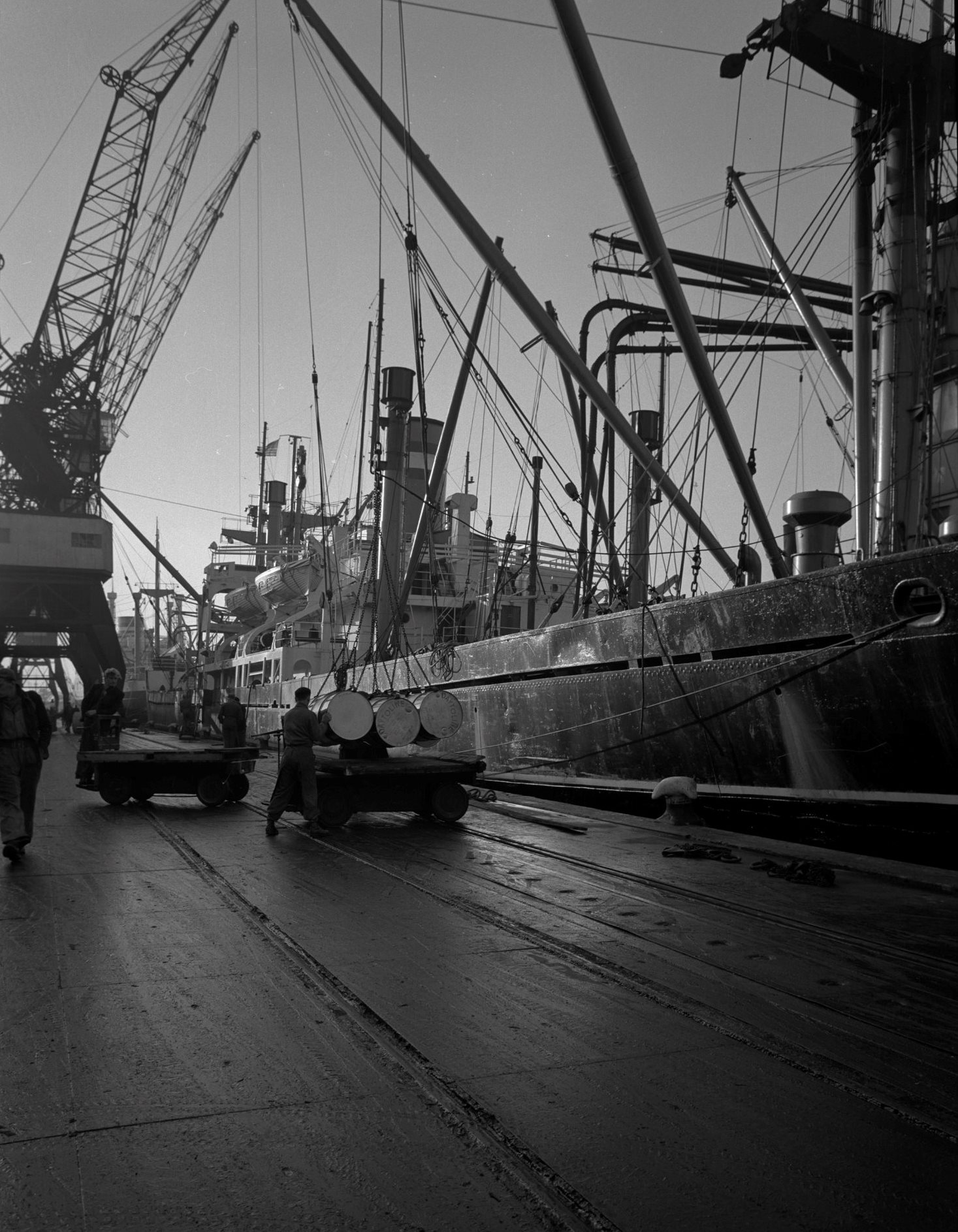
An atmospheric photo of the Axeldyk loading cargo in an unknown port (b)
On 27 Jan. 1956 he embarked as Staff Captain on the ss Ryndam (II) sailing to New York (arrival 08 February) to take command of the ss Axeldyk the next day. This ship was sailing for the Holland Inter America service to the East coast ports of South America. a joint venture with the Rotterdam “Van Nievelt Goudriaan Company” which specialized in maintaining a Dutch service to South America. and did not call at Rotterdam; until 6 months later (19 September 1956) when Snelleman brought her back to Rotterdam.
Then in December 1956 another fill in voyage occured, now on the ms Noordam when the ship was in between two Sr. Masters. A bit more seniority for Captain Snelleman himself came with the assignment to the Diemerdyk and Dinteldyk (II) in the year 1957. These two ships were the largest and newest ships the company had sailing on the North Pacific service to Vancouver and could carry 61 passengers. This accommodation was mainly filled with business men who wanted to travel with their goods, stored in the holds and then visit business associates at the same time, In the summer time the ships were quite popular with families living on the west coast who used the ships for a short cruise up and down the coast, as long as this cruise started or ended in a non American port. (Due to the American passenger act of 1886, non US flag ships were not allowed to transport passengers on domestic trips so a foreing stop had to be included)
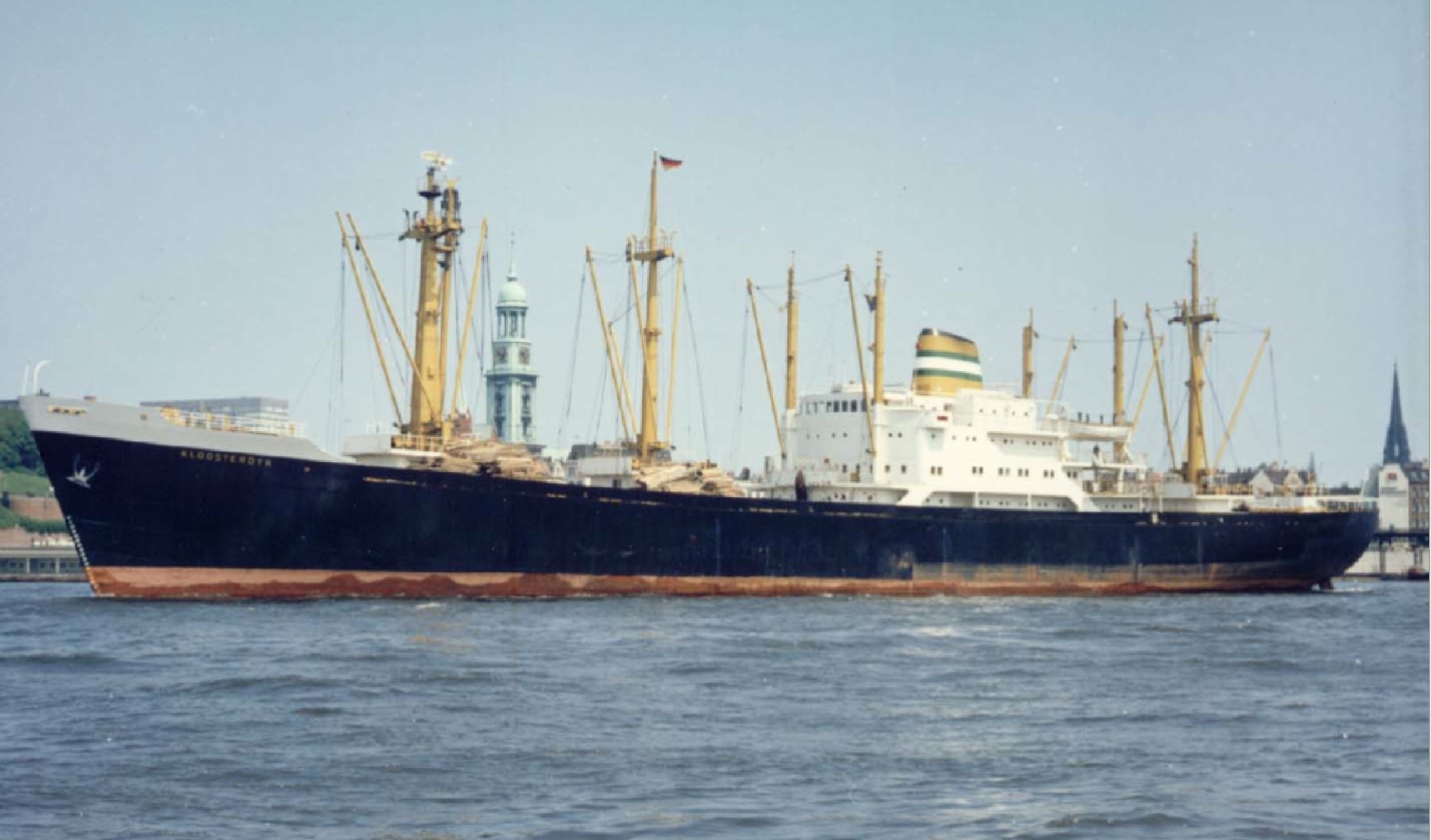
The ms Kloosterdyk, one of a series of 4 cargo ships especailly designed for the Rotterdam to the Gulf of Mexico service. (b)
In March 1957 Holland America had brought into service the ms Kloosterdyk a brand new cargo ship. Part of a class of 4. Snelleman made one round voyage with the ship (voyage 3 beween 26 September and 06 November, going to the East coast of the USA but also calling at Halifax).
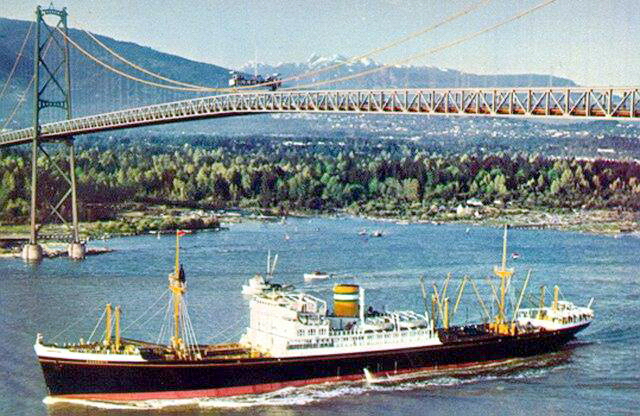
The ms Dongedyk seen here departing from Vancouver and sailing under the Lions Gate bridge. (Holland America postcard)
Then it was back to the North Pacific and between 25 November 1957and 06 May 1959, he was in command of the ms Dongedyk and made 6 voyages on her, with one coastal voyage on leave in June 1958). This was a bit of a different ship as it had entered service in 1929. Then called the ms Delftdyk but by 1950 she was in such a bad condition that she was completely rebuilt and also received new motor engines. She was then renamed in ms Dongedyk.
Christmas box presentation on board the Dongedyk. This foto was taken on 26 Dcember 1956. (b). A maybe not so wellknown tradition in the 1950s and 60’s was the delivery to the Dutch Merchant ships a box with christmas goodies from a shoreside charitbale organisation. The box was often brought on board by Ladies who were involved withe contents, before a ship left for a christmas voyage. While the crew always hoped for an alcoholic present, knitted socks were often present in large quantities.
The Dongedyk was followed between June 1959 and October 1959 by period on the Diemedyk again and then seniority had risen so far that the North Atlantic passengerships came permanently in the picture.
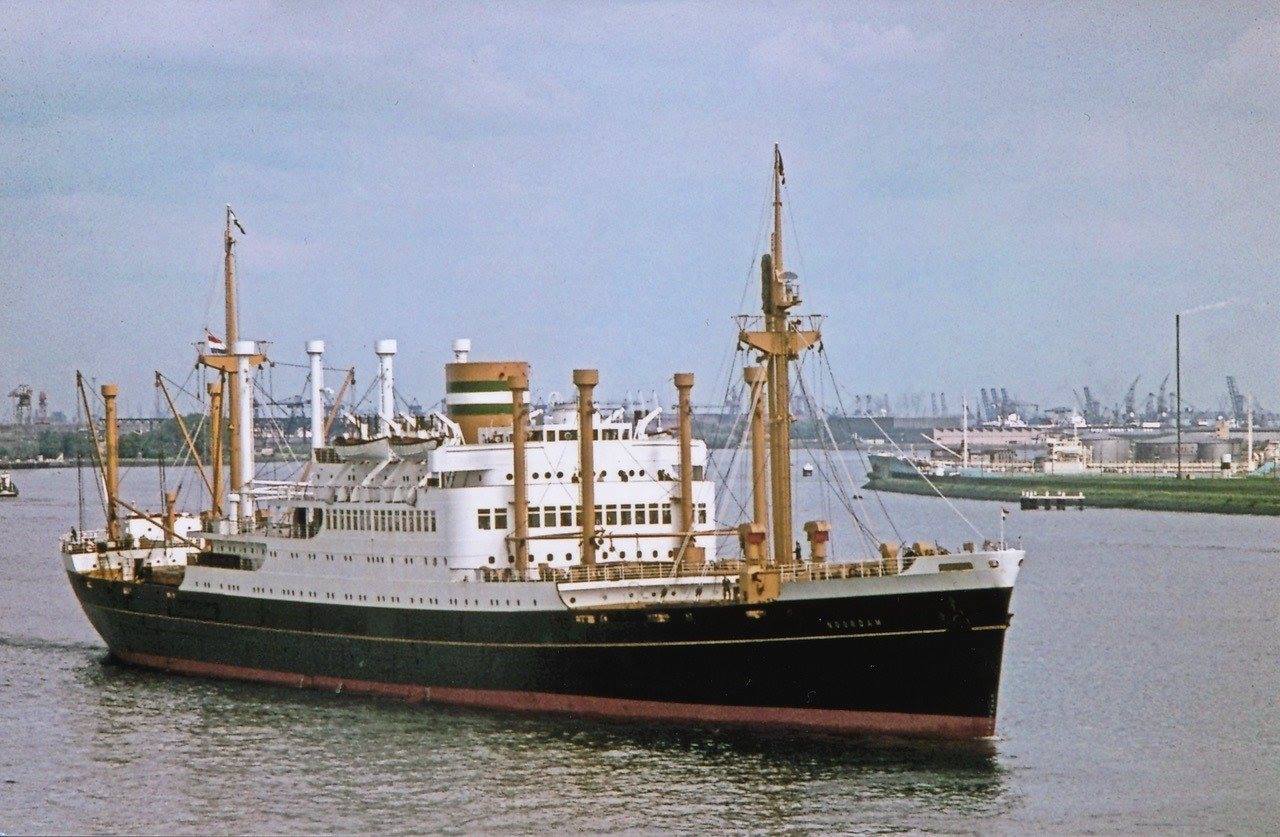
a color photo of the ms Noordam seen here departing from Rotterdam. (b)
First with a permanent assignment on the ms Noordam between 06 December 1959 and December 1961. A roundtrip from Rotterdam to New York lasted around 21 days (depending on the weather) and the ship spent 5 days in New York and 5 days in Rotterdam for turnover, so the schedule for the 125 passengers on board could still be kept, even if the ship arrived late. Snelleman made 21 roundtrips on this ship, (and was relieved 3 times for one voyage by a more junior captain).
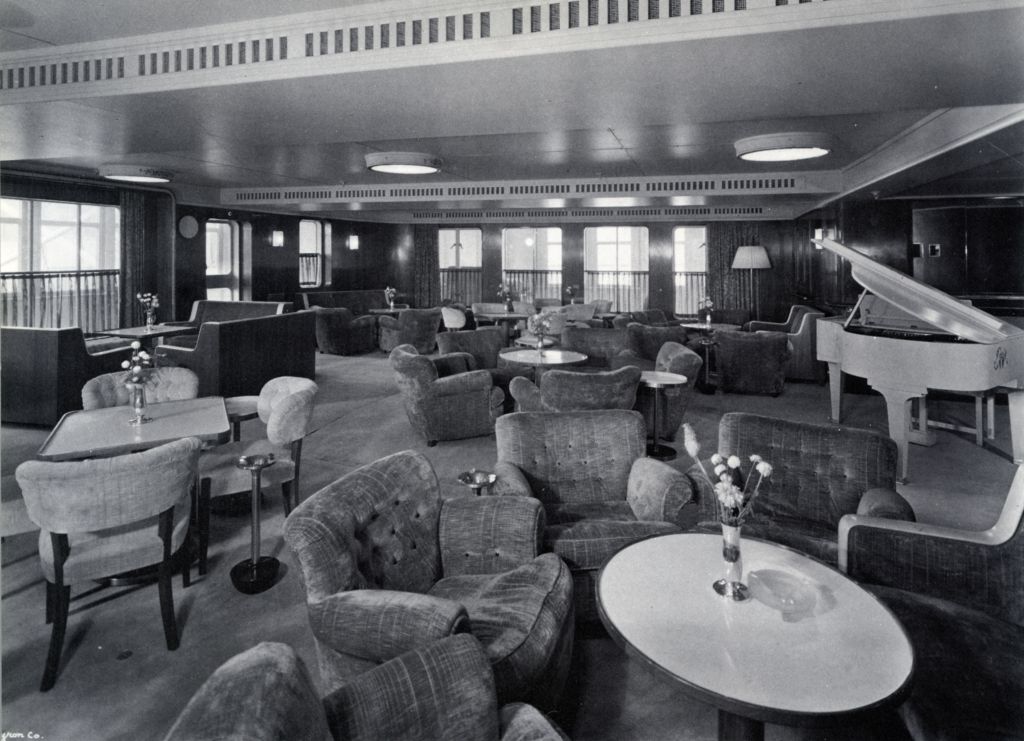
The Lounge or Smoking Room of the Noordam. Although a passenger cargo ship, the accomodation had been laid out to first class standards, as on the large passengerships, and so was also the service.
In November 1960, when the ms Noordam was in dry dock he went to school for a Radar Navigator exam ( and passed on 11 November). Radar had arrived on the HAL ships during the 2nd world war and had progressively become more modern and usefull. This should have resulted in much safer navigation as one now could see through the fog and much further ahead. But it had also resulted in “radar assisted” collisions due to it being used wrong. So eventually, a worldwide rule was accepted and all deck officers and captains had to go back to maritime school to follow a 5 day course to properly learn to handle the information displayed on the radar sceen. (A famous case where it went wrong was the collision between the passengerships ss Andrea Doria and the ms Stockholm who collided in the fog on the North Atlantic in July 1956)
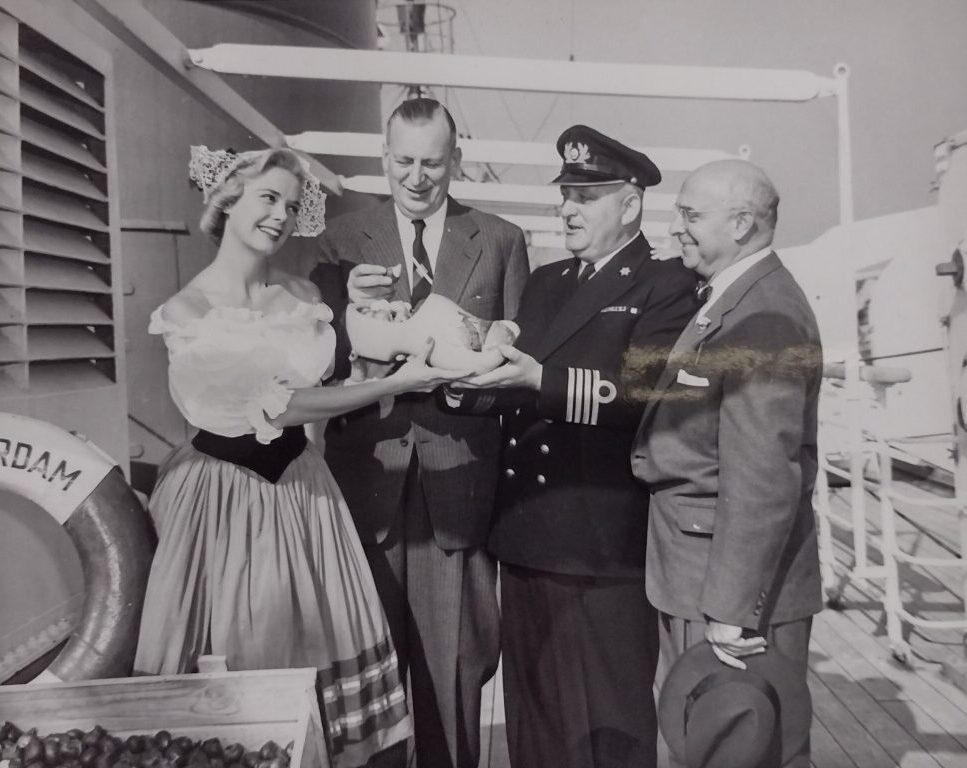
Public relations is also part of the job. Holland America promoted each year the “tulip festival sailings” to the USA, including an ambassadrice in full Dutch costume who sailed with the sailed to New York. this photo was taken on the Noordam in spring 1960. (c)
The on 22 August 1961 he was assigned to the ss Nieuw Amsterdam (II). He had now been at sea for 34 years. This ship, together with the ss Statendam (IV) and the flagship ss Rotterdam (V) where the top ships of the fleet and even if the regular master went on leave, his fill in would quite senior as well. This was not because the company did not trust the younger captains, exceptions to the rules regularly occured, but it was the seniority system the company had decided upon as far back as 1910.
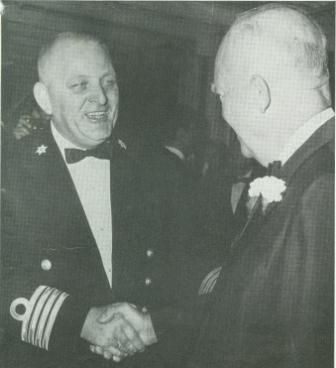
With the large passengerships comes glamour and socializing. This photo was taken in September 1961 when he met Ex US President, General Eisenhouwer during a charity ball on board for the Cancer Society in New York. (b)
The ss Nieuw Amsterdam (II) had been built in 1938 and had been the company’s flagship until the arrival of the ss Rotterdam (V) in 1958. She sailed opposite the ss Rotterdam on trans atlantic voyages and made cruises during the North Atlantic off season between January and May. Captain Snelleman would remain with this ship until his retirement in 1968.
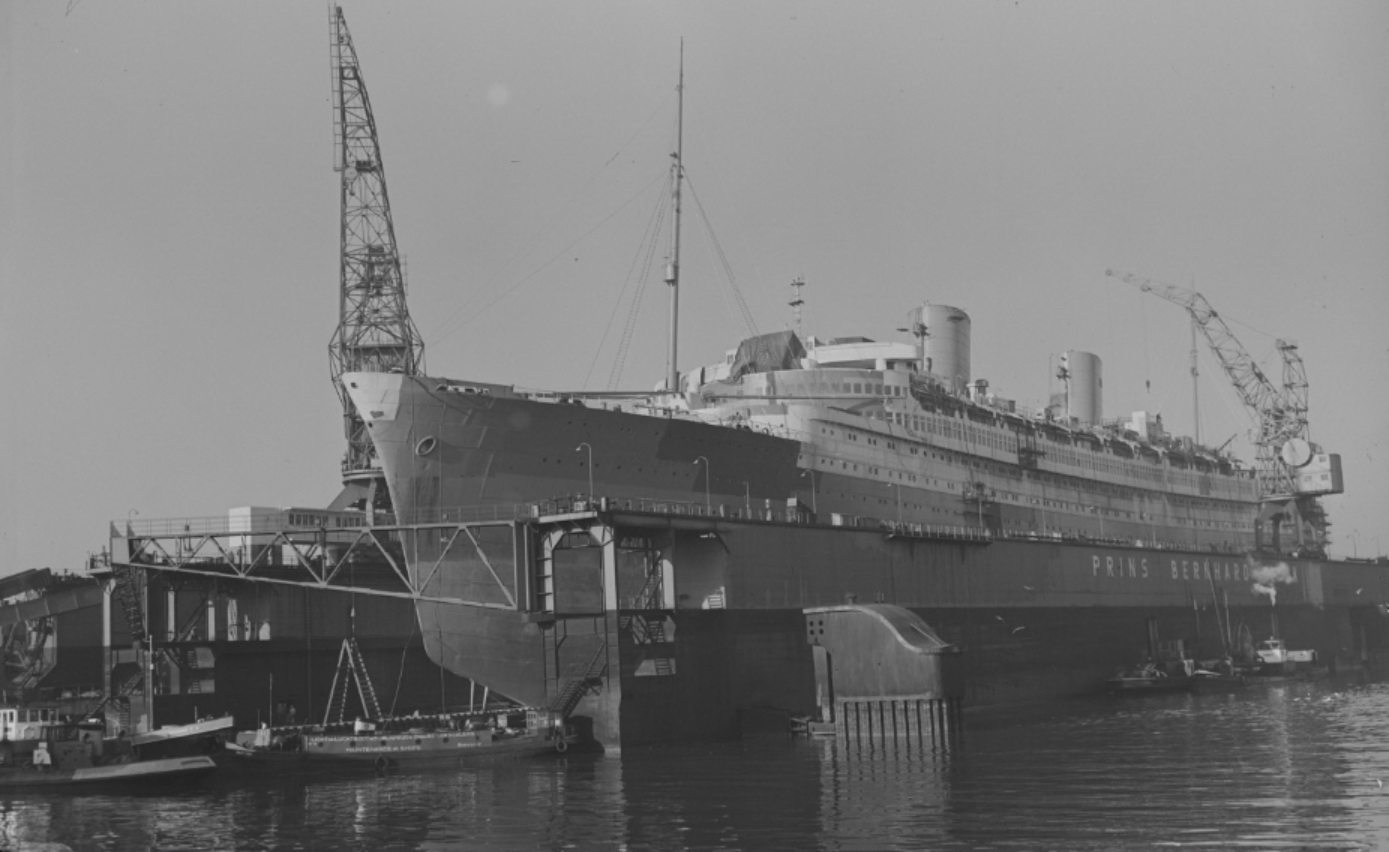
The ss Nieuw Amsterdam (II) seen her in Dry -dock during the refit in the winter of 1961. (b) Captain Snellemna would have spent most of his time at home during this period as captains have normally very little to do during a refit.
His first interesting occurence with the ship was between 30 September 1961 and 14 January 1962. The Nieuw Amsterdam went into dry dock to be converted to a 2 class ship by eliminating the 3rd class, whose cabins could not always be sold, even not as cheap Tourist class. Apart from a major cabin upgrade, also the public rooms were remodeled, also to make the ship more cruise friendly. He took the ship for its trial trip on 13 January on the North Sea and then sailed on 18 January 1962 to New York to make cruises from New York to the Caraibbean and Bermuda. By 07 May, the North Atlantic crossings started again lasting until the mid October when it was back to cruising.
Then on 27 July 1962 (voyage 243) His Royal Highness Prins Benhard of the Nethelands (queens Consort) popped up to sail with the ship from Bergen back to Rotterdam. He had attended a conference for the European (EEG) Community for tourism in Bergen and found that it was much more fun to sail back than to fly back. Once on board he decided to shake the hands of all the 600 cruise guests making the cruise.
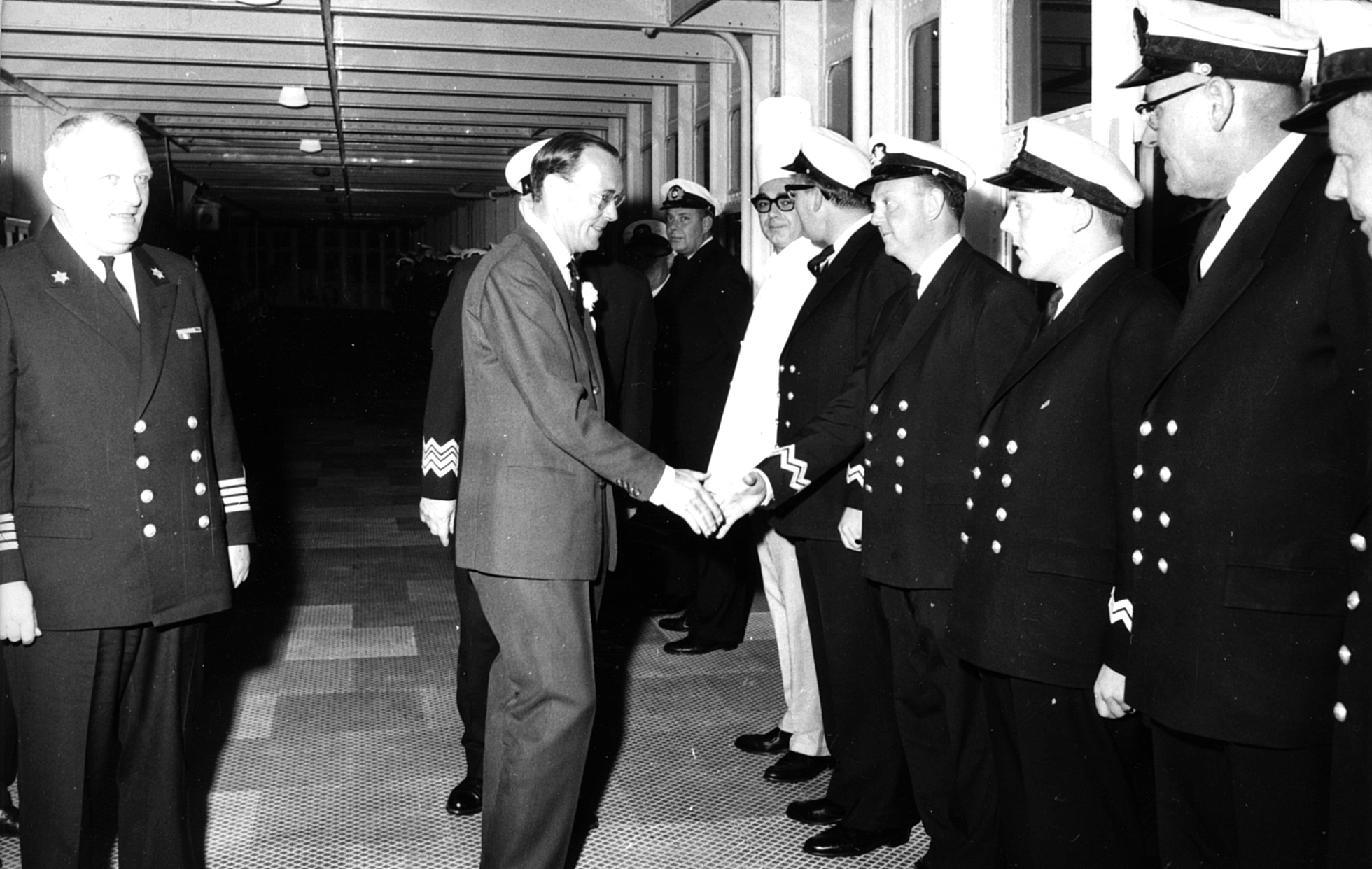
HRH Prins Bernhard meeting a selection of senior officers of the Nieuw Amsterdam with Captain Snelleman to the left. (b)
One of the interesting anecdotes of the captain is, and which made it into the newspapers, was that he sometimes saw himself as a”very expensive barkeeper” when having to attend parties in the ship or inviting guests up to his cabin. (b)
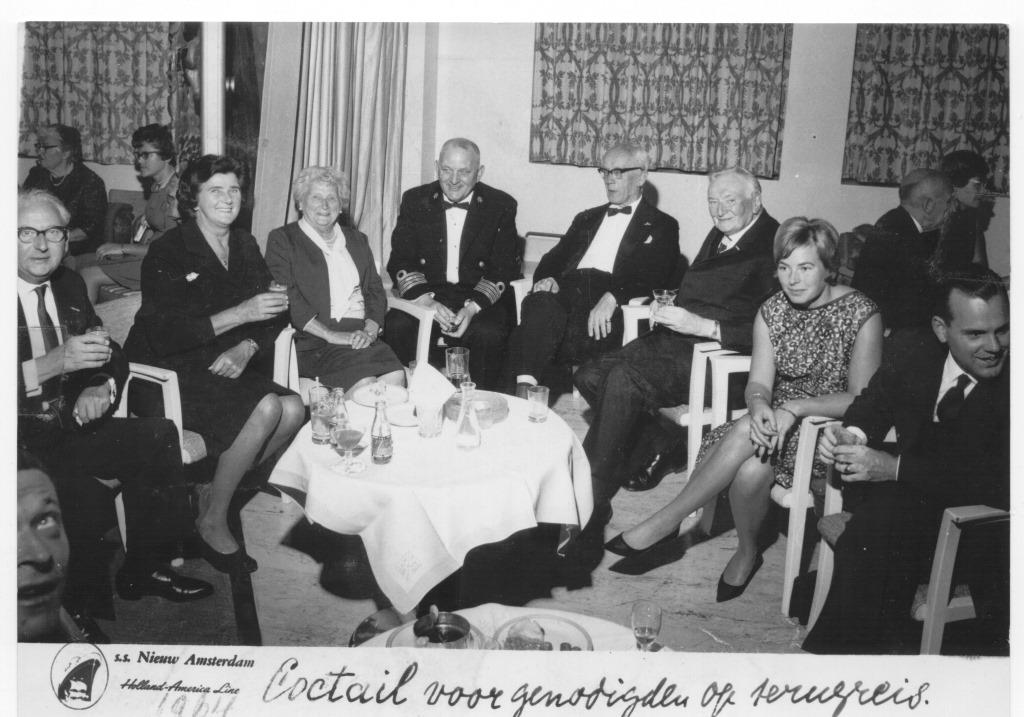
It was not just looking aft ther high and mighty. When the weather allowedm there were the captains tables and cocktail parties. This one in 1964 had the parents (either side of the captain) of Captain Van Deventer on board. (Photo courtesy Mr. Ruud van Deventer, son)
On 31 oct 1964 he received the silver medal of the Royal Dutch
KNMI medal of 1964 (c)
Meteorological Society (KNMI) from HRH Prinses Margriet of The Netherlands for keeping metrological records.
In May 1965 he is mentioned in the newspapers when he gave a lecture for a travel agency and the Dutch Department store chain V&D in Maastricht. Apart from his lecture, a company movie “Course to America” was shown.
On 27 July 1967 he offically celebrated his 40 years with the company while he was at home as the ss Nieuw Amsterdam was in the shipyard to receive new boilers between 16 July and 06 December. There was a party and during this party a journalist asked what he was doing during his vacations. To the suprise of many it turned out that he went to a caravan stationed in the town of Kootwijk on the Veluwe. (Center of the Netherlands, where a large National Park is located). It was not exactly the glamour some people had expected from the master of the one but biggest passengership of the country and the HAL.
The last entry in the company records for his sailing career was 01 May 1968, when he arrived with the ship in Rotterdam. It must be assumed that he opted for an early retirement as his mandatory date would have been 2 September 1970 when he would have reached the age of 60 years.
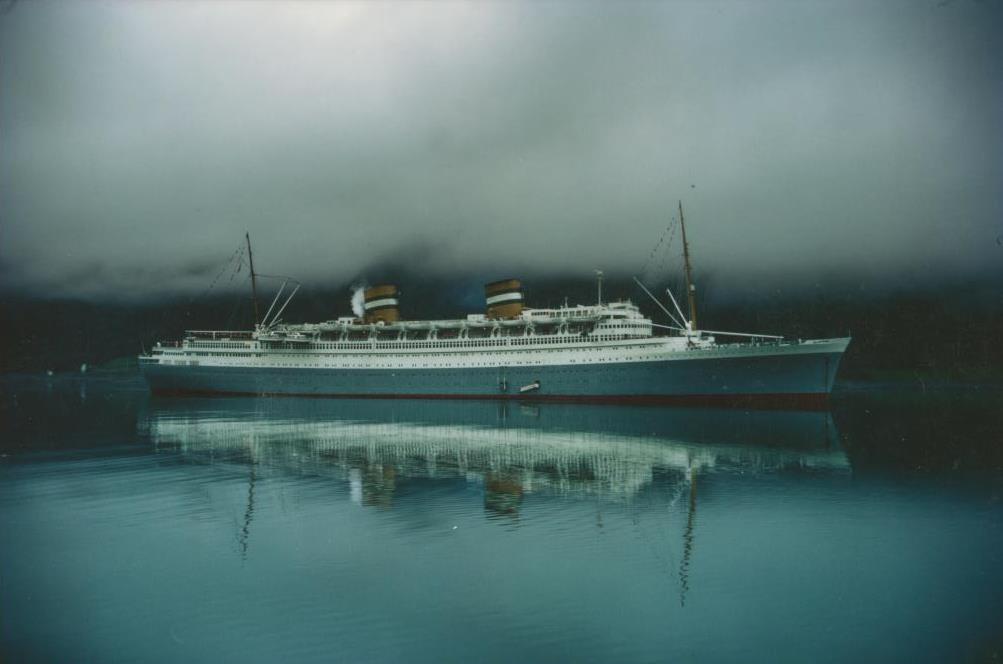
The ss Nieuw Amsterdam late in her career during a misty call to theNnorwegian Fjorss. (b)
Cornelis Snelleman continued to visit his caravan each summer (and maybe also in the winter) and passed away on 18 November 1980 at the age of 70.
Note: This extensive biography was partly only possible due to the large amount of material that the near family (c) made available, Captain Snelleman documented his voyages very well and photos with text were preserved in many photo albums.
Sailing list: (a,b)
Date: Function: Ship: Wages and/or remarks.
27 Jul. 1927 Cadet Officer Grootendijk 52,–
01 Jan. 1928 Cadet Officer Ashore 52,–
12 Jan. 1928 in service for the VNS (HBIL) as cadet officer
25 May. 1928 Cadet Officer Breedijk 52,– Dutch Indies
09 Nov. 1928 Cadet Officer Rijndam 52,– at New York
22 Nov. 1928 ashore to study
17 May. 1929 Passed exam for 3rd Officer
18 May. 1929 4th. Officer Ashore 100,–
24 May. 1929 4th. Officer Vechtdijk 100,–
01 Jan. 1930 Wage increase 115,–
02 Oct. 1930 Temporary ashore 115,–
18 Oct. 1930 4th. Officer Leerdam 115,–
03 Nov. 1930 4th. Officer Kinderdijk 115,–
15 Nov. 1930 4th. Officer Edam 115,–
08 Apr. 1931 Dismissed due to being surplus to requirements
xx.xxx 1931 4th. Officer Breedyk xxx,–
06 Oct. 1933 4th. Officer Damsterdijk 105,– minus 5% temp. contract
28 Dec. 1933 Wage decrease 105,– see Circ. 929 dated 27 -6-1933
02 Feb. 1934 Dismissed due being surplus to requirements
07 Feb. 1934 Act. 3rd Officer Leerdam 121.50 Temp contract
24 Mar. 1934 Temporary ashore without wages
Dismissed due to the lay up of the Leerdam
29 Apr. 1934 4th. Officer Breedijk 94.50
03 May. 1934 4th. Officer Dinteldijk 94.50
25 Aug. 1934 Act. 3rd. Officer Dinteldijk 121,50
01 Oct. 1934 Wage decrease 118,–
03 Apr. 1934 Temporary ashore at 70% 188,– ill, pleurisy.
03 Jul. 1935 Tempoary ashore without wages
18 May.1935 Act.3rd. Officer Burgerdijk xxx,—
08 Jul. 1935 Act. 3rd Officer Edam 118,–
10 Jul. 1935 Wage increase to 121. 75
12 Jul. 1935 Act. 3rd. Officer Maasdam 121,75
23 Dec. 1935 In military service for 35 days. HM wachtschip Den Helder. Sea service.
24 Jan. 1936 Act. 3rd Officer Rotterdam 121,75
10 Feb. 1936 Act. 3rd Officer Burgerdijk 121.75
12 Aug. 1936 Wage increase to 125.50
29 Nov. 1936 Act. 3rd Officer Spaarndam 125,50
07 Dec. 1936 Act. 3rd. Officer Volendam 125,50
16 Dec. 1936 Act. 3rd. Officer Blommersdijk 125,50
07 Jan. 1937 Act. 3rd Officer Breedijk 125,50
15 Jan. 1937 Temporary ashore 125,50
16 Jan. 1937 Act. 3rd Officer Spaarndam 125,50
24 Jan. 1937 Temporary ashore 125,50
01 Feb. 1937 Act. 3rd Officer Boschdijk 125,50
10 Feb. 1937 Temporary ashore 125,50
14 Feb. 1937 Act. 2nd Officer Bilderdijk 166,– 2nd officer for one voyage.
04 Apr. 1937 Set back to 3rd officer and temporary ashore for study for 2nd Mates license.
11 May. 1937 Passed exam for 2nd mate
13 May. 1937 2nd Officer Rotterdam 166,–
18 Sep. 1937 2nd Officer Veendam 166,– at New York back to home sick.
29 Sep. 1937 Temporary ashore with a lung infection,
01 Oct. 1937 According to new regulation 185,–
End of public company records as the company went to a new administration system and these records are held by the Holland America Pension Fund who does not allow access for research.
GAP: (we only have a sea mans book from 1944 onwards)
xx.xxx.1938 2nd. Officer Dinteldijk xxx
24 Jan. 1938 2nd Officer Noordam (II) stillon board by 13 Feb. 1939
16 Jun. 1939 2nd.Officer Volendam 203,42 until 28 Jan 1940
09 Feb. 1940 2nd. Officer Volendam 203.42
xx Apr. 1940 2nd. officer Pennland
War records starts:
10 May.1940 2nd Officer Pennland 212.50
Saile from Antwerp, arrived in New York, then to Kingston Jamaica arrived 02 Dec. 1940.
25 Apr.1941 2nd Ofiicer Pennland 212.50 Ship sinks that day and returns to London. (arrival 07 aug. 1941
07 aug.1941 2nd Officer On leave 212.50
03 Sep.1941 2nd. Officer Delftdyk 212.50
04 Sep.1942 2nd. Officer Delftdyk 212.50 Arrived at NY. Departed 09 June 1942
01 Jan. 1943 2nd. Officer Delftdyk 212.50 Arrived at New York
25 Mar. 1943 2nd. Officer Edam 274.–
11 April 1943 2nd. Officer Edam 274,– Arrived at New York. Departed on 31 May 1943.
14 Jun. 1943 2nd. Officer Edam 274.– Signed off due to sickness
15 Sep. 1943 2nd. Officer Fort Orange 274.– Travelled to Portland (Maine) to join the ship.
01 Oct. 1943 2nd Officer Fort Orange 274,– Departed from Boston.
04 Nov. 1943 2nd. Officer 274,– Signed off at Manchester for study purposes.
03 Apr.1944 Passed exam for First Mate in London.
15 Apr. 1944 Promoted to Chief Officer.
02 May 1944 Chief Officer Philips Wouwerman 274,– Upon arrival London of the ship.
10 Sep.1944 Chief Officer Philips Wouwerman 274,– Arrival London.
15 Nov. 1944 Chief Officer Philips Wouwerman 274,– Departed New York
09 Dec. 1944 Chief Officer Philips Wouwerman 274,– Departed New York
04 May.1945 Chief Officer Philips Wouwerman 274,– At New York
26 May. 1945 Chief Officer Philips Wouwerman 279,–
13 Jun. 1945 Chief Officer Philips Wouwerman Departed Rdam.
23 Jun. 1945 Chief Officer Philips Wouwerman Arrival Rotterdam on 23 July.
GAP
25 Jun. 1946 Chief Officer Edam Until 29 Aug. arrival at Rdam
12 Sep. 1946 Chief Officer Sommelsdyk Until 24 Sep. NY
13 Nov. 1946 Chief Officer Amsteldyk Until 01 Jan. 1947
17 Jan. 1947 Chief Officer Amsteldyk Until 08 Jul. 1947
01 Aug. 1947 Chief Officer Edam Until 14 Aug. 1947 at Philadelphia, by train to San Francisco to collect the Arnedyk.
05 Sep. 1947 Chief Officer Arnedyk Until 27 Jul. 1948
16 Aug. 1948 Chief Officer Delftdyk Until 03 Dec. 1948
18 Jan. 1949 Chief Officer Axeldyk Until 13 Mar. 1948
24 Mar.1949 Chief Officer Volendam Until 29 Nov. 1949
19 Jan. 1950 Chief officer Westerdam Until 13 Mar. 1950
03 Apr. 1950 Chief Officer Volendam Until 29 Sep. 1950
27 Nov. 1950 Chief Officer Almdyk Until 05 Dec. 1950
22 Dec. 1950 Captain Blijdendyk Until 26 May 1951
07 Jun.1951 Captain Blommersdyk Until 30 July 1951
15 Sep. 1951 Captain Abbedyk Until 17 Sep. 1952
13 Oct. 1952 Captain Arnedyk Until 24 Oct. 1952 at NY
25 Oct. 1952 Captain Schiedyk Until 28 Aug. 1953 at Ny
29 Aug. 1953 Staff Capt. Maasdam Until 07 Sep. 1953
12 Oct. 1953 Captain Averdyk Until 29 Apr. 1954
28 May. 1954 Captain Aardyk Until 02 Apr. 1955
18 May. 1955 Captain Arnedyk Until 12 Sep. 1955 at London
14 Sep. 1955 Captain Westerdam Until 10 Oct. 1955 (Fill in voyage)
06 Nov. 1955 Captain Alblasserdyk Until 05 Jan. 1956
27 Jan. 1956) Staff Captain Ryndam Until 08 Feb. 1956 at NY
09 Feb. 1956 Captain Axeldyk Until 19 Sep. 1956
12 Dec.1956 Captain Noordam Until 07 Jan. 1957 (Fill in voyage)
13 Jan. 1957 Captain Diemerdyk Until 02 May 1957
18 jun. 1957 Captain Dinteldyk Until 08 Sep. 1957
26 Sep. 1957 Captain Kloosterdyk Until 06 Nov. 1957
25 Nov. 1957 Captain Dongedyk Until 06 May. 1959
15 Jun. 1959 Captain Diemerdyk Until 08 Oct. 1959
06 Dec. 1959 Captain Noordam Until 14 Aug. 1961
(with 3 voyages off in this period)
11 Nov. 1960 Passed exam as Radar Navigator.
22 Aug.1961 Captain Nieuw Amsterdam Until Retirement
24 Jan. 1970 40 years with company.
Must have retired shortly after as he reached the mandatory retirement age of 60 on September 02, 1970.
Sources;
a. Stamboeken & Movement boeken from the HAL archives as held by the Municipal Archives of the City of Rotterdam.
b. Captain Alberts Database and Photo archive.
c. Mr. Peter Zeer ,Mrs. Mieke Snelleman, Marina Zeer-Snelleman (Family information) The author is very grateful and indebted to the family for given permission to use all the material that was still in their possession.
d. Wie was Wie, genealogy website.
e. Laurens van der Laan. HAL Historicus per Excellence.
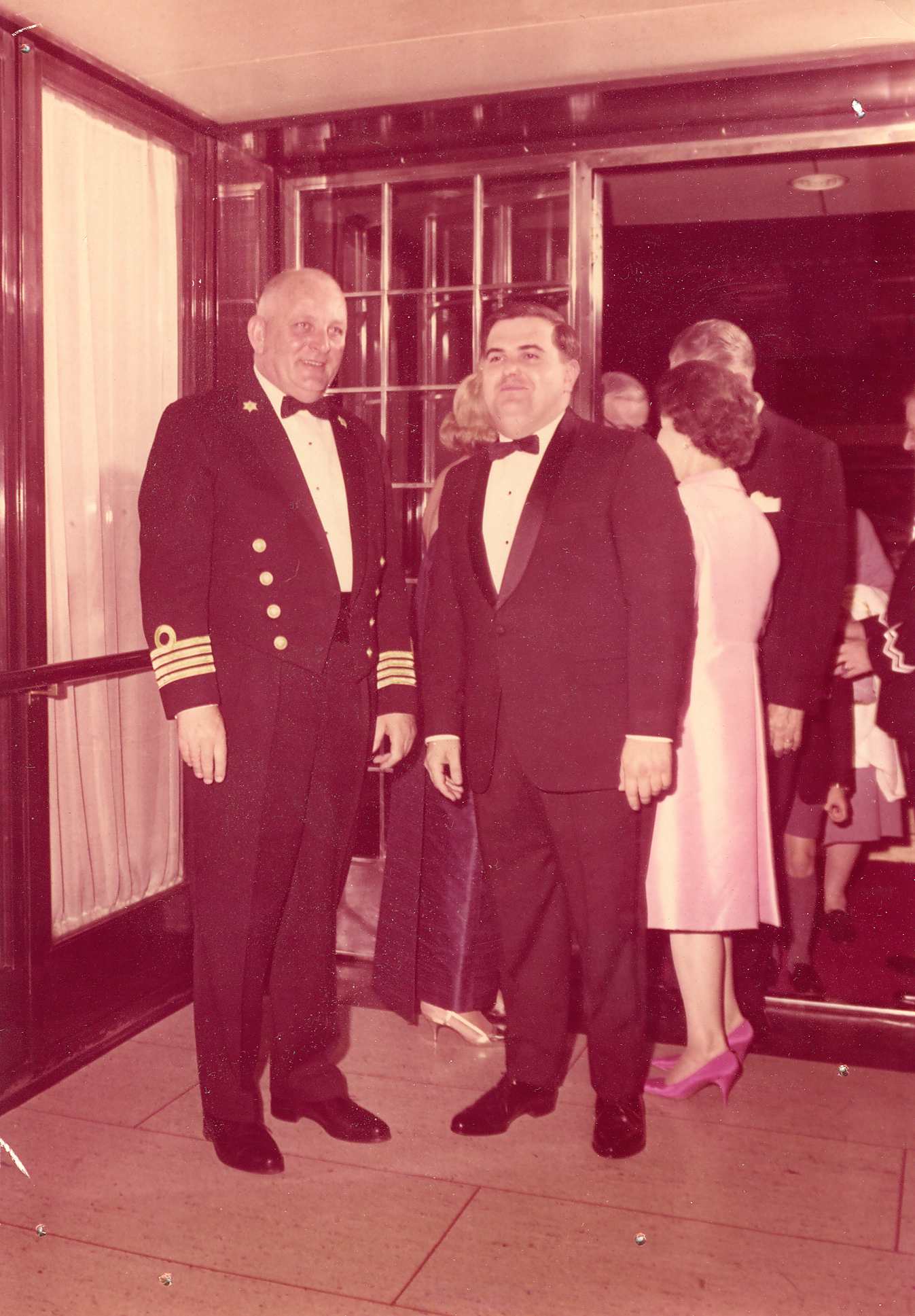
Mr. Laurens van der Laan and Captain Snelleman, during the gala Welcome night in 1966 during a cruise to Norway.
Biography last Updated: 11 Feb. 2026
December 17, 2019 at 8:41 pm
One of them a boy, joined HALl lateron as press officer in the 1970’s and 80’s.
This is not correct. They never have been press officers.
December 18, 2019 at 7:07 pm
Thank you for reading my blog.
I do not know what your relation is to the family, but when I was 3rd officer for the new building of the Noordam in 1983/1984 I was in frequent contact with Aad Snelleman who ran “Samenspel” and the press side in Holland. When dealing with “the English side” of things he frequently referred to himself as Press Officer. That is where the phrase is coming from. It might be very well possible that that was not the official title but that is what I heard and thus used.
Best regards
Capt. Albert
November 3, 2022 at 12:26 pm
For good order’s sake: Aad Snelleman was not related to Captain Snelleman, as he told me.
Laurens van der Laan, NASM/HAL historian
October 21, 2020 at 4:17 am
Ik schrif een roman over mijn tijd bij de HAL toen ik in 1966/ 1967 op de Nieuw Amsterdam heb gevaren. Kunt u, en bent u bereid om me met een paar vragen te helpen?
October 22, 2020 at 5:50 pm
Geen probleem.
Stuur de vragen svp naar Captalbert1@aol.com en ik zal mijn best doen.
mvg
Albert Schoonderbeek
December 7, 2022 at 2:41 am
If memory serves, I was 3 years old in 1963. On the New Amsterdam. I was watching a Mickey mouse cartoon about him having trouble in some sort of clock factory. Over my objections. My father pulled me out of the theater and brought me up to the captain and introduced me. The captain was kind enough to sound off the foghorn. At least that’s my recollection
December 7, 2022 at 2:38 pm
In 1965 I was five years old and a passenger on the ship. I remember sitting in the theater watching Mickey Mouse having trouble in some sort of clock factory. My father came in took me out over my objection and introduced me to Capt. Snellerman. If I recall correctly he sounded the foghorn. I have a picture of the encounter. I will share it if you like. Best wishes for the holidays.
October 20, 2024 at 10:19 am
Kapitein Snelleman heeft de zijn laatste jaren in Nijverdal gewoond.
Hij was mijn oom .
November 12, 2024 at 9:45 pm
I am so glad this information was here as I recently found a hand written note from Captain Cornelis Snelleman to my grandparents. They had been passengers on the S.S. Nieuw Amsterdam in March 1962.