Beek van, Cornelis.
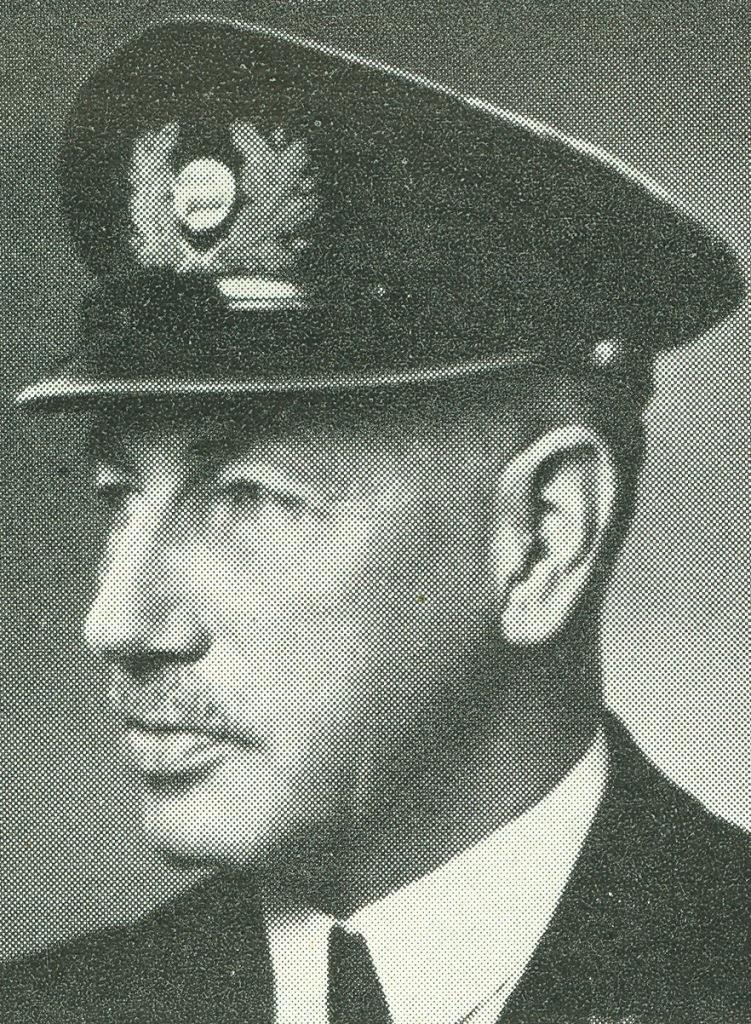
Captain Cornelis van Beek. Seen here on a passphoto taken in late 1948 when appointed commodore
Cornelis van Beek was born on 10 May 1889 at Hellevoetsluis as the son of Hendrik van Beek and Adriaantje Beekman. He was father was at that moment training for pilot and later became a sea pilot. The parents had been married since 21 July 1882. The father of the bride was registered as a skipper. It is unknown of what the exactly “skippered” e.g. was captain of. Hence there was a lot of salt blood in the family.
There were quite a few siblings:
Oldest sister Adriana (1883), 2nd. sister Lena (1885), 3rd sister Neeltje (1887), then Cornelis (1889). Followed by Maria Jacoba (1891), Adriana Hendrika (1894), Jacob (1897) and Tona (1899)
It is not known which Maritime school or academy he attended but he was accepted as cadet with Holland America on 15 July 1907 and assigned to the ss Potsdam. A cadet needed 365 days of sailing to be able to sit for the 3rd mates exam and Van Beek only did 5 months with HAL so this meant that he must have changed company’s halfway through his cadet year. He then passed his 3rd Mates exam on 14 May 1908,
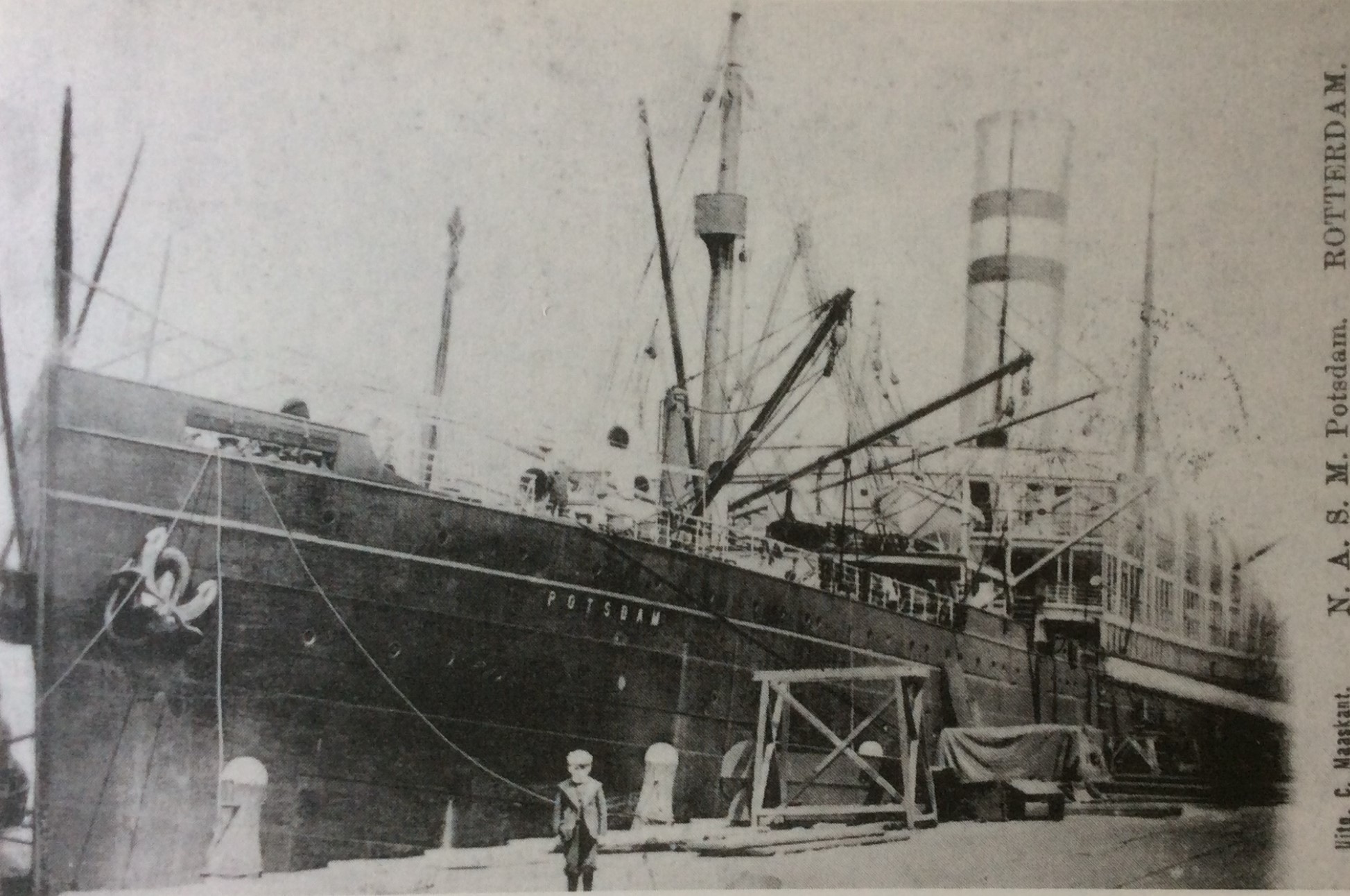
The ss Potsdam from 1900. The ship was nicknamed the “Funneldam” as its regular funnel had to be raised after entering service with 21 feet to get sufficient draft to the boilers. This photo shows the ship docked in Rotterdam. (a)
He returned to HAL and was assigned to the ss Nieuw Amsterdam (I) sailing on the North Atlantic service between Rotterdam and New York. Then in the following years he sailed on a mixture of cargo and passengerships.
On 21 October 1912 he married at Maasluis (a town just west of Rotterdam), Tona Suzanna van Neuren (born 23 Aug. 1891 at Hellevoetsluis) and daughter of Geerit van Neuren (sea pilot) and Johanna Cornelia Kegge. A son was born on 05 July 1917 in Rotterdam, called Hendrik. and a daughter Johanna Cornelia was born on 25 May 1918. However she passed away on 18 august 1934 at the age of 16. (b)
ED: This is all we know about his personal life. So if there is any family or relatives out there with additional information of anecdotes, and who would to help complete this biography, then please contact me on Captalbert1@aol.com.
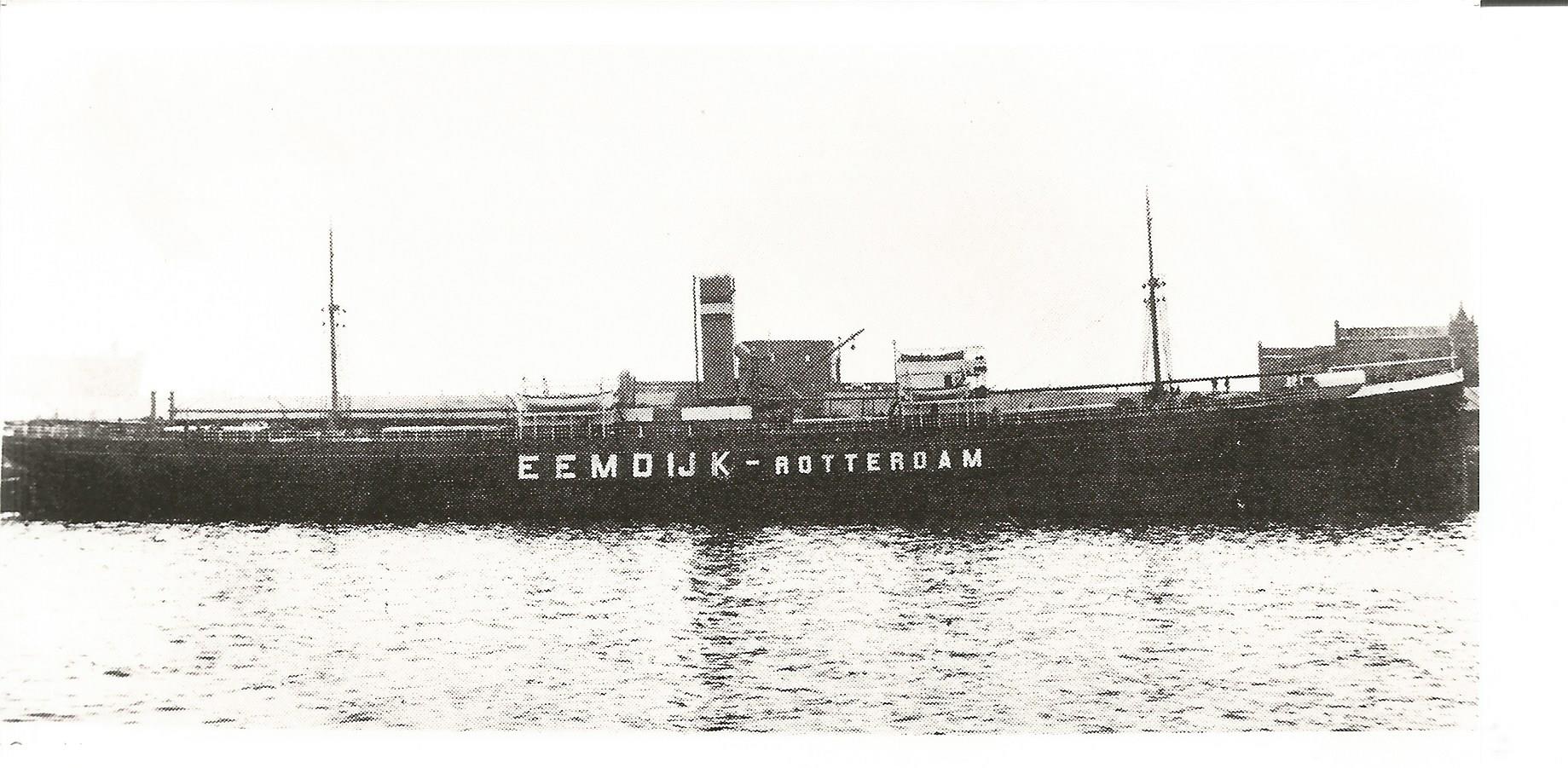
The ss Eemdijk (I) As the ship was only for a short time in service, there are not many photos out there. This photo might have been taken in March or May 1915 during one of the two calls at Rotterdam. Being a cargoship she had 42 crew, a speed of 10.5 knots and a tonnage of 6180 grt. (a)
In March 1915 he was promoted to Chief Officer / First Mate on the cargo ship ss Eemdijk (I), which had come into service on 18 March after having been taken over from a Greek Company. After one voyage to New York, he made a roundtrip to Buenos Aires and other South American ports. Homewardbound on this trip, the ship anchored at Deal outside London on 18 September for the required contraband inspection and was then released on the 20th. The ship departed on the 22nd. and while on the way to Rotterdam, was hit by two sea mines and sunk shortly after. He and the rest of the crew survived and was taken on board a Swedish ship and landed in Great Yarmouth on the East England coast. After interrogation by the British Authorties, they were all released and reached home by ferry from Tilbury to Vlissingen / Flushing on 28 September.
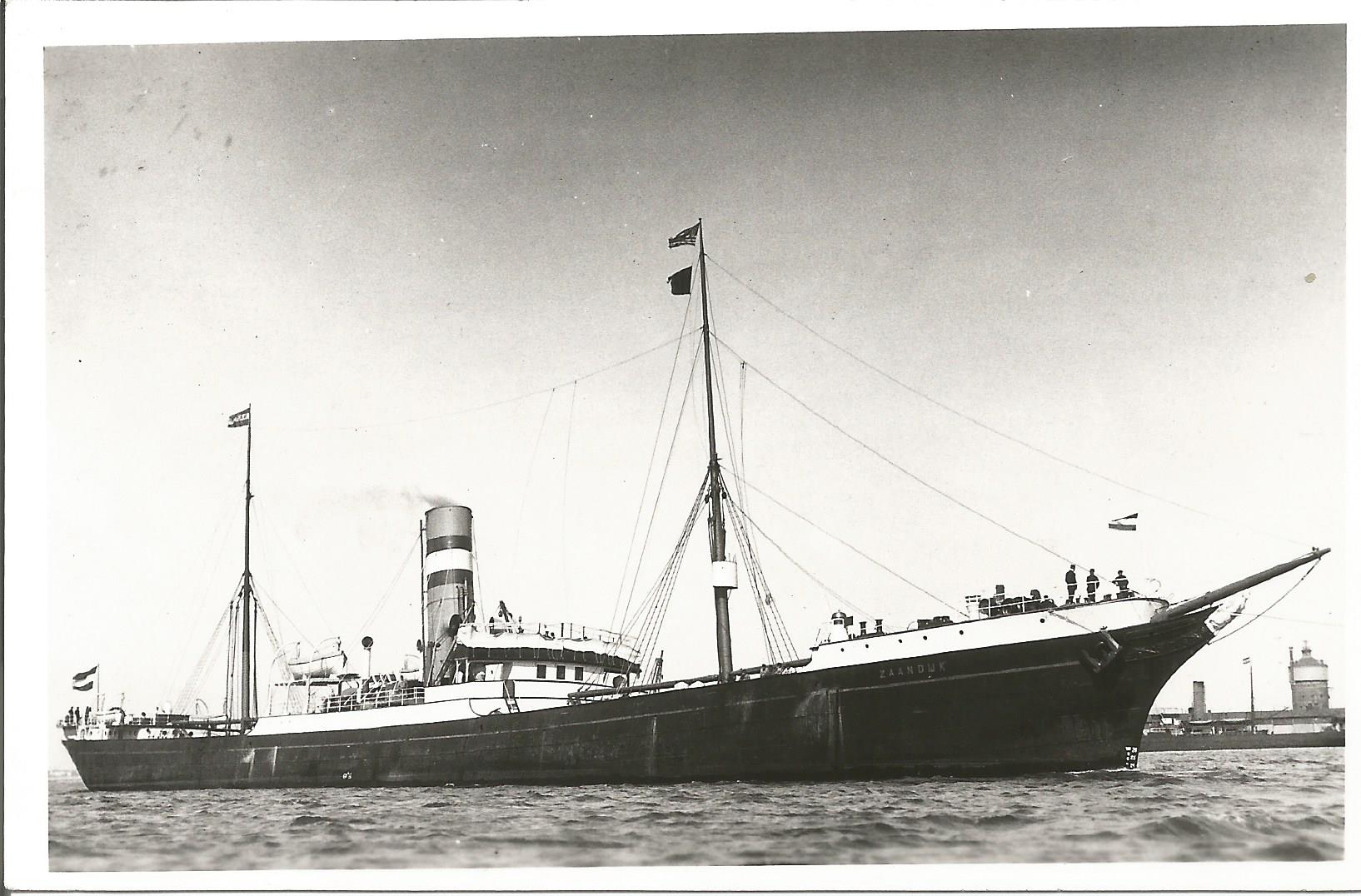
The ss Zaandijk (I). The orginal owner, had a ship built in 1899 that was more or less still a sailing ship with a bowsprit but with an engine in the middle. She had been bought by HAL in 1909 with a size of 4188 grt., a speed of 12 knots and carried 43 crew. (a)
Chief Officer Van Beek was sent on leave until October 1915 and then joine the cargo ship ss Waaldijk. This was followed on 19 Jul 1916 with an assignment to the ss Zaandijk (I).
This ship was together with many other HAL ships involved in the service from Rotterdam to ports on the East coast of the USA. Each ships was to carry as much grain as could be loaded, to the Netherlands. Due to the war and the embargoon German grain, the Netherlands was continiously short of grain and other cereals and thus these shipsents were a life line of the country. During the return on his fifth voyage the ship was torpedoed on 22 February 1917 after leaving Falmouth. The ship was sailing with a Dutch (un-escorted) convoy as the Netherlands was neutral and 7 Dutch ships were torpedoed at the same time including the ss Noorderdijk (I) of HAL. As the U boat commander of the U 21 gave sufficient notice, all on board had time to go into the lifeboats and were saved. The crews rowed their lifeboats to St Mary in the Scilly’s Islands. Later on they returned in small groups via HAL ships from England to Rotterdam. Our Chief Officer arrived home on 02 May 1917 with the ss Sommelsdijk (II). As the Netherlands was neutral during WWI, the torpedoing of the ship, and of the other six, was a war crime and the company was later compensated with a German ship which was renamed ss Zaandijk (II).
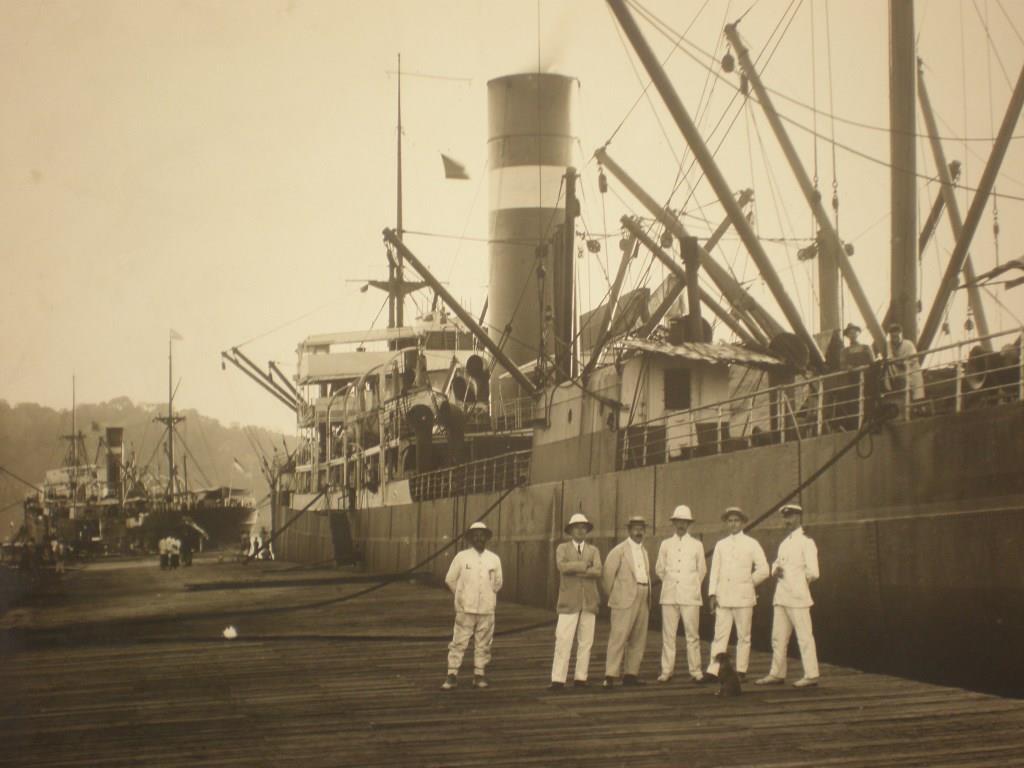
After WWI Holland America put a lot of focus on its “Britisch Indisch Line” from New York to the Dutch East Indies colonies. Here we see the ss Waaldijk and ss Schiedijk together in Tjilatjap. Chief Officer van Beek is posing at the right and Chief Officer Lagaay (with tropic helmet) in the middle. Photo was taken on 26 Aug. 1919 (a)
Van Beek now remained ashore until1919 as most of the HAL ships were laid up in Rotterdam or had been interred in USA ports. On 03 March 1919 he was assigned as Chief Officer to the ss Waaldijk and on 25 March 1920 promoted to Acting Captain until 07 June. The ss Waaldijk was in service on the Britisch Indisch Line of the company from New York to the Dutch East Indies, first via Cape Town and later via Suez.
Then it was back to Chief Officer but as he had been captain, it automatically meant he was now a Sr. Chief Officer in the fleet and thus sailed on the most senior passenger ships. (Where the functoin was often noed as Staff Captain. Then promotion came again on 12 March 1924 with the appointment as Captain to the ss Burgerdijk. On 07 November 1925 that promotion became permanent when he went back to the ss Waaldyk.
On 2 November 1927, on the way back from South America just before arriving in Rotterdam, Captain and crew saved the lives of crew of the french sailing vessel “Gabi” while in the English Channel. During very bad weather this ship had lost all steering capacity and was floundering. A boat was lowered with 7 crew and they managed to get all the French crew off. Just escaping death themselves as the ships mast came crashing down the moment they came along side the Gabi. Op 27 March 1928, while the Waaldijk was in Rotterdam again, the seven crew and the captain, were recognized for their heroic efforts by means of a medal and a scroll, presented by the French Consul.
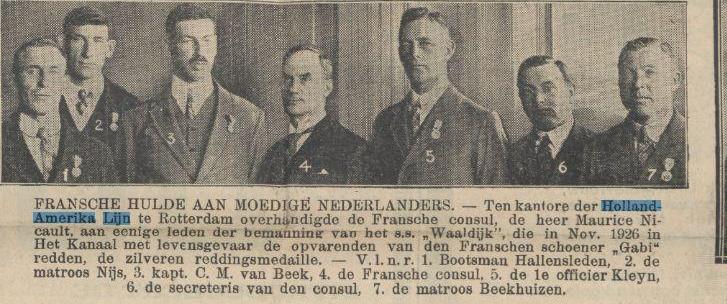
This photo shows Captain van Beek (3rd. from left) with consul and 4 crew after receiving the medal. (Courtesy: a comtemporary newspaper, name unknown)
On 27 November 1927 the Waaldijk was involved in a collision with the ss Eemland on departure for a voyage to South America. Both ships are damaged and the Waaldijk had to go to dry dock for bow repairs delaying the voyage by 3 weeks. The Board of Inquiry later acquited all captains involved as with at least 4 ships hindering each other, it was impossible to put the blame somewhere.
The next medal he received was the recognition for his efforts in maintaining weather logs, so on 14 January 1930 he received the Silver medal of the Royal Netherlands Meteorological Society (KNMI)
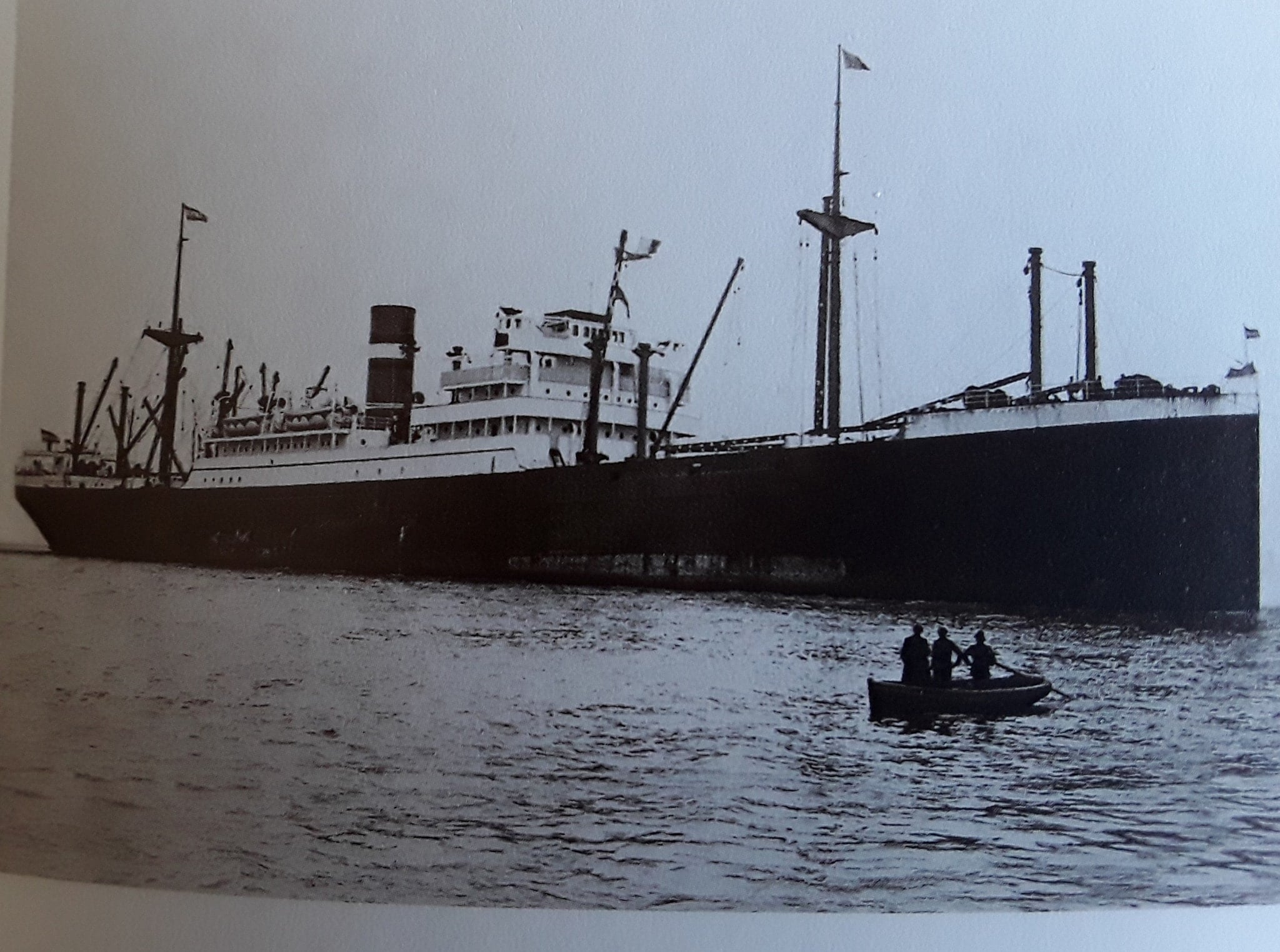
The ms Dinteldyk (I) was a cargo liner with a limited passenger accommodation of 12. It had been commissoned in 1921 for the HAL ‘s North Pacific Service (going as far as Vancouver) The ship had 2 motor engines and carried 64 crew. (a)
In 1938 regular assignments started to the smaller passenger ships with the ss Maasdam (IV) and ms Dinteldyk (I). The latter sailing on the Vancouver service through the Panama Canal. While in command of the ss Dinteldyk he was in Rotterdam when the war broke out and could not get his ship out on time. He thus was stuck in the Netherlands for 5 years under German occupation. His ship was hit by incendery bombs during the bombing of the center of Rotterdam and partly burns out. The hull was later used as a blockade vessel in the New Waterway to prevent an Allied invasion through the port. After being raised the remainders were scrapped in 1946.
As of yet it is unknown what Captain Van Beek did during the occupation years.
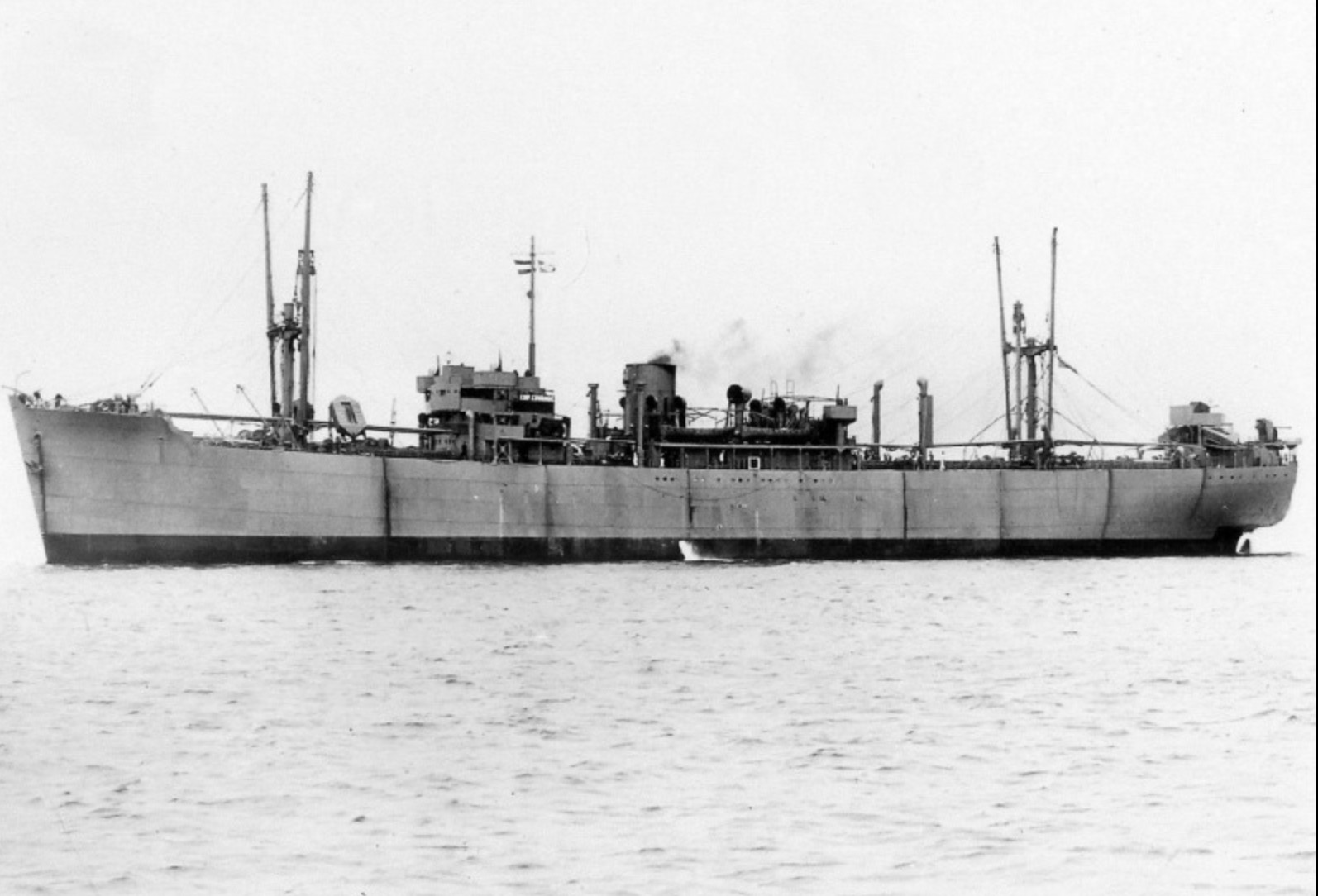
The ss Philips Wouwerman. (Named after a wellknown Dutch painter 1619 – 1668) (a)
As soon as the war was over (10 May 1945) and the HAL ships returned one by one to Rotterdam, he was back to sea again to relieve the crews who had been away for 5 long years. His first assignment was a Dutch Government ship which was given in management to the company, the ms Philips Wouwerman . This was a British built “Empire Class” cargo ship of 7000 tons with one single Doxford Diesel engine. The Captain made one voyage on her to Montrea and then, after 9 months on the ms Delftdyk (service to Vancouver), he was assigned to the larger passenger ships.
First to the ms Noordam (II), followed by the ss Volendam (I) and ss Veendam (II). Then in March 1948 he was appointed to the flag ship of the fleet the ss Nieuw Amsterdam II, sailing from Rotterdam via Le Havre and Southampton to New York. On 11 December 1948 he was promoted to Commodore.
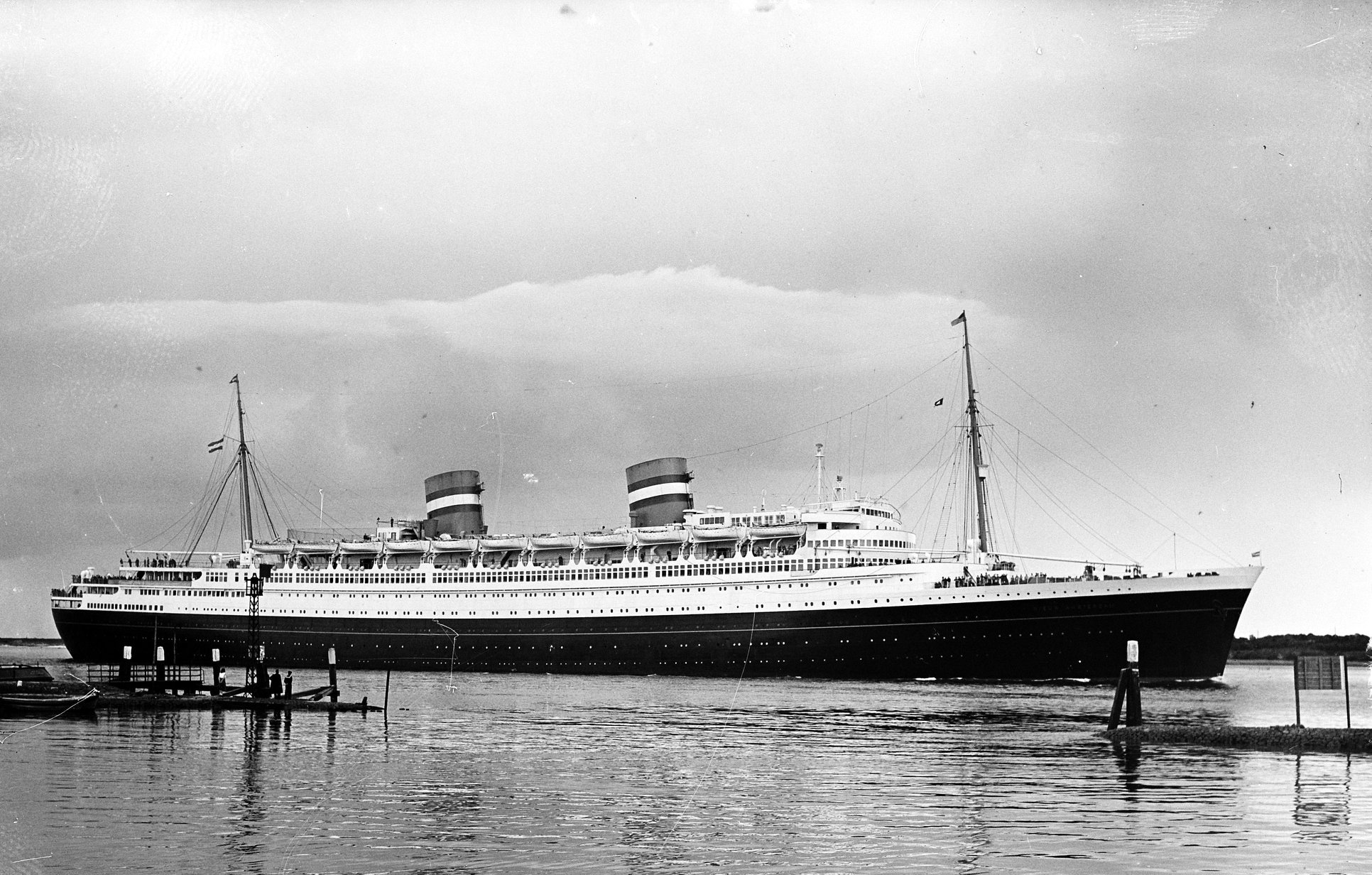
The ss Nieuw Amsterdam II of 1938. This photo was taken on 31 May 1949 during the departure of the Commodore’s final voyage (Voy. 119). (a)
After turning 60, all deep sea sailors had to officially retire and so also Captain Cornelis van Beek. However he was requested to return due to a shortage of captains as the fleet was rapidly expanding with the arrival of the 10 A class cargo ships. This also helped with the pension situation as , with the fund only having been established in 1933, the pay outs were not that high for those who had only been enrolled for a few years. Hence he was doing fill-ins (sometimes for several months) between 1950 and 1955.
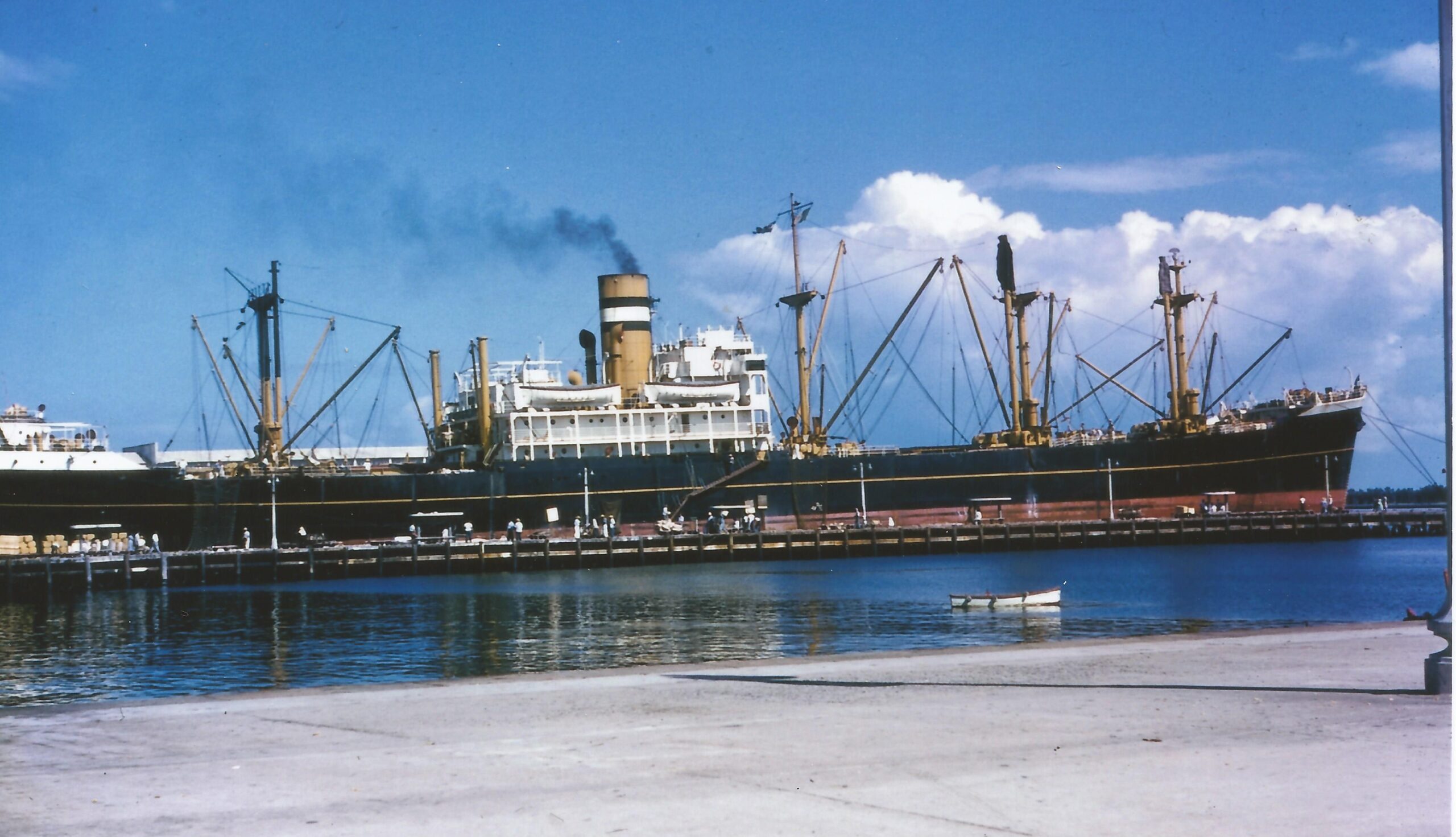
The ss Eemdyk (III) was a British built “Empire Class” cargo ship and had been ordered by the Dutch Government as a replacement program for the Dutch fleet. It ended up with Holland America in 1946.
The ship he served the longest on was the ss Eemdyk (III) involved in voyages to the Gulf of Mexico. In 1955, he was 66 years old and that was supposed to be the end of his sailing career. However he was called back one more time, when he was 73, not as captain but as Owners Representative to be on board the new cargo ship ms Grotedyk when it made its trial trip on 07 August 1962.
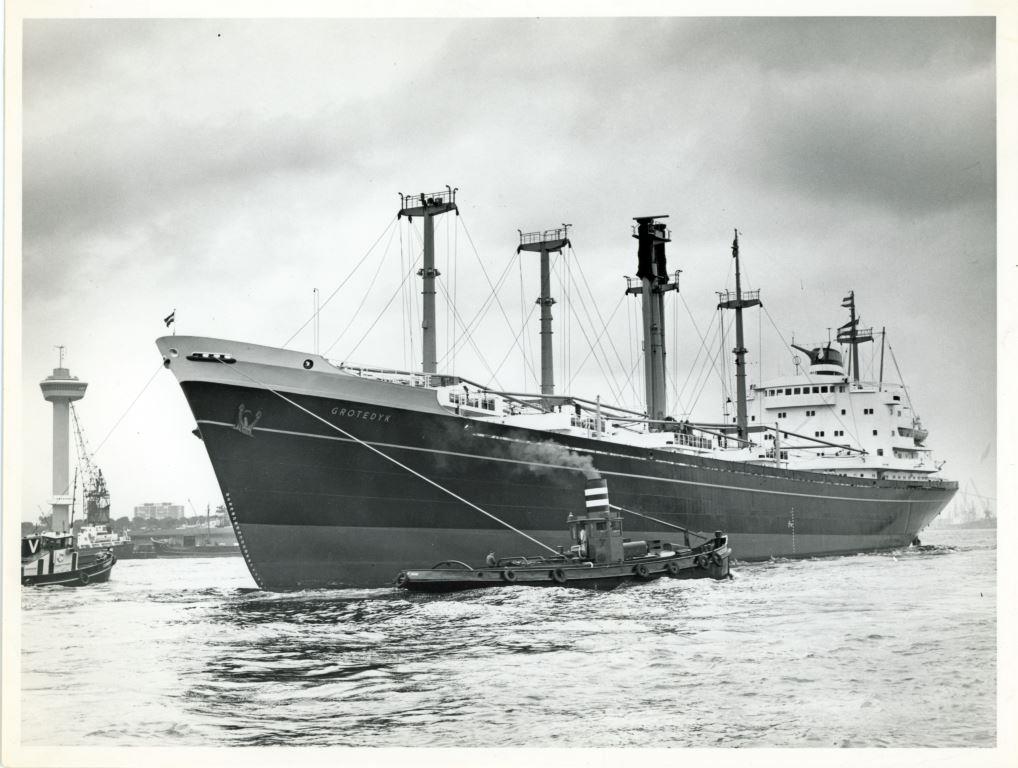
The ms Grotedyk, part of a series of 4 G class cargo ships meant for the New york and Gulf of Mexico service.
Retired Holland America Line Commodore, Captain Cornelis van Beek passed away on 26 May 1975 (d)
ED: I have not been able to find out yet where he lived after his retirement
Sailing List: (c)
Date: Function: Ship: Wages and/or remarks.
15 Jul. 1907 Cadet Potsdam 15,–
11 Jan. 1908 Temporary dismissed to go to school. Passed for 3rd Mate’s license on 14 May 1908
15 May. 1908 4th. Officer Nieuw Amsterdam 30,–
08 Oct. 1908 4th.Officer Sloterdijk 30,–
24 Mar. 1909 3rd. Officer Sloterdijk 30,–
27 Oct. 1909 3rd. Officer Noordam 50,–
04 Jul. 1910 3rd. Officer Zaandijk 50,–
22 Dec. 1910 Temporary dismissed to go to school. Passed for 2nd Mates license on 16 Mar. 1911
01 Jan. 1911 Due to restructuring wages 75,–
21 Mar.1911 3rd Officer Sloterdijk 75,–
08 Aug. 1911 3rd Officer Maartensdijk 80,–
27 Sep.1911 Temporary dismissed waiting for position
08 Oct. 1911 Promoted to 2nd Officer 100,–
08 Oct. 1911 2nd Officer Potsdam 100,–
05 Sep. 1912 2nd Officer Soestdijk 100,-
13 Dec. 1912 2nd Officer Rotterdam 100,-
04 Apr. 1913 Wages increased 110,-
13 May.1913 2nd Officer Potsdam 110,–
07 Oct. 1913 2nd.Officer Andijk 110,–
29 Dec. 1913 Temporary ashore awaiting transfer to ss Noordam.
05 Jan. 1914 2nd Officer Noordam 110,–
20 Mar. 1914 Temporary dismissed to go to school passed for Chief’s Mate ticket on 10 June 1914
24 Jun. 1914 Wages increased 150,–
12 Mar. 1915 Chief Officer Eemdijk 150,–
Ss Eemdijk sunk on 23 Sept. at 03.30 in the morning on location: 55o47N – 3o50E.
Per ss Framnaes to Yarmouth and from there on 28 sept per ss Mecklenburg to Flushing. Arrived on 28/9 in Rotterdam
18 Oct. 1915 Wages increased to 160,–
18 Oct. 1915 First Officer Potsdam 160,–
21 Oct. 1915 Chief Officer Waaldijk 160,–
23 Jun. 1916 Wages increased 175,–
19 Jul. 1916 First Officer Zaandijk 175,–
05 Dec. 1916 Wages increased 190,–
Ss Zaandijk on 22 Feb. 1917around 0628 , while approx. 27 miles west of Bishops Rock torpedoed by a
German submarine. Taken on board of the Naval patrol trawler ”White Tides” and on 24 Feb. arrived at Penzance. On 2 May 1917 arrived home in Rotterdam with the ss Sommelsdijk.
30 May.1917 mobilized and assigned to the army as a sailor.
18 Nov.1918 First Officer Rotterdam 190,- (for the books, remains ashore)
03 Mar.1919 First Officer Waaldijk 200,–
01 Jul. 1919 Wages increased 290,–
18 Jan. 1920 Wages increased 320,–
25 Mar. 1920 Act. Captain Waaldijk 600,– until 7 June
07 Jun. 1920 Chief Officer Rotterdam 320,– working as 2nd officer
21 Jun. 1920 Temporary s shore for leave 320,– (on wages and per diem)
27 Jul. 1920 Chief Officer Noorderdijk 320,–
Wages increased 340,– Per 1 Jan. 1920
15 Oct. 1920 Wages increased 360,–
22 Aug. 1920 Chief Officer Rijndam 360,–
01 Sep. 1921 Wages decreased 344,–
16 Oct. 1921 Wages decreased 328,–
24 Mar. 1922 Wages increased 350,–
20 Sep. 1922 Temporary ashore
13 Nov. 1922 First Officer Nieuw Amsterdam 350,–
02 Jan. 1923 First Officer Volendam 350,–
12 Mar. 1924 Act. Captain Burgerdijk 560,–
16 May. 1924 Act. Captain Zijldijk 560,–
02 May. 1925 Act. Captain Blijdendijk 560,–
30 Jun. 1925 Chief Officer Veendam 380,–
01 Jul. 1925 Act. Captain Hoogkerk 625,–
Assigned for filling in at VNS but did not sail, position taken by Capt. Burger.
30 Jul. 1925 Temporary ashore
18 Sep. 1925 Act. Captain Binnendijk 560,–
07 Nov.1925 Captain Waaldijk 560,–
01 Apr. 1927 Captain Waaldjik 580,– wage increase
27 Jul. 1927 Captain Ashore 580,– on leave
08 Aug. 1927 Captain Waaldijk 580,– At Amsterdam
29 Jul. 1928 Captain Ashore 580,–
08 Aug. 1928 Captain Waaldijk 580,–
01 Jan. 1929 Captain Waaldijk 600,– Wage increase
13 Mar. 1929 Temporary ashore 600,–
02 Apr.1929 Captain Bilderdijk 600,–
14 Aug. 1929 Captain Westerdijk 600,–
29 Apr. 1930 Temporary ashore 600,–
Silver medal of the Royal Netherlands Meteorological Society awarded on 14 Jan. 1930
01 Jun. 1930 Wage increase 620,– sailed during the last 3 years 2 years and 4 ½ months
09 Nov. 1930 Captain Statendam 600,– As passenger heading to the Indies.
22 Nov. 1930 Captain Beemsterdijk 600,– At New York.
05 Jun. 1931 Captain ashore 620,–
03 Jul. 1931 Captain Grootendijk 620,–
04 Oct. 1931 Temporary ashore 620,–
12 Nov. 1931 Wages decreased 496,– and placed on standby on 70%
16 Dec. 1931 Captain Blommersdijk 496,–
08 Apr. 1932 Captain Breedijk 496,–
01 Nov. 1932 Wages decreased 446,–
24 Mar. 1932 Captain Maasdam 446,–
28 Jun. 1933 Wages decreased with 5% acc. to Memo 929 date 27 June 1933
27 Jul. 1933 Captain Bilderdijk 446,–
20 Oct. 1933 Temporary ashore 446,– regular leave.
15 Nov. 1933 Captain Blommersdijk 446,–
28 Dec. 1933 Wages decreased to 401,40
See Memo 929 dated 27 June 1933
09 Jan. 1934 Temporary ashore 401.40 cancelled
11 Jan. 1934 Temporary ashore at 70% 401,40 cancelled
18 May. 1934 Temporary ashore at 70% 401,40
02 Jun. 1934 Captain Breedijk 401.40
27 Jul. 1934 Temporary ashore 401,40 regular leave.
17 Aug. 1931 Temporary ashore 70% 401,40
29 Aug. 1934 Captain Binnendijk 401.40
01 Oct. 1934 Wages decreased 385,50
17 Dec. 1934 Captain Bilderdijk 385,50
15 May.1935 Captain Burgerdijk 385,50
On 3 Jan. 1936 coming from the office of the agents and on the way home to the ship, fell while getting on the bus in the Leadenhall street and broke the disk of his knee. Taken into the London hospital at Whitechapel street London.
04 Feb. 1936 Temporary ashore in London 385,50
Comes home with the Damsterdijk 7 March from London and 8 March in Rotterdam.
08 Mar. 1936 Temporary ashore 385,50
15 Apr. 1936 Captain Boschdijk 385,50
01 Oct. 1937 According to new arrangements 430,–
10 Sep. 1938 Captain Maasdam
12 Nov. 1938 Captain Dinteldijk
Arrived on 07 May 1940 in Rotterdam and was supposed to leave again in due course but the ship burns out during bombardments while fighting in the port.
1940 – 1945 In the Netherlands under occupation.
27 Jul. 1945 Captain Philip Wouwerman
27 Sep. 1945 Captain Delftdijk
02 Nov. 1946 Captain Noordam
20 Jul. 1947 Captain Volendam
05 Mar. 1948 Captain Veendam
Appointed Commodore November 1948.
11 Dec.1948 Captain Nieuw Amsterdam Until June 1949
Should have retired when turning 60 years of age as this was the compulsory retirement date. Was requested to return due to shortage of captains as the fleet was rapidly expanding with the arrival of the A class.
15 Jun. 1950 Captain Edam Until 31 Dec. 1951
09 Mar. 1951 Captain Eemdyk Until 23 Dec. 1951
02 Jan. 1952 Captain Ryndam Until 03 Feb. 1952
26 Mar. 1952 Captain Eemdyk Until 04 Apr. 1952 Coastal Relieve voyage
26 Sep. 1952 Captain Eemdyk Until 03 Sep. 1954
28 Feb. 1955 Captain Sloterdyk (End Date unknown)
01 Aug. 1962 Captain Grotedyk Until 07 Aug. 1962 Owners representative trial trip
Sources:
(a) Captain Albert Schoonderbeek HAL Archive and photo database,
(b) E.H. Kruidhof (family information)
(c) “Stamboek” sailing periods HAL Archives as held by the Municipel Archives of the City of Rotterdam.
(d) Information by Laurens van der Laan, HAL historian par Excellence.
Last updated: 28 Jan. 2026.
May 12, 2024 at 6:23 pm
“Uncle Cor” was the brother of my grandmother. Impressive man.
November 21, 2025 at 6:29 pm
Wat een verrassend leuk verhaal over mijn opa. Vooral van de zakelijke kant wist ik niet zoveel.
Over zijn (privé) leven weet ik wel het een en ander.
Neem contact met mij op.
January 28, 2026 at 10:18 am
Cornelis van Beek 10/5/89 – destijds commodore overleden op 26 mei 1975 in de leeftijd van 86 jaar.
Samenspel jrg 18 nr 03 jul 1975