- Captain Albert's Website and Blog -

Ocean Liner History and Stories from the Sea, Past and Present. With an In Depth focus on Holland America Line

Category: Shore Excursions (page 4 of 4)

10 March 2019: Puerto Quetzal, Guatemala.

This is a cargo port and the reason we are calling here is for the tours. Everybody, who goes on tour, disappears into the main land for shore excursions. They are all nearly full day tours and due to the peculiarities of the way the Guatemalans travel on the roads, they are sometimes more than a full day. The tours mainly go to Colonial Antigua which is a UNESCO world heritage site.  Continue reading

06 March 2019; Cabo San Lucas, Baja California.

I have been coming to Cabo San Lucas since 1982 (First time was with the old Statendam IV) so I have seen it being transformed from a sleepy fishing village to a mega resort. From the occasional cruise ship calling to the row of ships now in port every day. And I have seen it in all the weather variations; the Good, the Bad and the Ugly days.  When I came to the bridge this morning it was overcast and the sea was a flat as a mirror, although it was a wavy mirror as there is always some swell running, but no wind at all. And that is a good start for Cabo San Lucas. As it means that during the day the sun will burn some of the clouds away but some will be left; and there will be some wind later in the day, caused by the warming up of the Mexican mainland, but it has to start from wind force zero and thus the wind will not get to a big momentum. Continue reading

04 March 2017; Panama Canal.

It was not one of the best Panama Canal days in my life but it all worked out. Occasional rain, which it has to be otherwise The Canal Zone does not get its 200 inches of rain a year which it needs to operate the Canal; and very windy.  However the wind was from the North and the First set of locks are almost north south as well. Only 8 degrees away from the true North. Thus the wind was only pushing or slowing the ship down, it was not causing much drift which otherwise would have hampered the lining up for the lock entrances.

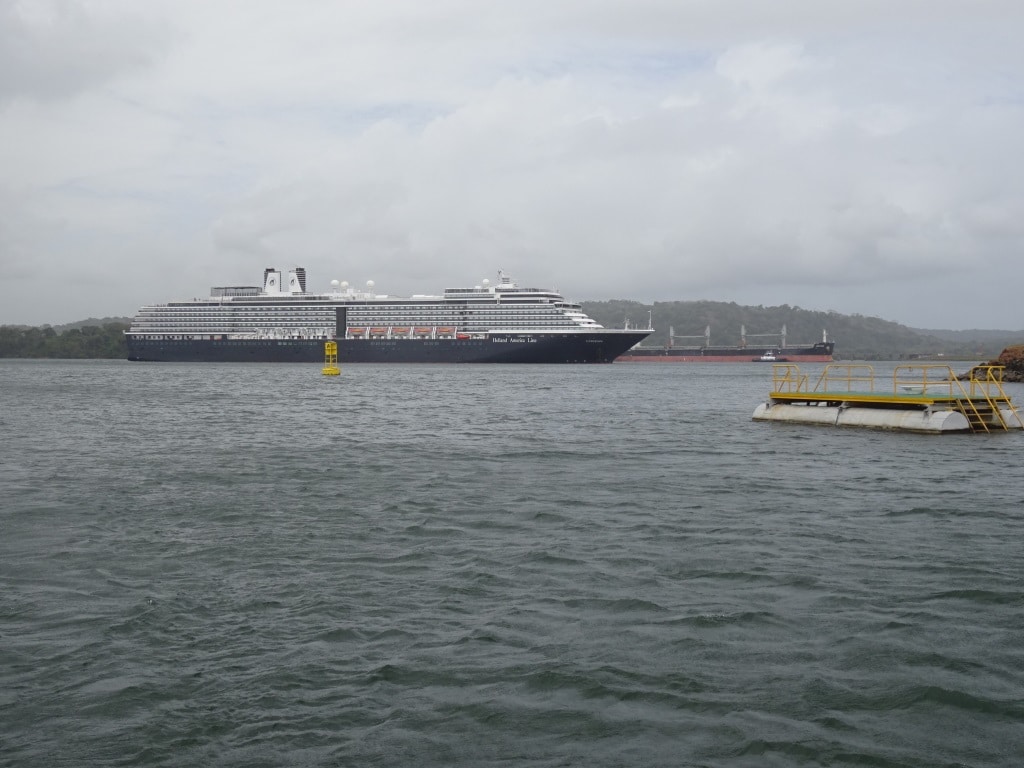
The ms Zuiderdam drifting in the anchorage just outside the Traffic Lane to the locks.

The ms Zuiderdam drifting in the anchorage area just outside the Traffic Lane to the Gatun Locks.

This is a Panama Canal visit with a twist. You see the canal, by going through the first set of locks and then you have the option to take the local tours and catch the ship again in the evening. If you do not take a tour then you can see the ship sailing out of the lake again, back to open sea, and then sail to the dock at Manzanillo to collect the tour.

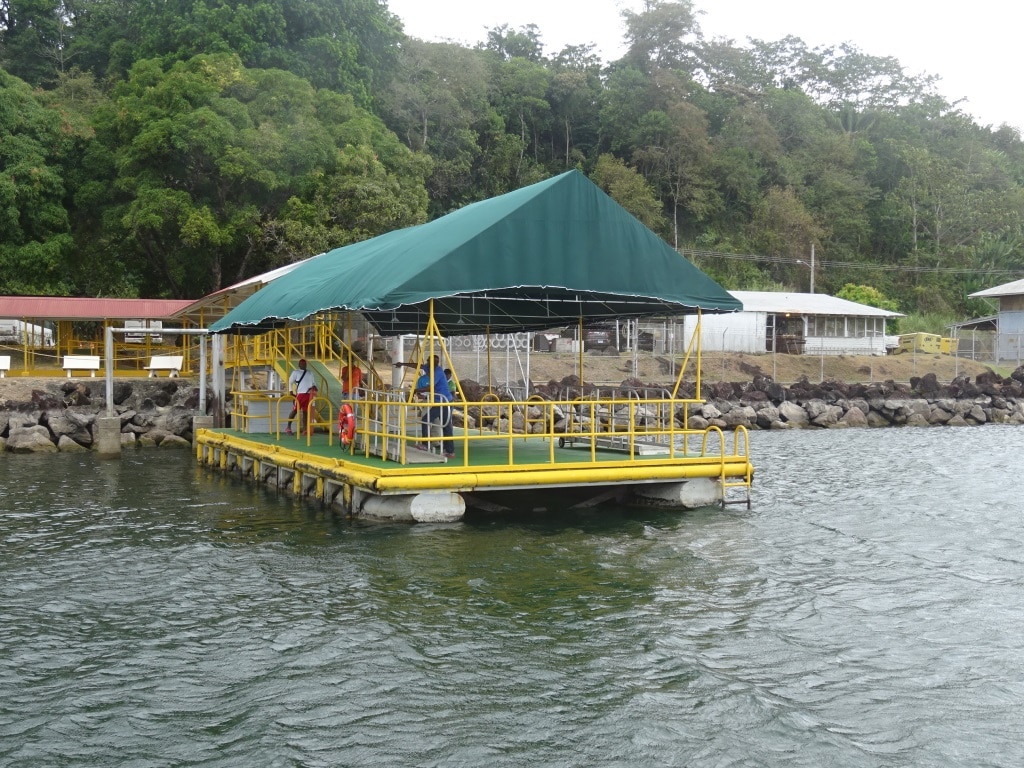
The tender dock we use to disembark the guests. Designed by a pilot and thus a delight to use by use. Safe mooring and safe loading and unloading. It floats as the level of the lake goes up and down with the rain fall.

The tender dock we use to disembark the guests. Designed by a pilot and thus a delight to use by us. Safe mooring and safe loading and unloading. It floats as the level of the lake goes up and down with the rain fall.

This morning the whole happening started at 05.30 with the arrival at the pilot station. Then there is the clearing of the ship and then line up in the convoy. Although we are not going all the way through, the Panama Canal Authority still has to make sure that the locks are used efficiently and will lose as little water as possible. With the new locks in operation and thus more traffic, more water is used and focus on efficiency is now even more important than it was before.  But by 09.00 we had made it through, had left the locks behind and the ship parked itself between the two lock sections in the anchorage area of Gatun Lake. All the tenders were lowered as we had to shuttle 1120 guests ashore, out of the 1970 on board, Thus it took two good hours before all the tours were on the way and the tenders had been retrieved. Then the ship was ready to turn around and go back.

This is the moment where everything goes out of the captains hands, as the ship can only go back if there is a gap in the convoy or no opposing traffic so the other side of the lock system can be used. Sometimes the ship has to wait one or two hours and then it docks just on time to collect the returning tour people again. Today we were lucky, there was a gap in the traffic and the ms Zuiderdam could slot in without having to wait. Good news as it gave the guests who remained on board the un-expected bonus of being able to go ashore and noise around in Colon 2000.

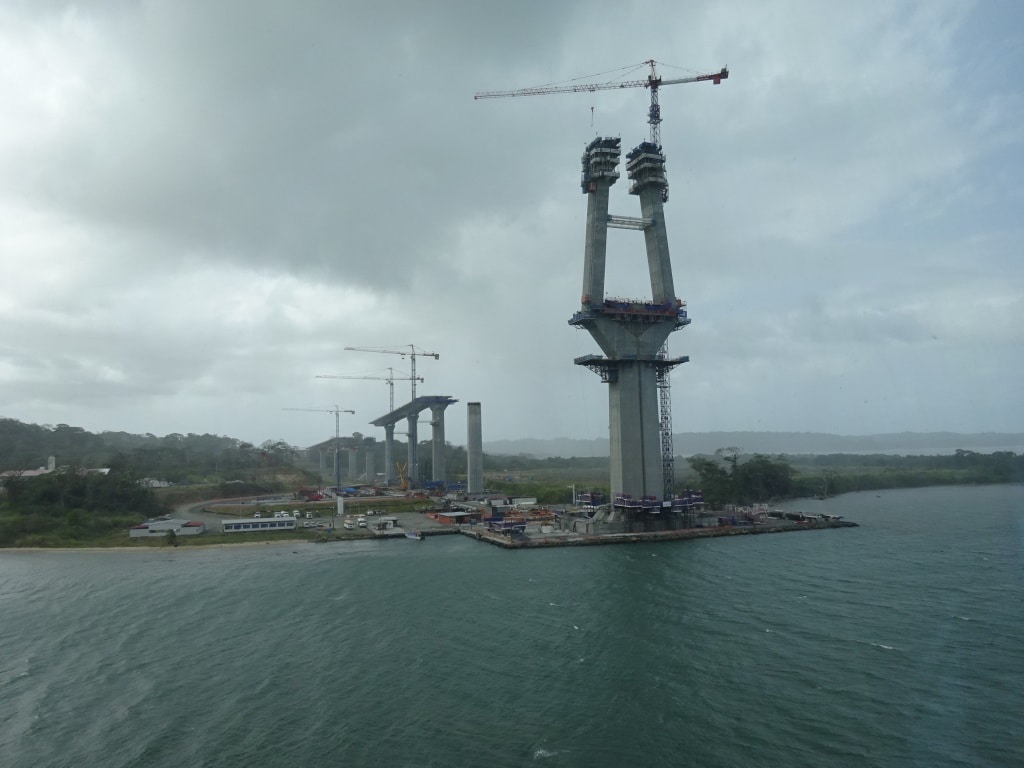
The bridge is going to be pretty high so even the tallest ships will fit under the bridge span.

The bridge is going to be pretty high so even the tallest ships will fit under the bridge span.

Sailing back, means going down the locks back to sea level, I personally find that more impressive than going up because it is easier to comprehend a downwards depth, than an upwards lift in measurement. Also there was now something new to see. They are building a bridge on the Atlantic side. First there was only the Bridge of the Americas near Panama City. Then they built the Centennial Bridge near the Continental divide (Culebra Cut) and while that was very nice, the Caribbean or Atlantic side could only cross over the bridge built into the Gatun locks or had use the ferries closer to Colon. Both created long waiting times if there was a lot of shipping traffic in and out of the locks. But now there is a new bridge being constructed which should be finished late 2017 or early 2018. I suppose it will depend on the amount of rain for how fast they can work.

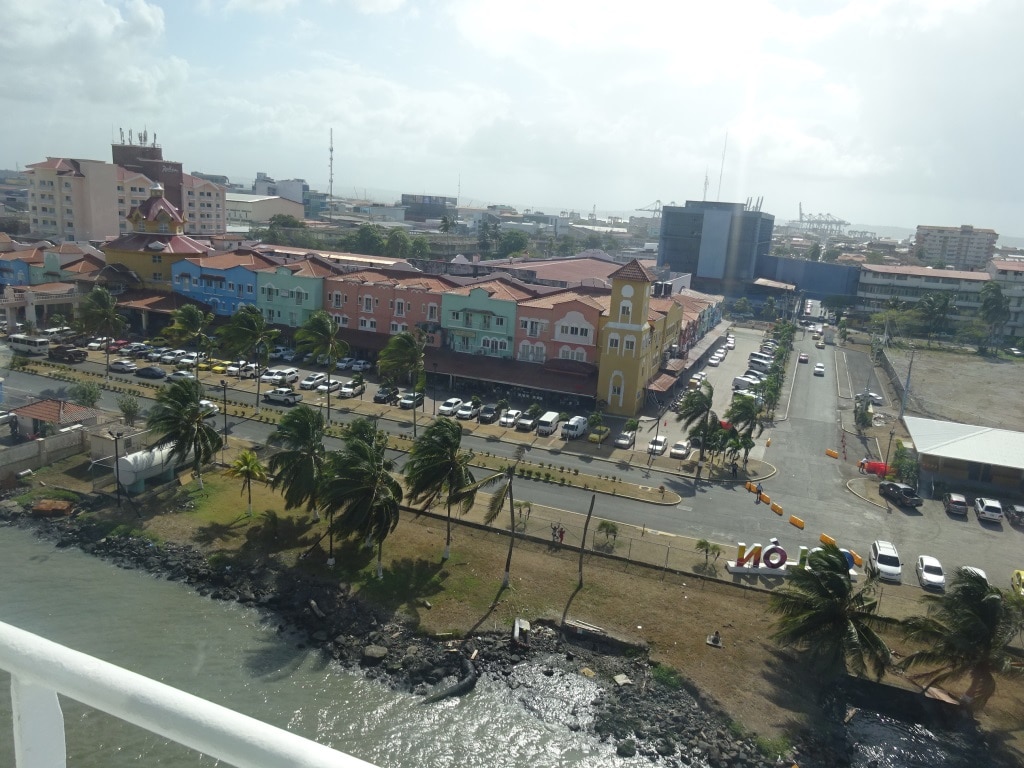
Colon 2000. I suppose the locals go here was well, but it seems to be focussed on the cruise ships who stop here an ever icnreasing numbres.

Colon 2000. I suppose the locals go here was well, but it seems to be focused on the cruise ships that stop here in ever increasing numbers.

Normally our ships docked at Cristobal but this season the ships have started using Colon 2000 full time, which is tucked away in the corner of the Manzanillo container port. To get there you have to sail out of the Panama Canal, make a sharp 180o turn in open sea, and then enter the port of Manzanillo. There they have two berths, dock 1, today in use by the Monarch of Pullmantur and Colon 2000 which is a sort of little terminal village with shops eateries and a Casino.  We were docked by 15.00 hrs. which is a record so far and thus a bonus for the guests.

Tonight we will sail around 1900 hrs. and head for Puerto Limon in Costa Rica.  Weather is expected to be the same; windy and a with certain chance of rain.

Nov. 2016; Santo Tomas de Castilla, Guatemala.

Sailing into Santo Tomas means sailing through a long and narrow channel. Therefore we were all very happy that the predicted wind had disappeared. Thank you Otto for destabilizing the original weather planning. Always nice to have a Tropical Storm as your friend and not as your enemy. The entrance channel is nearly 6 miles long and dredged out of a very shallow inland lake or Laguna. Because it is a very sheltered place, there is a lot of shipping around. Either in layup, or anchor waiting or fishing or docked in the two ports here. Apart from Santo Tomas there is also the smaller port of Puerto Barrios which has a finger pier leading from the town of Barrios to the channel which ends at Santo Tomas. Barrios is specializing in the Banana trade and as Guatemala has an awful lot of Bananas there is always a ship alongside and sometimes also one or two waiting at the anchorage. Chiquita Bananas are mostly coming from Costa Rica, the bananas trading under the name Sole come from here, from Barrios.
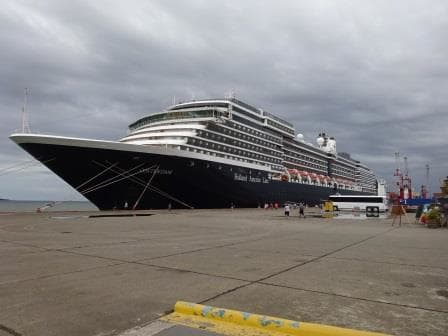
The ms Oosterdam, nbr. 3 of the Vista Class. Docked at Santo Tomas.

The ms Oosterdam, nbr. 3 of the Vista Class. Docked at Santo Tomas.

The Oosterdam happily sailed by and docked at the Commercial berth nbr.1 of Santo Tomas. This is the designated cruise ship berth but is also used as a cargo berth. Behind us at the same pier is the container berth but if there are two cruise ships scheduled then they kick the container ship(s) or bulk carriers or tankers off the berth and a 2nd cruise ship can go alongside. That does not make the cargo ships captains very happy but it is all about making money and cruise guests bring in more money than containers.
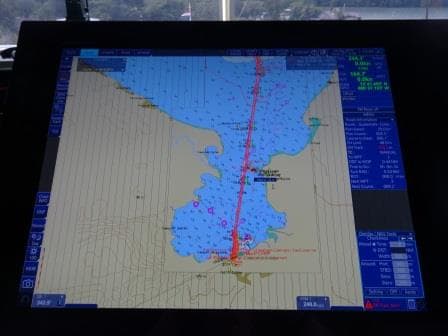
It is a long way in and thus we had the pilot on board at 05.45 in the morning for a 07.00 docking.

It is a long way in and thus we had the pilot on board at 05.45 in the morning for a 07.00 docking.

Santo Tomas is really a port for taking tours. The longest tour is a fly tour to the Mayan ruins of the city of Tikal. That tours leaves on arrival and comes back when the ship leaves. (Quite often the ship leaves just after the tour has come back) There is also a Mayan ruin closer by, Quirigua, which you can do in one morning. Then there are the Eco Tours and the beach visits.
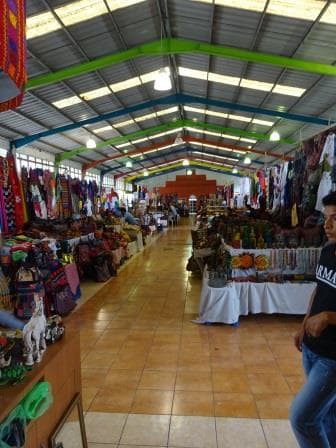
The local indoor souvenir market (and some art as well) In the centre a sitting area with a cafe, telephone and internet, and a stage with a Marimba band.

The local indoor souvenir market (and some art as well) In the centre a sitting area with a cafe, telephone and internet, and a stage with a Marimba band.

For those who stay on board (this cruise we have a lot of guests on board who have already been there and bought the T shirt) there is an extensive souvenir market in the port building where you can still buy a T shirt in case you forgot it last time. (And a lot of other things as well) I was almost tempted to buy a Mayan skull with two lights in it in the shape of red hearts. But I value my marriage and I know that my wife would not be amused if I brought that one home. I did try the local beer called Brahva and I was a little bit disappointed. A lot of Belgians lived here in the 19th. Century and you would think that they would have at least taught the locals how to brew a decent beer. But some of our guests where drinking it so maybe it was my personal taste. There was a full size Marimba band present in the terminal and thus you could enjoy some local culture without leaving the port.
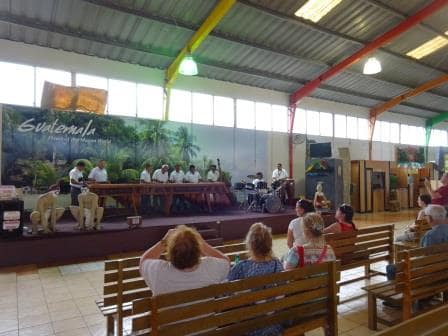
The Marimba band. they played without amplifiers so it was very pleasant to listen to.

The Marimba band. They played without amplifiers so it was very pleasant to listen to.

There is only one way in and thus also only one way out and at 17.00 hrs. the Oosterdam will thus sail through the channel again to open waters and then north to Costa Maya. Tomorrow we will have a short call there from 08.00 to 14.30 in the afternoon. Longer is not possible otherwise we might arrive late in Tampa. Costa Maya is a purpose built resort in the middle of nowhere (although there is a small village about 20 minute’s walk outside the gate). Normally a six hour visit is long enough for a Beach call and through all the years I have been going there I have never heard guests complaining about the stay being too short. Most of them were just ready to step back on board after a lot sea salt and sand. The pier can take three ships and we will be there with one other ship.  Contrary to Santo Tomas this port is fully exposed to the Caribbean Sea and thus we depend on nice weather. At least not too much wind, otherwise we cannot dock and not too much swell, otherwise the ropes break and we cannot remain alongside the dock.

For tomorrow things look quite good, not too much wind, and thus not too much swell, but warm 28oC / 82oF and a fair chance of a shower.
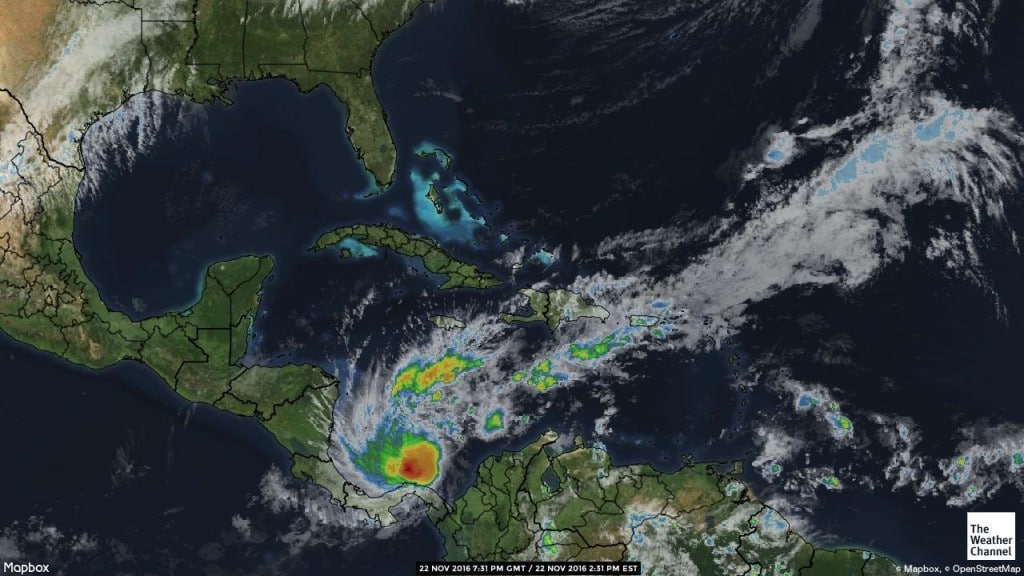
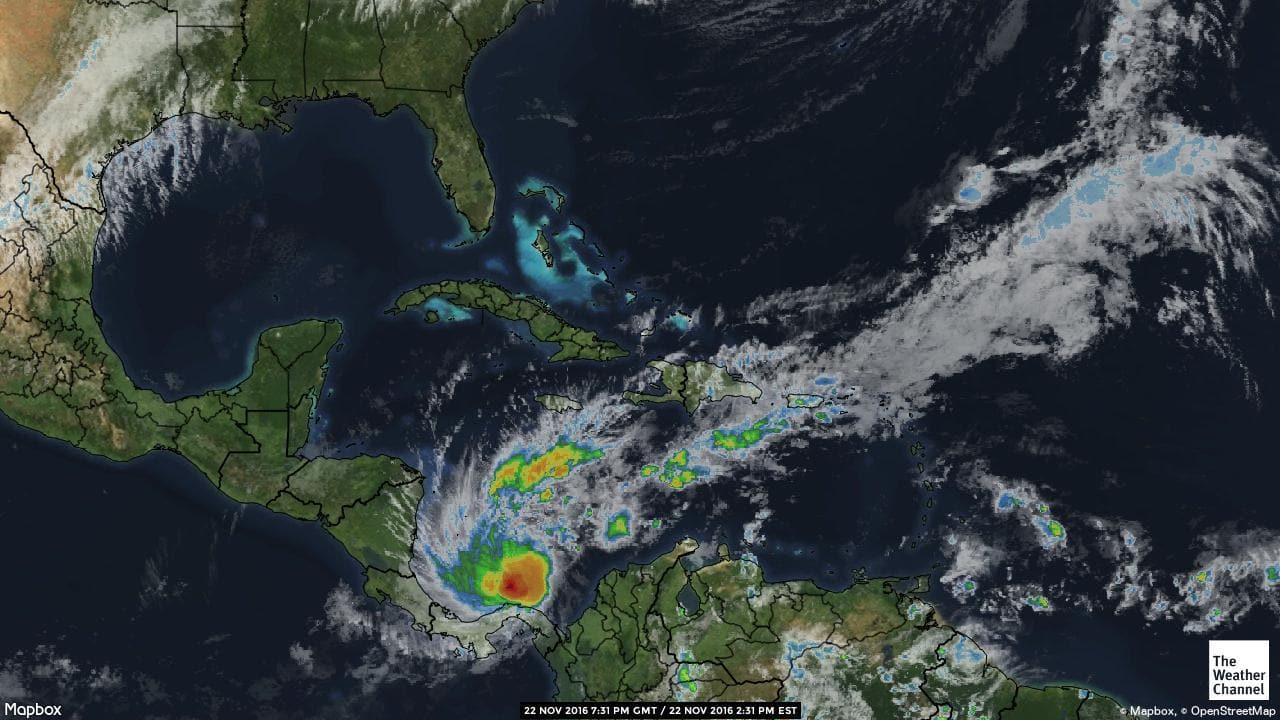
Otto now looks like a tropical storm although still a small one. Thus not much of an deep eye and a swirling -isolated-cloud around it.

Otto now looks like a tropical storm /hurricane although still a small one. Thus not much of a deep eye and not a defined swirling -isolated- cloud around it.

Otto still seems to like it in his little corner of Panama but he is gathering strength all the time and the weather guru’s expect he will start moving eventually. Not in our direction and so all is well in the little world of the Oosterdam.

According to our friends from the hurricane Centre:

As of early Tuesday morning, Tropical Storm Otto’s maximum-sustained winds have increased to 70 mph, only 5 mph short of Category 1 hurricane intensity. Otto remains nearly stationary and is not expected to move much through Tuesday afternoon. Tropical storm-force winds extend outward up to 35 miles away from the center of the storm.

Otto remains within an environment of warm water and decreasing vertical wind shear. This should allow Otto to intensify further and Otto could become a hurricane before making landfall over southeast Nicaragua on Thursday. Though the system is nearly stationary at this time, it will start to slowly drift westward over the next few days as high pressure builds over the eastern Gulf of Mexico and Florida. This will create an easterly steering flow that will take the storm westward.
Newer posts